
Harewood House
Harewood House
England · West Yorkshire — between Leeds and Harrogate, Harewood village, LS17 · Near Leeds
Built 1759 · Georgian Neoclassical; exterior by John Carr of York, interiors by Robert Adam 1759–1771; one of Adam's finest complete achievements, with exceptional plasterwork ceilings in the Gallery and Music Room; south and east wings modified by Sir Charles Barry in the 1840s; Capability Brown landscape with serpentine lake, 1772–1778
This page is part of an independent travel guide and is not affiliated with, endorsed by, or operated by Harewood House.
© Castles & Palaces
Quick Facts
- Hours
- Tue–Sun 11:00–16:00. Closed Mon
- Entry via GetYourGuide
- €29
- Duration
- 3–4 hours (State Floor + Below Stairs + grounds)
- Best time
- March to October
- Nearest city
- Leeds
Featured Tour
Harewood House: Gardens and Grounds Entry Ticket
Cancellation available · Instant confirmation
Highlights
- ✦The most significant private collection of Thomas Chippendale furniture in existence — commissioned from a cabinet-maker born fewer than 10 km away in Otley, still in the rooms Adam designed it to occupy
- ✦Robert Adam's state interiors are considered among his finest complete achievement, with exceptional plasterwork ceilings in the Gallery, the Music Room, and the Yellow Drawing Room
- ✦Capability Brown reshaped the grounds in the 1770s, sweeping away formal gardens to create naturalistic parkland with a large serpentine lake and terrace walk with views across the Wharfe Valley
- ✦The Below Stairs exhibition interprets the working lives of the 18th-century domestic staff in the original kitchens, larders, and service rooms beneath the Adam state floor
- ✦The Harewood Bird Garden, established within the grounds in 1969, houses flamingos, Humboldt penguins, macaws, and tropical species — a year-round draw that makes Harewood a genuinely multi-interest destination
Skip the queue with a guided tour
Skip-the-line tickets & expert guides
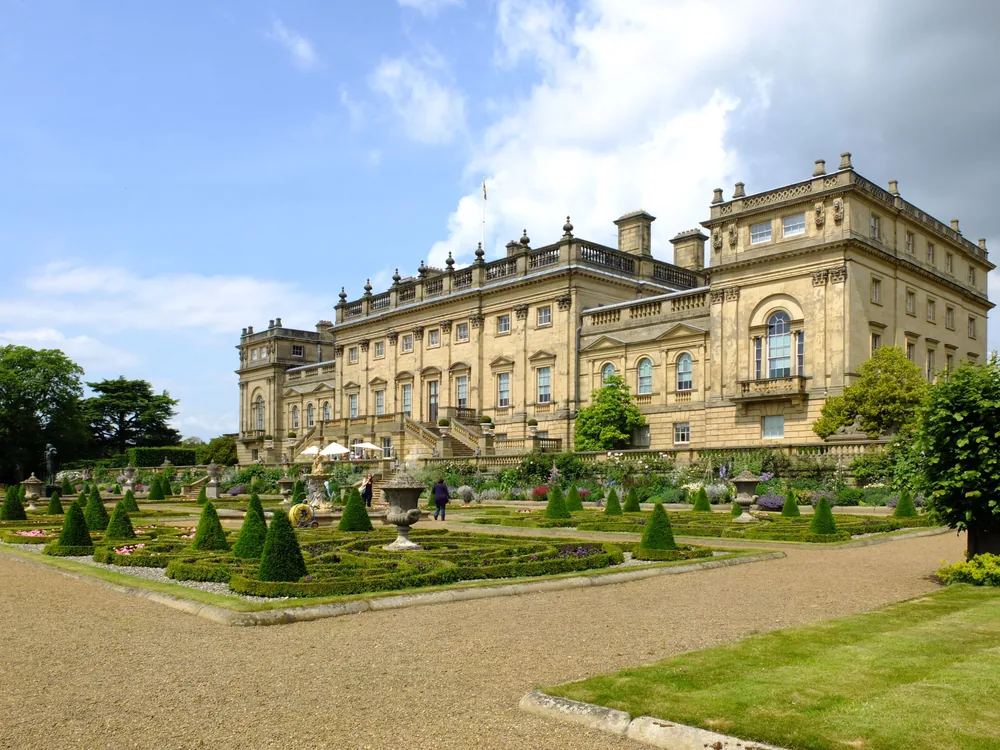
Harewood House stands between Leeds and Harrogate in a landscape shaped by three of the 18th century's defining creative minds. John Carr of York designed the exterior — a measured Palladian façade of honey-coloured millstone grit, symmetrical and restrained in the Yorkshire manner. Robert Adam designed the interiors — one of his most complete achievements, with plasterwork ceilings in the Gallery, the Music Room, and the state rooms that represent the peak of his neoclassical decorative vocabulary. And Thomas Chippendale, born ten kilometres away in Otley, supplied the furniture — a commission so substantial and so well-preserved that Harewood now holds the most significant private collection of Chippendale's work anywhere in the world.
The house was built between 1759 and 1771 for Edwin Lascelles, later the 1st Earl of Harewood, on a fortune derived in large part from Caribbean plantation interests. This history the house has in recent years begun to address candidly, with dedicated interpretation examining the connection between the Lascelles family wealth and the transatlantic slave trade. Harewood now occupies an unusual position among English country houses: one of the most beautiful and best-preserved 18th-century interiors in England, and one of the most honest in confronting the sources of the wealth that created it.
The relationship between the house and Chippendale is the defining furniture-patronage story of Georgian England. Chippendale delivered furniture for Harewood from the early 1770s through to 1778, a commission coinciding with his most accomplished period. The pieces — beds, library tables, commodes, pier glasses, and armchairs — were made specifically for Adam's rooms, to their dimensions and colour palette, and they remain in the positions they were designed to occupy. Walking through the state rooms at Harewood is one of the few places in England where the original integration of Adam architecture and Chippendale furniture survives exactly as intended: not a period reconstruction, but the thing itself.
The grounds were transformed by Lancelot 'Capability' Brown in the 1772–1778 period. Brown swept away the earlier formal gardens and replaced them with naturalistic parkland, a large serpentine lake, and a terrace walk with views across the Wharfe Valley below. The lake, the woodland walks, and the ha-ha separating the formal grounds from the grazing parkland are all unmistakably Brown — subtle, apparently effortless, and entirely English in their refusal to acknowledge any design at all.
Victoria and Albert visited in 1858; George V and Queen Mary used Harewood as a stopping point on northern tours. The Victorian era brought Sir Charles Barry, architect of the Houses of Parliament, to remodel the exterior, adding a third storey and altering the roofline in ways that give the house its current silhouette. The Adam interiors survived Barry's intervention substantially intact.
The Harewood Bird Garden, established in 1969 within the grounds and now home to flamingos, penguins, and tropical species, makes the estate a genuinely multi-interest destination — families with children, architectural enthusiasts, and garden visitors all find reasons to stay longer than planned. The Below Stairs exhibition, occupying the original kitchens and service areas beneath the state rooms, gives a different perspective on the same house: what it took to maintain the Adam interiors and Chippendale furniture, and who did that work.
History
Harewood came into the Lascelles family through Henry Lascelles, a customs collector and plantation owner whose Caribbean wealth funded the purchase of the Gawthorpe and Harewood estates in the 1730s. His son Edwin Lascelles inherited in 1753 and resolved to build on an entirely new scale, commissioning John Carr of York to design the house in 1759 and Robert Adam — already establishing his reputation — to complete the interiors. Construction ran from 1759 to 1771, with Adam's plasterwork ceilings and neoclassical decorative programme giving the state rooms a unity and ambition that made Harewood one of his acknowledged masterpieces. Thomas Chippendale, born nearby in Otley, was engaged to supply furniture from the early 1770s through 1778, creating pieces made specifically for Adam's rooms that have remained in their original positions ever since.
In the 1770s, Edwin commissioned Lancelot Brown to transform the surrounding landscape, replacing earlier formal gardens with naturalistic parkland and creating the serpentine lake that remains the defining feature of the grounds. Edwin became the 1st Earl of Harewood in 1812, and the title has continued in direct descent to the present. Sir Charles Barry undertook significant exterior remodelling in the 1840s, adding a third storey and altering the roofline, but the Adam interiors survived the intervention largely intact. The Harewood House Trust, which now manages the estate, has expanded the public interpretation programme in recent years to address the plantation origins of the Lascelles family fortune alongside the more celebrated architectural and artistic inheritance.
How to Visit
Getting there: Harewood House is 12 km north of Leeds city centre on the A61 road toward Harrogate, around 20 minutes by car. Bus service 36 (Leeds to Harrogate) stops at Harewood village, from which the estate entrance is a short walk; the journey from Leeds Bus Station takes approximately 35 minutes. From Harrogate the same service runs in the opposite direction, taking around 25 minutes.
Tickets: Walk-up admission covers the State Floor (Adam interiors and Chippendale furniture), the Below Stairs exhibition, and 140 acres of grounds including the Capability Brown lake terrace and the Bird Garden. The GetYourGuide entry ticket provides the same access with the convenience of online booking and is available without advance reservation.
Practical tips: The State Floor is at its quietest mid-week in the morning before coach groups arrive. The Below Stairs exhibition — covering the working lives of the domestic staff who maintained the house — is frequently overlooked by visitors focused on the Adam rooms, but rewards time in its own right. The Bird Garden, which houses flamingos and penguins, is accessible year-round even when the wider grounds are reduced in winter, and substantially extends the value of a visit for families with children.
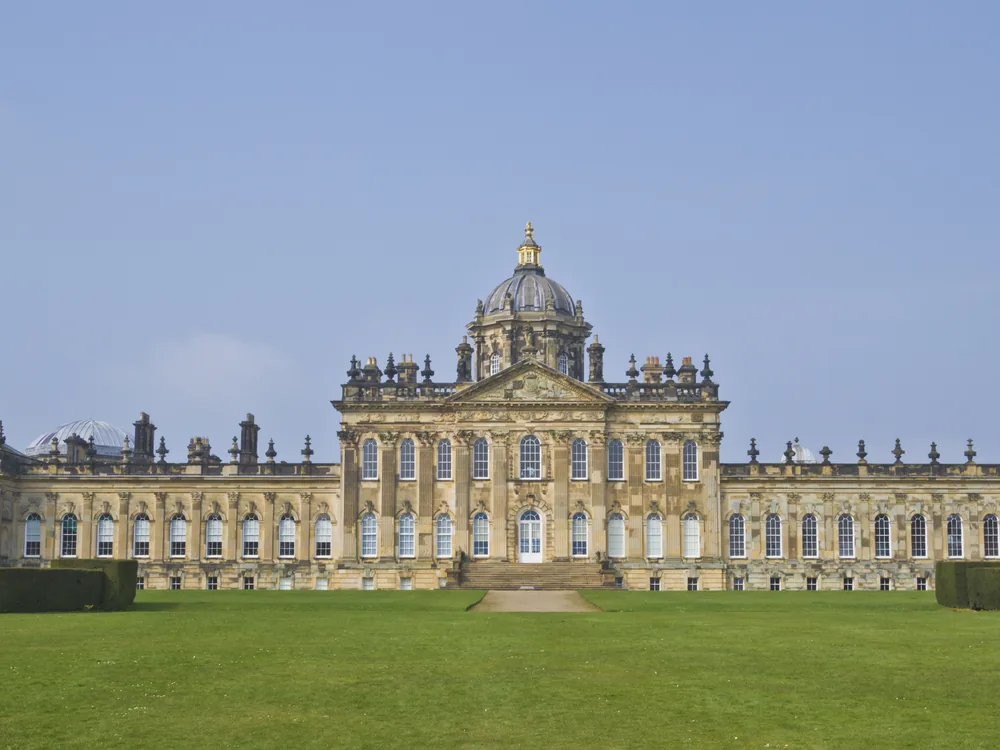
Combine with: Castle Howard (25 km northeast near York — the Baroque palace immortalised as Brideshead in the TV adaptation, set in 1,000 acres of parkland; together with Harewood they form the definitive Yorkshire great-house circuit within a 30-minute drive of each other).
Frequently Asked Questions
Yes — Chippendale was born in Otley, a market town fewer than 10 kilometres from the Harewood estate. He was engaged to supply furniture for the house from the early 1770s through 1778, working directly to the dimensions and colour palette of Robert Adam's interiors. The resulting collection is the most significant private holding of Chippendale furniture in existence, and seeing his pieces in the rooms they were made for — still in their original positions — is one of the defining experiences of a Harewood visit.
Location
Harewood, Leeds LS17 9LG, England
Nearby Castles
Tours & Tickets
Powered by GetYourGuide
From
€29/ person