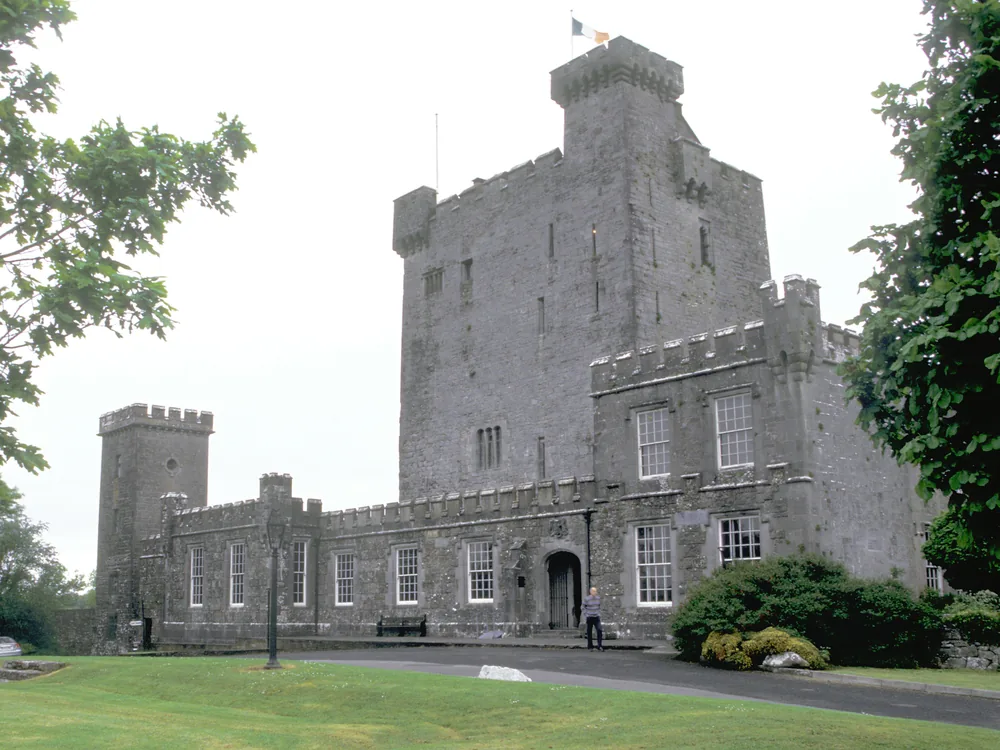
Knappogue Castle
Caisleán Cnap an Óga
Ireland · County Clare · Near Ennis
Built 1467 · Late medieval Irish tower house; 15th-century MacNamara construction with a large rectangular keep and bawn wall; substantially restored and extended in the 18th and 19th centuries; Great Hall interior refurbished in the 1960s–70s by the Andrews family for the medieval banquet programme
This page is part of an independent travel guide and is not affiliated with, endorsed by, or operated by Knappogue Castle.
© Castles & Palaces
Quick Facts
- Hours
- Sat & Sun 19:30–22:30. Closed Mon–Fri
- Guided tour from
- €80
- Duration
- 3–3.5 hours (full banquet experience)
- Best time
- April to October
- Booking
- Required — book 7+ days ahead
- Nearest city
- Ennis
Featured Tour
Knappogue Castle Medieval Banquet
Cancellation available · Instant confirmation
Highlights
- ✦Four-course medieval banquet served in the original 15th-century Great Hall — goblets of mead, period costumes, and live entertainment by the 'Ladies of the Castle'
- ✦One of Ireland's best-preserved tower houses — built by the MacNamara clan in 1467, restored with exceptional care from the 1960s by American diplomat Mark Edwin Andrews
- ✦Live music, medieval storytelling, and dramatic presentation of Irish history from the Normans to the Tudor conquest
- ✦The minstrels' gallery above the Great Hall — restored and used for live performances during the banquet
- ✦Located in the Quin–Ennis area of County Clare, at the centre of Ireland's most castle-dense landscape
Skip the queue with a guided tour
Skip-the-line tickets & expert guides
Knappogue Castle is a 15th-century MacNamara tower house near the village of Quin in County Clare — a region so densely fortified in the medieval period that it is sometimes called the 'castle capital of Ireland.' The castle was built in 1467 by Seán Fionn Mac Con Mara (Sean Fine MacNamara) as the primary residence of one of the most powerful Gaelic clans in Connacht, and changed hands repeatedly over the following centuries: it passed to the O'Briens, to the Cromwellian planter Robert Scott, and through successive owners before being purchased in 1855 by the McNamara family, and then in 1966 by Mark Edwin Andrews, an American diplomat from Texas who had served as Assistant Secretary of the US Navy.
Andrews' restoration of Knappogue is one of the most significant achievements of Irish castle conservation in the 20th century. Over two decades he and his wife Lavone undertook a meticulous reconstruction of the castle's interior — reinstating the Great Hall, restoring the minstrels' gallery, sourcing period furniture and architectural details from demolished Irish houses — transforming what had been a roofless shell into a fully habitable and theatrically credible medieval interior. The medieval banquet programme, which Andrews initiated in 1967, grew from this restoration and has operated — with brief interruptions — for nearly sixty years. It is now managed by Shannon Heritage and ranks among the most unusual evening experiences in Ireland: a four-course dinner served by costumed staff, accompanied by mead, live Celtic music, dramatic readings, and a narrative of Irish history delivered as theatrical performance.
History
The MacNamara clan who built Knappogue were one of the dominant Gaelic dynasties of Thomond — the ancient territory of County Clare — tracing their descent from the Dál Cais, the same dynastic group that produced Brian Boru, High King of Ireland. At their height in the 15th century the MacNamaras controlled much of east Clare and held Quin Abbey (which they had founded in 1402 on the ruins of a Norman castle) as their principal religious house. Knappogue's tower was designed to the standard Irish tower house pattern of the period: a tall rectangular keep of multiple floors with a substantial bawn wall enclosing a courtyard, positioned to command the surrounding farmland and river crossings.
The castle passed through many hands after the Tudor conquest. It was held by Parliamentary forces during the Cromwellian wars and granted to a Cromwellian officer, Robert Scott, after 1651. The castle's relative good fortune — it was not demolished or stripped of its roof, unlike many Irish castles during this period — allowed it to remain structurally sound through subsequent centuries of declining maintenance. The MacNamara connection was restored symbolically when the castle was briefly purchased by a McNamara family in the Victorian era before its acquisition by Andrews in 1966.
How to Visit
Getting there: Knappogue Castle is 3 km from Quin village and approximately 12 km from Ennis. There is no public transport direct to the castle — a car or taxi from Ennis is necessary. Ennis itself is well connected by bus and train from Limerick, Galway, and Dublin.
Tickets: The castle operates primarily as a medieval banquet venue, not a daytime museum. Banquet tickets are approximately €80 per person, booked in advance through Shannon Heritage (shannonheritage.com) — check for current dates and seasonal availability (typically April to October). The GYG Knappogue Castle Medieval Banquet (t94764, from €80, 5.0★/2 reviews) covers the full 3-hour evening experience including welcome mead in the courtyard, a four-course dinner in the Great Hall, live Celtic music, and dramatic readings of Irish history.
Practical tips: Book in advance — banquet evenings sell out, particularly in July and August. The format is genuinely theatrical (costumed staff, minstrels' gallery, dramatic narrative) rather than just a themed dinner; the tone is participatory and festive. Vegetarian and dietary alternatives are available with advance notice at the time of booking.
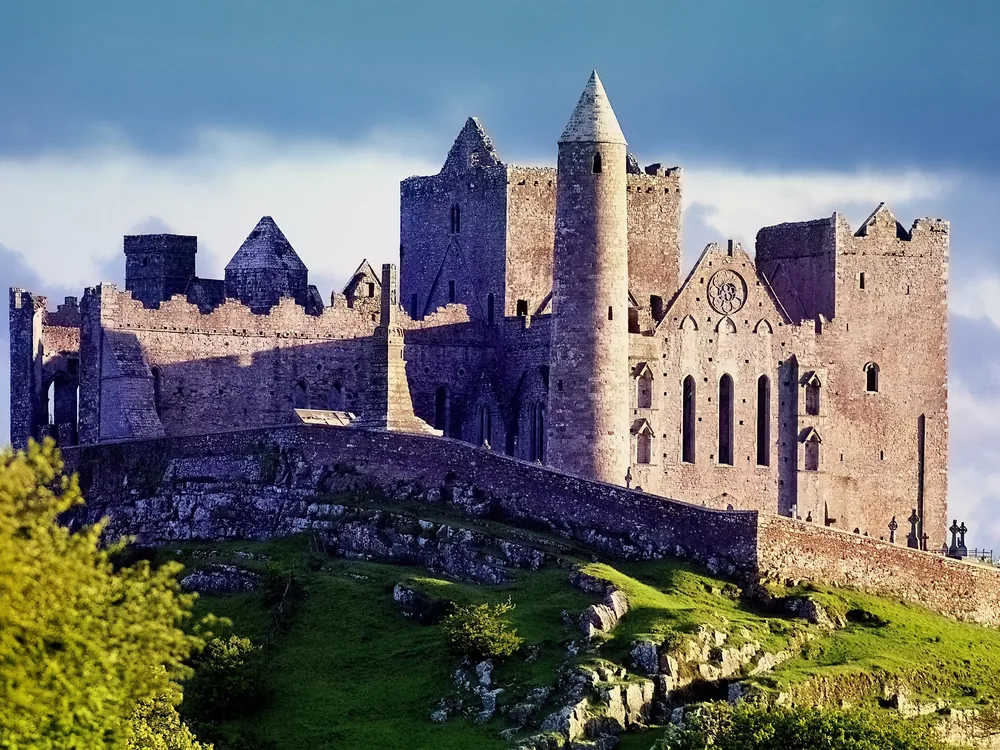
Combine with: [Rock of Cashel](/castles/ireland/rock-of-cashel) in County Tipperary, approximately 80 km east, is the most dramatic medieval complex in Munster and makes a natural daytime companion to an evening banquet at Knappogue — a full day of medieval Ireland. Quin Abbey (3 km, free), founded by the MacNamaras who built Knappogue, is worth a short detour before the evening banquet.
Frequently Asked Questions
Shannon Heritage accommodates vegetarian and other dietary requirements when notified at the time of booking. The standard menu is meat-based (traditional Irish courses), but alternatives are available with advance notice. Contact Shannon Heritage directly when booking to confirm current menu options.
Location
Quin, Co. Clare, V95 W8X3, Ireland
Nearby Castles
Tours & Tickets
Powered by GetYourGuide
From
€80/ person