Wilton Castle
Caisleán Wilton
Ireland · Bree, Enniscorthy, County Wexford · Near Enniscorthy
Built 1247 · Castellated 19th-century remodelling (1836–38, architect Daniel Robertson of Kilkenny) of a late-17th-century house, itself incorporating an earlier structure first documented in 1247; burned in 1923 and only partially restored, with the south wing rebuilt in 2015
This page is part of an independent travel guide and is not affiliated with, endorsed by, or operated by Wilton Castle.
© Castles & Palaces
Quick Facts
- Rooms from
- €199 / night
- Duration
- Overnight stay only — restoration covers only part of the historic building
- Best time
- Year-round
- Nearest city
- Enniscorthy
Stay Here
Wilton Castle
Booked via Booking.com · Free cancellation on most rates
Open to day visitors without booking a room — see How to Visit below.
Highlights
- ✦First documented reference to the site dates to 1247, when it belonged to William de Dene; sold to William Alcock in 1695, who renamed it 'Wilton'
- ✦A late-17th-century house was incorporated into a much larger, more ornate castellated building designed by Kilkenny architect Daniel Robertson between 1836 and 1838
- ✦Burned by armed men during the Irish Civil War in 1923 — arsonists doused the ground floor with petrol and set it alight, leaving the building a ruin for more than 80 years
- ✦Restoration began in 2003 under current owner Sean Windsor; the two-storey south wing was completed in 2015, replicating the original facade — the rest of the building remains stabilised but roofless, meaning the restoration is genuinely partial, not complete
- ✦Part of the building operates as accommodation today; visitors should understand that only the rebuilt south wing has been restored, not the full historic castle
Stay in the castle itself
Book a room via Booking.com
Wilton Castle stands near Bree, in the Enniscorthy area of County Wexford, and its documented history begins remarkably early: the first recorded reference to the site dates to 1247, when it belonged to William de Dene, placing Wilton's origins firmly within the 13th century alongside many of Ireland's oldest Anglo-Norman landholdings. The property changed hands significantly in 1695, when it was sold to William Alcock, who gave the estate the name 'Wilton' that it carries to this day — a naming choice that replaced whatever earlier designation the property had held under its medieval owners.
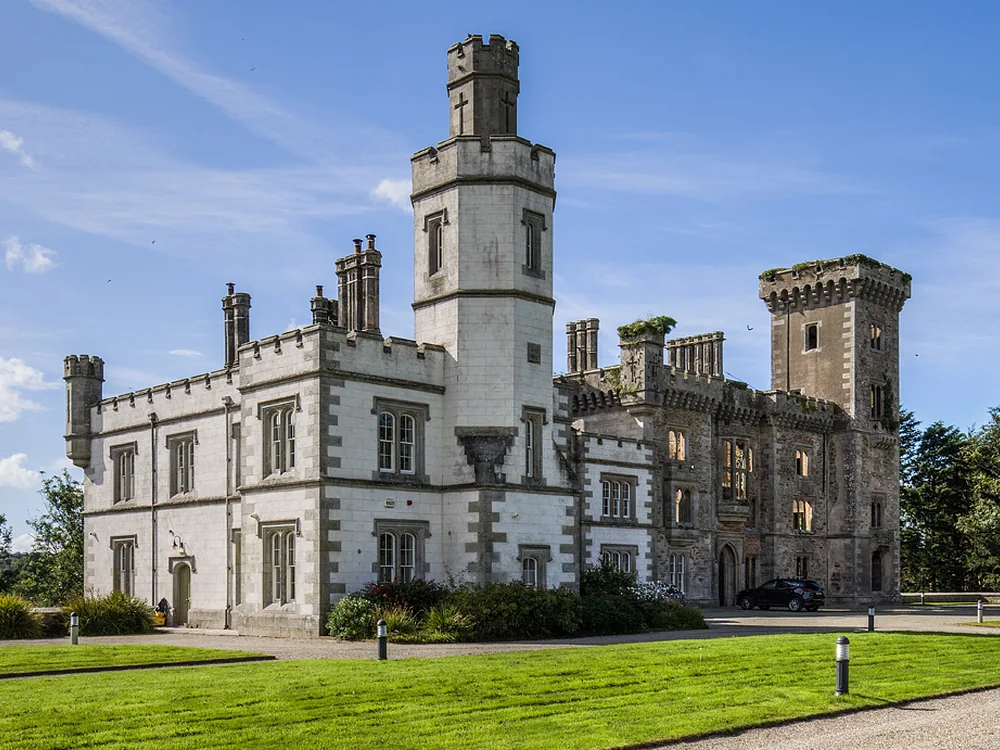
The building's architectural evolution took a major step forward when a late-17th-century house on the site was incorporated into a considerably larger and more ornate structure, commissioned in the castellated style and designed by the Kilkenny architect Daniel Robertson between 1836 and 1838. Robertson's design transformed what had been a more modest house into a genuine castle in appearance, complete with the towers, battlements and romantic silhouette characteristic of the 19th-century taste for castellated Gothic architecture — a stylistic choice that gave Wilton the imposing form its ruins still convey today, even in their damaged state.
Wilton's history took a genuinely dramatic and destructive turn during one of the most turbulent periods of modern Irish history. In 1923, during the Irish Civil War, armed men set fire to the castle, dousing the ground floor with petrol before igniting the blaze — an attack consistent with the wider pattern of arson attacks on Anglo-Irish 'Big House' estates that occurred across the country during this period of intense political and social upheaval. The fire left Wilton Castle a ruin, and remarkably, the building remained in this damaged, uninhabitable state for more than 80 years, a genuinely long period of abandonment even by the standards of Ireland's many fire-damaged historic estates.
The castle's return to active use began only in 2003, when current owner Sean Windsor initiated a restoration project aimed at bringing at least part of the historic structure back into functioning condition. That restoration effort achieved a significant milestone in 2015, when the castle's two-storey south wing was completed, carefully replicating the building's original facade to maintain visual continuity with Robertson's 19th-century design. It is important, however, to be entirely transparent about the scope of this restoration: the remainder of the historic castle beyond the south wing remains stabilised — meaning structurally secured against further deterioration — but genuinely roofless and unrestored. Visitors and anyone researching Wilton Castle online should understand this distinction clearly: describing Wilton as a fully 'restored castle' would overstate what has actually been accomplished, since the restoration to date covers only a portion of the original building rather than the complete historic structure.
Today, part of Wilton Castle operates as accommodation, offering guests the opportunity to stay within the rebuilt south wing while the wider ruined sections of the historic building remain visible on the same grounds, a tangible and honest reminder of the fire's lasting impact alongside the genuine progress made in bringing part of the estate back to life. This combination of restored and still-ruined sections within a single property gives Wilton Castle a distinctive character compared to the more fully restored castle hotels found elsewhere in this collection — a place where visitors can directly observe both the results of dedicated restoration work and the physical scars of a genuinely destructive chapter in Irish 20th-century history.
County Wexford's southeastern Irish landscape, known for its beaches, its historic county town, and its significant role in the 1798 Rebellion, provides the wider setting for a visit to Wilton Castle. For visitors interested in an honest, ongoing restoration story rather than a polished, fully completed castle hotel experience, Wilton offers a genuinely distinctive stay within a building whose own history — spanning nearly 800 years from its first documented reference to its dramatic 20th-century destruction and gradual, still-incomplete restoration — reflects the real complexity of preserving Ireland's historic built heritage.
History
Wilton Castle's site was first documented in 1247, when it belonged to William de Dene. The property was sold to William Alcock in 1695, who renamed it 'Wilton.' A late-17th-century house was incorporated into a much larger castellated building designed by Kilkenny architect Daniel Robertson between 1836 and 1838. The castle was burned by armed men during the Irish Civil War in 1923, leaving it a ruin for more than 80 years. Restoration began in 2003 under current owner Sean Windsor, and the two-storey south wing was completed in 2015, replicating the original facade — the rest of the building remains stabilised but roofless.
Frequently Asked Questions
No. Only the two-storey south wing, completed in 2015, has been rebuilt and restored, replicating the castle's original facade. The rest of the historic building remains stabilised but roofless following the 1923 fire — the restoration is genuinely partial, not complete.
Location
Bree, Enniscorthy, Co. Wexford, Y21 XY24, Ireland
Nearby Castles
Rooms from
€199/ night