
Palazzo Contarini del Bovolo
Palazzo Contarini del Bovolo
Italy · Veneto · Near Venice
Built 1499 · Venetian Gothic-Renaissance
This page is part of an independent travel guide and is not affiliated with, endorsed by, or operated by Palazzo Contarini del Bovolo.
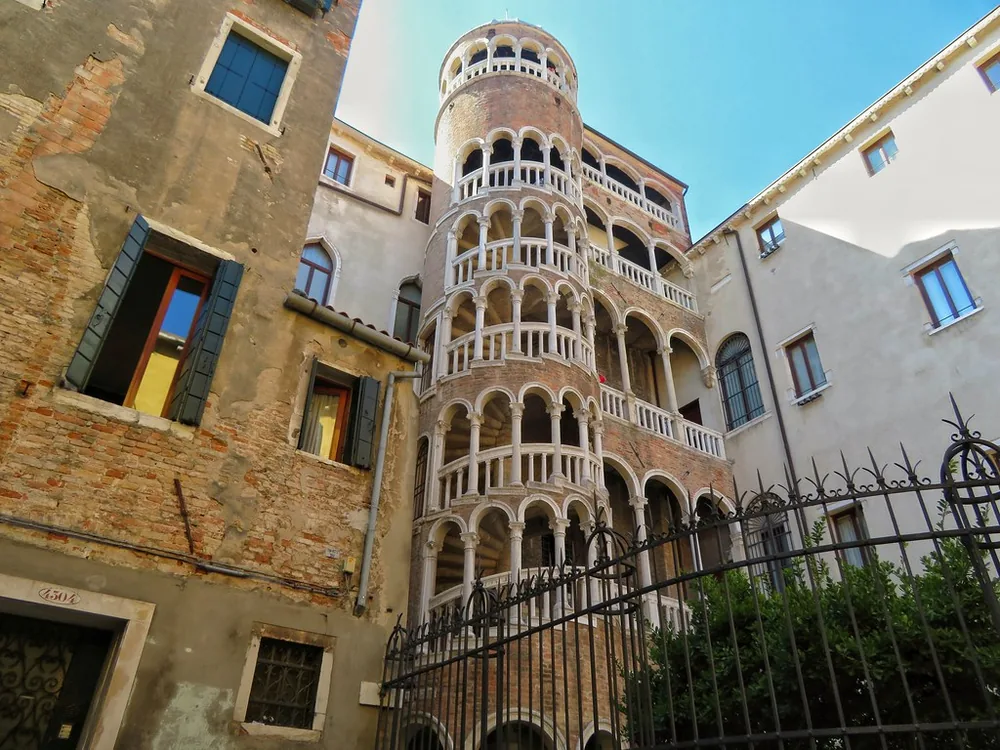
© Castles & Palaces
Quick Facts
- Hours
- Daily 10:00–18:00
- Guided tour from
- €7
- Duration
- 30–45 minutes
- Best time
- April to June, September to November
- Booking
- Required — book 1+ days ahead
- Nearest city
- Venice
Featured Tour
Venice Hidden Gems Tour — including Palazzo Contarini del Bovolo
Cancellation available · Instant confirmation
Highlights
- ✦External spiral staircase ('bovolo' = snail in Venetian dialect) with five loggia levels
- ✦Rare blend of Gothic pointed arches and Renaissance round arches on the same tower
- ✦Hidden from the main streets — finding it is part of the experience
- ✦Pietro Contarini's 1499 commission, attributed to the circle of Giovanni Candi
- ✦Rooftop views over Venice's terracotta roofscape from the upper loggia
Skip the queue with a guided tour
Skip-the-line tickets & expert guides
Tucked into a small, unmarked courtyard off the labyrinthine lanes of San Marco, Palazzo Contarini del Bovolo is one of Venice's most genuinely surprising architectural discoveries — a Gothic-Renaissance palace wrapped around an external spiral staircase tower so unexpectedly elegant that finding it, after weaving through narrow calli with nothing but a name to follow, feels like a reward in itself.
The palazzo was built in 1499 for Pietro Contarini, one of Venice's ubiquitous patrician families, and the staircase tower is attributed to the circle of Giovanni Candi, an architect working in the tradition of Mauro Codussi whose loggia designs were reshaping Venetian palatial architecture at the turn of the sixteenth century. The genius of the design lies in its synthesis: each of the tower's five levels combines Gothic pointed arches with Renaissance round arches in alternating rows, creating a rhythm that is neither wholly medieval nor fully classical but distinctly Venetian — a city that habitually absorbed architectural styles from every direction and made something coherent from the mixture.
The name 'Bovolo' derives from the Venetian dialect word for snail (in Italian, chiocciola), a reference to the spiral form of the staircase as seen from the courtyard below. Looking up from the ground into the tower well is the essential Bovolo experience: the staircase winds upward through successively lighter loggias, the arches framing the sky, the whole structure combining structural logic with visual poetry in a way that feels almost impossible for something made of brick and stone.
The palazzo fell into disrepair over subsequent centuries and long remained closed to visitors. After extensive restoration work in the twentieth and twenty-first centuries, the courtyard and staircase were reopened, and timed entry tickets now allow a limited number of visitors to ascend to the upper loggias and take in rooftop views across Venice's terracotta skyline. The palace interior is not publicly accessible, but the courtyard and staircase alone justify the detour — and the hunt through Venice's back lanes to reach them.
The surrounding neighbourhood rewards exploration: Campo Manin, a short walk away, is one of the few large squares in San Marco not overwhelmed by tourist traffic, and the lanes radiating from the courtyard lead past some of the most architecturally layered streets in Venice.
History
Venice's Contarini family was one of the Serenissima's most prolific patrician dynasties — the surname appears across the city on palaces, churches, and canal frontages — and this particular branch commissioned the palazzo at the close of the fifteenth century, when Venetian Gothic was giving way to the Renaissance forms arriving from mainland Italy. The 1499 construction date places the Bovolo staircase in the same decade as some of Mauro Codussi's most influential Venetian buildings; the loggia system with its alternating arch types reflects Codussi's influence even if the specific attribution remains debated. The Contarini family occupied the palazzo for generations before it passed through various owners in the later modern period. Extended periods of disuse left the structure in poor condition; twentieth-century restoration campaigns stabilised and eventually reopened the courtyard. The palazzo's UNESCO designation falls within Venice's Historic Centre, recognised in 1987 as a World Heritage Site for its extraordinary integration of built heritage, water, and urban form.
How to Visit
Getting there: The Bovolo is deliberately hard to find — that is part of it. From Campo Manin (San Marco sestiere), look for the sign marked 'Scala Contarini del Bovolo' pointing into a narrow lane; the courtyard is a short walk in. The closest vaporetto stops are Sant'Angelo (line 1) or Rialto (lines 1 and 2), both within 5–10 minutes on foot. Water taxi from Santa Lucia station takes approximately 15–20 minutes.
Tickets: Admission to the courtyard and staircase costs approximately €7 for adults and €5 for children. Timed entry tickets are required and can be purchased on-site if available, but in July and August slots sell out — book ahead at the ticket desk or online. A GetYourGuide guided Venice tour (from approximately €7) includes the Bovolo among its highlights and is ideal for visitors who want a guide to provide context for the staircase and its neighbourhood.
Practical tips: The courtyard is small and fills quickly at midday in high season — arrive at opening (10:00) or in the late afternoon (after 16:00) to avoid the busiest periods. The spiral staircase itself requires a moderate climb; upper loggias offer the best views across Venice's roofscape. The palazzo interior is not open to visitors — the staircase courtyard is the attraction. Photography is best from the base of the tower looking up, and from the upper loggia looking back down through the arches.
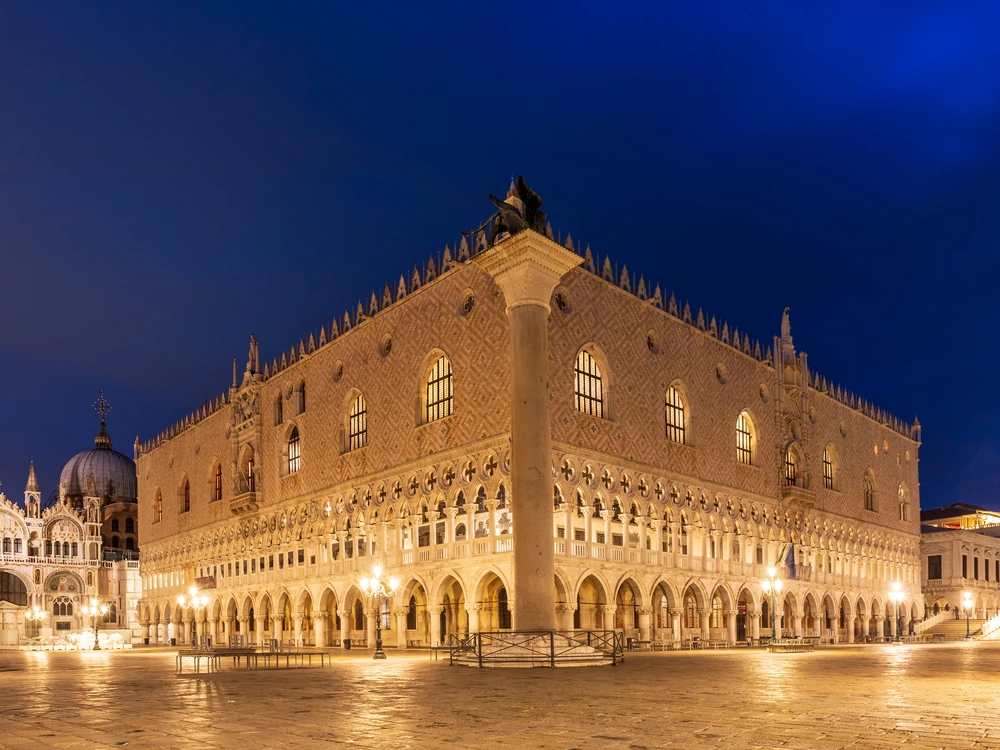
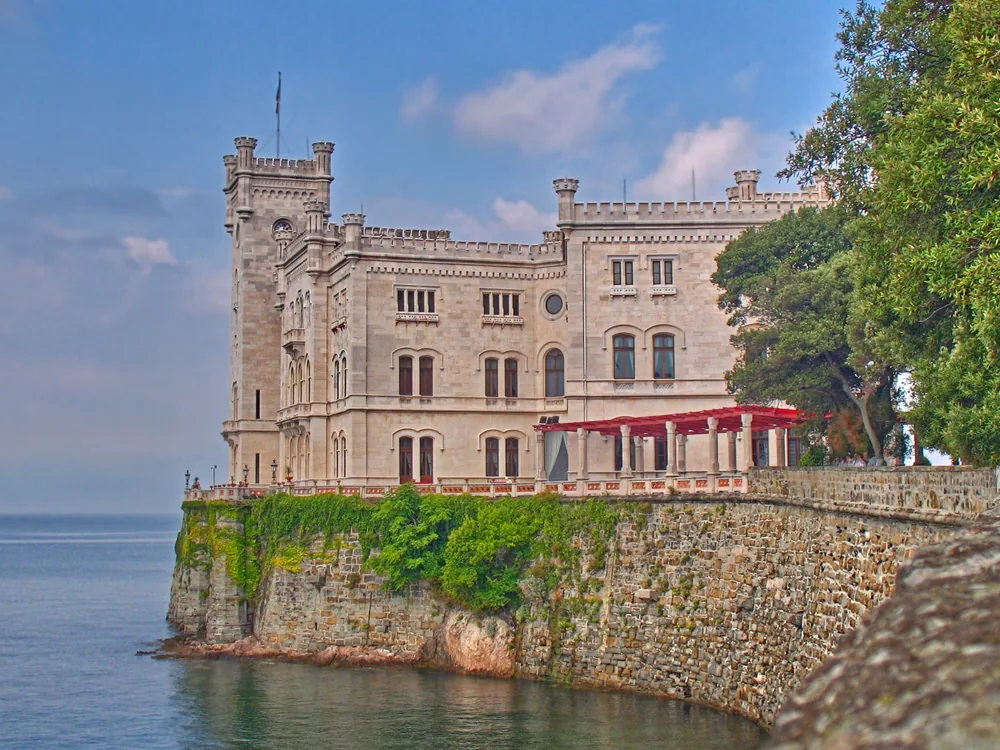
Combine with: Doges' Palace (10–15 minutes on foot — the seat of Venetian political power for centuries, with the Bridge of Sighs, Tintoretto ceilings, and the immense Gothic-Renaissance façade onto the Piazzetta) or Miramare Castle (day trip via train to Trieste, then short bus — a nineteenth-century neo-Gothic castle built for Habsburg Archduke Maximilian on a headland above the Adriatic, a compelling counterpoint to the depth of Venetian history).
Frequently Asked Questions
'Bovolo' means snail in the Venetian dialect — a reference to the spiral form of the external staircase as seen from the courtyard below. In standard Italian, the equivalent word is 'chiocciola'. The name stuck and the palazzo became known by it rather than by any family appellative, which is unusual for a Venetian building.
Location
Ramo del Bovolo 4299, San Marco, 30124 Venice, Italy
Nearby Castles
Tours & Tickets
Powered by GetYourGuide
From
€7/ person