
Palazzo Moroni
Palazzo Moroni — Bergamo
Italy · Bergamo, Lombardy · Near Bergamo
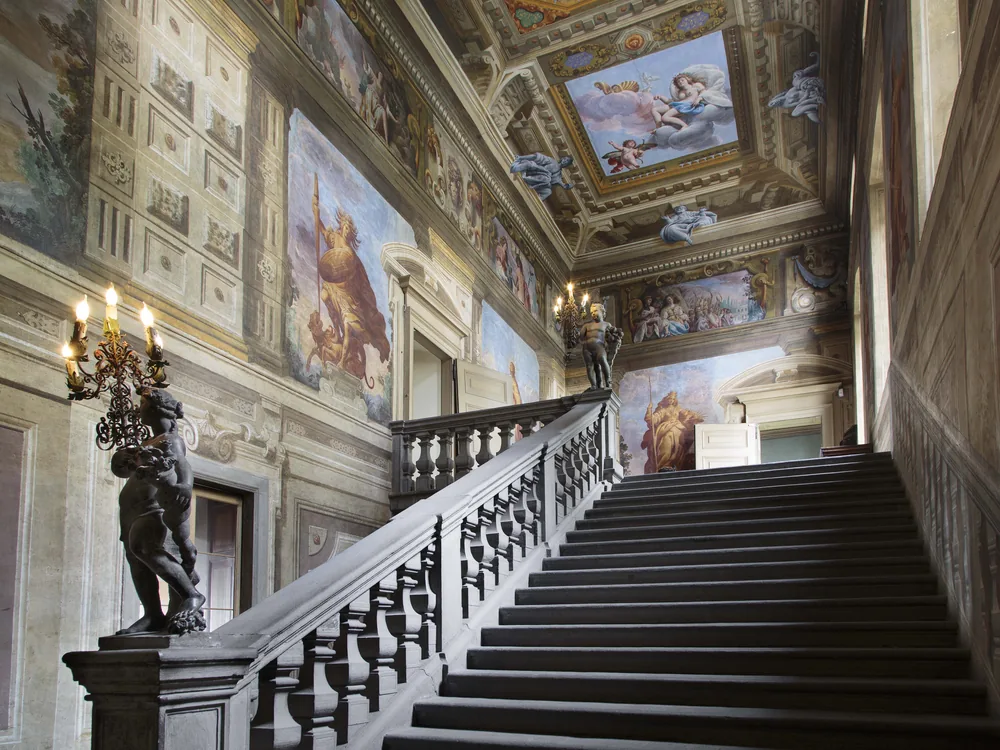
Built 1564 · Venetian Renaissance palace; constructed 1564 for the Moroni family; loggia with Corinthian columns facing the street, internal cortile; the façade is one of the most refined examples of Venetian Renaissance residential architecture in the Città Alta of Bergamo; now houses the Pinacoteca del Comune di Bergamo (civic art gallery) with works including portraits by Giambattista Moroni
This page is part of an independent travel guide and is not affiliated with, endorsed by, or operated by Palazzo Moroni.
© Castles & Palaces
Quick Facts
- Hours
- Fri 14:00–18:00. Sat & Sun 10:00–13:00. Closed Mon–Thu
- Entry via GYG
- €14
- Duration
- 1–1.5 hours
- Best time
- April to June and September to October
- Nearest city
- Bergamo
Featured Tour
Bergamo: Palazzo Moroni Entry Ticket
Cancellation available · Instant confirmation
Highlights
- ✦Portraits by Giambattista Moroni (c.1520–1579) — one of the greatest portrait painters of the Italian Renaissance, whose psychological acuity and democratic range of subjects (tailors, lawyers, scholars, and noblemen alike) set him apart from his Venetian contemporaries
- ✦Venetian Renaissance loggia — the palace's principal street façade with Corinthian columns is one of the finest examples of Venetian residential architecture in the upper city
- ✦The Città Alta context — the palace is within Bergamo's UNESCO-listed walled upper city, surrounded by Venetian-era walls, piazzas, and towers
- ✦Civic art collection — works spanning the 15th to 18th centuries including pieces from Bergamo's Venetian period, when the city was part of the Republic of Venice for 350 years
- ✦Limited opening hours — the palace's restricted schedule gives it a less crowded atmosphere than major museum complexes
Skip the queue with a guided tour
Skip-the-line tickets & expert guides
Palazzo Moroni is a 16th-century Venetian Renaissance palace in the Città Alta — the walled upper city of Bergamo, situated on a hill above the modern lower town. Built in 1564 for the Moroni family, prominent citizens of Bergamo during its period as part of the Venetian Republic (1428–1797), the palace's principal façade features an open loggia of Corinthian columns facing Via Porta Dipinta — one of the main streets of the upper city, named for the painted city gate at its northern end.
The palace now houses the Pinacoteca del Comune di Bergamo (the civic art gallery), a collection assembled by the city of Bergamo over two centuries. The collection's most significant works are the portraits of Giambattista Moroni (c.1520–1579) — a Bergamo painter whose reputation is one of the most interesting cases of undervaluation and belated recognition in art history. Moroni's portraits — his Knight in Pink, the Tailor (in the National Gallery, London), and multiple civic and religious commissions — represent a quality of psychological observation and social range extraordinary for the period: he painted tailors, scholars, lawyers, and minor nobles with the same focused attention that his Venetian contemporaries reserved for doges and cardinals. Giovanni Battista Moroni was praised by Titian himself, and the National Gallery London acquired its Moroni portrait in the 19th century — but outside specialist circles he remains less famous than his achievement deserves.
Bergamo's Città Alta was inscribed as a UNESCO World Heritage Site in 2017 (as part of the 'Works of Defence from the 16th to 17th centuries' nomination covering Venetian defensive walls). The Palazzo Moroni is within this protected area.
History
Bergamo was part of the Republic of Venice from 1428 to 1797 — a period of 369 years that shaped the city's architecture, administration, and cultural character more thoroughly than any other influence. The Venetian governors (Podestà and Capitano) who administered the city, the noble families who built palaces in the Città Alta, and the artists who worked for both groups all operated within the Venetian cultural orbit. Giambattista Moroni, though born in the Bergamo territory, trained in the Venetian tradition under Alessandro Moretto in Brescia and produced work that belongs to the Venetian school in all but geography.
The Moroni family for whom the palace was built were a prominent local family of the Venetian period; the palace passed through various owners after the extinction or dispersal of the family line and was eventually acquired by the Commune of Bergamo. The civic art collection was assembled in the 19th and early 20th centuries from donations, acquisitions, and the absorption of smaller institutional collections. The palace reopened as a museum in its current form after restoration work in the late 20th century.
How to Visit
Getting there: Take the funicular from the lower city (Piazza Mercato delle Scarpe) to the Città Alta — a 4-minute ride. From the upper station, walk 5 minutes northeast along Via Porta Dipinta to the palace entrance. The Città Alta is also reachable on foot via the medieval gate roads from the lower town.
Tickets: Walk-up entry €14 adult, free for children. The GYG entry ticket (t434043, from €14, 4.7★/228 reviews) covers the palace and civic art collection — book in advance to secure your visit.
Practical tips: The palace is open Friday 14:00–18:00 and Saturday–Sunday 10:00–13:00 only — closed Monday through Thursday. Plan your visit accordingly. After the palace, Piazza Vecchia (5 minutes away) and the adjacent Cappella Colleoni are essential stops in the Città Alta and require no extra ticket.
Combine with: [Castello di Brescia](/castles/italy/castello-di-brescia) (~50 km west in Brescia, Bergamo's companion Lombard city).
Frequently Asked Questions
Giambattista Moroni (c.1520–1579) was a Bergamo painter trained in the Venetian tradition — one of the finest portrait painters of the Italian Renaissance, whose works are characterised by exceptional psychological depth and an unusual democratic range of subjects. He painted minor nobles, professional men, scholars, and tradespeople with the same unsentimental acuity, producing images that feel startlingly modern. The Moroni family who built the palace are a different family from the painter (same surname, different lineage), but the palace's art collection includes works by Giambattista Moroni that make the connection apt. His most famous works — including The Tailor — are in the National Gallery, London.
Location
Via Porta Dipinta 12, 24129 Bergamo BG, Italy
Tours & Tickets
Powered by GetYourGuide
From
€14/ person