
Torre della Botonta
Torre della Botonta (Castello Albornoz)
Italy · Umbria — Castel Ritaldi (San Giovanni della Botonta), Perugia Province · Near Spoleto
Built 1300 · 14th-century fortress, originally called Castello Albornoz; "Botonta" derives from an old term meaning "border place" between Trevi and Spoleto
This page is part of an independent travel guide and is not affiliated with, endorsed by, or operated by Torre della Botonta.
© Castles & Palaces
Quick Facts
- Rooms from
- €75 / night
- Duration
- Overnight stay only
- Best time
- Year-round
- Nearest city
- Spoleto
Stay Here
Torre della Botonta di Baliani Fortunato
Rooms are split between the historic building and a newer wing
Booked via Booking.com · Free cancellation on most rates
No confirmed independent day-visit product was found; access is primarily for hotel guests.
Highlights
- ✦Run by Fortunato Baliani, a professional cyclist for 16 years with 8 Giro d'Italia appearances
- ✦14th-century fortress originally called Castello Albornoz
- ✦Strong sustainability focus: organic linens, ecological laundry, natural soaps
Stay in the castle itself
Book a room via Booking.com
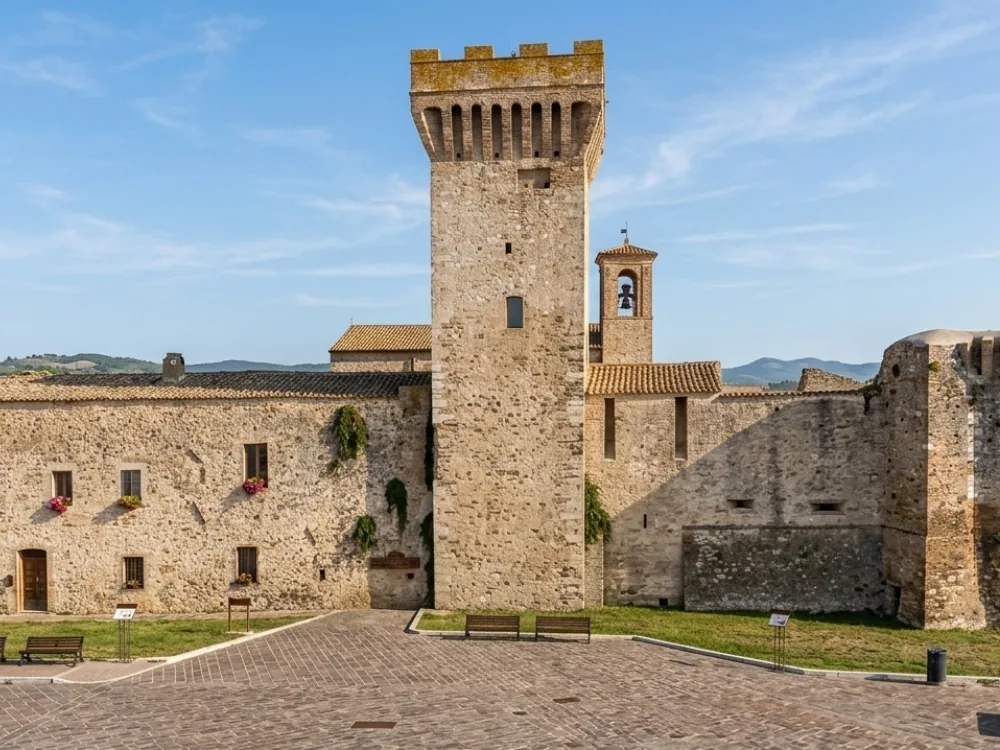
The settlement of Torre della Botonta is a fortress dating back at least to the 14th century, originally called Castello Albornoz, at San Giovanni della Botonta. "Botonta" derives from an old term meaning "border place," since this point separated the territories of Trevi and Spoleto in medieval Umbria.
Today the complex operates as an "albergo diffuso" — a dispersed tourism model aimed at reviving the old buildings of Castel San Giovanni and bringing them back to life — under the management of Fortunato Baliani, a professional cyclist for sixteen years with eight Giro d'Italia appearances. The castle has become a genuine oasis of sustainability, with a strong focus on natural materials and ecological practices.
The name's derivation from "border place" ties this fortress directly to the medieval territorial rivalry between Trevi and Spoleto, two neighboring Umbrian towns whose contested frontier this site once marked.
Fortunato Baliani's background as a professional Giro d'Italia cyclist gives the property an unusual owner profile within this collection, distinct from the noble families, wine producers, and hospitality investors who run most of the other castle-hotels here.
The explicit sustainability focus — organic linens, ecological laundry, natural soaps — sets Torre della Botonta apart from the more conventionally luxury-oriented castle-hotels in this collection, positioning it toward guests specifically seeking a lower-impact stay.
The surrounding Valle Umbra and its olive groves give guests staying at Torre della Botonta easy access to both Spoleto's and Trevi's historic centers within a short drive.
History
Torre della Botonta is a fortress dating to at least the 14th century, originally called Castello Albornoz, marking the medieval border between Trevi and Spoleto in Umbria. Today it operates as an "albergo diffuso" under the management of former professional cyclist Fortunato Baliani, with a strong focus on sustainability and natural materials, its 8 themed rooms spread independently across the fortified borgo.
How to Stay
Getting there: About 15 minutes from Spoleto and 20 minutes from Trevi by car; Perugia's San Francesco d'Assisi Airport (PEG) is about 35 minutes away.
Rooms & rates: 8 themed rooms (hemp, silk, linen, jute, cotton, cashmere), spread independently across the fortified borgo, all with en-suite bathrooms. From €75/night.
On-site: Gardens, a sustainability focus throughout the experience (organic linens, natural soaps, ecological laundry).
Good to know: As an "albergo diffuso" spread across the borgo, the rooms are physically separate from one another — part of the experience is walking through the fortified village itself between accommodation and common areas.
Combine with: Spoleto (~15 min), Trevi (~20 min), the Valle Umbra and its olive groves.
Frequently Asked Questions
No — as an explicit "albergo diffuso," the 8 rooms (each dedicated to a natural fiber — hemp, silk, linen, jute, cotton, cashmere) are spread independently across the fortified borgo, not concentrated in a single structure.
Location
Via Santa Maria, 06044 Castel Ritaldi PG, Italy
Nearby Castles
Rooms from
€75/ night