
Lofen Palace
Paleis Lofen
Netherlands · Utrecht — directly beneath Domplein (Cathedral Square), city centre of Utrecht · Near Utrecht
Built 1050 · Romanesque Holy Roman imperial palace in Rhenish tuffstone; now preserved as excavated underground foundations beneath Domplein
This page is part of an independent travel guide and is not affiliated with, endorsed by, or operated by Lofen Palace.
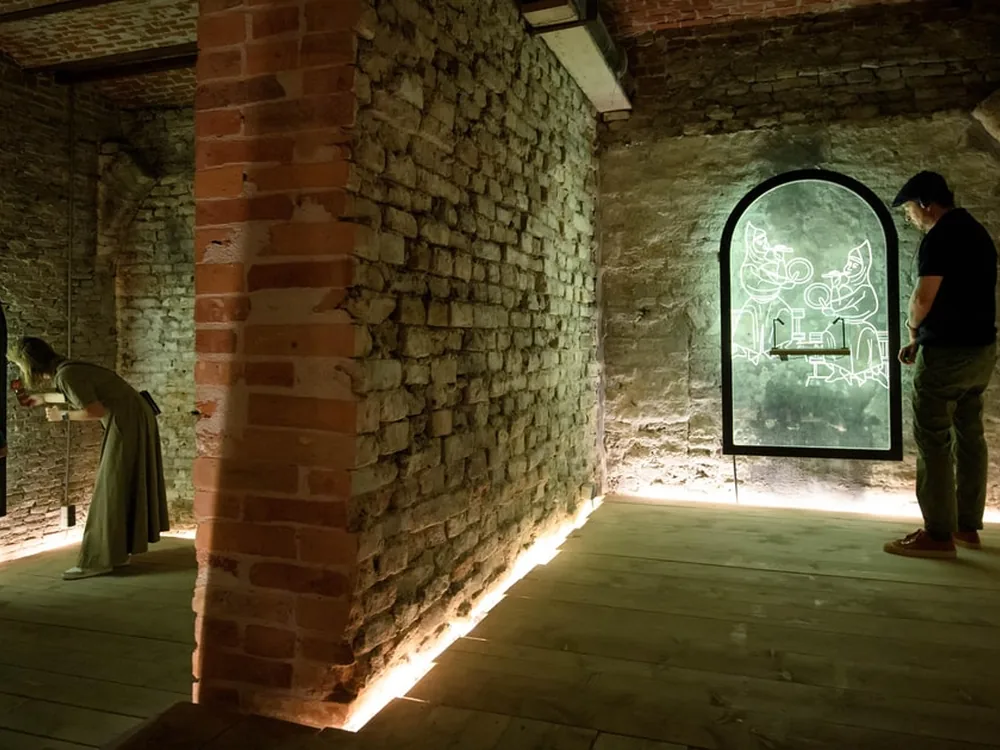
© Castles & Palaces
Quick Facts
- Hours
- Mon–Sun Guided tours at set times — check domunder.nl for current 2026 schedule
- Guided tour from
- €14
- Duration
- 45–60 minutes (guided visit)
- Best time
- Year-round
- Booking
- Required — book 1+ days ahead
- Nearest city
- Utrecht
Featured Tour
Utrecht: Lofen Palace Time Travel Entry Ticket
Cancellation available · Instant confirmation
Highlights
- ✦One of the imperial palaces of the Holy Roman Empire, built around 1050 by Emperor Henry III — an itinerant royal court stop where the emperor held assemblies, administered justice, and received guests as he traveled between his scattered domains
- ✦Built directly against the inner wall of Utrecht's former Roman castellum — layering the 11th-century Carolingian-descended empire precisely upon the 1st-century Roman military occupation of the same site
- ✦Utrecht's medieval city rights were signed inside this palace — one of the defining legal acts in the city's civic history
- ✦Destroyed above ground by a catastrophic nine-day fire in 1253, then built over by successive generations of the city without anyone rebuilding the original palace — preserving the Romanesque walls intact as buried foundations for eight centuries
- ✦Now accessible underground as part of DOMunder, one of the only surviving visitable Holy Roman imperial palace remains in Europe
Skip the queue with a guided tour
Skip-the-line tickets & expert guides
Beneath one of Utrecht's busiest squares, beneath the shadow of the Dom Tower and the accumulated weight of eight centuries of city, the walls of an 11th-century imperial palace survive intact. Lofen Palace was built around 1050 by Emperor Henry III of the Holy Roman Empire — not as a permanent residence, but as one stop on the imperial circuit. The Holy Roman Empire had no fixed capital; emperors traveled continuously across their scattered domains, maintaining authority through presence, holding assemblies, and receiving the submissions of local lords at each royal palace they passed through. Utrecht was a node in that circuit, and Lofen was the palace that received the emperor.
Henry III's architects built the palace in Rhenish tuffstone directly against the inner wall of Utrecht's much older Roman castellum — the 1st-century fort the Roman army had established on the Rhine frontier, which had given the settlement its original form and name. The deliberate positioning of 11th-century imperial power against 1st-century Roman military infrastructure was not accidental; it spoke to the Holy Roman Empire's deep sense of itself as Rome's legitimate successor. Inside these walls, Utrecht received its city rights — the legal act that defined the medieval city's civic identity and established its place in the imperial order.
The palace's above-ground existence ended in 1253, when a catastrophic fire burned for nine days and consumed Lofen along with much of the medieval city around it. The palace was never rebuilt. Instead, successive generations of Utrecht constructed new buildings directly on top of the ruins, their foundations resting on the Romanesque masonry without any awareness of what lay below. Eight centuries of city accumulated above the original floor level. When 20th-century excavations finally revealed the intact walls, the discovery prompted the creation of DOMunder — an underground visitor experience entered from Domplein — making the site accessible for the first time.
Visitors descend today from the cathedral square above into a space where the Roman castellum wall abuts the Romanesque palace wall, and where the scale of the 11th-century imperial hall becomes legible at floor level. The guided visit is the only way to understand what is here — without explanation, the site is undifferentiated stone. With it, the layers of Roman, Carolingian, and medieval Utrecht resolve into something coherent and rare.
History
Utrecht's position on the Rhine made it one of the most important nodes in the medieval Low Countries long before it became a city in the modern sense. The Roman military castellum established in the 1st century on the river's south bank was the seed around which the later settlement grew, and it was against this same Roman wall that Emperor Henry III of the Holy Roman Empire ordered the construction of Lofen Palace around 1050 — a Kaiserpfalz, one of the circuit of imperial halls in which the itinerant emperor held court as he traveled his domains. In Lofen, Utrecht's city rights were signed, making the palace the legal birthplace of the city's medieval civic identity. In 1253 a fire burned for nine days and consumed the palace above ground; rather than rebuild, the city grew over it, layer by layer, for eight centuries. The Romanesque walls were preserved intact beneath the accumulated construction of medieval, Renaissance, Baroque, and modern Utrecht. Archaeological investigation uncovered them in the 20th century, and the DOMunder project — opened beneath Domplein — made them accessible to visitors for the first time, revealing one of the few surviving visitable traces of the Holy Roman Empire's itinerant court system anywhere in Europe.
How to Visit
Getting there: Lofen Palace is accessed through the DOMunder entrance at Domplein 9, directly beneath Utrecht's cathedral square. Utrecht Centraal station is approximately 10 minutes' walk south. The site sits immediately beside the Dom Tower and Dom Church at the historic heart of the city.
Tickets: Entry is via a guided visit only at set times — advance booking is required. The GetYourGuide entry ticket with guide and audioguide — a guided visit to the underground palace foundations, including the Roman castellum wall remains, the Romanesque palace structure, and the story of its nine-day destruction in 1253 — is the most convenient booking mechanism. Book at domunder.nl or via the GetYourGuide link.
Practical tips: This is an underground site — dress warmer than you might for an outdoor visit in the same season, and check accessibility before booking if mobility is a concern. The guided format is the only way to understand what you are seeing; going without a guide would mean facing undifferentiated stone walls. Allow time before or after for the Dom Tower directly above — climbing it is one of Utrecht's signature experiences.
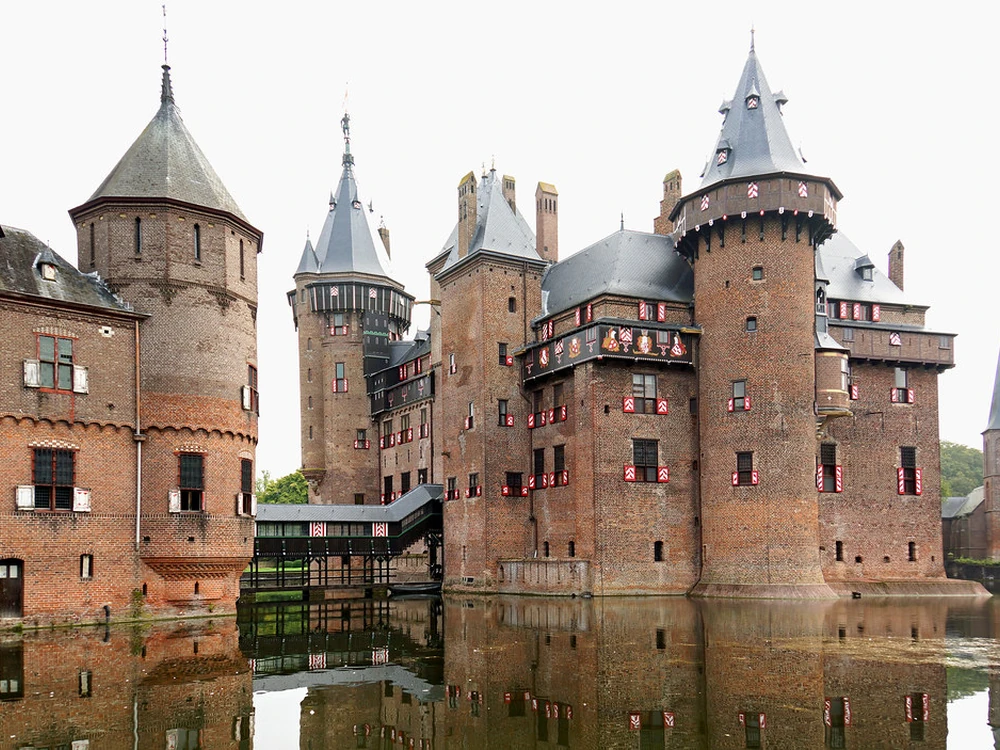
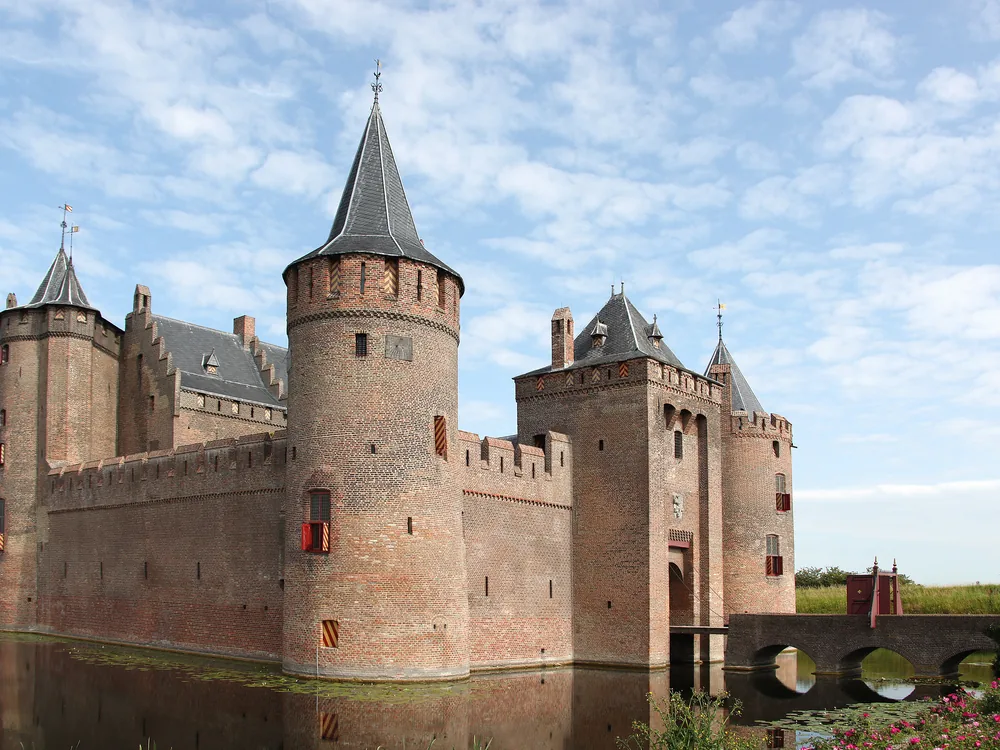
Combine with: De Haar Castle (10 km west of Utrecht — the largest castle in the Netherlands, a neo-Gothic fantasy comprehensively rebuilt in 1892–1912 on the site of a medieval original) and Muiderslot (~50 km northwest near Amsterdam — the best-preserved medieval water castle in the Netherlands, a 13th-century fortification still surrounded by its original moat).
Frequently Asked Questions
Lofen Palace is the preserved underground remains of a Holy Roman imperial palace built around 1050 by Emperor Henry III beneath what is now Domplein, Utrecht's cathedral square. It is one of the only surviving visitable traces of the Holy Roman Empire's itinerant court system in Europe.
Location
Domplein 9, 3512 JC Utrecht, Netherlands
Nearby Castles
Tours & Tickets
Powered by GetYourGuide
From
€14/ person