
Oscarsborg Fortress
Oscarsborg festning
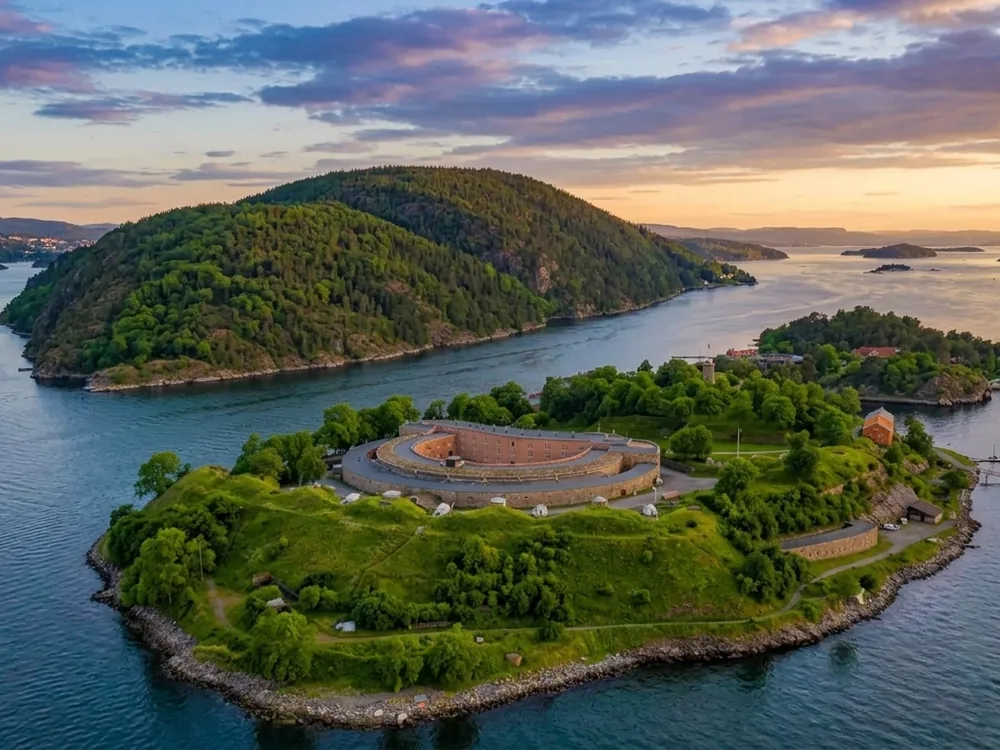
Norway · Akershus — Drøbak Sound, Oslofjord, Frogn Municipality; on a cluster of islets at the narrowest point of the fjord, adjacent to Drøbak · Near Drøbak
Built 1859 · 19th-century coastal artillery fortress in granite — main gun batteries, a torpedo battery, and minefields designed to block the Drøbak Sound; the fortress occupies several small islets at the narrowest point of the Oslofjord (~500 m wide)
This page is part of an independent travel guide and is not affiliated with, endorsed by, or operated by Oscarsborg Fortress.
© Castles & Palaces
Quick Facts
- Hours
- Check official website
- Guided tour from
- €87.95
- Duration
- 2–3 hours
- Best time
- June to August
- Nearest city
- Drøbak
Featured Tour
Oslo, Drøbak and Oscarsborg Fortress Day Trip
Cancellation available · Instant confirmation
Highlights
- ✦Norwegian reservist gunners at Oscarsborg fired 1890s Krupp cannons — Moses, Aron, and Josva — and a salvo of 40-year-old Whitehead torpedoes at the German invasion fleet on 9 April 1940, sinking the heavy cruiser Blücher in the Drøbak Sound.
- ✦The Blücher was the flagship of the German naval force carrying the troops and administration intended to seize Oslo and capture King Haakon VII — its sinking delayed the invasion by several critical hours.
- ✦The delay bought by Oscarsborg's guns allowed King Haakon VII, the Norwegian government, parliament, and the national gold reserves to evacuate Oslo before German forces arrived — enabling Norway's government-in-exile and continued resistance.
- ✦Built 1853–1859 under King Oscar I on islets at Drøbak Sound, where wooden defenses had guarded the Oslofjord chokepoint since 1644 — the only navigable passage between the open sea and the Norwegian capital.
- ✦The original Krupp cannons (Moses, Aron, and Josva) and the torpedo battery that fired on the Blücher on 9 April 1940 are preserved on site as the centrepieces of the fortress museum's WWII exhibits.
Skip the queue with a guided tour
Skip-the-line tickets & expert guides
The Drøbak Sound is where the Oslofjord narrows to roughly 500 metres — the only natural chokepoint between the open sea and the Norwegian capital, and the reason fortifications have stood here since 1644, when Christian IV ordered a wooden battery to defend the approach to Christiania. The current fortress is a granite structure built between 1853 and 1859 under King Oscar I, from whom it takes its name. Positioned on a small cluster of islets at the sound's narrowest point, it was designed as a complete coastal defence system: artillery batteries on the main island, a torpedo installation, and minefields laid to block the fjord against any naval force attempting to run the passage. For most of its first century it sat in readiness above a chokepoint that no hostile fleet tested.
That changed on the night of 9 April 1940. A German invasion fleet was passing through the Oslofjord in darkness, carrying the troops and administrative officials intended to seize Oslo, capture the Norwegian king and government, and establish immediate German control of the capital. The force included the heavy cruiser Blücher, flagship of the naval group and the centrepiece of the operation. At Drøbak Sound, Oscarsborg's guns opened fire. The gunners were not professional soldiers — they were reservists, recently mobilised, operating the fortress's 1890s German-made Krupp artillery pieces (still known by their biblical names: Moses, Aron, and Josva) with limited experience of the weapons. The Krupp guns hit the Blücher repeatedly. Then the torpedo battery — using Whitehead torpedoes that had been in storage for approximately 40 years — launched its salvo at point-blank range into the stricken cruiser. The Blücher sank in Drøbak Sound with significant loss of life.
The delay that followed was measured in hours, but those hours changed the course of Norwegian history. King Haakon VII, the parliament, the government, and the national gold reserves evacuated Oslo before German forces arrived overland. The king's subsequent refusal to abdicate — made in a farmhouse in Elverum two days after the battle — became the founding act of Norway's government-in-exile and its continued resistance throughout the war. Without the hours bought by Oscarsborg's guns, the Norwegian state as a functioning legal and political entity might not have survived the first day of the occupation. The fortress's reservist crew did not merely damage a warship; they changed the character of Norway's entire wartime experience.
Today Oscarsborg is a summer destination, reached by boat from Drøbak or Oslo, with the original Krupp cannons — Moses, Aron, and Josva — preserved in their batteries and the torpedo hall displaying the weapons used against the Blücher. The museum covers the fortress's 300-year history and the detail of the April 1940 engagement. Access is seasonal; the Oslofjord setting, on a clear summer day, is one of the most beautiful approaches to any military heritage site in Scandinavia.
History
The strategic point in Drøbak Sound has been fortified since 1644, when Christian IV established a wooden battery to command the chokepoint where the Oslofjord narrows to approximately 500 metres — the only practical passage for any ship approaching the Norwegian capital from the sea. That first installation was replaced and upgraded over the following two centuries, but it was King Oscar I's decision in 1853 to commission a permanent granite fortress that created the structure still standing today. Construction ran from 1853 to 1859, establishing the main gun batteries, a torpedo installation, and the island infrastructure that would define the fortress's operational character for the next century.
For most of its peacetime existence, Oscarsborg fulfilled its role through deterrence rather than action. The test came on 9 April 1940, when a German naval force attempted to take Oslo by surprise, running the Drøbak Sound in darkness with the heavy cruiser Blücher leading the column. The fortress's reservist crews manned the Krupp batteries and the torpedo tubes, hit the cruiser repeatedly with artillery, and then put two Whitehead torpedoes — stored at the fortress for approximately 40 years — into the Blücher at close range. The flagship sank in the sound. The hours gained by that engagement allowed King Haakon VII, the Norwegian government, parliament, and the national gold reserves to evacuate Oslo before German forces arrived. The fortress continued in military use after liberation in 1945, received formal heritage protection in 2014, and now operates as a seasonal summer museum and public heritage site.
How to Visit
Getting there: Oscarsborg Fortress occupies several small islets in the Oslofjord near Drøbak — there is no bridge or road access. The fortress is reached by boat from Drøbak (frequent seasonal service) or from Oslo. Drøbak itself is roughly 40 km south of Oslo by road (about 45 minutes), or reachable by bus from Oslo. The recommended GetYourGuide day tour from Oslo includes transport and the boat crossing.
Tickets: Entry pricing is in Norwegian kroner (NOK) — verify current 2026 admission fees before your visit. The GetYourGuide Oslo day trip — a guided day trip from Oslo combining Drøbak town with the fortress crossing and museum — handles logistics including the boat transfer. Book in advance during summer peak season.
Practical tips: This is an exposed island site on the Oslofjord — bring layers even in summer, as the fjord creates its own microclimate cooler than central Oslo. The Krupp cannon batteries (where Moses, Aron, and Josva are preserved) and the torpedo hall are the key exhibits — allow time to walk the full islet complex rather than just the museum building. The fortress is primarily a summer destination; a winter visit without confirmed access is not advisable.
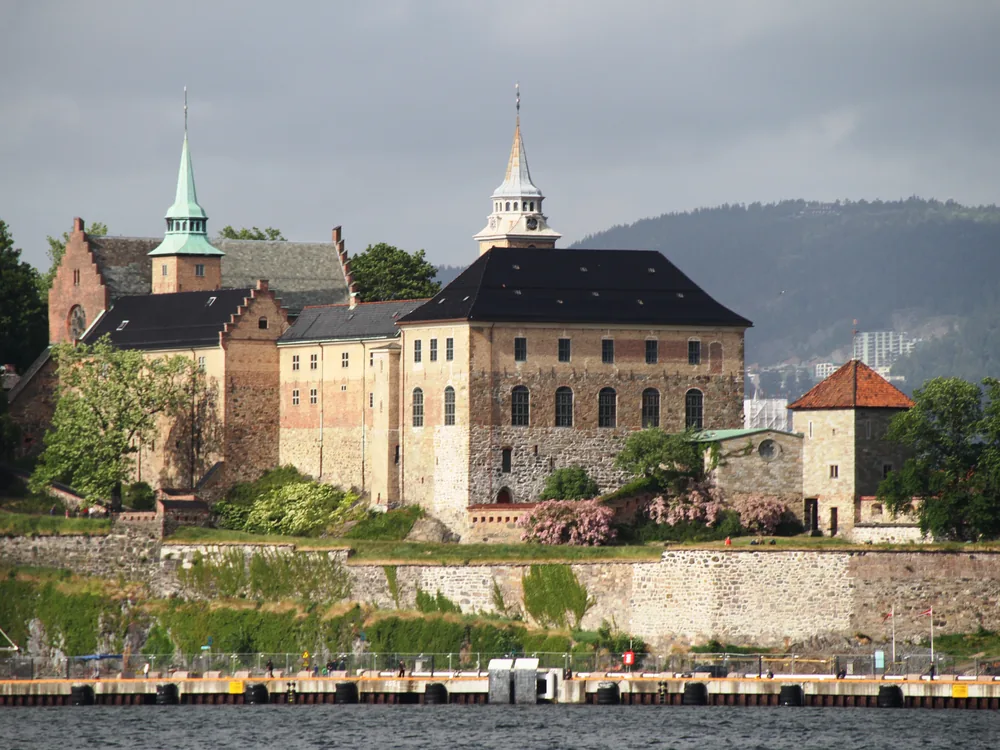
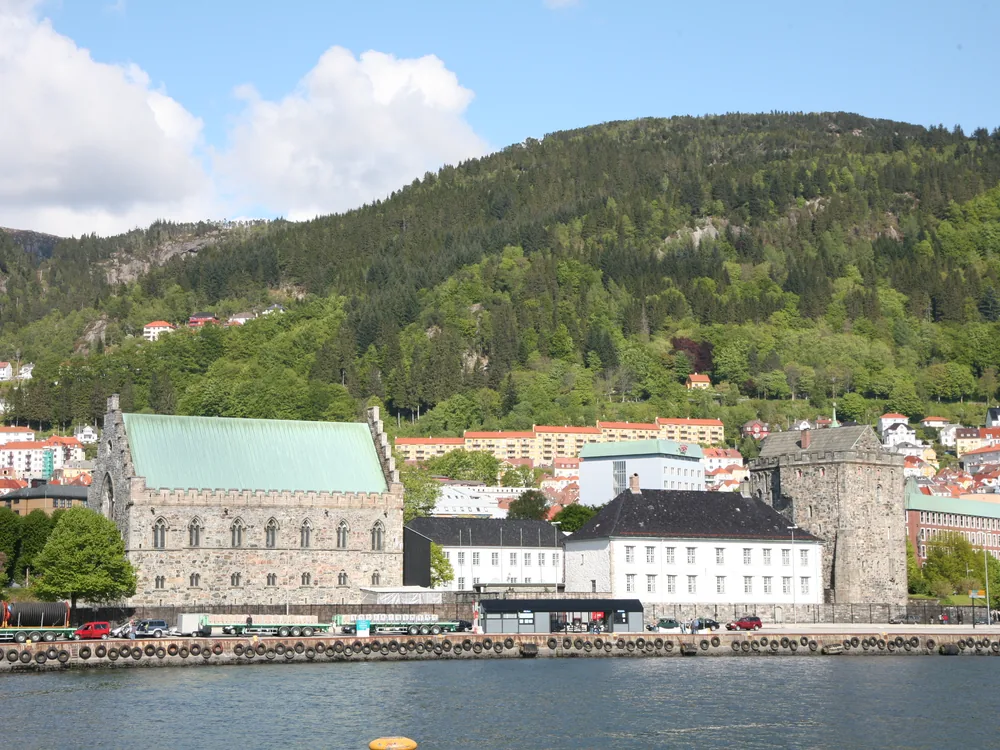
Combine with: Akershus Fortress (in Oslo city centre — the medieval fortress that served as Norway's main royal castle and military stronghold from the 13th century, now also housing Norway's WWII Resistance Museum, which pairs naturally with Oscarsborg's WWII story) and Bergenhus Fortress (Bergen — Norway's oldest surviving royal castle complex, on the Bergen harbour, covering the medieval period of Norwegian royal history).
Frequently Asked Questions
It is the site of the Battle of Drøbak Sound on 9 April 1940, when Norwegian reservists operating 1890s Krupp cannon batteries and a 40-year-old torpedo installation sank the German heavy cruiser Blücher, delaying the Nazi invasion of Oslo and giving King Haakon VII, the government, and the national gold reserves the time to escape the capital.
Location
Oscarsborg festning, 1440 Drøbak, Norway
Nearby Castles
Tours & Tickets
Powered by GetYourGuide
From
€87.95/ person