Dubiecko Castle
Zamek Dubiecko
Poland · Subcarpathian Voivodeship — above the San River valley, west of Przemyśl · Near Przemyśl
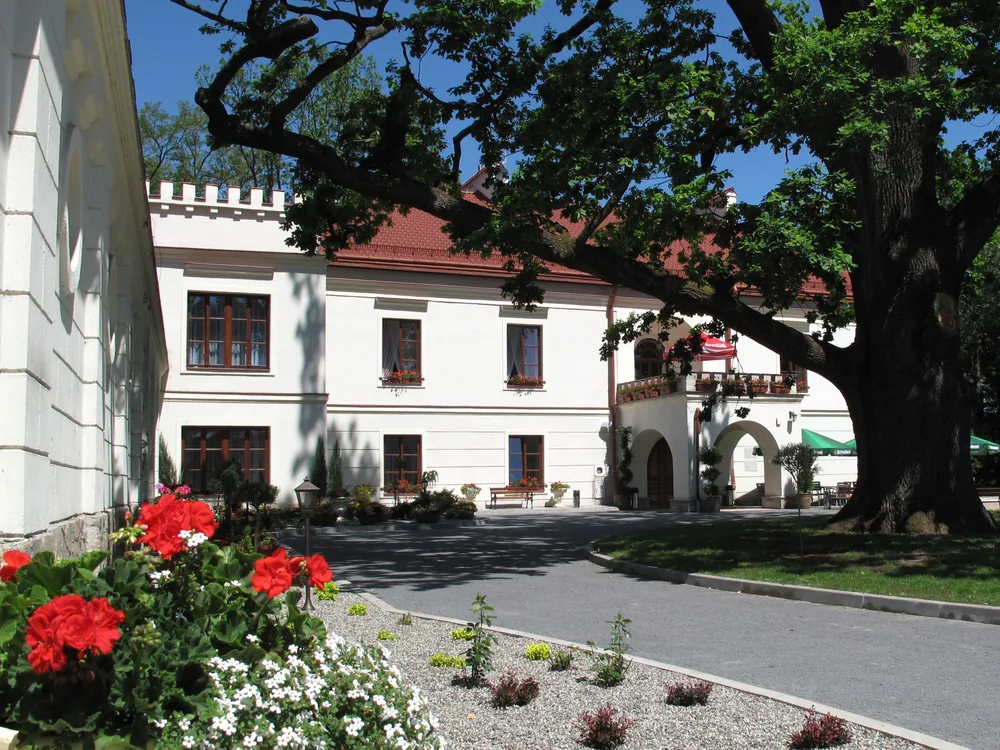
A classicist mansion built at the end of the 18th century on the site of an earlier castle that burned down in 1750, with a Gothic extension, a tower and small wall towers around a courtyard and moat
This page is part of an independent travel guide and is not affiliated with, endorsed by, or operated by Dubiecko Castle.
© Castles & Palaces
Stay Here
Zamek Dubiecko
Rooms are split between more than one building in the castle grounds, so check which one you are booking
Booked via Booking.com · Free cancellation on most rates
Highlights
- ✦The estate's castle was first built in the 16th century and passed to Stanisław Krasicki in 1588
- ✦A major fire destroyed the original castle in 1750
- ✦A classicist mansion was built in its place at the end of the 18th century, with a Gothic extension, a tower and small wall towers around a courtyard and moat
- ✦Ignacy Krasicki, later bishop of Warmia and archbishop of Gniezno, was born here
- ✦The Konarski family were the estate's last private owners before nationalisation in 1958, and it was restored as a hotel with period furniture
Stay overnight
Book a room via Booking.com
Dubiecko Castle stands on a terrace above the San River valley, west of Przemyśl in Subcarpathian Voivodeship. The estate's original castle dated to the 16th century — sources differ on its exact builders and date — and passed to Stanisław Krasicki in 1588, beginning a long association with the Krasicki family.
A major fire destroyed that castle in 1750, and at the end of the 18th century a classicist mansion rose in its place, rather than a rebuilt fortress. The building seen today combines this classicist core with a Gothic extension, a tower and small wall towers set around a courtyard and moat — a layered result of its rebuilding rather than a single architectural period.
The estate's most notable historical connection is literary rather than military: Ignacy Krasicki, who went on to become bishop of Warmia and later archbishop of Gniezno, and who is remembered as one of the leading Polish writers of the Enlightenment, was born here. Ownership eventually passed to the Konarski family, the estate's last private owners before nationalisation in 1958, after which the mansion was restored as a hotel furnished in period style.
Today's hotel includes a restaurant with Polish and Mediterranean-influenced dishes, a small spa with a hydromassage bath and Finnish sauna, and an 18th–19th-century park with a viewing terrace over the San, alongside ballroom and conference spaces that make the estate a popular wedding and conference venue.
History
The estate's castle was first built in the 16th century (sources differ on its builders and exact date) and passed to Stanisław Krasicki in 1588. A major fire destroyed it in 1750, and at the end of the 18th century a classicist mansion was built in place of the original castle; the main building today is classicist with a Gothic extension, a tower and small wall towers around a courtyard and moat. Ignacy Krasicki, later bishop of Warmia and archbishop of Gniezno, was born here. The Konarski family were its last private owners before nationalisation in 1958, and it was restored as a hotel with period furniture.
How to Stay
Getting there: In the village of Dubiecko on a terrace above the San River valley, west of Przemyśl, reached by road.
Rooms & rates: From approx. €73/night for a 20 m² Deluxe Double or Twin with a garden view and air conditioning; the rate seen included a parking spot and late check-in, and a rate with breakfast and free cancellation was around €84. Check which building your room is in when you book.
On-site: Restaurant with Polish and Mediterranean-influenced dishes, a small spa with a hydromassage bath and Finnish sauna, an 18th–19th-century park with a viewing terrace over the San, and ballroom and conference spaces. The park is reported to be open to visitors from morning until dusk.
Good to know: The castle also hosts weddings and conferences, so weekends can be busy. It is a classicist mansion on the site of a burned castle rather than a medieval fortress.
Combine with: Krasiczyn Castle, the Renaissance castle near Przemyśl.
Frequently Asked Questions
No — the original 16th-century castle burned down in 1750, and the building visitors see today is a classicist mansion built at the end of the 18th century in its place, later combined with a Gothic extension, a tower and small wall towers.
Location
Zamkowa 1, Dubiecko, Subcarpathian Voivodeship, Poland
Nearby Castles
Rooms from
€73/ night