
Castle of Montemor-o-Velho
Castelo de Montemor-o-Velho
Portugal · Centro Region — Coimbra District, Mondego River valley, Central Portugal · Near Coimbra
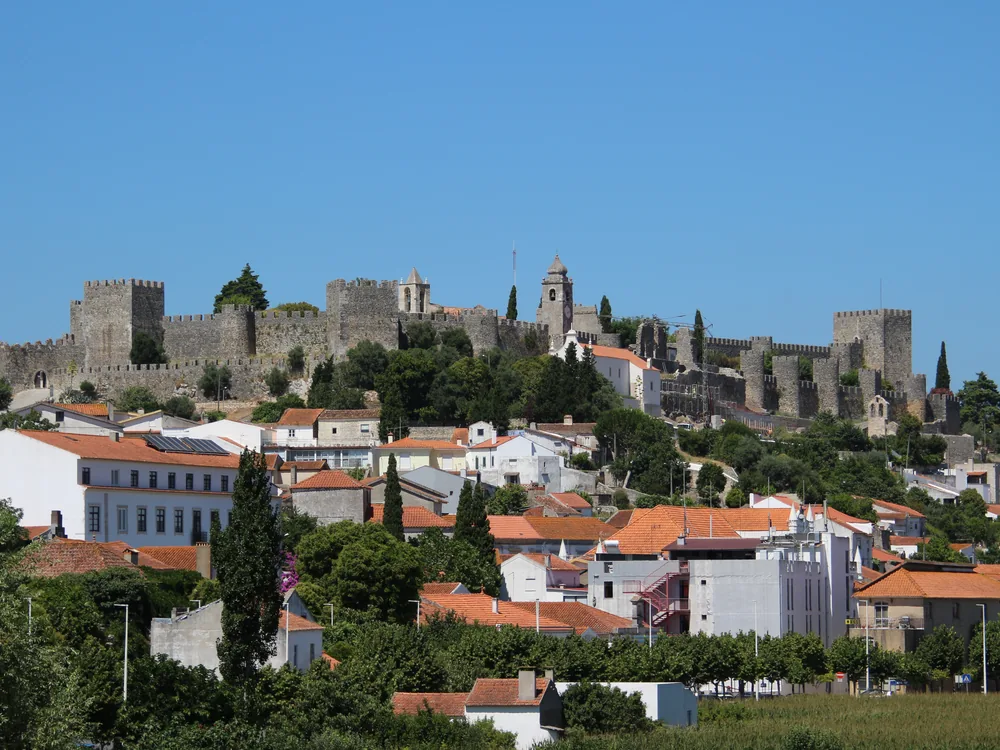
Built 1090 · Medieval Portuguese castle of the Reconquista era, 10th–15th century — the castle at Montemor-o-Velho occupies an elongated ridgeline above the Mondego River floodplain, its walls following the natural contours of the long, low hill in a plan that differs from the compact hilltop castles typical of the Portuguese Alentejo and Beiras; the principal surviving elements are the curtain walls, a sequence of wall towers integrated into the ridge's profile, a keep, and the Romanesque church of Santa Maria de Alcáçova (12th century) built within the castle enclosure; the castle's elongated form reflects the shape of the ridge it defends rather than a compact defensible circuit, giving the castle a distinctive silhouette when seen across the Mondego plain below; construction spans from the first Christian reconquest of the site through 14th- and 15th-century modifications as the Portuguese crown invested in the castle's residential and ceremonial function; the church of Santa Maria de Alcáçova, with its Romanesque doorway and carved tympanum, is among the oldest intact ecclesiastical elements surviving within a Portuguese castle enclosure
This page is part of an independent travel guide and is not affiliated with, endorsed by, or operated by Castle of Montemor-o-Velho.
© Castles & Palaces
Quick Facts
- Hours
- Daily 09:00–18:00
- Guided tour from
- €170
- Duration
- 1–1.5 hours (castle walls, keep, church of Santa Maria de Alcáçova, and Mondego River panoramic viewpoints)
- Best time
- March to October
- Nearest city
- Coimbra
Featured Tour
Coimbra Experience: River Cruise and Historic Tour
Cancellation available · Instant confirmation
Highlights
- ✦Control of the Mondego — the strategic logic that built this castle — the Mondego River, the only major river whose entire course lies within Portugal's territory, flows from the Serra da Estrela through Coimbra toward the Atlantic at Figueira da Foz, passing directly below the ridge of Montemor-o-Velho; whoever held the ridge held the river crossing, and whoever held the crossing held the route between the coast and Coimbra — Portugal's medieval capital before Lisbon assumed that role in the 13th century; the castle's elongated form follows the ridge's natural shape precisely because the ridge, not a compact hilltop, was the strategic asset: a long elevated spine above a flat approach gave defenders visibility over any force advancing from the Mondego plain
- ✦The church of Santa Maria de Alcáçova — a Romanesque church inside a medieval castle — built within the castle enclosure in the 12th century, the church of Santa Maria de Alcáçova is among the oldest surviving Romanesque ecclesiastical structures within a Portuguese castle complex; its carved doorway and tympanum are among the oldest intact architectural details remaining within any Portuguese castle enclosure; the church's presence signals the shift from contested frontier to permanent royal possession — Romanesque ecclesiastical architecture inside a military enclosure means settlement, not just garrison; the church continued to serve the castle's resident population across the medieval period and is included in the free castle visit
- ✦Royal associations — Leonor Teles and the Avis dynasty — the castle's proximity to Coimbra placed it within the circuit of Portuguese royal residences throughout the 13th and 14th centuries; the succession crisis of 1383–1385 — triggered by the disputed inheritance following Fernando I's death and the role of his queen, Leonor Teles — drew the Mondego valley's royal possessions into the political contest that ended with João I of Avis defeating Castile at Aljubarrota; the Avis dynasty that emerged from that crisis continued to patronise Montemor-o-Velho's castle and church into the 15th century, and the castle appears in royal itineraries across the medieval period as a working royal possession
- ✦A day that spans Roman, medieval, and river — the GYG tour pairing with Conimbriga — the GYG tour from Coimbra (t1007599) is unusual in its historical range: Santa Cruz Monastery (12th-century royal pantheon), a traditional 'barca serrana' river cruise on the Mondego, Montemor-o-Velho Castle, and the Conimbriga Roman ruins, one of the largest and most completely excavated Roman civilian cities in the Iberian Peninsula (intact mosaic floors, forum, domestic structures, dedicated museum); the pairing of a Roman city and a Reconquista castle in a single Coimbra day gives the itinerary a historical span from the 1st century CE to the 15th that few Portuguese day programmes can match
Skip the queue with a guided tour
Skip-the-line tickets & expert guides
The ridge above Montemor-o-Velho does not announce itself dramatically. From the Mondego River plain, it reads as a long, low hill — not a vertiginous clifftop or soaring granite outcrop, but a gentle elevation above a flat agricultural landscape of rice fields and market gardens. What the ridge offers is control. The Mondego River, the only major river whose entire course lies within Portugal's territory, flows from the Serra da Estrela through Coimbra toward the Atlantic at Figueira da Foz, and for much of its middle section it passes directly below the castle's walls. Whoever held the ridge held the river crossing, and whoever held the crossing held the route between the Atlantic coast and Coimbra — Portugal's medieval capital before Lisbon assumed that role definitively in the 13th century.
The site was fortified before the Portuguese kingdom existed. Moorish forces had established a hilltop position here during the period of Andalusi expansion across the Iberian Peninsula, recognising the strategic value of an elevated point commanding a navigable river in a region where the Mondego served simultaneously as a natural boundary and a practical highway. The 10th and 11th centuries were marked by repeated contest along this stretch of the river: Fernando I of León and Castile took the position in 1064 during his southward campaign; Almoravid pressure from the south reasserted control in the following years; the castle passed between Christian and Moorish control more than once before the consolidation of Portuguese authority over the Mondego valley in the late 11th and early 12th centuries gave the crown a permanent hold.
The physical fabric of the castle that stands today represents the accumulated investment of several centuries. The walls follow the elongated shape of the ridge — not a compact defensible circuit but a long, narrow spine tracking the hilltop's natural contour above the plain. The keep and a sequence of wall towers are distributed along this ridge-line, with sections of curtain wall connecting them across the slope. The church of Santa Maria de Alcáçova, built within the castle enclosure in the 12th century, is among the most significant surviving elements: a Romanesque church constructed inside a royal castle, its carved doorway and tympanum among the oldest intact architectural details within any Portuguese castle complex. The church's presence signals the shift from contested frontier to permanent royal possession — ecclesiastical architecture inside a military enclosure means settlement, not merely garrison.
The castle's royal associations deepened through the 13th and 14th centuries as the Reconquista frontier moved far to the south and Portugal consolidated control of the entire territory. Coimbra's importance as a seat of the Portuguese court placed Montemor-o-Velho within the circuit of residences and administrative centres maintained along the Mondego valley. Several notable figures of the Portuguese medieval court are associated with the castle and the town below it. The succession crisis of 1383–1385 — triggered by the disputed inheritance following Fernando I's death and involving Leonor Teles, his queen, whose political role remains one of medieval Portugal's most contested historical judgements — drew the Mondego valley's royal possessions into the dynastic conflict that ended with João I of Avis defeating Castile at the Battle of Aljubarrota. The Avis dynasty continued to use Montemor-o-Velho as part of their royal circuit, and 15th-century investments in the castle and church reflect this continuing royal patronage.
The landscape that surrounds the castle gives the visit its strongest historical dimension. The Mondego plain visible from the walls — rice fields and slow-flowing river stretching west toward the sea, the undulating hills of the Beiras rising to the east — has not fundamentally changed its agricultural character since the medieval period. The strategic logic of the castle is immediately visible from the walls: the river, the crossing point, the flat approaches that gave defenders visibility over any advancing force for several kilometres, the distant hills that mark the edge of the Beiras plateau. No amount of textual description substitutes for standing on the walls and seeing the crossing below.
The town of Montemor-o-Velho has grown up at the foot of the ridge, following the pattern that structured most medieval Portuguese urban development: fortified administrative centre on high ground, commercial settlement on the approach roads and river bank beneath it. The relationship between castle and town is legible in the present-day landscape.
The GYG day tour from Coimbra (t1007599, approximately 4.5 hours) includes Montemor-o-Velho Castle as a confirmed Visit and Guided tour stop alongside Santa Cruz Monastery in Coimbra, the Igreja de São Tiago, a traditional 'barca serrana' wooden river cruise on the Mondego, and the Conimbriga Roman ruins. The pairing with Conimbriga is historically significant: Conimbriga, approximately 15 kilometres south of Coimbra, is one of the largest and most thoroughly excavated Roman civilian settlements in the Iberian Peninsula — a former city with intact mosaic floors, domestic structures, forum, baths, and a dedicated archaeological museum. The combination of a Roman city and a Reconquista medieval castle within the same day gives the Coimbra programme a historical span — from the 1st century CE to the 15th — that few Portuguese day itineraries can match. The tour price covers the combined programme; the castle itself is freely accessible independently outside tour hours.
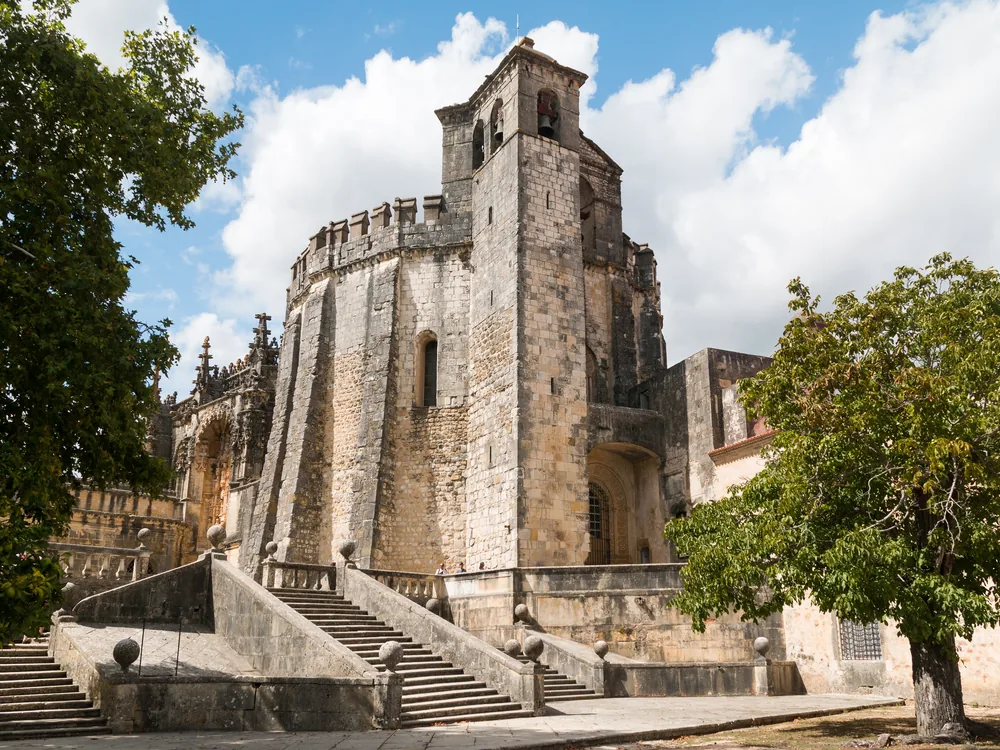
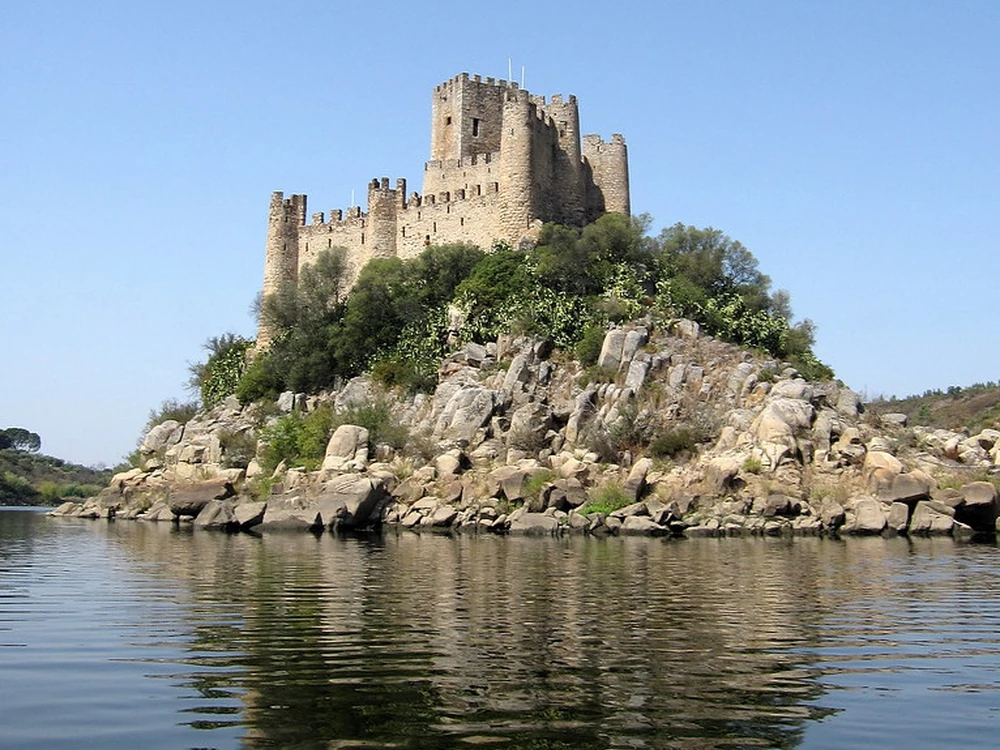
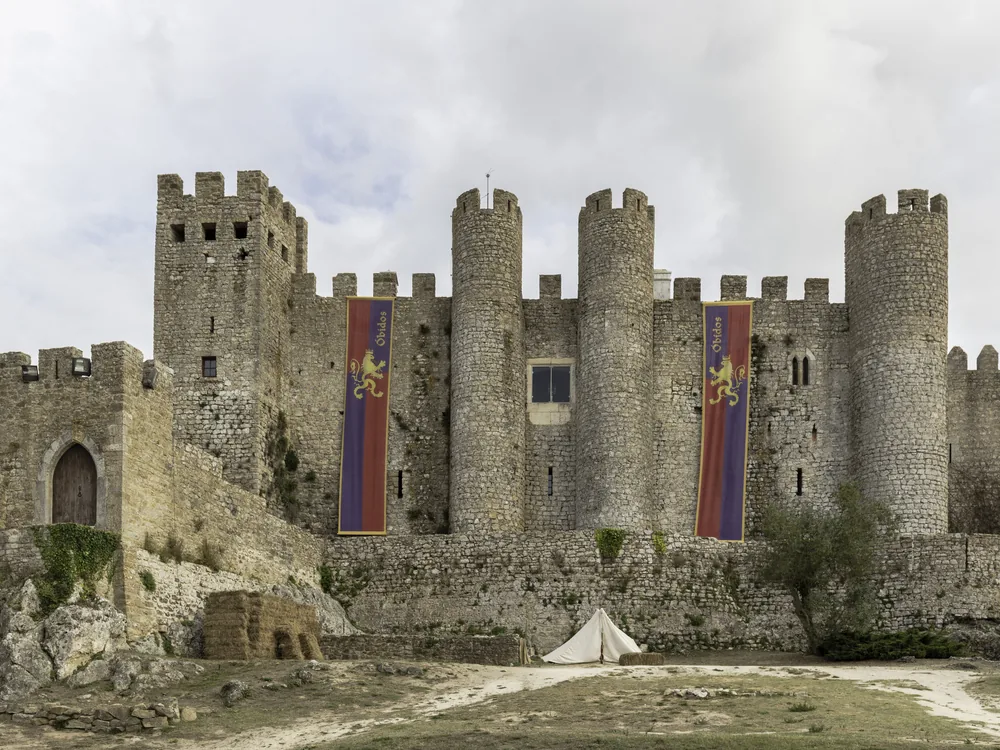
[Almourol Castle](/castles/portugal/almourol-castle) — the Knights Templar island fortress in the Tagus, approximately 60km to the south — pairs naturally with Montemor-o-Velho as the two defining river-position castles of the Portuguese Reconquista. [Convent of Christ, Tomar](/castles/portugal/convent-of-christ-tomar) — the Templar-Hospitaller fortress-convent and UNESCO World Heritage Site approximately 70km south — is the major monument of the central Ribatejo. [Óbidos Castle](/castles/portugal/obidos-castle) — the complete medieval walled town west of Coimbra on the road toward Lisbon — completes the Central Portugal medieval heritage circuit westward.
History
Pre-10th century: site fortified by Moorish forces as a strategic position above the Mondego River crossing. 10th–11th century: repeated contest between Christian and Moorish forces along the Mondego valley; castle changes hands during the Reconquista campaigns. 1064: Fernando I of León and Castile takes Montemor-o-Velho during his southward campaign. Late 11th–early 12th century: definitive establishment of Portuguese royal control over the castle and the Mondego crossing. 12th century: church of Santa Maria de Alcáçova built within the castle enclosure — one of the oldest Romanesque ecclesiastical structures surviving inside a Portuguese castle. 13th–14th century: castle maintained as royal possession and residence; several Portuguese monarchs associated with Montemor-o-Velho as part of their Mondego valley circuit. 1383–1385: Portuguese succession crisis — the Mondego valley and its royal castles form part of the political landscape of the conflict resolved at Aljubarrota. 15th century: continued Avis dynasty investment in the castle and church. 16th century onward: castle falls from active military and residential use as the royal court consolidates in Lisbon. Present day: castle freely accessible; church of Santa Maria de Alcáçova preserved within the enclosure.
How to Visit
Getting there: From Coimbra (30 km east), drive via IC2/N111 in about 30 minutes. By public bus (AVIC lines) from Coimbra bus station to Montemor-o-Velho town, roughly 45 minutes; the castle is a short uphill walk from the town centre. No direct train service — bus or car is the practical option from Coimbra.
Tickets: Walk-up entry free. The GYG tour (t1007599, from €170) — a 4.5-hour guided day from Coimbra combining Santa Cruz Monastery, a traditional 'barca serrana' river cruise on the Mondego, Montemor-o-Velho Castle, and Conimbriga Roman ruins — book in advance.
Practical tips: Arrive before 11:00 in summer — the ridge is fully exposed with little shade and heats up quickly; bring water. Walk the full circuit of the curtain walls to see the Mondego plain and river crossing below, which makes the castle's entire strategic logic immediately legible. If visiting Conimbriga independently (15 km south of Coimbra), budget at least 2 additional hours for that site.
Combine with: [Almourol Castle](/castles/portugal/almourol-castle) and [Óbidos Castle](/castles/portugal/obidos-castle) for a Central Portugal medieval circuit along the Tagus and toward the coast.
Frequently Asked Questions
Yes — the castle is freely accessible with no entry fee. The walls, keep, and church of Santa Maria de Alcáçova can all be visited independently during opening hours at no cost. The GYG day tour from Coimbra (t1007599) includes the castle as a guided stop within a combined programme covering a Mondego river cruise and Conimbriga Roman ruins — the tour price covers the full day itinerary, not a castle entry ticket.
Location
Castelo de Montemor-o-Velho, 3140-259 Montemor-o-Velho, Portugal
Nearby Castles
Tours & Tickets
Powered by GetYourGuide
From
€170/ person