Porto de Mós Castle
Castelo de Porto de Mós
Portugal · Porto de Mós, Leiria District, Centro Region — Serra de Aire e Candeeiros, between Leiria and the Serra Natural Park · Near Leiria
Built 1450 · Medieval castle with rare Gothic-Manueline reconstruction, 15th century — the site has Moorish and early medieval origins; the current castle received its distinctive form during a reconstruction commissioned by Afonso, Count of Ourém, in the mid-to-late 15th century, which added the unusual conical green-tiled tower roofs and Gothic-Manueline decorative elements that give the castle its fantastical appearance; the reconstruction transformed a functional medieval fortress into a residentially comfortable noble seat while retaining the earlier circuit of walls; the castle was damaged in the 1755 Lisbon earthquake and underwent restoration works in the 19th and 20th centuries, including conservation of the rooflines and interior spaces; it is now managed as a municipal museum by the Câmara Municipal de Porto de Mós
This page is part of an independent travel guide and is not affiliated with, endorsed by, or operated by Porto de Mós Castle.
© Castles & Palaces
Quick Facts
- Hours
- Tue–Sun 09:00–13:00, 14:00–18:00. Closed Mon
- Guided tour from
- €170
- Duration
- 45 minutes–1 hour (castle interior and museum circuit); 15 additional minutes for views from the exterior terrace over Porto de Mós and the limestone hills
- Best time
- March to June and September to November
- Nearest city
- Leiria
Featured Tour
Coimbra: Mira de Aire Caves & Porto de Mós Castle Tour
Cancellation available · Instant confirmation
Highlights
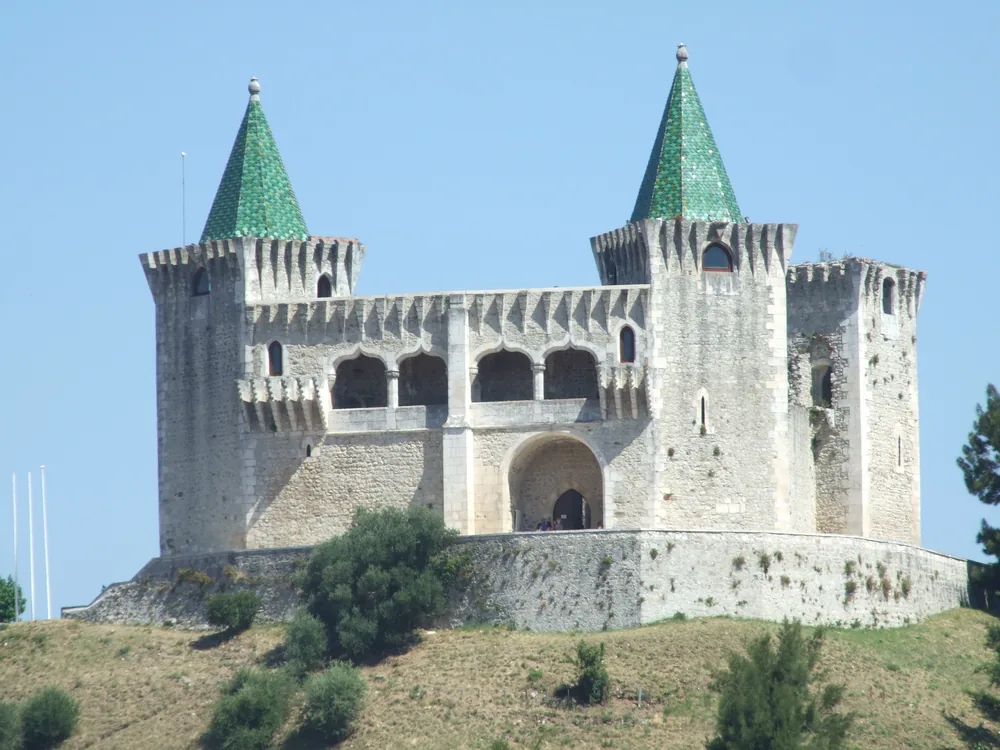
- ✦The green conical tower roofs — the most visually distinctive Portuguese castle roofline — the castle's two principal towers are capped with pointed conical roofs covered in green glazed tiles, the result of the 15th-century Gothic-Manueline reconstruction by Afonso, Count of Ourém; the combination of medieval fortress walls and these fantastical green-tipped towers is unlike any other castle in Portugal and gives Porto de Mós a silhouette that photographs as something between a medieval fairytale and an Iberian Gothic illustration
- ✦Afonso, Count of Ourém, and the 15th-century Gothic-Manueline rebuild — Afonso was one of the most powerful Portuguese noblemen of his time (grandson of João I of Portugal, cousin of Henry the Navigator); his reconstruction of Porto de Mós Castle in the mid-to-late 1400s transformed a functional fortress into a residence in the fashionable new Gothic-Manueline style then defining the appearance of Portuguese royal and noble architecture
- ✦Serra de Aire e Candeeiros Natural Park setting — the castle sits above Porto de Mós at the edge of the Serras de Aire e Candeeiros Natural Park, a limestone massif of karst plateaus, caves, and endemic plants; the Mira de Aire Caves — one of Portugal's 7 Natural Wonders, with remarkable stalactite formations — are approximately 20km south and make the natural pairing for a day combining the castle with underground geology
- ✦Moorish and early medieval stratification — the site has been fortified since at least the Moorish period; the current castle incorporates medieval walls beneath the 15th-century Gothic-Manueline reconstruction, and Roman and Moorish occupation layers have been identified in archaeological studies of the site; it is one of the earlier inhabited sites in the Leiria District
- ✦Municipal museum with regional historical collections — the castle interior now functions as a municipal museum with collections covering the medieval history of Porto de Mós and the surrounding limestone region; low entry price (approximately €2) makes it one of the most accessible heritage visits in the Centro Region
Skip the queue with a guided tour
Skip-the-line tickets & expert guides
From the hillside above Porto de Mós, two towers announce the castle before anything else comes into view. Their profiles are unusual: pointed conical roofs covered in green glazed tiles, tapering to a point above the medieval battlements. In a country full of medieval fortresses, Porto de Mós Castle has a silhouette that belongs to no other Portuguese castle — the towers look less like military architecture and more like an illustration from a book of chivalric romance, or a Flemish altarpiece with a castle in the background. The green conical roofs are the result of a single 15th-century commission that transformed a functional border fortress into a statement of Gothic-Manueline noble taste.
The site has been fortified since well before the 15th century. Roman and Moorish occupation layers have been identified in archaeological studies of the castle hill, and the medieval castle that existed before the Gothic reconstruction was already old when Afonso, Count of Ourém, received lordship of Porto de Mós in the 15th century. Afonso was among the most powerful Portuguese noblemen of his generation — grandson of João I of Portugal, cousin of Henry the Navigator, and a significant figure in the political life of the Avis dynasty. His reconstruction of the castle in the mid-to-late 1400s was not a restoration but a transformation: he retained the earlier circuit of walls while adding the towers, the conical rooflines, and the Gothic-Manueline decorative vocabulary then fashionable in the most ambitious Portuguese construction of his era.
The Manueline style — sometimes called Portuguese Late Gothic — was the architectural expression of Portugal's Age of Discovery period: elaborately ornamented, incorporating nautical and tropical motifs alongside Gothic structural forms, and associated above all with the great works of the reign of Manuel I at the end of the 15th and beginning of the 16th centuries. Afonso's work at Porto de Mós predates the high Manueline period but belongs to the same current of Gothic elaboration that would produce the Jerónimos Monastery in Belém and the Convent of Christ at Tomar. The castle's distinctive rooflines are the most visible expression of this aesthetic impulse applied to a military and residential building in the interior of the country.
The 1755 Lisbon earthquake — one of the most destructive in European recorded history, which collapsed buildings across southern and central Portugal as well as destroying most of Lisbon — damaged Porto de Mós Castle along with much of the surrounding town. The castle was partially ruined in the aftermath and underwent restoration works during the 19th and 20th centuries that stabilised the structure and repaired the rooflines. The current appearance of the castle reflects both the 15th-century reconstruction and the later conservation work; the green conical towers that define its visual identity are maintained in their reconstructed form.
The visit to the castle covers the interior museum circuit managed by the Câmara Municipal de Porto de Mós, with collections covering the medieval history of the town and the surrounding limestone region. The museum is modest by international standards but provides useful local context. The castle's most rewarding features are exterior: the terrace views over Porto de Mós town and the limestone hills of the Serra de Aire e Candeeiros, the castle's profile from below in the town square, and the towers themselves photographed from outside the walls. Entry at approximately €2 is among the lowest for any medieval castle in Portugal.
The Serra de Aire e Candeeiros Natural Park extends south and east of Porto de Mós across a karst limestone plateau of unusual geological character. The plateau is riddled with caves and sinkholes, the most accessible and celebrated of which are the Mira de Aire Caves approximately 20km south of Porto de Mós — a cave system with substantial stalactite and stalagmite formations and an underground lake, classified as one of Portugal's Seven Natural Wonders and one of the largest show caves on the Iberian Peninsula. The GYG product for Porto de Mós Castle (t1292946) is a private guided tour from Coimbra that combines the Mira de Aire Caves and Porto de Mós Castle in a single six-hour day — a logical pairing since both sites are within the same limestone landscape and would otherwise require separate planning.
The Batalha Monastery — one of the masterpieces of Portuguese Gothic architecture, built by João I to commemorate the victory at the Battle of Aljubarrota (1385) and a UNESCO World Heritage Site — is approximately 12km north of Porto de Mós, making a combined visit feasible within a single day from Leiria or Fátima.
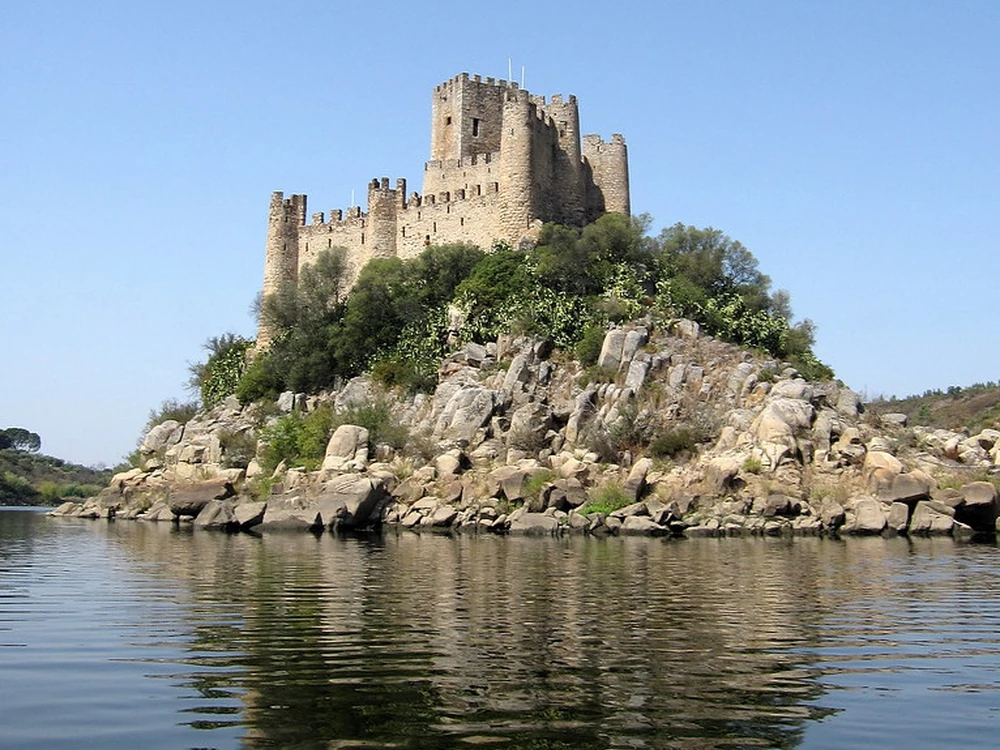
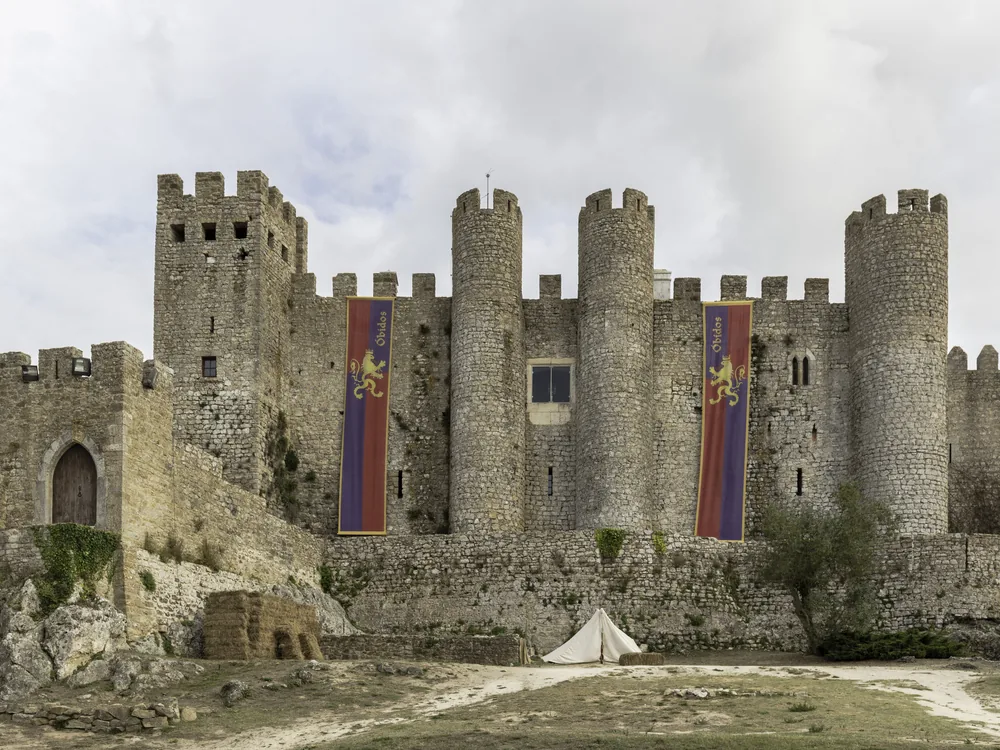
[Almourol Castle](/castles/portugal/almourol-castle) — the 12th-century Knights Templar island castle in the middle of the Tagus river, one of Portugal's most dramatically sited medieval fortresses — is approximately 55km southeast. [Óbidos Castle](/castles/portugal/obidos-castle) — the medieval walled hill town with a castle converted into a pousada — is approximately 50km southwest.
History
Roman period: hill site above Porto de Mós occupied. Moorish period (8th–12th century): Islamic fortress on the site. 1148: Afonso Henriques, first King of Portugal, takes Porto de Mós from the Moors during the Reconquista. 12th–14th century: medieval castle developed as a Christian fortification; the town of Porto de Mós grows below. 15th century: Afonso, Count of Ourém (grandson of João I), receives lordship of Porto de Mós and commissions the Gothic-Manueline reconstruction, adding the distinctive conical green tower roofs and decorative elements. 1755: Lisbon earthquake damages the castle; partial ruination follows. 19th–20th century: restoration and conservation works stabilise the structure and repair the rooflines. Present day: managed as a municipal museum by the Câmara Municipal de Porto de Mós; open Tuesday–Sunday.
How to Visit
Getting there: From Leiria (25 km northwest), drive via IC2 in about 30 minutes. Buses run from Leiria bus station to Porto de Mós town in roughly 45 minutes; the castle is a short uphill walk from the town centre. The castle is closed Mondays — confirm hours at cm-portodemos.pt before making a special trip.
Tickets: Walk-up entry €2 adult, €1 child. The GYG tour (t1292946, from €170) — a private 6-hour guided day from Coimbra combining the Mira de Aire Caves and a dedicated 1-hour stop at Porto de Mós Castle with private transport included — book in advance.
Practical tips: Visit in the morning when the castle exterior faces the best light for photographing the green conical towers — they are the main draw and worth taking time with from the town square below. Pair with Batalha Monastery (12 km north, UNESCO, free on Sunday mornings) and Mira de Aire Caves (20 km south) for a full day without backtracking. Fátima (25 km east) is easily added if you have a car.
Combine with: [Almourol Castle](/castles/portugal/almourol-castle) and [Óbidos Castle](/castles/portugal/obidos-castle) for a Central Portugal medieval day circuit.
Frequently Asked Questions
The green conical tower roofs were added during a Gothic-Manueline reconstruction commissioned by Afonso, Count of Ourém, in the mid-to-late 15th century. Afonso transformed the existing medieval fortress into a noble residence in the fashionable Gothic-Manueline style — a distinctively Portuguese elaboration of late Gothic architecture associated with the Age of Discovery period. The conical form and green glazed tiles were aesthetic choices of the Count's reconstruction rather than features of the original medieval castle. The rooflines were partially damaged by the 1755 earthquake and restored during later conservation work, but their form follows the 15th-century original. No other Portuguese castle has quite this roofline, which gives Porto de Mós its distinctive visual identity.
Location
Castelo de Porto de Mós, Rua Conde Ourém, 2490-413 Porto de Mós, Portugal
Nearby Castles
Tours & Tickets
Powered by GetYourGuide
From
€170/ person