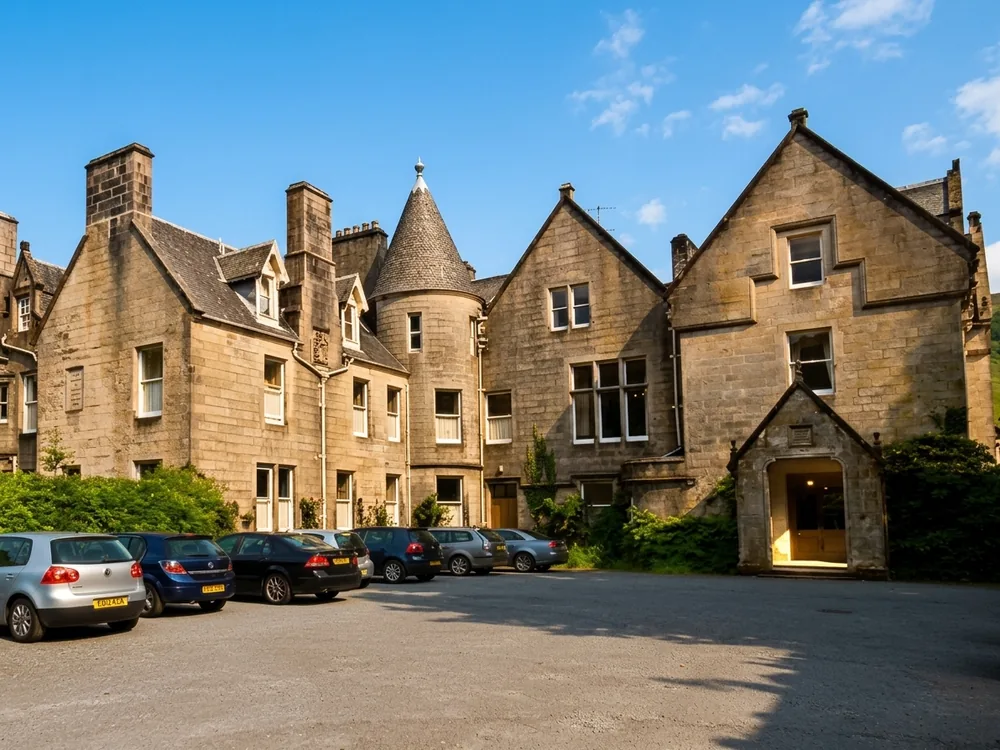
Glengarry Castle Hotel
Scotland · Highlands — Invergarry, Great Glen · Near Fort William
Built 1866 · Scots Baronial mansion, built 1866–69 by architect David Bryce as Invergarry House, standing on the same estate as the ruined 17th-century Invergarry Castle
This page is part of an independent travel guide and is not affiliated with, endorsed by, or operated by Glengarry Castle Hotel.
© Castles & Palaces
Quick Facts
- Rooms from
- £140 / night
- Hotel rating
- ★★★ 3-Star Hotel
- Duration
- Ruin grounds: 20–30 minutes, free and unticketed; overnight hotel stay separately bookable
- Best time
- Year-round
- Nearest city
- Fort William
Stay Here
Glengarry Castle Hotel
★★★ 3-Star HotelRooms are within the historic castle building itself
Booked via Booking.com · Cancellation terms vary by rate
The nearby Invergarry Castle ruin (17th-c. tower, exterior-only) is freely accessible on the grounds — see Highlights above; the hotel building itself has no separate day-visit access
Highlights
- ✦The hotel building is Invergarry House, a Scots Baronial mansion built 1866–69 by the noted architect David Bryce for Edward Ellice Jr.
- ✦The ruined Invergarry Castle stands on the same estate, near the main entrance — freely visible and accessible from the grounds and access road at any time
- ✦Seat of the chiefs of Clan MacDonell of Glengarry from the 15th century; burned by Cromwellian troops under General Monck in 1654
- ✦Reoccupied by the Jacobites during the 1745 Rising and visited twice by Bonnie Prince Charlie, before being burned again by the Duke of Cumberland's forces after Culloden
- ✦Edward Ellice Jr. died in 1934; the mansion became Glengarry Castle Hotel in 1960
Stay in the castle itself
Book a room via Booking.com
Glengarry Castle Hotel occupies a genuinely striking position on the shores of Loch Oich, in the heart of the Great Glen between Fort William and Inverness, and it offers something few Scottish castle-hotels can: two distinct historic buildings on one estate, each with its own separate story worth knowing before a visit. The hotel itself is Invergarry House, a substantial Scots Baronial mansion designed by David Bryce — the same prolific Victorian architect behind Glenapp Castle further south — and built between 1866 and 1869 for Edward Ellice Jr. Close to the estate's main entrance, and clearly visible from the access road, stands something considerably older: the ruined tower of Invergarry Castle itself, a genuinely medieval structure with a history stretching back centuries before Bryce ever put pen to paper.
Invergarry Castle was the seat of the chiefs of Clan MacDonell of Glengarry from the 15th century onward, a position that placed it squarely in the path of some of the most turbulent episodes in Highland history. In 1654, the castle was burned by Cromwellian troops under General Monck, part of the wider suppression of Highland clan power during the Commonwealth period. It was rebuilt and reoccupied, and nearly a century later found itself at the centre of events again during the Jacobite Rising of 1745: Bonnie Prince Charlie himself visited the castle twice, using it as a rallying point in the campaign that would end so decisively at Culloden. The castle paid a heavy price for that association — in the brutal aftermath of Culloden, it was burned once more, this time by the forces of the Duke of Cumberland, whose ruthless suppression of Jacobite sympathisers across the Highlands earned him the enduring nickname 'the Butcher.'
The ruin that survives today is exactly that: a shell, its interior unstable and fenced off for safety, but its walls and setting on a rocky outcrop above the loch remain genuinely evocative and are freely accessible to anyone exploring the estate grounds or driving in along the access road — no ticket, booking or hotel stay required. This is a meaningfully different situation from some other Scottish properties sharing a name or estate with an older ruin: rather than a source of confusion, Invergarry's ruin and its Victorian mansion sit together as two complementary attractions on the same piece of ground, each illuminating a different chapter of the glen's history.
Edward Ellice Jr., the mansion's original owner, died in 1934, and Invergarry House was eventually converted into Glengarry Castle Hotel in 1960, a name that deliberately invokes the older ruin's legacy even though the two buildings are physically distinct. The hotel today is an AA-rated 3-star country house hotel with a Rosette-recognised restaurant, its rooms looking out over Loch Oich and the surrounding grounds — landscaped parkland that itself forms part of the visiting experience, with mature trees and lochside walks connecting the two historic structures.
For travellers making their way along the Great Glen — the dramatic geological fault line running from Fort William to Inverness via Loch Ness — Glengarry offers a rare combination: a comfortable, historically grounded base for the night, and a genuine piece of clan history to explore on foot before checking in, entirely free of charge and open at any hour.
The wider Invergarry area carries additional layers of Jacobite-era history worth knowing for anyone drawn to the estate's own story: the village sits close to routes used repeatedly during both the 1715 and 1745 risings, and the broader MacDonell clan lands surrounding Loch Oich and Loch Garry saw some of the heaviest reprisals in the Highland suppression that followed Culloden. Walking the ruin's grounds today, with Loch Oich stretching out below and the mountains of the Great Glen rising on either side, it is easy to understand why this particular stretch of ground mattered enough to be fought over, burned and rebuilt more than once across four centuries.
History
Invergarry Castle was the seat of the chiefs of Clan MacDonell of Glengarry from the 15th century. It was burned by Cromwellian troops under General Monck in 1654, then rebuilt and reoccupied. During the Jacobite Rising of 1745, the castle was visited twice by Bonnie Prince Charlie, and in the aftermath of the Battle of Culloden it was burned again by forces under the Duke of Cumberland. The ruin survives on the same estate as the current hotel building, Invergarry House, a Scots Baronial mansion designed by architect David Bryce and built 1866–69 for Edward Ellice Jr. Ellice died in 1934, and the mansion was converted into Glengarry Castle Hotel in 1960.
How to Stay
Getting there: Invergarry, Highlands, near the shores of Loch Oich.
Rooms & rates: All bedrooms are within the original Victorian house — the building has never been extended, so there is no separate annex or wing.
On-site: Grounds including the free-access Invergarry Castle ruin near the entrance.
Good to know: A genuinely single-building property — every room is inside the same historic house, so there's no need to specify a room type for building location.
Combine with: The Great Glen and Loch Ness, both within easy reach.
Frequently Asked Questions
Yes. The ruined tower of Invergarry Castle stands on the hotel's estate near the main entrance and is freely visible and accessible from the grounds and access road at any time, with no ticket or booking required. The interior of the ruin is fenced off for safety due to its unstable structure, but the exterior and setting above Loch Oich can be explored on foot as part of any visit to the estate.
Location
Invergarry, Highlands PH35 4HW, Scotland
Nearby Castles
Rooms from
£140/ night