Petrovaradin Fortress
Petrovaradinska tvrđava
Serbia · Novi Sad, Vojvodina, Serbia · Near Novi Sad
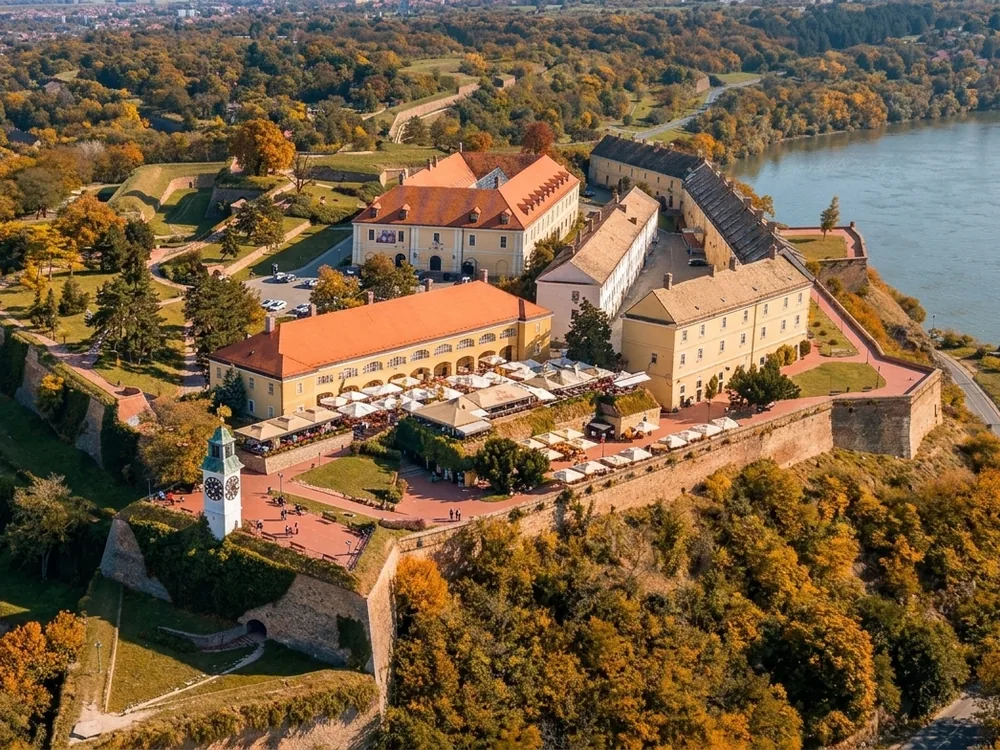
Built 1692 · 18th-century Habsburg Baroque fortress complex on a loess bluff above the Danube; one of the largest and most complete baroque military fortifications in Europe; 16km of underground tunnels, four upper and lower fortification levels, the iconic clock tower with its large and small hand positions reversed (minute hand larger than hour hand), and a series of bastions designed by French military engineer Vauban's principles
This page is part of an independent travel guide and is not affiliated with, endorsed by, or operated by Petrovaradin Fortress.
© Castles & Palaces
Quick Facts
- Hours
- Daily 00:00–24:00
- Guided tour from
- €33
- Duration
- 1.5–2 hours (upper fortress and views); add 1 hour for the underground tunnel tour
- Best time
- April to October
- Nearest city
- Novi Sad
Featured Tour
Novi Sad: Walking Tour City Center and Petrovaradin Fortress
Cancellation available · Instant confirmation
Highlights
- ✦'Gibraltar on the Danube' — Petrovaradin Fortress earned its nickname from the Austrian Habsburgs who built it: a massive, multi-level fortification on a 40-metre loess bluff above the Danube, designed to be impregnable from river attack and unassailable from the Serbian plain; it is one of the largest and most completely preserved Baroque military fortifications in Europe
- ✦16 kilometres of underground tunnels — the fortress contains an extraordinary network of tunnels, galleries, and casemates carved through the loess below the upper fortifications, stretching for 16km and descending through four levels; originally used for troop movements, ammunition storage, and emergency refuge, parts of the network are open to guided tours
- ✦The clock tower and reversed hands — Petrovaradin's clock tower is immediately identifiable from the Novi Sad riverfront for a peculiarity: its clock has the large hand for hours and the small hand for minutes — the reverse of the standard arrangement — so that the fishermen and sailors on the Danube below could read the hour from a distance without a telescope
- ✦The EXIT music festival — each July, Petrovaradin Fortress transforms into the venue for EXIT, one of Europe's largest summer music festivals; the combination of medieval ramparts, Baroque bastions, and 100,000+ visitors has made EXIT one of the most photographed festival sites in the world; multiple stages occupy different levels of the fortress complex
- ✦The GetYourGuide walking tour covers both Novi Sad's city centre and Petrovaradin Fortress in a 2–3 hour guided walk; the local guide's knowledge includes the tunnel network, the EXIT festival history, and the fortress's role in the Battle of Petrovaradin (1716)
Skip the queue with a guided tour
Skip-the-line tickets & expert guides
Petrovaradin Fortress stands on a 40-metre loess bluff above the Danube, just across the river from Novi Sad — the city it was built to protect. The Austrians called it 'the Gibraltar on the Danube,' and the comparison is not entirely immodest: the fortress complex covers roughly 112 hectares, incorporates four levels of fortifications above and below ground, and contains approximately 16 kilometres of underground tunnels, galleries, and casemates carved through the loess rock. Construction began in earnest in 1692, following the Habsburgs' recapture of the Pannonian plain from the Ottomans, and continued for most of the 18th century; the final design reflects Vauban-era principles of angled bastion construction intended to eliminate dead angles of fire.
The fortress's military career included one genuinely significant engagement: the Battle of Petrovaradin in 1716, when Prince Eugene of Savoy defeated a numerically superior Ottoman army attempting to recapture the position. The victory helped consolidate Habsburg control over the Pannonian plain and is commemorated in numerous places across the fortress complex. After that battle, the fortress never faced serious military threat again; the Ottomans never returned to this part of the Danube in force.
The most immediately striking feature of the fortress for a casual visitor is its clock tower — visible from across the river, it carries a clock with an unusual arrangement: the large hand marks the hours and the small hand marks the minutes. The reversal was deliberate, intended to make the time legible to fishermen and Danube boatmen reading the clock from the water below without optical instruments. Local residents have long since absorbed the reversed logic and read it without thinking.
Underground, the tunnel network is the fortress's most unexpected dimension. The 16km of galleries and casemates were used for troop movements during sieges, ammunition storage, water management, and emergency refuge. Today, parts of the tunnel are open to guided tours — a genuinely unusual experience that underscores how much the above-ground walls represent only the visible portion of the complex.
The GetYourGuide walking tour of Novi Sad covers the city centre alongside a walk through the fortress, with a local guide providing context on the Battle of Petrovaradin, the tunnel network, the clock tower's reversed hands, and the EXIT festival. The fortress grounds are free and open access; the tour provides a local guide, consistent with a site that carries no admission ticket.
History
A Roman fortification occupied the Petrovaradin position as early as the 2nd century AD. Medieval Slavic fortifications followed. The modern fortress was built by the Habsburg Empire following the Treaty of Karlowitz (1699), which ended the Great Turkish War and gave Austria control of the Pannonian plain. Construction of the Baroque fortress began in 1692 and continued through the early 18th century. The Battle of Petrovaradin in 1716, in which Prince Eugene of Savoy decisively defeated the Ottoman army, established the fortress's military reputation and secured Habsburg control of the region. The fortress served as an Austrian military headquarters and prison through the 18th and 19th centuries — the Serbian revolutionary Đorđe Petrović ('Karađorđe') was held here briefly. The fortification was gradually decommissioned for military purposes in the 20th century. The EXIT festival was launched in 2000 by students at Novi Sad University as a form of political protest against the Milošević government; it has grown into one of Europe's largest summer music events.
How to Visit
Getting there: Petrovaradin Fortress is directly across the Danube from Novi Sad city centre, connected by the Varadinski Bridge. From Novi Sad's main square (Trg slobode), it is a 15-minute walk across the bridge and up the hill to the fortress gate. By public transport, buses and trams connect to the Petrovaradin side. The GetYourGuide walking tour departs from a central Novi Sad meeting point.
Tickets: The fortress grounds and upper fortifications are free and open to the public at all hours — no ticket is required to enter and explore the ramparts and views. Underground tunnel tours are separately ticketed; contact the fortress museum for current rates and schedule. The GetYourGuide walking tour of Novi Sad city centre and Petrovaradin Fortress includes a local guide covering both areas in 2–3 hours — the guide covers the fortress's history, tunnel network, clock tower, and EXIT festival connection.
Practical tips: Visit in the morning for the best light on the Danube views and fewer crowds; the upper fortress ramparts face east and southeast, giving excellent views over the river and Novi Sad. If visiting during the EXIT festival (mid-July), the fortress is transformed into a music venue — spectacular visually but extremely crowded. The underground tunnel tour, when running, departs from a small museum inside the fortress; check current availability on arrival. The fortress contains several restaurants, galleries, and artist workshops in the converted casemates.
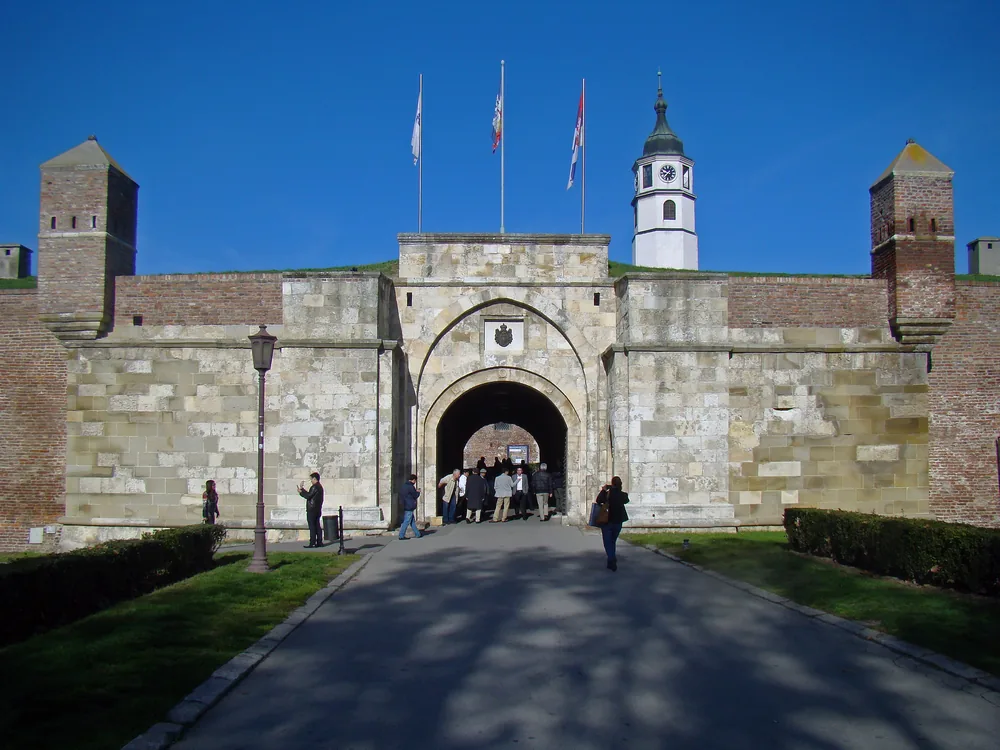
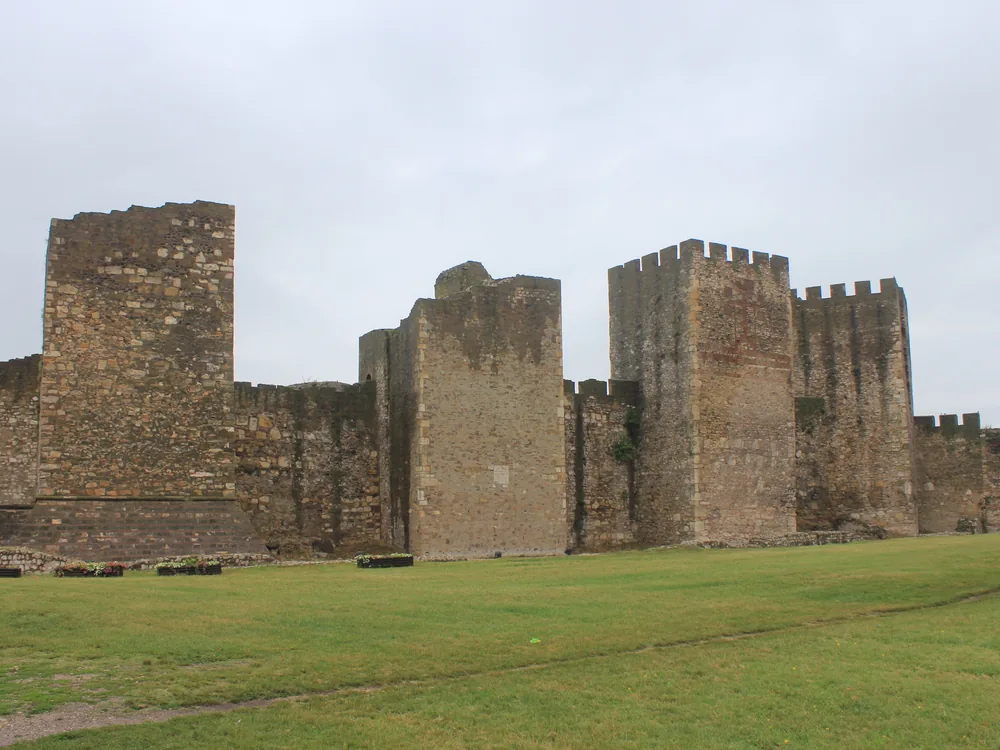
Combine with: Belgrade Fortress (~80 km south — Kalemegdan, at the confluence of the Sava and Danube rivers; the other great Serbian riverine fortress complex, with a long layered history from Roman through Ottoman to Austrian periods) and Golubac Fortress (~150 km southeast — the medieval fortress on the Danube gorge at the entry to the Iron Gates, one of the most dramatic fortress positions in southeastern Europe).
Frequently Asked Questions
The clock on the fortress tower has its large hand showing the hours and its small hand showing the minutes — the reverse of standard clock convention. The reversal was a practical decision: the tower is visible from the Danube below, and fishermen, sailors, and boatmen needed to read the time from their boats on the river. At the distances involved, a clock with a normal arrangement would be hard to read without magnification. By making the hour hand larger, the builders made the hour legible from the water without needing to distinguish the smaller minute hand at all. Local residents have been reading the clock this way for centuries and do so without conscious effort.
Location
Petrovaradin Fortress, Petrovaradin, 21131 Novi Sad, Serbia
Nearby Castles
Tours & Tickets
Powered by GetYourGuide
From
€33/ person