
Morella Castle
Castillo de Morella
Spain · Comunitat Valenciana — Castellón Province, Els Ports comarca, walled hilltop city of Morella · Near Castellón de la Plana
Built 1232 · Medieval Reconquista fortress crowning a 1,072-metre hilltop; Roman and Visigothic occupation from antiquity; Moorish fortification through the 11th century; Aragonese castle completed under James I in 1232; Gothic church of Sant Miquel within the upper walls; surrounded by 2.5 km of intact medieval walls with six surviving gatehouses
This page is part of an independent travel guide and is not affiliated with, endorsed by, or operated by Morella Castle.
© Castles & Palaces
Quick Facts
- Hours
- Daily 10:00–19:00
- Day trip from
- €130
- Duration
- 1 hour (self-guided with audio guide)
- Best time
- April to October
- Nearest city
- Castellón de la Plana
Featured Tour
From Valencia: Morella & Peñíscola Day Trip Transfer + Lunch
Cancellation available · Instant confirmation
Highlights
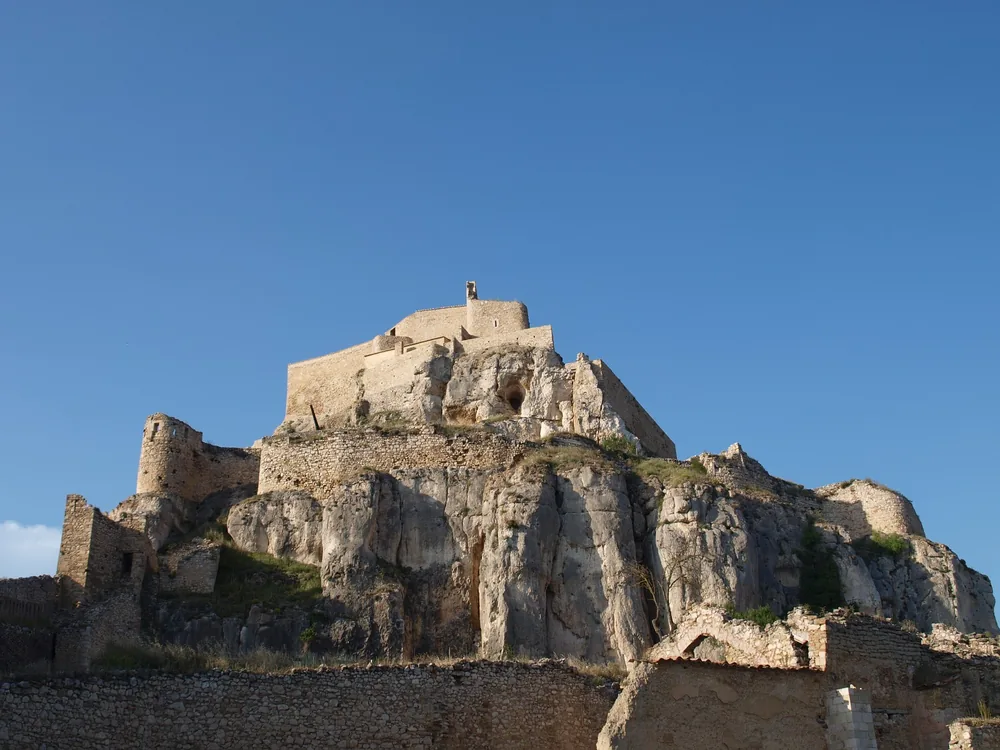
- ✦The hilltop setting at 1,072 metres — the castle crowns a near-vertical rock promontory that has been fortified since Roman times, making Morella one of the most dramatically positioned fortifications in the Iberian Peninsula, visible from the surrounding Maestrazgo plains for kilometres in every direction
- ✦The 2.5 km of intact medieval walls encircling the entire town below the castle — six gatehouses survive complete, and the full circuit walk offers sweeping panoramic views over the empty Els Ports landscape and the distant mountains of the Maestrazgo range
- ✦The Gothic church of Sant Miquel within the castle walls — a compact medieval chapel accessible on the audio-guided circuit, its Gothic vaulting intact above the exposed limestone of the upper promontory, alongside the ruins of the royal audience chamber and ancient cisterns cut into the rock
- ✦The complete story of the Reconquista at a single site — James I of Aragon captured Morella from the Moors in 1232, and the castle subsequently witnessed every major conflict of the eastern Iberian Peninsula from the War of Two Pedros in the 14th century to the Carlist Wars of the 19th
- ✦The intact medieval city below — fewer than 2,500 people live inside the walls today, and the streets, churches, Gothic market arcades, and the Basilica of Santa María la Mayor form one of the most complete and least-touristed medieval urban environments surviving anywhere in Spain
Skip the queue with a guided tour
Skip-the-line tickets & expert guides
Morella Castle crowns one of the most extraordinary urban survivals in medieval Spain — a complete hilltop city still encircled by its original walls, rising from the dry scrublands of the Maestrazgo range at 1,072 metres above sea level. The rock on which Morella stands is nearly vertical on all sides, making it one of the most naturally defensible positions in the Iberian Peninsula, and the town below the castle is as remarkable as the fortification itself: 2.5 kilometres of medieval walls, six gatehouses, and a perfectly preserved tangle of Gothic and Renaissance architecture survive in a city of fewer than 2,500 inhabitants.
The castle's strategic logic is immediately apparent from any approach. The promontory rises abruptly from the plain, and the town clings to its flanks in tightly packed concentric rings of white and ochre buildings before giving way to the sheer rock face and then the castle walls above. The fortification is accessible via a stepped path from the town, rising through successive gates to the upper reaches where the Gothic church of Sant Miquel, the ruins of the royal audience chamber, ancient cisterns cut into the living rock, and the foundations of towers spanning more than a thousand years of military occupation are all part of the audio-guided circuit.
What distinguishes Morella from other Spanish hilltop castles is the integrity of the total urban composition. The castle cannot be separated from the town, nor the town from its walls: the three elements form a single medieval artifact, and the experience of walking the walls — circumnavigating the entire circuit and looking out over the wide plains of Els Ports — is arguably more memorable than the castle itself. The Maestrazgo landscape stretches to the horizon in every direction: empty, ochre, and dramatic, the kind of terrain that explains why this region resisted conquest for so long.
James I of Aragon took Morella in 1232, completing the Reconquista of what was then the northernmost stronghold of Moorish-controlled Valencia. The castle subsequently played a role in multiple conflicts — the War of Two Pedros in the 14th century, the War of Spanish Succession in the 18th, and the Carlist Wars of the 19th century — each leaving its physical traces on the surviving fabric. The modest entry fee of €4 covers the audio guide, which is the best introduction to the castle's layered history. The visit typically takes around an hour for the castle itself, though most visitors spend considerably longer in the town and along the walls.
Morella's relative remoteness — 90 kilometres from the coast, served by infrequent buses — means it sees far fewer visitors than comparable walled cities in Spain, and the experience retains a quietness that Segovia, Toledo, and Ávila have long since lost. For travellers with a car, the combination of Morella with Peñíscola on the coast makes one of the finest medieval circuits in the Comunitat Valenciana: inland walled mountain city and coastal papal fortress, separated by 75 kilometres of the Maestrazgo foothills.
History
The promontory above what is now Morella has been a fortified position since at least Roman times, and Visigothic and early medieval occupation left traces that subsequent builders built over and through. Moorish rulers held the site as one of the most formidable natural strongholds in the region between Valencia and Zaragoza, exploiting a rock face so steep that conventional military approaches were almost impossible. James I of Aragon — El Conquistador — captured Morella in 1232 as part of his systematic campaign to take the Kingdom of Valencia from its Almohad rulers, and the castle he consolidated that year became the anchor of Aragonese power across the Maestrazgo region.
The medieval centuries saw Morella serve as a seat of royal governance and a key position in the network of Maestrazgo fortifications. During the War of Two Pedros (1356–1375), the Aragonese-Castilian conflict that convulsed the eastern Iberian Peninsula, Morella changed hands and was extensively contested. The castle and walls were further tested during the War of Spanish Succession (1700–1715), when Morella supported the Austrian claimant, and again during the Carlist Wars of the 19th century — the last time the castle served any genuine military function. The 2.5 kilometres of medieval walls that surround the town below, with their six surviving gatehouses, were substantially completed in the 14th century and are among the best-preserved urban fortification circuits in Spain.
How to Visit
Getting there: Morella is 90 kilometres northwest of Castellón de la Plana and 170 kilometres north of Valencia. There is no train station — the town is served by occasional bus services from Vinaròs (on the coast) and Castellón, but services are infrequent and a car is the practical option for most visitors. The approach by road from any direction involves scenic mountain driving through the Els Ports natural park; from the coast, take the CV-15 inland from Vinaròs or the N-232 from Zaragoza. Park in the lower town and walk up through the medieval gates.
Tickets: Walk-up entry is €4 adult and €2 child, paid at the castle gate — no advance booking required. The entry price includes the audio guide, which is the best way to navigate the castle's multiple zones: the Gothic church of Sant Miquel, the ruins of the royal audience chamber, the cisterns, and the towers. The GetYourGuide day trip from Valencia combines Morella with Peñíscola on a guided transfer tour with lunch — a different option to the simple walk-up castle ticket, aimed at visitors without a car.
Practical tips: Allow at least half a day for Morella — the castle takes around an hour, but the medieval walls, the Gothic arcaded market street, and the Basilica of Santa María la Mayor deserve time of their own. Morella's altitude (1,072 m) makes it genuinely cool in summer compared to coastal Valencia — a pleasant contrast in July or August — but the castle paths can be icy in winter. Wear sturdy footwear regardless of season.
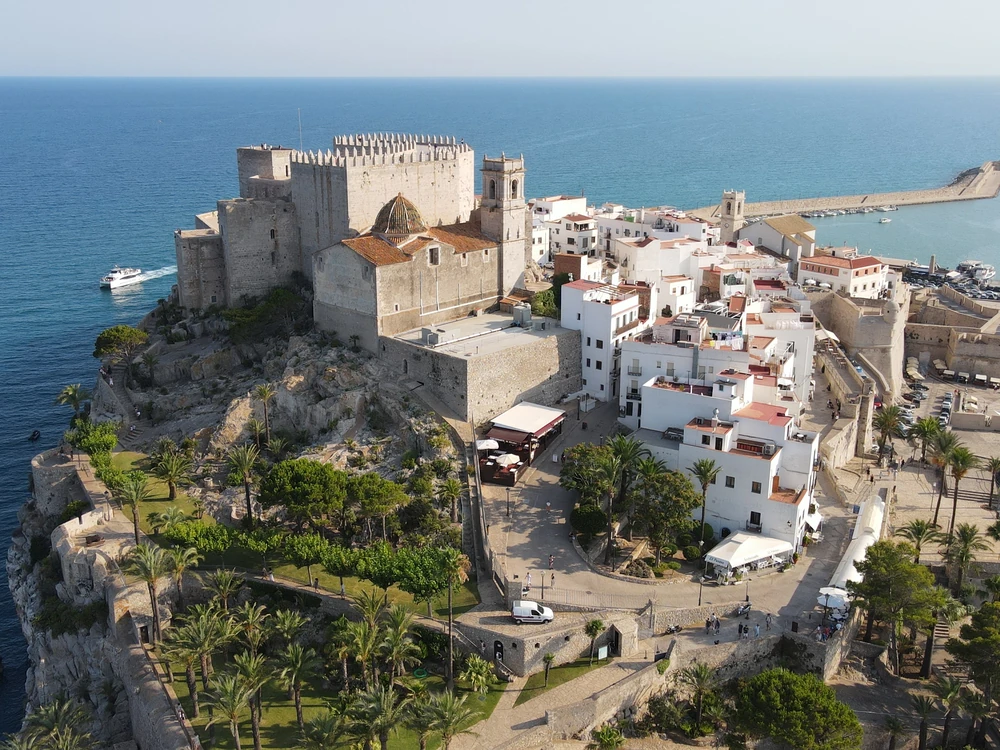
Combine with: Peñíscola Castle (75 km southeast on the Mediterranean coast — the papal castle of Antipope Benedict XIII, rising dramatically from a rocky peninsula above the sea; together Morella and Peñíscola form the essential Castellón medieval circuit, contrasting the inland walled city with the coastal fortress).
Frequently Asked Questions
The castle itself, followed on the audio guide, takes around one hour. However, most visitors spend considerably longer in Morella as a whole — the medieval walls require another hour or so to walk the full 2.5-kilometre circuit, and the walled town below the castle (the arcaded market street, the Basilica of Santa María la Mayor, the narrow medieval lanes) adds another hour at minimum. Allow a full half-day for the castle and walls; a full day if you want to explore the town at leisure.
Location
Castillo de Morella, 12300 Morella, Castellón, Spain
Nearby Castles
Tours & Tickets
Powered by GetYourGuide
From
€130/ person