
Hallwyl Palace
Hallwylska palatset
Sweden · Stockholm, Sweden · Near Stockholm
Built 1898 · Late 19th-century neo-Renaissance private palace in central Stockholm; designed by architects Isak Gustaf Clason and Carl Möller for Count Walther von Hallwyl and his wife Wilhelmina von Hallwyl (née Kempe); the four-storey limestone façade on Hamngatan conceals an interior of extraordinary completeness — every room preserved exactly as the von Hallwyls left it, with the family's collection of over 70,000 objects documented by Wilhelmina von Hallwyl over 50 years of obsessive cataloguing; the interior courtyard links the street façade to the residence behind, a Swedish interpretation of Florentine Renaissance palazzo planning
This page is part of an independent travel guide and is not affiliated with, endorsed by, or operated by Hallwyl Palace.
© Castles & Palaces
Quick Facts
- Hours
- Tue & Wed 10:00–16:00. Thu 10:00–19:00. Fri–Sun 10:00–16:00. Closed Mon
- Entry via GetYourGuide
- €14
- Duration
- 1.5–2 hours self-guided; longer with an audio guide (available separately on-site)
- Best time
- Year-round
- Nearest city
- Stockholm
Featured Tour
Stockholm: Hallwyl Museum Entrance Ticket
Cancellation available · Instant confirmation
Highlights
- ✦Wilhelmina von Hallwyl's 50-year catalogue — Countess Wilhelmina von Hallwyl (1844–1930) spent five decades creating a scientific inventory of every object in the family residence, producing a 78-volume catalogue of over 70,000 items; this compulsive documentation — driven by the countess's conviction that the palace should be preserved exactly as it was lived in — is what makes the Hallwyl Museum uniquely complete among Stockholm's house museums; the visitor doesn't see a curated selection but the full accumulation of a rich family's life across three decades of continuous residence
- ✦A palace preserved mid-conversation — the von Hallwyls donated the palace to the Swedish state in 1920 with the stipulation that it be preserved intact; the result is a house museum that feels genuinely inhabited rather than staged: furniture in the rooms it was used in, personal photographs on the desks, silverware in the dining room, art in the frames where the countess hung it; nothing has been rearranged for display purposes
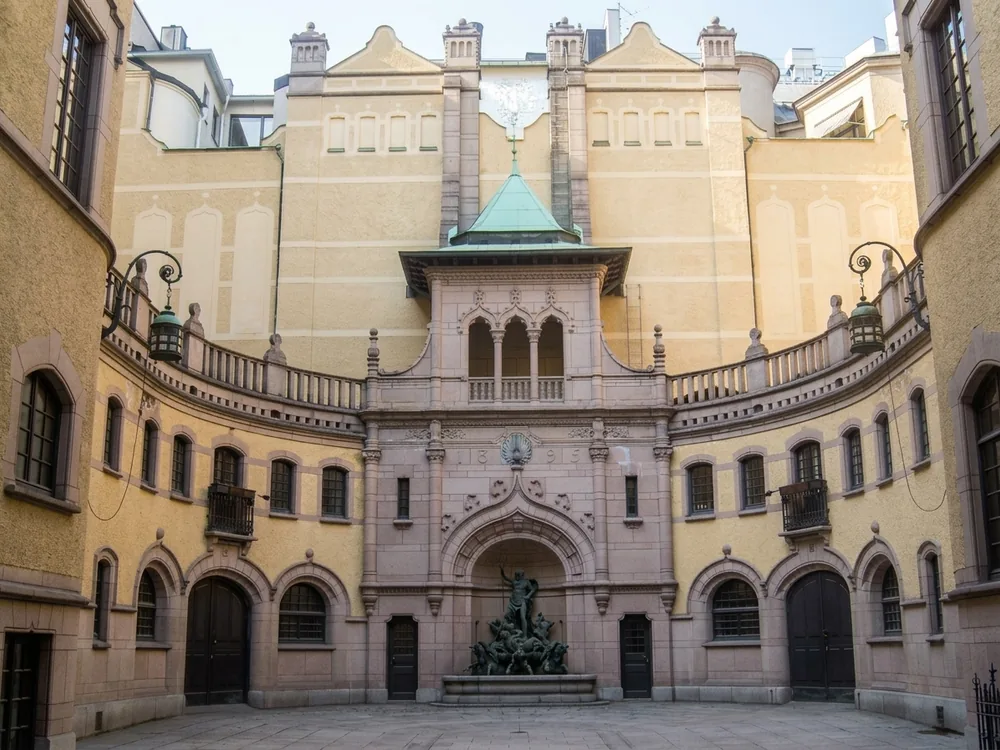
- ✦The neo-Renaissance courtyard — the palace's internal courtyard, inspired by Italian Renaissance palazzo planning, is the architectural centrepiece of the residence; surrounded by galleries on all four sides, it functioned as the heart of the von Hallwyls' social life and is now one of the most photographed interiors in central Stockholm; the courtyard gives the building a spatial generosity unusual for a private residence on a tight Stockholm street frontage
- ✦Central Stockholm's hidden interior — Hallwyl Palace stands on Hamngatan, one of Stockholm's main shopping streets, its limestone façade blending into the commercial street frontage; most people who walk past it daily have never been inside; the contrast between the busy pedestrian street and the silent, perfectly preserved interior just a few metres back is part of what makes the museum so striking
- ✦Count and Countess von Hallwyl's collected world — the 70,000-object collection ranges from European paintings and silverware to tapestries, armour, Asian ceramics, and personal correspondence; the breadth reflects the collecting habits of an extremely wealthy aristocratic family at the height of the Gilded Age, when the world's luxury goods flowed through the auction houses of Paris, London, and Stockholm; the collection is not a specialist cabinet but a totality — the world as the von Hallwyls chose to surround themselves with it
Tickets & tours
Book through GetYourGuide
Hallwyl Palace stands on Hamngatan in central Stockholm, its neo-Renaissance limestone façade giving no indication of the extraordinary interior behind it. Built between 1893 and 1898 for Count Walther von Hallwyl and his wife Wilhelmina, the palace was the private residence of one of Sweden's wealthiest families — and is today one of the most completely preserved private homes of the Gilded Age anywhere in Europe.
What makes the Hallwyl Museum exceptional is not the grandeur of its interiors but the completeness of their preservation. Countess Wilhelmina von Hallwyl spent fifty years creating a scientific inventory of every object in the residence — 70,000 items documented in 78 volumes — and donated the palace to the Swedish state in 1920 with the condition that it be preserved exactly as it was lived in. No rearrangement for display, no selective editing of the collection, no museum staging: the rooms have been maintained as they were during the family's residence, with the furniture in the positions the family used, the art in the frames where the countess hung it, and the personal objects on the surfaces where they were left.
This completeness makes the Hallwyl Museum something genuinely different from Stockholm's other major historic interiors. Drottningholm Palace and the Royal Palace are royal residences adapted for state display; the Hallwyl is a private home preserved mid-conversation. The kitchen equipment, the children's toys, the correspondence on the desks, the silverware in the dining room — all of it is there, documented and in place, giving the visitor not a curated impression of aristocratic life but its full, unedited reality.
The internal courtyard — inspired by Italian Renaissance palazzo planning, surrounded by galleried upper floors — is the architectural centrepiece of the residence and one of the most photographed interiors in the city. The juxtaposition of this quiet, beautiful space with the commercial bustle of Hamngatan immediately outside is a characteristically Stockholm surprise.
The GetYourGuide entrance ticket provides access to the Hallwyl Museum, with the family's collection and home as confirmed highlights. Note that audio guides and guided tours are not included in the ticket price — they are available to purchase separately on-site and are worth adding for visitors who want historical context for the rooms.
History
The site on Hamngatan was acquired by Count Walther von Hallwyl in the early 1890s. The palace was designed by architects Isak Gustaf Clason and Carl Möller and built between 1893 and 1898 as the private residence of the count and countess. Wilhelmina von Hallwyl (née Kempe) came from an extraordinarily wealthy Swedish industrial family and brought significant personal wealth to the marriage; together the von Hallwyls assembled one of Sweden's largest private collections. Countess Wilhelmina began her systematic cataloguing of the collection in the 1880s and continued until near her death in 1930. The palace was donated to the Swedish state in 1920 while the family was still living in it; the von Hallwyls retained the right of residence until their deaths. Countess Wilhelmina died in 1930; the museum opened to the public in 1938. The Hallwyl Museum has been managed by the Swedish National Museums of World Culture since 2013.
How to Visit
Getting there: Hallwyl Palace is on Hamngatan in central Stockholm, a 5-minute walk from the Kungsträdgården T-bana station (blue and green lines) and 10 minutes from the central train station (Stockholm Central). The entrance is at Hamngatan 4.
Tickets: The GetYourGuide entrance ticket is the standard way to visit — it provides direct access to the museum with the family's collection and home as confirmed inclusions. Audio guides and guided tours are available separately on-site and are not included in this ticket. Children under 19 are admitted free.
Practical tips: The palace is not suitable for visitors with mobility impairments or wheelchair users — there are multiple stairs between levels and no lift access, so plan accordingly. Thursday evening hours (open until 19:00) are the quietest time to visit. The audio guide, while sold separately, provides the contextual detail that makes the 70,000-object collection legible: knowing which room served which social function and who sat where during dinner makes the experience significantly richer.
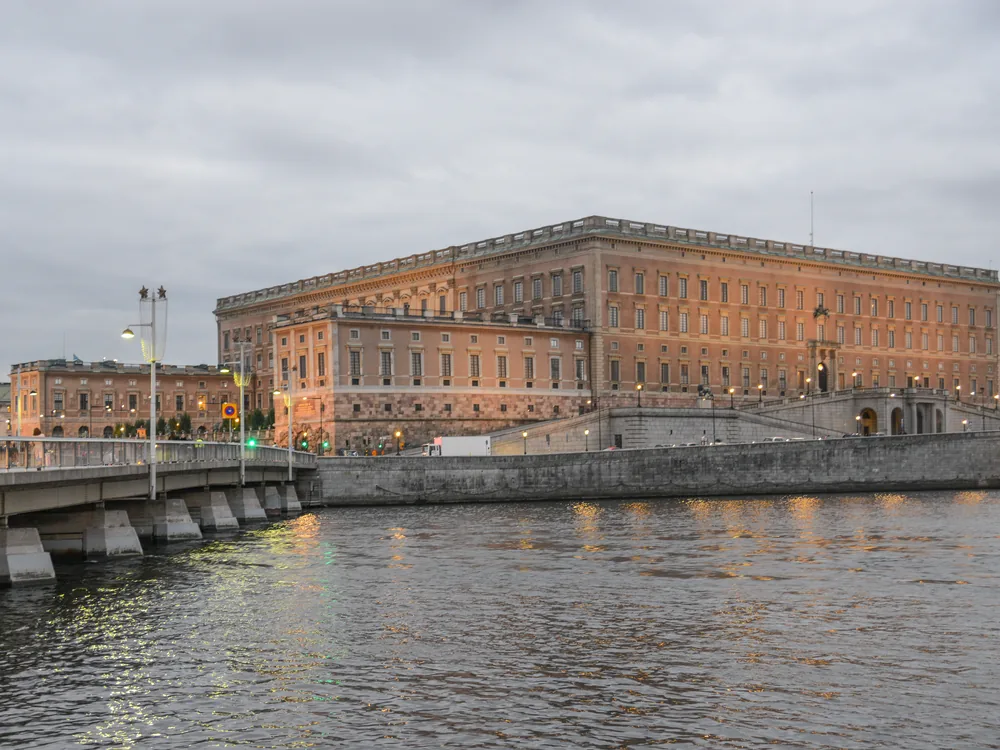
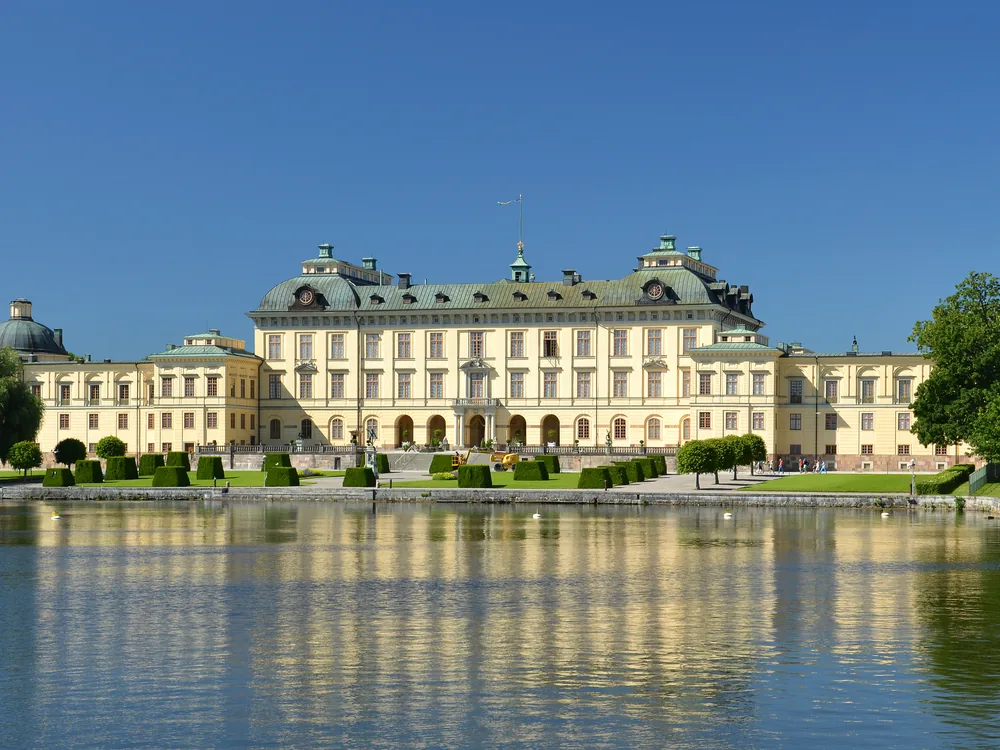
Combine with: Stockholm Royal Palace (10 minutes' walk on Gamla Stan — the official royal residence of the Swedish monarchs and the largest functioning royal palace in the world by room count, representing the public face of Swedish royal architecture in contrast to the Hallwyl's private domestic interior) and Drottningholm Palace (UNESCO World Heritage royal palace on Lovön island, 30 minutes from central Stockholm by boat — the most complete baroque royal palace in Scandinavia).
Frequently Asked Questions
Wilhelmina von Hallwyl was driven by the belief that the family's home and collection should be preserved as a complete historical document for future generations — a conviction that was unusual even among wealthy collectors of her era, who more commonly donated selected highlights to public museums rather than entire domestic interiors. Her approach was scientific rather than sentimental: she brought in experts to help document each object and insisted on systematic, consistent recording methods. The 78-volume catalogue that resulted is itself a significant archival achievement, and her donation of the palace to the Swedish state with the condition of in-situ preservation was the logical conclusion of the same impulse — not just the objects but the context in which they were used and arranged.
Location
Hamngatan 4, 111 47 Stockholm, Sweden
Nearby Castles
Tours & Tickets
Powered by GetYourGuide
From
€14/ person