
Maiden's Tower
Kız Kulesi
Turkey · Istanbul — southern mouth of the Bosphorus, off Üsküdar, Asian side · Near Istanbul
Built -408 · A tiny islet fortification 200 metres off Üsküdar, with origins as a 408 BC Athenian watchtower; the present structure has Byzantine 12th-century foundations, destroyed and rebuilt by Mehmed II after the 1453 Ottoman conquest, and later served in turn as a lighthouse, quarantine station and military outpost through the Ottoman era
This page is part of an independent travel guide and is not affiliated with, endorsed by, or operated by Maiden's Tower.
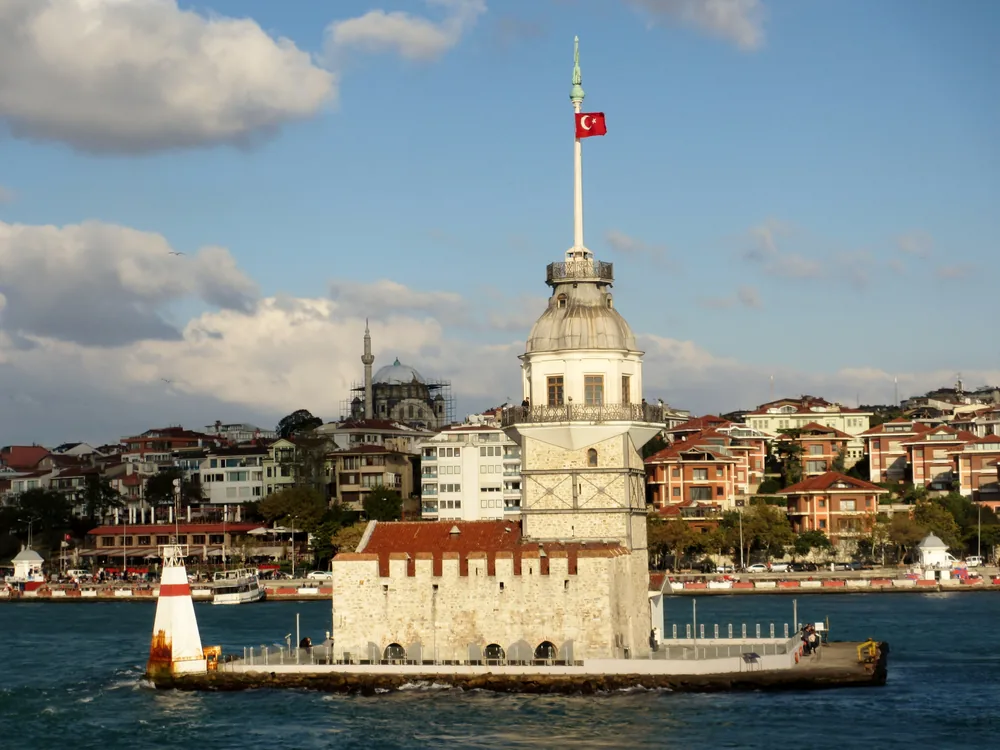
© Castles & Palaces
Quick Facts
- Hours
- Daily 09:30–17:00
- Entry via GYG
- €39
- Duration
- 1.5–2 hours including boat transfer
- Best time
- Year-round
- Nearest city
- Istanbul
Featured Tour
Istanbul: Maiden's Tower Entry Ticket with Audio Guide
Cancellation available · Instant confirmation
Highlights
- ✦Origins trace to 408 BC, when Athenian general Alcibiades is said to have built a watchtower here to monitor ships arriving from the Black Sea
- ✦In 1110, Byzantine Emperor Alexios I Komnenos built a wooden tower behind a stone wall, linked by an iron chain to another tower on the European shore at Mangana, closing the strait to hostile ships
- ✦The Turkish name, Kız Kulesi ("Maiden's Tower"), and the alternate English name, Leander's Tower, come from two separate legends — one about an emperor's daughter and a fatal snakebite, the other from the Greek myth of Hero and Leander
Skip the queue with a guided tour
Skip-the-line tickets & expert guides
Maiden's Tower occupies a tiny islet at the southern mouth of the Bosphorus, barely 200 metres off the coast of Üsküdar on Istanbul's Asian side. Its origins reach back to 408 BC, when the Athenian general Alcibiades is said to have built a watchtower here to monitor ships arriving from the Black Sea — a strategic chokepoint that any power controlling the Bosphorus needed to watch.
The structure known today has Byzantine roots: in 1110, Emperor Alexios I Komnenos built a wooden tower protected by a stone wall, from which an iron chain stretched to another tower on the European shore, in the Mangana district of Constantinople — a defensive system designed to close the strait to hostile vessels.
During the Ottoman conquest of Constantinople in 1453, the tower held a Byzantine garrison commanded by the Venetian Gabriele Trevisano. It was destroyed in the siege and rebuilt on the order of Sultan Mehmed II, going on to serve successive functions — lighthouse, quarantine station, and military outpost — throughout the Ottoman era.
The tower is famous for two legends that give it its two names. The first, the "maiden's legend" behind its Turkish name Kız Kulesi, tells of an emperor who had the tower built to protect his daughter from a prophecy that she would die from a snakebite; on her 18th birthday, an asp hidden in a basket of exotic fruit bit her anyway, fulfilling the oracle. The second legend, of Greek origin, gives the tower its alternate English name, Leander's Tower: according to the myth of Hero and Leander, Hero was a priestess of Aphrodite living in a tower at Sestos on the Hellespont; one stormy night, Leander drowned swimming to visit her, and Hero threw herself from the tower in grief.
Today the tower operates as a museum and café, and is one of Istanbul's most photographed landmarks, visible from both shores of the Bosphorus.
History
The islet's watchtower origins trace to 408 BC under Athenian general Alcibiades. In 1110, Byzantine Emperor Alexios I Komnenos built a wooden tower behind a stone wall, linked by chain to a tower on the European shore at Mangana. Destroyed during the 1453 Ottoman conquest while defended by a Venetian-commanded Byzantine garrison, it was rebuilt under Mehmed II and served over the centuries as a lighthouse, quarantine station, and military outpost. It operates today as a museum and café.
How to Visit
Getting there: The only access is by boat, departing from the Karaköy pier, directly in front of the Ziraat Bank. Boats run daily between 09:30 and 17:00, with departures roughly every 90 minutes.
Tickets: The GYG entry ticket does not include the boat fare — that is purchased separately at the ticket office beside the pier. Budget for both when planning your visit. The GYG ticket includes an audio guide in 25 languages, free cancellation up to 24 hours in advance, and a reserve-now-pay-later option.
Practical tips: Several reviewers have flagged the boat fare as a point of confusion, since it isn't bundled into the GYG ticket price — confirm this at booking so it isn't a surprise on the day. Time your visit around the roughly 90-minute sailing intervals to avoid a long wait at the pier.
Combine with: The wider Bosphorus waterfront on both the European and Asian shores, easily reached from the same Karaköy pier area.
Frequently Asked Questions
No — the GYG entry ticket covers the tower and its museum, but the boat crossing from Karaköy pier is a separate cost, purchased at the ticket office beside the pier. Several visitor reviews specifically flag this as easy to miss when booking.
Location
Salacak Mevkii, Üsküdar, 34668 İstanbul, Turkey
Nearby Castles
Tours & Tickets
Powered by GetYourGuide
From
€39/ person