
Château Rhianfa
Wales · Anglesey — Menai Strait · Near Bangor
Built 1849 · Victorian Loire-château-style mansion built 1849–1851, designed by architect Charles Reed, Grade II* listed
This page is part of an independent travel guide and is not affiliated with, endorsed by, or operated by Château Rhianfa.
© Castles & Palaces
Quick Facts
- Rooms from
- £107 / night
- Hotel rating
- 4-Star Hotel
- Duration
- Afternoon tea: 1–2 hours, served daily; overnight stay separately bookable
- Best time
- Year-round
- Nearest city
- Bangor
Stay Here
Château Rhianfa
4-Star HotelBooked via Booking.com · Free cancellation on most rates
Open to day visitors without booking a room — see How to Visit below.
Highlights
- ✦Built 1849–1851 by Sir John Hay-Williams, 2nd Baronet of Bodelwyddan, for his wife Lady Sarah, as a 'dower house' — a refuge intended for his wife and daughters in the event of his death
- ✦'Rhianfa' means 'dwelling of ladies' in Welsh, directly reflecting the house's original purpose
- ✦Grade II* listed, styled after the châteaux of the Loire Valley that the Williams family had encountered on their travels through France; designed by architect Charles Reed
- ✦A genuine 19th-century construction, not a modern recreation — the same precedent as Peckforton Castle, Bovey Castle and Augill Castle in England
- ✦Sold in 1957 and converted into apartments; reopened as a hotel in 2012 with 21 suites
Stay in the castle itself
Book a room via Booking.com
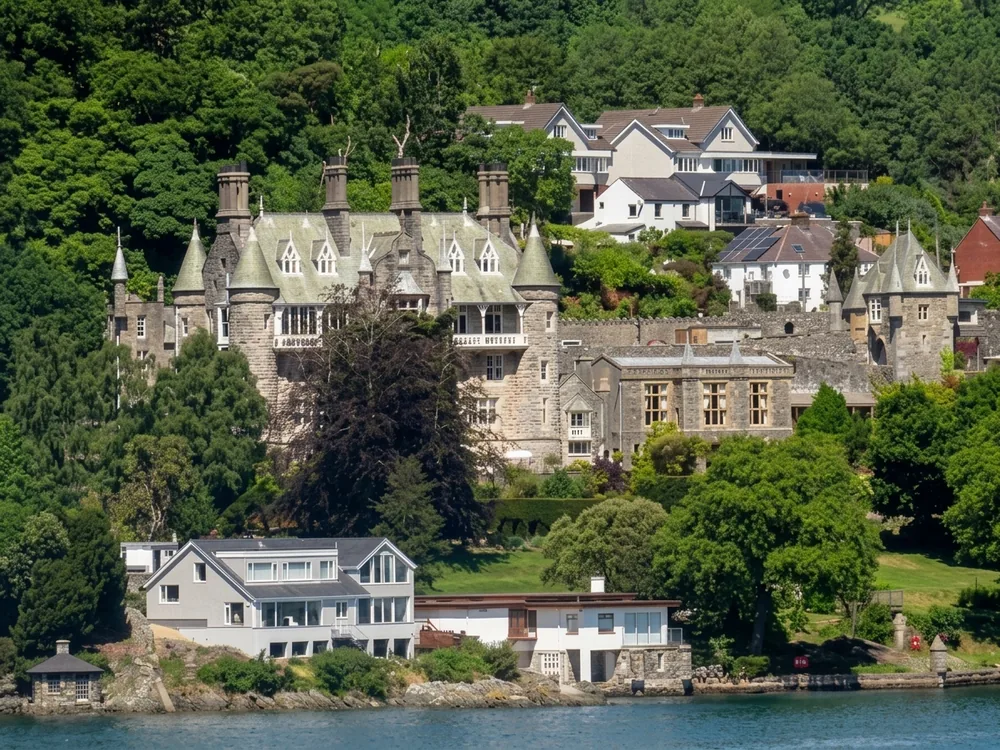
Château Rhianfa occupies a striking position on the Anglesey shore of the Menai Strait, the narrow tidal channel separating the island of Anglesey from mainland Wales, and its origins lie in a genuinely personal act of Victorian family provision rather than any military or defensive need. The house was built between 1849 and 1851 by Sir John Hay-Williams, 2nd Baronet of Bodelwyddan, for his wife Lady Sarah, conceived specifically as a 'dower house' — a residence intended to provide for a wife and daughters in the event of the baronet's death, a common if rarely so elaborately executed provision among wealthy Victorian landowning families.
The house's Welsh name captures that original purpose directly: 'Rhianfa' translates as 'dwelling of ladies', an unusually literal and evocative name for a building whose entire conception centred on securing the future of the women of the Hay-Williams family. That name has endured even as the building's function has changed dramatically over the intervening century and a half, from private family refuge to apartments to its current life as a hotel.
Architecturally, Château Rhianfa is one of the more distinctive buildings in this entire collection: rather than following the Scottish Baronial or English Gothic Revival conventions found at most other properties in this pilot, the house was styled after the châteaux of France's Loire Valley, which the Hay-Williams family had encountered directly on their travels through France. Architect Charles Reed translated that continental inspiration into a genuinely striking Welsh building, complete with the steep slate roofs, turrets and dormered towers characteristic of Loire château design, set against the very different backdrop of a Welsh tidal strait rather than a French river valley. The house holds Grade II* listed status, and it is worth being explicit that this is a genuine piece of mid-19th-century construction — an authentic period building drawing on historical French architectural style, not a modern pastiche or fantasy recreation, placing it alongside Peckforton Castle, Bovey Castle and Augill Castle in England as a legitimate example of Victorian-era 'revival' or 'inspired' architecture that nonetheless qualifies as genuinely historic.
One naming detail is worth noting for visitors researching the property online: Booking.com's own internal listing slug for the property is 'plas-rhianfa' (Welsh for 'Rhianfa mansion'), but the name displayed on the booking page itself is 'Château Rhianfa', matching the name by which the property is popularly and commercially known today — there is no meaningful naming discrepancy to navigate here, unlike some other properties where a historic name and a current commercial name diverge more significantly.
The house passed out of the Hay-Williams family's hands in 1957, when it was sold and converted into apartments, a common fate for large Victorian country houses in the mid-20th century as maintaining such properties as single-family residences became increasingly impractical. Château Rhianfa's more recent history has seen a return to its original grandeur: the building reopened as a hotel in 2012, now offering 21 suites across the restored château.
Today, non-residents are welcomed for afternoon tea, served daily in lounges overlooking the Menai Strait, with a champagne option available for those wanting to elevate the experience. Reservations are recommended given the popularity of the strait-view seating. The hotel also operates its own restaurant, Le Dragon Rouge, giving visitors a further dining option beyond the afternoon tea service. For anyone exploring Anglesey or the wider Menai Strait — an area also home to Beaumaris Castle and the Britannia and Menai Suspension bridges — Château Rhianfa offers a rare opportunity to take tea inside a genuine slice of imported French château architecture, built for entirely Welsh Victorian family reasons on the shore of one of Wales' most historic waterways.
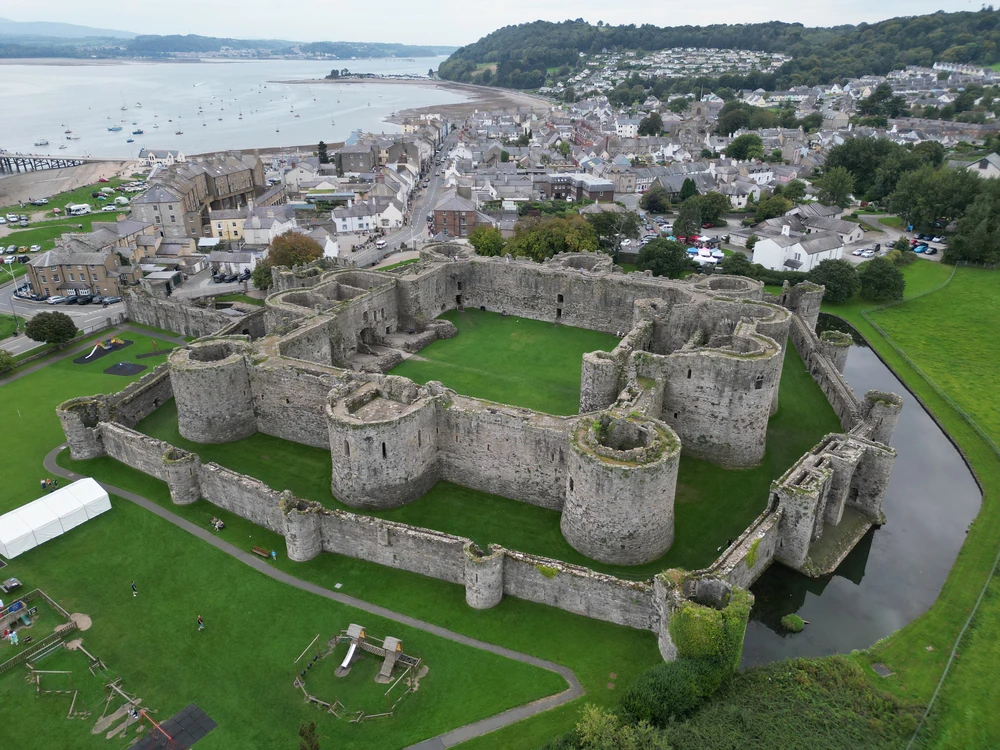
The Menai Strait itself has been a crossing point of major strategic and engineering importance for centuries, from the medieval ferry crossings that preceded Thomas Telford's 1826 Menai Suspension Bridge to Robert Stephenson's later Britannia railway bridge — both visible from parts of the Anglesey shoreline near Château Rhianfa. That concentration of engineering and architectural landmarks within a few miles of one another gives the area a genuinely rich day-trip potential well beyond the château alone, and visitors staying at Rhianfa or stopping for its afternoon tea can easily combine the visit with Beaumaris Castle, Edward I's last and most technically sophisticated Welsh fortress, a short drive along the strait.
History
Château Rhianfa was built between 1849 and 1851 by Sir John Hay-Williams, 2nd Baronet of Bodelwyddan, for his wife Lady Sarah, as a 'dower house' intended to provide for her and their daughters. Its Welsh name, meaning 'dwelling of ladies', reflects that original purpose. Grade II* listed, the house was styled after the châteaux of France's Loire Valley, which the family had encountered on their travels, and designed by architect Charles Reed. The property was sold in 1957 and converted into apartments before reopening as a hotel in 2012 with 21 suites.
Frequently Asked Questions
Yes. Afternoon tea, including a champagne option, is served daily in lounges overlooking the Menai Strait, explicitly available to non-residents with a reservation. The hotel also operates its own restaurant, Le Dragon Rouge.
Location
Water Street, Menai Bridge, Anglesey LL59 5NS, Wales
Nearby Castles
Rooms from
£107/ night