Schloss Hof Palace
Schloss Hof
Austria · Lower Austria (Niederösterreich) — Engelhartstetten, Marchfeld, near the Slovak/Hungarian border · Near Vienna
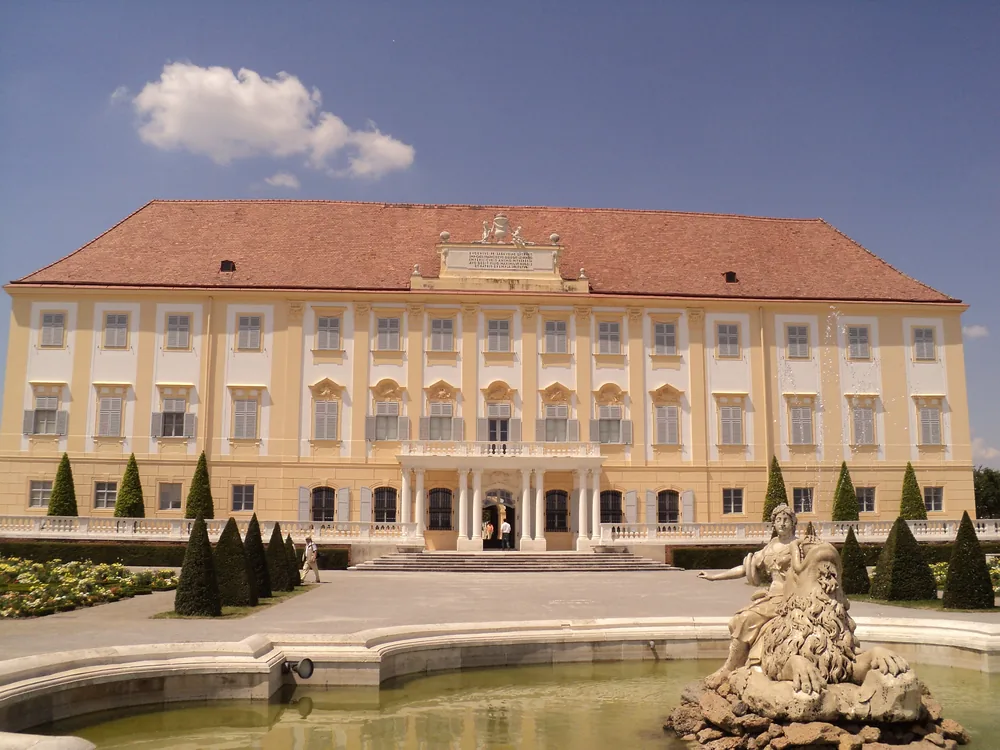
Built 1725 · High Baroque palace and estate complex, 1725–1770s, Austria's largest baroque palace complex outside Vienna — originally a hunting lodge in the Marchfeld, acquired by Prince Eugene of Savoy in 1725 and expanded by the Viennese court architect Johann Lukas von Hildebrandt into a substantial baroque country seat; after Eugene's death in 1736, the estate was purchased by Empress Maria Theresa in 1755 and further expanded into the current seven-wing complex, the largest baroque country residence in Austria after Schönbrunn; the seven terraced baroque gardens descend from the palace toward the March River (the Slovak border); the working estate farm (Meierhof) — a major baroque agricultural compound — was also expanded under Maria Theresa and today houses heritage animal breeds; the interiors include ceremonial state halls, royal apartments, and exhibitions on Habsburg lifestyle, hunting culture, and court ceremony
This page is part of an independent travel guide and is not affiliated with, endorsed by, or operated by Schloss Hof Palace.
© Castles & Palaces
Quick Facts
- Hours
- Mon 10:00–18:00. Wed–Sun 10:00–18:00. Closed Tue
- Guided tour from
- €99
- Duration
- 2.5–3 hours (palace interior, ceremonial halls, royal apartments, terraced baroque gardens, estate farm); allow a full half-day
- Best time
- April to October
- Nearest city
- Vienna
Featured Tour
Vienna: Schloss Hof Palace Guided Tour with Transfers
Cancellation available · Instant confirmation
Highlights
- ✦Prince Eugene of Savoy's creation — Austria's greatest military commander — Prince Eugene of Savoy (1663–1736), the Savoyard prince who commanded Habsburg armies against the Ottomans, the French, and the Spanish for four decades, acquired the Marchfeld estate and commissioned the expansion of its hunting lodge into a baroque palace from 1725; Eugene was one of the greatest military figures of his era — he fought at Zenta (1697), Blenheim (1704), and Belgrade (1717) — and was simultaneously one of Austria's most ambitious architectural patrons; the Baroque Belvedere in Vienna was his winter palace; Schloss Hof was his country seat
- ✦Empress Maria Theresa's expansion — Habsburg family life on a grand scale — after Eugene's death in 1736, Maria Theresa purchased Schloss Hof in 1755 and transformed it into Austria's largest baroque country residence outside Vienna; the empress used the estate for Habsburg family summer life, hunting, and court ceremony; the scale of the seven-wing palace complex, the seven terraced baroque gardens descending toward the March River, and the working estate farm reflects her ambition to create a complete baroque world in the Marchfeld countryside
- ✦Seven terraced baroque gardens — one of Central Europe's finest — the gardens at Schloss Hof descend in seven terraces from the palace toward the March River, which forms the border with Slovakia; each terrace has its own formal composition of parterres, fountains, and trained trees; the whole composition — viewed from the palace's upper windows looking down across the terraces toward the river — is one of the most complete surviving expressions of High Baroque garden design in Central Europe
- ✦The estate farm with heritage animal breeds — the Meierhof, the working agricultural compound of the Schloss Hof estate, is itself a major baroque complex expanded by Maria Theresa; today it houses rare heritage breeds including Noriker horses, Mangalitsa pigs, and other historically significant farm animals; for families, the Meierhof gives the visit a living, interactive dimension that baroque palace interiors typically cannot provide
- ✦A quieter alternative to Schönbrunn — all the Habsburg grandeur, a fraction of the crowds — Schloss Hof receives a fraction of Schönbrunn's annual visitors despite offering comparable baroque grandeur, genuine historical depth, and substantially more space; for visitors who find Schönbrunn overwhelmed by tourism, Schloss Hof is the logical alternative — the same world, at a different scale of visitor pressure
Skip the queue with a guided tour
Skip-the-line tickets & expert guides
The Marchfeld — the flat agricultural plain east of Vienna between the Danube and the March River — is one of Austria's least visited landscapes from the perspective of international tourism. It is also, historically, one of the most significant: the plain where the Habsburg dynasty won the Battle of Marchfeld in 1278, establishing its dominance over the Austrian lands; the plain that Prince Eugene of Savoy crossed returning from campaigns against the Ottomans; the plain where Empress Maria Theresa retreated from the pressures of Vienna court life into something resembling private family existence at an enormous scale.
Prince Eugene of Savoy (1663–1736) acquired the Marchfeld hunting lodge that would become Schloss Hof in 1725, commissioning the Viennese court architect Johann Lukas von Hildebrandt — the same architect he employed for the Belvedere in Vienna — to transform it into a baroque country palace. Eugene was 62 when he bought Schloss Hof; his military career was largely complete, his place in Austrian history established across four decades of campaigns against the Ottomans, the Spanish, and the French. The palace he built in the Marchfeld was a retirement project in the same sense that Versailles was a retirement project for Louis XIV: not a relaxation of ambition but its continuation by other means.
Eugene died in 1736, leaving Schloss Hof to his niece, who sold it. Empress Maria Theresa purchased the estate in 1755 and expanded it into the largest baroque country residence in Austria outside Schönbrunn. The seven-wing palace, the seven terraced baroque gardens descending toward the March River (which forms the current border with Slovakia), and the expanded working estate farm (the Meierhof) together constitute a complete baroque world in the Marchfeld countryside — a statement of Habsburg ambition at imperial scale, placed in the agricultural plain rather than a dramatic landscape setting.
The seven terraced gardens are the most immediately impressive feature for visitors approaching the palace from the court of honour. Each terrace has its own formal composition — parterres, fountains, trained trees — and the sequence descends from the palace's main floor to the level of the March River below. Viewed from the palace's upper windows or from the upper terrace, the composition reads as one continuous design: the classic High Baroque ambition to subject the natural landscape to architectural order across a vast horizontal extent. The gardens were restored to their 18th-century character in a major project completed in 2008, which brought them back from a long period of degradation.
The palace's state rooms and royal apartments contain exhibitions on Habsburg court life, hunting culture at the Marchfeld estate, and the personal history of Prince Eugene and Maria Theresa. The hunting dimension is worth noting: the Marchfeld was one of the primary imperial hunting grounds, and the culture of the great imperial hunt — a major ceremonial and social event that could last days and involve hundreds of participants — was as much a part of Schloss Hof's purpose as the formal apartments and state ceremonies.
The estate farm (Meierhof), expanded by Maria Theresa into a major baroque agricultural complex, is one of Schloss Hof's most distinctive features for contemporary visitors. The Meierhof now houses rare heritage animal breeds — Noriker horses, Mangalitsa pigs, and others — making it one of the few baroque palace complexes where the agricultural heritage is maintained in living form rather than merely displayed as documentary history. For families, the Meierhof provides the interactive, outdoor dimension that palace interiors typically lack.
The GYG guided tour from Vienna (t1198397) covers the 50-kilometre journey from the city in both directions, includes skip-the-line admission and a 1.5-hour guided palace tour, and leaves 1.5 hours free for the gardens, Meierhof, and the palace café. It is a five-hour programme from Vienna that gives the visit the structure that a self-organised day trip to a location without convenient public transport requires.
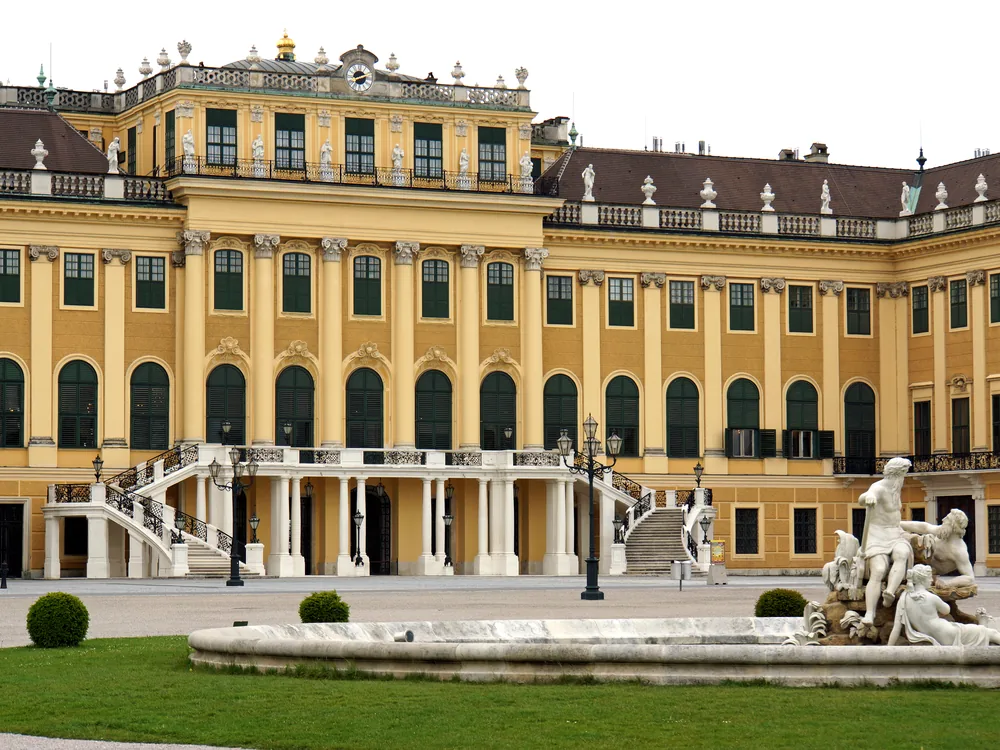
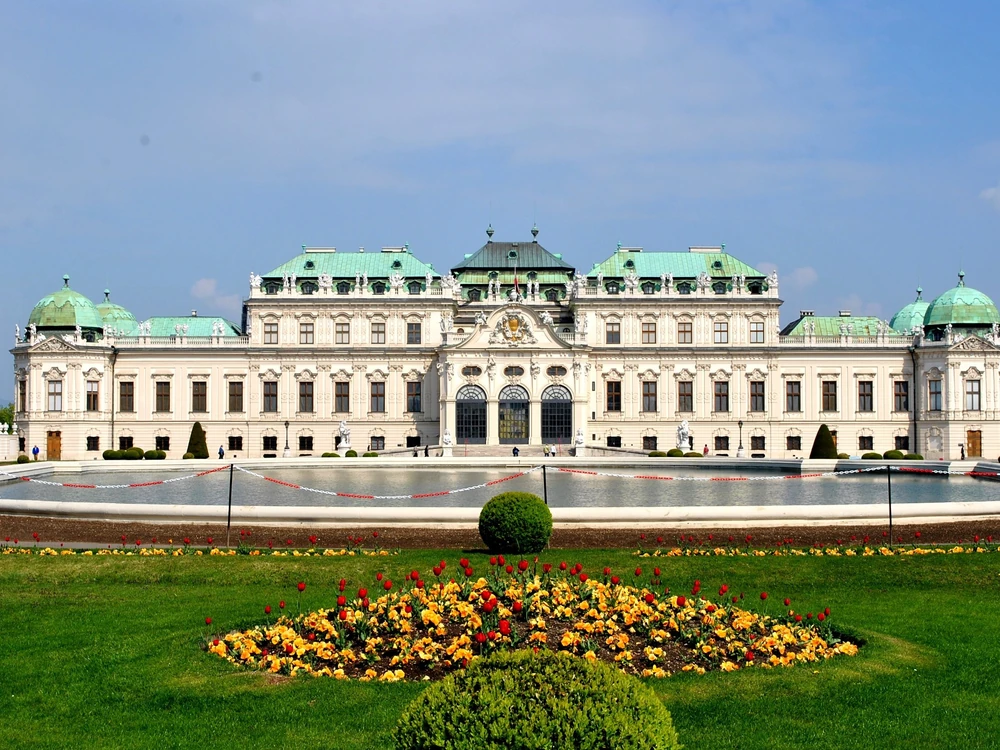
For visitors staying in Vienna who have already visited [Schönbrunn Palace](/castles/austria/schonbrunn-palace) and [Belvedere Palace](/castles/austria/belvedere-palace) — the two major baroque palaces within the city — Schloss Hof is the logical next destination: comparable Habsburg grandeur, substantially fewer crowds, and a different kind of baroque landscape — flat, agricultural, frontier — that gives the Marchfeld estate a character that the garden palaces of Vienna cannot replicate. [Hofburg Palace](/castles/austria/hofburg-palace) — the Habsburg imperial city residence in central Vienna — completes the standard Vienna palace trio that Schloss Hof extends.
History
Prince Eugene of Savoy acquired the Schloss Hof estate in 1725, following the string of military victories over the Ottomans and the French that had established him as the most celebrated commander in Habsburg service. He brought Johann Lukas von Hildebrandt — who had already designed his Vienna winter palace, the Belvedere — to expand a modest hunting lodge into a full baroque complex. The terraced gardens and symmetrical wings that rose between 1726 and 1736 transformed an agricultural estate into one of the most ambitious private residences in the Habsburg lands outside the capital. When Eugene died in 1736, the property passed to his niece and was sold, its scale suddenly left without an adequate patron.
The palace found its most purposeful era under Empress Maria Theresa, who purchased it in 1755 and commissioned further expansion into a seven-wing complex with a comprehensively organised working estate farm. For the Empress — whose reign combined absolute political authority with a carefully constructed domestic self-presentation — Schloss Hof served as the setting for family life, hunting, and court events in a deliberately less formal register than the Vienna palaces. Under her direction it became Austria's largest baroque country estate outside the capital, a role it sustained through the remainder of the 18th century.
The estate's primary function diminished through the 19th and 20th centuries. A major restoration programme begun in the 1980s and substantially completed by 2008 returned the gardens and palace interiors to something approaching their 18th-century character. The site is now managed by the Marchfeldschlösser company as a major heritage tourism destination, with a heritage animal farm among its visitor attractions.
How to Visit
Getting there: Schloss Hof is approximately 50 km east of Vienna — approximately 45 minutes by car on the A4/A6. Public transport is limited: regional train from Vienna to Marchegg, then taxi or local bus approximately 5 km to Engelhartstetten. Open Wednesday–Monday, March to November; closed Tuesdays and January to mid-February.
Tickets: Walk-up entry is €20 adults, €10 children. The GYG guided tour (t1198397, from €99, 5.0★/2 reviews) includes round-trip transport from Vienna, skip-the-line admission, a 1.5-hour guided tour of the palace, and 1.5 hours free time for the gardens, estate farm, and café — the most practical option for visitors without a car.
Practical tips: View the seven terraced gardens from the palace's upper windows before descending — the full multi-terrace composition toward the March River and the Slovak border reads best from above. The Meierhof estate farm with its heritage animal breeds (Noriker horses, Mangalitsa pigs) is the most distinctive feature not found at any other Vienna-area baroque palace; allow 30 minutes there, especially with children.
Combine with: [Schönbrunn Palace](/castles/austria/schonbrunn-palace) and [Belvedere Palace](/castles/austria/belvedere-palace) — Schloss Hof is the logical next Vienna-area baroque palace for visitors who want to see Habsburg grandeur without Schönbrunn-level crowds.
Frequently Asked Questions
Schloss Hof and Schönbrunn are both major baroque imperial palaces with extensive formal gardens, but the visitor experience is substantially different. Schönbrunn receives approximately 3.5 million visitors per year — crowds are a persistent feature of any visit. Schloss Hof receives a small fraction of that number, giving the same quality of baroque architecture and gardens a calmer, less pressured context. Schönbrunn is the more architecturally elaborate building with more rooms open to the public; Schloss Hof has the unique addition of the working heritage animal farm (Meierhof) and the dramatic multi-terrace garden composition looking toward the Slovak border. For visitors who have already seen Schönbrunn, Schloss Hof is the obvious extension; for visitors who have not, both are worth the effort.
Location
Schloss Hof, 2294 Engelhartstetten, Lower Austria, Austria
Nearby Castles
Tours & Tickets
Powered by GetYourGuide
From
€99/ person