
Kamerlengo Castle
Tvrđava Kamerlengo
Croatia · Trogir, Split-Dalmatia County, Croatia · Near Trogir
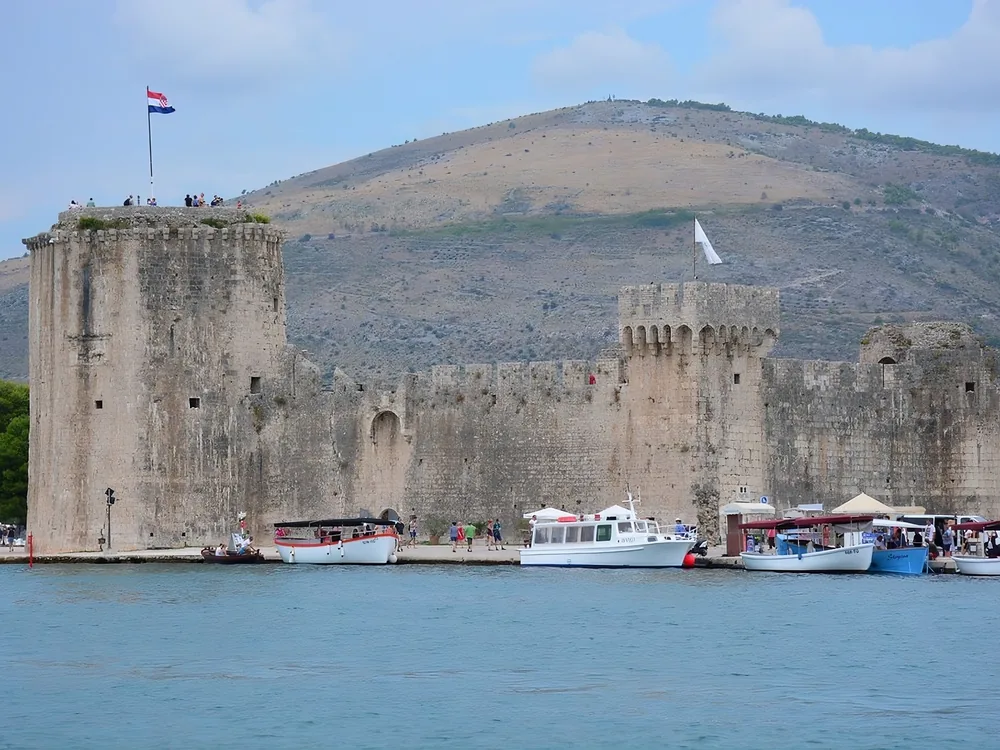
Built 1437 · Venetian 15th-century coastal fortress; L-shaped plan with a large circular tower at the seaward corner and a rectangular fortified court; built to defend the western sea approach to Trogir's UNESCO-listed old town island; located on Trogir's western waterfront, visible from the sea and from the old town's main promenade
This page is part of an independent travel guide and is not affiliated with, endorsed by, or operated by Kamerlengo Castle.
© Castles & Palaces
Quick Facts
- Hours
- Daily 09:00–21:00
- Guided tour from
- €12.8
- Duration
- 30–45 minutes (exterior and courtyard); 2–3 hours for full Trogir old town
- Best time
- May to October
- Nearest city
- Trogir
Featured Tour
Trogir: Guided Walking Tour of the Old Town
Cancellation available · Instant confirmation
Highlights
- ✦Trogir's UNESCO setting — Kamerlengo Castle stands at the western end of Trogir's old town island, a UNESCO World Heritage Site (1997) described as 'an outstanding example of urban continuity' from the Hellenistic period through the medieval Venetian era; the castle is the western anchor of the island's urban composition
- ✦The 'Camerlengo' name — derived from the Venetian administrative title for the official who managed finances; Venetian chamberlains administered the city's revenues and the castle's name reflects the administrative weight the Venetian Republic placed on this Dalmatian outpost
- ✦The circular tower rising above the Adriatic — Kamerlengo's most striking architectural feature is its large seaward circular tower, visible from the sea approach to Trogir and from the open water between the town and Čiovo Island; it is the defining silhouette of Trogir's western waterfront
- ✦Trogir's Cathedral of St. Lawrence — a medieval masterwork in the old town centre, featuring the Romanesque portal by Master Radovan (1240) considered the finest Romanesque sculpture in Croatia; a short walk from Kamerlengo
- ✦The GetYourGuide guided walking tour of Trogir (new listing) covers Kamerlengo Castle and the old town highlights with a professional guide — an efficient and affordable introduction to one of Dalmatia's finest historic towns
Skip the queue with a guided tour
Skip-the-line tickets & expert guides
Kamerlengo Castle stands at the western tip of Trogir's old town island — the Venetian fortress that anchors the seaward edge of one of Dalmatia's most complete medieval urban ensembles. The name 'Kamerlengo' is a corruption of 'camerlengo', the Venetian term for the official who managed the financial administration of a subject city; the Venetian Republic administered Trogir as a prized Dalmatian possession, and the castle's name reflects the administrative importance of the relationship.
The fortress was built in the early 15th century — construction is generally dated to around 1420–1437 — as the Venetian Republic reinforced its Dalmatian defences against Ottoman expansion. The plan is an L-shaped fortification with a large circular tower at the seaward corner, rising above the Adriatic channel between Trogir and Čiovo Island. The tower is Kamerlengo's most distinctive feature: visible from the sea as ships approach Trogir, it defined the fortress's presence as a maritime landmark as much as a military one.
Trogir old town was inscribed as a UNESCO World Heritage Site in 1997 for its extraordinary completeness as a medieval Adriatic city: the street pattern, the Gothic and Romanesque buildings, the city walls, and the Venetian loggia are all largely intact. Kamerlengo is the fortress that anchors the western end of this composition. The courtyard hosts an open-air cinema in summer and is used for cultural events — it is a living urban space rather than a pure museum.
The GetYourGuide guided walking tour of Trogir covers Kamerlengo Castle's exterior and setting alongside the old town's principal monuments: the Cathedral of St. Lawrence with its extraordinary Romanesque portal by Master Radovan (1240), the Čipiko Palace, and the city's medieval North Gate. The tour is a guided walk through the exterior and public spaces of the city — not an interior museum tour — and gives a well-contextualised introduction to Trogir's heritage.
History
Trogir (ancient Tragurion) was founded by Greek colonists from Syracuse in the 3rd century BC and has been continuously inhabited since. Roman, Byzantine, Croatian, Hungarian, and Venetian administrations succeeded one another, and the city's medieval fabric reflects primarily the Venetian period (1420–1797), during which the city was governed as part of the Republic of Venice's Dalmatian possessions. Kamerlengo Castle was built in the early Venetian period (c. 1420–1437) to defend the western sea approach to the city. The fortress remained in use through the Venetian period and into Austrian administration after 1797. It was never seriously besieged; the Ottoman advance into Dalmatia was checked by the Venetian defence system of which Kamerlengo was a part. The castle was used for various purposes in the 20th century and is now primarily a cultural and events space, with its courtyard serving as Trogir's summer open-air cinema.
How to Visit
Getting there: Trogir is 27 km west of Split on the Dalmatian coast. Regular buses run from Split bus station to Trogir (30–40 minutes). By car, take the road toward Split Airport — Trogir is adjacent to the airport. The old town island is pedestrianised and reached by crossing the bridge from the mainland near the bus station. Kamerlengo Castle is at the western end of the old town, a 5-minute walk from the main square.
Tickets: Walk-up entry to Kamerlengo Castle (exterior and courtyard, with access to the tower in season) costs approximately €5 per adult, €2 per child. The GetYourGuide guided walking tour of Trogir (new listing) covers the castle's exterior and setting alongside the old town's key monuments, with a professional English-speaking guide. Note: the GetYourGuide tour is a walking introduction to Trogir's heritage — the guide covers the castle's context, exterior, and architectural significance; it does not include paid interior access as a separate line item.
Practical tips: Combine the Kamerlengo exterior with a walk along Trogir's waterfront promenade to the Čiovo Island bridge — the castle reads best from the water side. The Cathedral of St. Lawrence, 5 minutes' walk away, is Trogir's supreme architectural achievement: the Romanesque portal carved by Master Radovan in 1240 is the finest sculpted medieval portal in Croatia. Allow 2–3 hours total for Kamerlengo, the cathedral, and the old town.
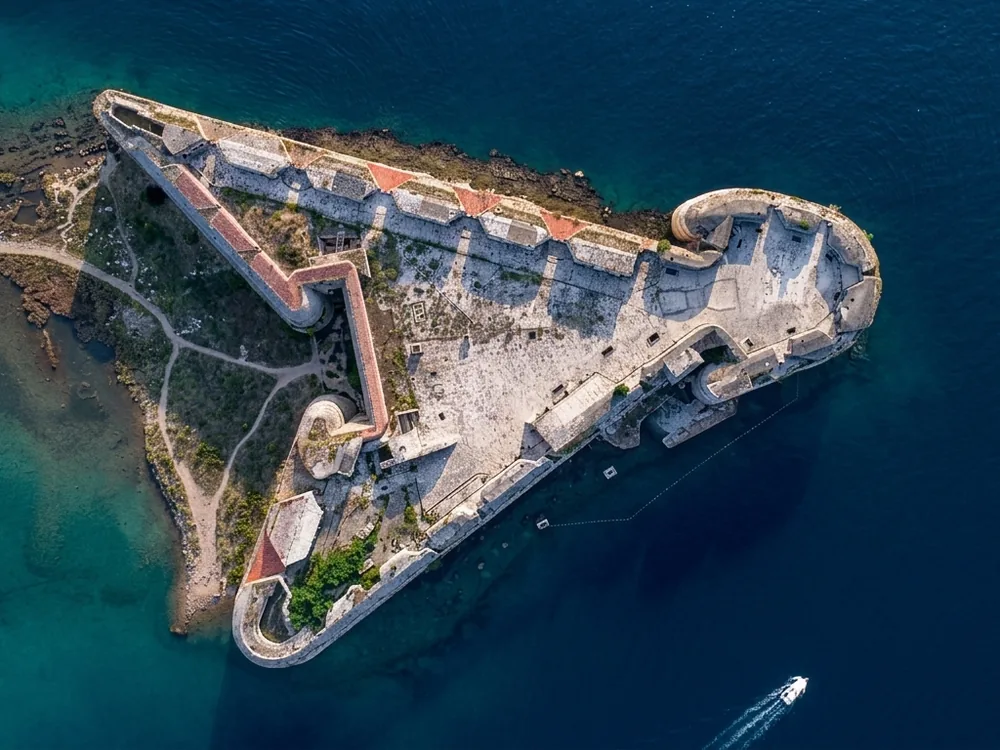
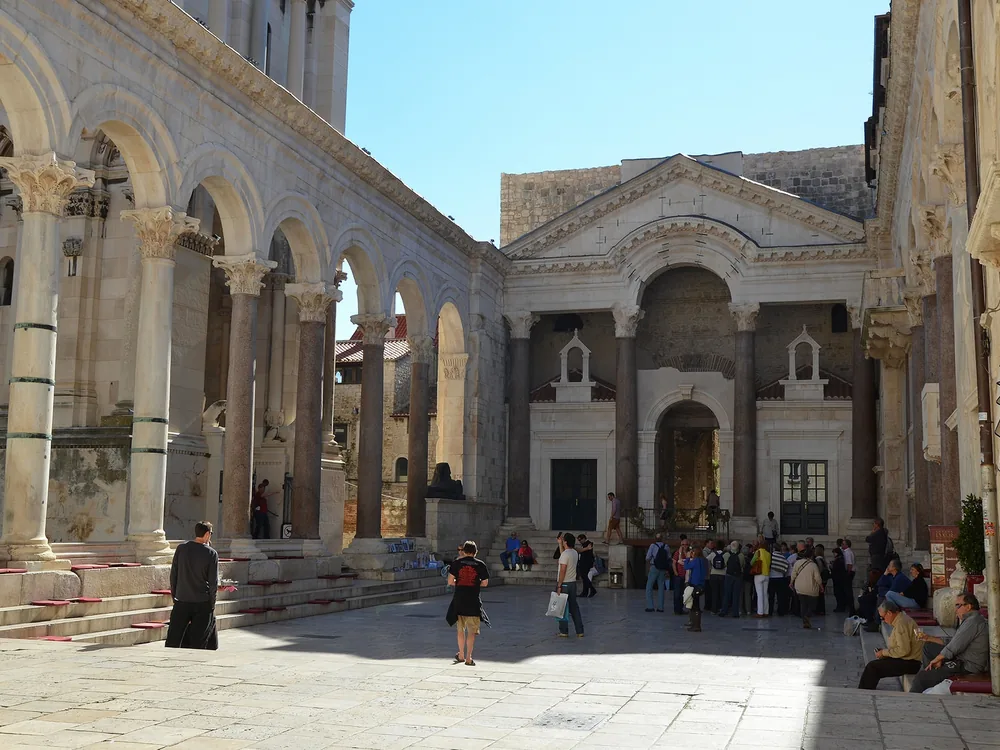
Combine with: St. Nicholas Fortress (~25 km north near Šibenik — the UNESCO-listed Venetian sea fortress best viewed from a sea-kayak tour on the Šibenik Channel) and Diocletian's Palace (~27 km east in Split — the Roman imperial palace-city that forms the entire historic core of Split, a UNESCO World Heritage Site).
Frequently Asked Questions
Camerlengo (Venetian camerlengo, Latin camerarius) was the title of the official who managed the financial and administrative affairs of a Venetian subject city — equivalent to a treasurer or chamberlain. The Venetian Republic's Dalmatian possessions were administered by appointed rectors and financial officers, and the Trogir camerlengo held significant local power. The fortress apparently took its name from this official's association with the fortification's administration or construction, though the exact etymology is debated. The name is sometimes also associated with the papal title (Camerlengo of the Holy Roman Church), which is a coincidence of terminology.
Location
Tvrđava Kamerlengo, Trogir 21220, Split-Dalmatia County, Croatia
Nearby Castles
Tours & Tickets
Powered by GetYourGuide
From
€12.8/ person