
Medvedgrad Fortress
Medvedgrad
Croatia · Zagreb County — Medvednica Mountain Nature Park, above the Šestine district, Zagreb · Near Zagreb
Built 1254 · High medieval double-walled fortress with three gates; octagonal Chapel of St. Philip and James with Romanesque portal; built in response to the 1242 Mongol invasion of Croatia
This page is part of an independent travel guide and is not affiliated with, endorsed by, or operated by Medvedgrad Fortress.
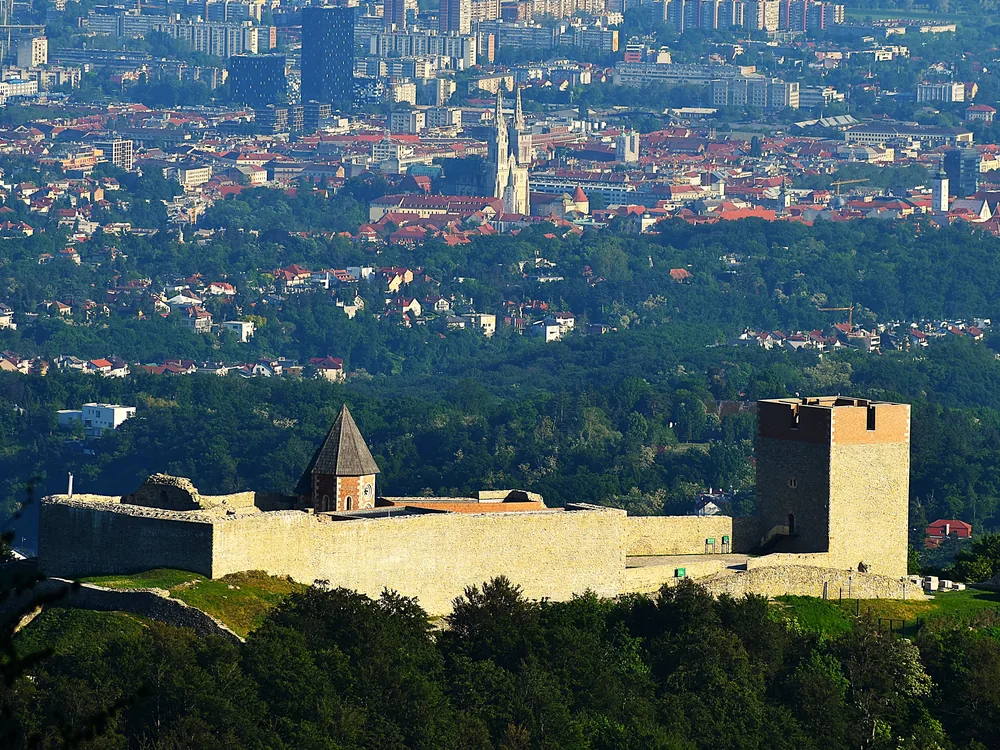
© Castles & Palaces
Quick Facts
- Hours
- Daily Daylight hours
- Guided tour from
- €58
- Duration
- 3 hours total (1.5h hike up + time at the fortress + return); the guided hiking tour runs 3 hours
- Best time
- April to October
- Nearest city
- Zagreb
Featured Tour
Zagreb: Easy Hike to Medvedgrad Fortress
Cancellation available · Instant confirmation
Highlights
- ✦Built in direct response to the 1242 Mongol invasion of Croatia — construction began within years of the invasion, with the specific intent of creating a fortified hilltop retreat that could not be overwhelmed as the lowland settlements had been
- ✦Commissioned by the Bishop of Zagreb with the personal support of Pope Innocent IV — an unusual pairing of ecclesiastical and papal authority behind a military fortification, reflecting the scale of the Mongol threat to Christian Europe
- ✦Despite its imposing double walls and three gates, Medvedgrad was never attacked or besieged in its entire history — built as a response to an existential threat, it spent its medieval life as an administrative and ecclesiastical centre rather than a battleground
- ✦The octagonal Chapel of St. Philip and James, built within the fortress walls, features a nearly 3-metre-high Romanesque stone portal — one of the most significant examples of Romanesque ecclesiastical architecture in the Zagreb region
- ✦The Altar of the Homeland, a memorial flame to Croatian war dead established inside the fortress in 1991, adds an unexpected layer of contemporary national memory to the medieval setting
Skip the queue with a guided tour
Skip-the-line tickets & expert guides
In 1242, Mongol forces swept through Croatia, exposing the catastrophic vulnerability of the kingdom's lowland settlements. When the invasion withdrew, King Béla IV and Bishop Filip Türje of Zagreb drew a single clear lesson from the experience: the next time such a force came, there needed to be a fortress that could not be overrun. Construction of Medvedgrad began in 1249 and was completed in 1254 — a direct institutional response to an existential military threat, backed not only by royal authority but by the personal support of Pope Innocent IV, who recognised the Mongol incursion as a danger to the Christian order of Europe.
The fortress occupies a commanding position on the forested southern slopes of Medvednica Mountain, above the Šestine district of Zagreb, visible from much of the city below. Its design reflects the specific lessons of 1242: a double-walled perimeter, three controlled gate passages, and an elevated position that would require any attacker to fight uphill through dense forest before reaching the walls. Within those walls, the octagonal Chapel of St. Philip and James — featuring a nearly three-metre-high Romanesque stone portal — provided both spiritual and architectural substance to the fortress's character as an ecclesiastical as much as a military institution.
The great irony of Medvedgrad is that despite all this investment, it was never tested by siege. The fortress that the Mongol invasion demanded was never attacked in its entire medieval history. Instead, it passed through a succession of owners — Croatian and Hungarian royalty, the bishops of Zagreb, and the noble families of Šubić and Zrinski — serving as an administrative and ecclesiastical centre rather than a battlefield. Decline came not from conquest but from changing ownership, reduced strategic relevance, and gradual abandonment.
Today Medvedgrad is reached by a forest hiking trail through Medvednica Nature Park — about 45 minutes from Šestine — making it one of the more unusual castle destinations in the region: a serious medieval fortification that is also a leisure walk through forested mountain terrain. The Altar of the Homeland, a memorial flame established inside the fortress in 1991, adds a charged contemporary layer to the medieval setting.
History
Medvedgrad came into being as a direct consequence of the 1242 Mongol invasion — one of the most traumatic events in medieval Croatian history, which exposed the catastrophic vulnerability of the existing settlement pattern. Within years of the invasion, Bishop Filip Türje of Zagreb received the personal backing of Pope Innocent IV and began construction of a new fortress on the southern slopes of Medvednica Mountain, a position chosen for its elevated terrain and the natural barrier of dense forest. The work ran from 1249 to 1254, producing a double-walled fortification with three gate passages and the octagonal Chapel of St. Philip and James, whose Romanesque portal remains among the most significant ecclesiastical stonework in the Zagreb region. Ownership passed in subsequent centuries through the bishops of Zagreb, Croatian and Hungarian royal hands, and the powerful noble families of Šubić and Zrinski — a sequence of proprietors that reflects the fortress's administrative rather than military function, since it was never besieged during its entire medieval history. Gradual abandonment followed the decline of the Zrinski family's regional influence. A modern restoration project transformed the ruins into a hiking and heritage destination, and the establishment of the Altar of the Homeland memorial flame in 1991 added a contemporary dimension to the medieval structure.
How to Visit
Getting there: The guided hike starts at St. Mirko's Church in Šestine, accessible by Zagreb city buses from the centre (about 20 minutes). By car, drive to Šestine and park near the church. The trail runs through Medvednica Nature Park forest for approximately 45 minutes to the fortress.
Tickets: The fortress entry fee (~€8 adult, ~€6 students) is paid on site at the gate and is NOT included in the GetYourGuide hiking tour price — it is an optional extra charged separately on arrival. The GetYourGuide guided hiking tour — a 3-hour guided return hike through Medvednica Nature Park to the fortress, with a licensed guide explaining the fortress history and Zagreb context — can be booked in advance at the GetYourGuide link.
Practical tips: Wear proper walking shoes — the trail is a forest path with roots and some uneven sections, though no technical climbing is required. The fortress ramparts offer the best panoramic view of Zagreb and the Sava plain; clear days are essential for the full effect. The Altar of the Homeland memorial flame inside the fortress, established in 1991, gives the medieval site an unexpected layer of contemporary Croatian national memory worth pausing over.
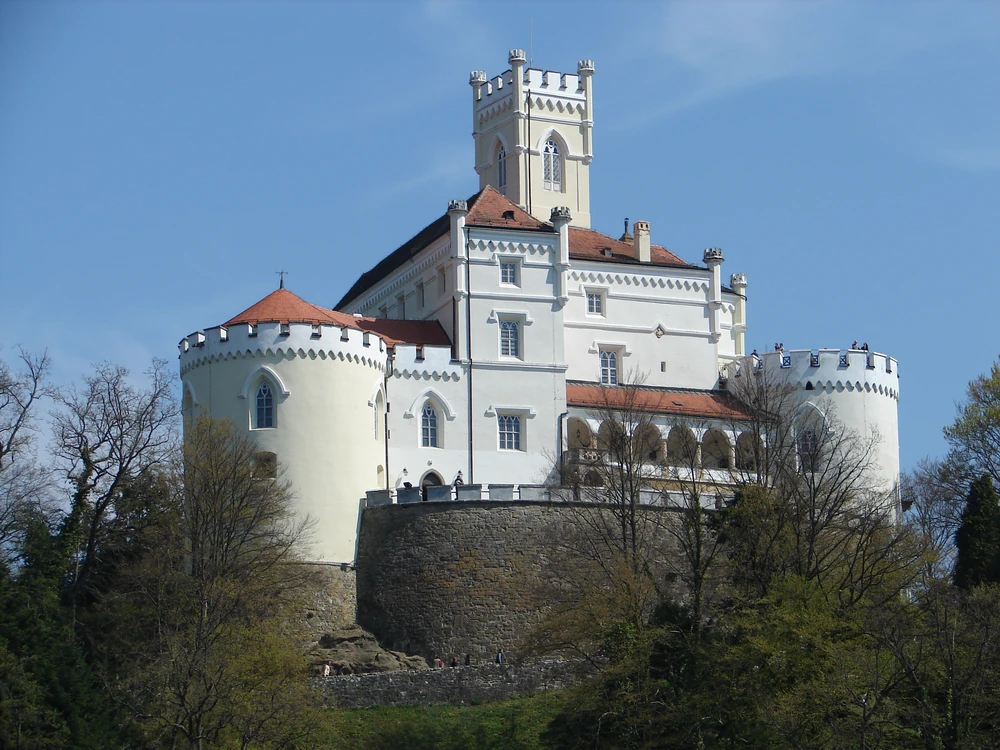
Combine with: Trakošćan Castle (~80 km northwest of Zagreb — Croatia's most photographed Romantic castle, perched above a forested lake in the Zagorje hills, a striking visual contrast to Medvedgrad's exposed hilltop position).
Frequently Asked Questions
No — despite being built specifically in response to the 1242 Mongol invasion of Croatia, the fortress was never besieged or attacked in its entire medieval history. It served primarily as an administrative and ecclesiastical centre, changing hands between bishops, kings, and noble families without ever functioning as a battlefield.
Location
Medvednica Nature Park, Šestine, 10000 Zagreb, Croatia
Nearby Castles
Tours & Tickets
Powered by GetYourGuide
From
€58/ person