Trakošćan Castle
Dvorac Trakošćan
Croatia · Krapina-Zagorje County · Near Zagreb
Built 1334 · Medieval / Romantic Neo-Gothic
This page is part of an independent travel guide and is not affiliated with, endorsed by, or operated by Trakošćan Castle.
© Unsplash
Quick Facts
- Hours
- Daily 09:00–17:00
- Day trip from
- €250
- Duration
- 1.5–2.5 hours
- Best time
- April to October
- Nearest city
- Zagreb
Featured Tour
From Zagreb: Fairytale Castle & Wine Tasting & Lunch
Cancellation available · Instant confirmation
Highlights
- ✦The most visited castle in Croatia, set on a wooded hill above a picture-perfect artificial lake
- ✦The romantic 19th-century restoration by Count Juraj Drašković created one of Europe's finest examples of Romantic historicism
- ✦The castle's reflection in the still lake water is one of Croatia's most photographed images
- ✦Inside: authentic Drašković family furnishings, weapons, portraits, and decorative arts spanning 600 years
- ✦Surrounded by 6 km of lakeside walking paths through ancient parkland
Skip the queue with a guided tour
Skip-the-line tickets & expert guides
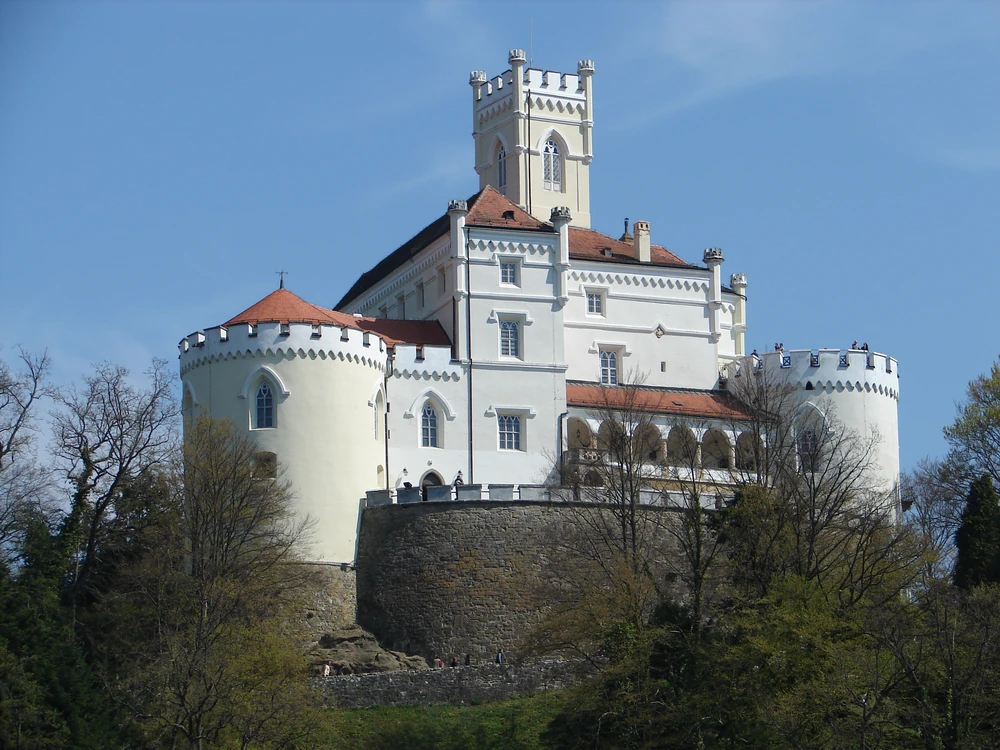
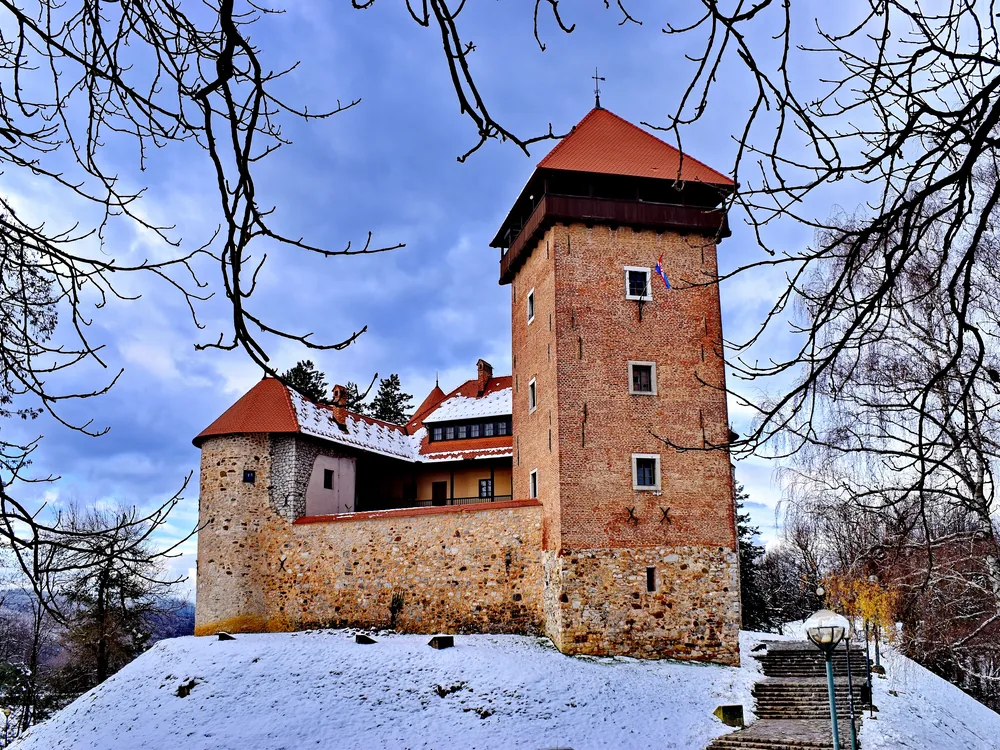
Every country has a castle it puts on its tourist posters, and Trakošćan is Croatia's. The image is always the same: white walls and round towers rising from a wooded hill, and below them a perfectly still artificial lake that mirrors the whole composition in its dark water. It is an image of such composed beauty that it seems almost contrived — yet Trakošćan has looked essentially like this for nearly two centuries, and the effect never becomes routine.
The castle's medieval origins date to 1334, when it appears in written records as a Hungarian border fortress in the hills of the Zagorje region north of Zagreb. But the castle that visitors see today is largely the product of a mid-19th-century romantic restoration by Count Juraj Drašković, who inherited Trakošćan in 1840 and transformed it according to the fashions of the Romantic era: towers were heightened, crenellations restored, the artificial lake created by damming the Bednja River, and the interior furnished as a romantic aristocratic residence rather than a military installation.
The Drašković family occupied the castle until World War II, accumulating the collection of weapons, portraits, furniture, and decorative arts that visitors see today in the 30 furnished rooms. The castle was nationalised after the war and opened as a museum, but unlike many nationalised properties, it retained much of its original furnishing rather than being emptied. Walking the rooms of Trakošćan, you see the genuine domestic life of a 19th-century Croatian noble family — not a reconstruction, but the thing itself.
History
Trakošćan first appears in records in 1334 as a military fortress guarding the Bednja valley on the border between the Hungarian Kingdom and the territories to the north. It passed through various noble families and was significantly modified in the 16th century when the Ottoman threat made defensive improvements urgent throughout this region of Croatia.
The castle came to the Drašković family in 1569 and remained in their possession for over 350 years. The decisive transformation came when Count Juraj Drašković inherited the property in 1840 and embarked on a comprehensive romantic restoration inspired by the neo-Gothic revival then sweeping European aristocratic architecture. Juraj commissioned Viennese architects to redesign the exterior, created the artificial lake by damming the Bednja River, and laid out the English-style parkland that still surrounds the castle. The restoration took approximately 20 years to complete.
The Drašković family continued to accumulate the furnishings, weapons, and portraits that fill the castle today until the communist takeover of Yugoslavia after World War II, when the property was nationalised. The castle was converted into a museum in 1953 and has been open to the public ever since. It was returned to state ownership after Croatian independence in 1991 and remains one of the most visited cultural sites in the country.
How to Visit
Getting there: Trakošćan is 65 km north of Zagreb — approximately 1 hour by car on the A4 motorway toward Varaždin, then regional roads toward Ivanec and Bednja. There is no direct public transport to the castle; the nearest bus-served town is Ivanec (10 km away). A rental car or organised tour is strongly recommended.
Tickets: Entry is €7 adult / €4 child; the lakeside walking path (6 km) is included with the castle ticket. The GYG day trip from Zagreb (t338976, from €250, 4.8★/28 reviews) includes Trakošćan Castle, a wine tasting, and lunch on a 7-hour circuit.
Practical tips: Allow 1.5–2.5 hours total — 30–45 minutes for the 30 furnished museum rooms, and 1–1.5 hours for the lake circuit. The famous mirror reflection of the castle is best before midday when the lake surface is still; from the far end of the lake you get the full composition that appears on every Croatian tourism poster. The castle is busiest on summer weekends; arrive early.
Combine with: [Veliki Tabor](/castles/croatia/veliki-tabor), Croatia's best-preserved medieval fortress 30 km southeast in the same Zagorje region, makes a natural second stop on a day trip from Zagreb. [Dubovac Castle](/castles/croatia/dubovac-castle) near Karlovac is the other accessible inland castle for a broader central Croatia circuit.
Frequently Asked Questions
It is consistently ranked as such — and for visual impact, the combination of hilltop position, white walls, and perfect lake reflection is unmatched in Croatia. Dubrovnik's city walls are more dramatic and historically significant, and the Dalmatian coast has impressive Venetian fortifications, but for the classic fairy-tale castle image in a pastoral setting, Trakošćan is the Croatian standard.
Location
Trakošćan 1, 42253 Bednja, Croatia
Nearby Castles
Tours & Tickets
Powered by GetYourGuide
From
€250/ person