
Dubovac Castle
Stari grad Dubovac
Croatia · Karlovac County, Central Croatia · Near Karlovac
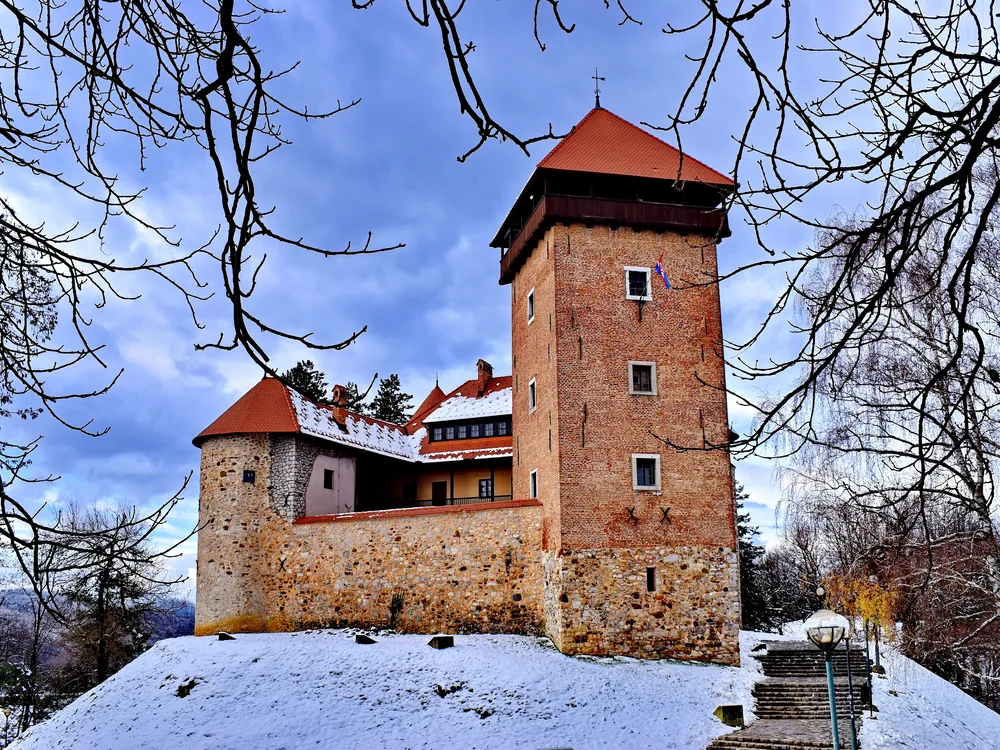
13th century · Medieval hilltop fortress overlooking the confluence of four rivers at Karlovac — first fortified in the 13th century, expanded significantly in the 15th and 16th centuries by the Frankopan and later Zrinski noble families as part of Croatia's Military Frontier (Vojna krajina) defense network against Ottoman expansion; the castle occupies a strategic hilltop above the Kupa river valley at the point where the Kupa, Korana, Mrežnica, and Dobra rivers converge — the four-river confluence that defines Karlovac's geography; three-tower structure with a central residential tower and connecting curtain wall, substantially in its Renaissance-military character; one of Croatia's best-preserved medieval fortresses; now houses the Karlovac City Museum (Gradski muzej Karlovac) with collections covering regional history, Frankopan and Zrinski family history, and the Croatian Military Frontier; hosts public events including the Dubovac castle fairy-tale/heritage festival
This page is part of an independent travel guide and is not affiliated with, endorsed by, or operated by Dubovac Castle.
© Castles & Palaces
Quick Facts
- Hours
- Tue–Sun 10:00–18:00. Closed Mon
- Guided tour from
- €560
- Duration
- 1–1.5 hours
- Best time
- April to October
- Nearest city
- Karlovac
Featured Tour
From Zagreb to Karlovac, Dubovac Castle, and War Museum
Cancellation available · Instant confirmation
Highlights
- ✦The Frankopan family — one of the most powerful Croatian noble dynasties of the medieval and early modern period, related to the Habsburgs and at various points controlling much of coastal and inland Croatia — are the defining noble family of Dubovac's medieval history; the Frankopans expanded the castle significantly in the 15th century as the Ottoman advance through the Balkans made the Military Frontier increasingly critical; their subsequent alliance with the Zrinski family — whose members include the Croatian national hero Nikola Šubić Zrinski, who died defending Szigetvár from Suleiman the Magnificent in 1566 — links Dubovac to one of the defining episodes of Croatian resistance to Ottoman expansion in the 16th century
- ✦Karlovac's four-river confluence is the geographical reason both the city and the castle exist: the Kupa, Korana, Mrežnica, and Dobra rivers converge at this point, creating a network of waterways that made the area simultaneously strategically important (as a crossing and supply point) and naturally defensible (the rivers forming natural barriers around the promontory); Dubovac's hilltop above this confluence was the obvious command position for the entire river system; the Croatian Military Frontier — the Vojna krajina, a defensive zone established and maintained by the Habsburg military administration to buffer the Ottoman advance — ran through this exact landscape, and Dubovac was one of its key inland fortifications
- ✦The Croatian Military Frontier (Vojna krajina) was one of the most significant military administrative systems in European history — a belt of territory running from the Adriatic coast to Transylvania, governed directly by the Habsburg military rather than by civil Croatian or Hungarian institutions, populated largely by Vlach and Serbian settlers given land in exchange for military service; the system ran for approximately 350 years (c.1540–1881) and created a distinct social and demographic landscape across the Croatian and Slavonian interior; understanding Dubovac in its Military Frontier context explains both its architecture (designed for the Ottoman threat) and its social history (the castle as a node in a military administrative system rather than a purely feudal noble residence)
- ✦The Karlovac City Museum housed in Dubovac covers the Military Frontier period in detail alongside the Frankopan and Zrinski family collections — the combination of the castle building, the noble family history, and the frontier military context makes Dubovac one of the more coherent small regional museum experiences in continental Croatia; the castle also hosts the annual Dubovac Fairy-tale festival and heritage events that use the courtyards and towers as performing spaces
- ✦Karlovac itself — the city at the foot of the castle hill — was founded in 1579 as a purpose-built Habsburg military frontier town, designed in a star-shaped Renaissance fortification plan by the Italian military engineer Martin Gambon; the city's original hexagonal plan (six bastions around a central rectangular street grid) is still partially visible in the present-day urban layout, and the city's founding as a military installation 35 years before Descartes invented the coordinate system is worth noting as a piece of Renaissance geometry applied to frontier defense
Skip the queue with a guided tour
Skip-the-line tickets & expert guides
Dubovac Castle stands on a hilltop above the city of Karlovac in central Croatia, overlooking the confluence of four rivers — the Kupa, Korana, Mrežnica, and Dobra — that defines the geography of the city below. It is one of Croatia's best-preserved inland medieval fortresses, housing the Karlovac City Museum in its three-tower structure, and its history is inseparable from the Croatian Military Frontier and the centuries-long contest between the Habsburg Empire and the Ottoman advance through the Balkans.
The site was first fortified in the 13th century, but the castle's critical period came in the 15th and 16th centuries, when the Frankopan noble family expanded it significantly as the Ottoman threat transformed the Croatian interior from a regional political landscape into a military frontier. The Frankopans were one of the most powerful Croatian dynasties of the medieval period — related to the Habsburgs, controlling much of coastal and inland Croatia, and connected through family alliances to the Zrinski, another noble family whose name is embedded in Croatian national consciousness through the figure of Nikola Šubić Zrinski, who died defending Szigetvár from Suleiman the Magnificent's besieging army in 1566.
Dubovac's position at the four-river confluence explains its strategic importance in the Military Frontier system. The Croatian Military Frontier (Vojna krajina) was a belt of territory running from the Adriatic to Transylvania, governed directly by the Habsburg military administration rather than by civil Croatian institutions, and maintained as a defensive buffer against Ottoman expansion for approximately 350 years (c.1540–1881). Dubovac was one of the frontier's inland fortifications — a position controlling river crossings and supply routes through the Kupa valley corridor. The castle's three-tower structure with curtain wall reflects the Military Frontier's requirement for defensive installations capable of withstanding not just raids but sustained siege operations.
The city of Karlovac, at the foot of the castle hill, was founded in 1579 as a purpose-built Habsburg military frontier town — designed in a star-shaped Renaissance fortification plan with six bastions around a central rectangular street grid, the kind of ideal geometric military town that 16th-century Italian military engineers (the designer here was Martin Gambon) were developing across Europe. The city's founding plan is still partially visible in the present urban layout. Dubovac and Karlovac together form a paired landscape — the medieval hilltop fortress and the Renaissance grid town below — that documents the transition from feudal to modern military organisation across approximately 300 years of the same defensive landscape.
The Karlovac City Museum inside Dubovac covers the Frankopan and Zrinski period, the Military Frontier era, and the broader regional history of Karlovac County. The castle also hosts an annual fairy-tale and heritage festival and other events in the courtyard and towers.
The GetYourGuide product is a private guided tour from Zagreb covering Karlovac, Dubovac Castle, and the nearby Domovinsi Rat (Homeland War) museum — the €560 price is per group of up to 3 people, not per person; it is a private door-to-door service from Zagreb with local guided commentary, not a standard per-person ticket. Independent visitors can reach Karlovac from Zagreb by train or bus in approximately 1 hour (55 km), with Dubovac a 10-minute uphill walk from the city centre.
History
13th century: Initial fortification of the Dubovac hilltop above the four-river confluence. 15th century: Frankopan family expands the castle significantly as the Ottoman advance makes the Military Frontier critical. 16th century: Zrinski family also associated with the castle; Karlovac city founded (1579) as a Habsburg military frontier town below. c.1540–1881: Croatian Military Frontier operational period; Dubovac serves as a frontier fortification. 17th–19th centuries: Castle remains in use as the frontier is maintained, then gradually reduced as the Ottoman threat recedes. 1881: Military Frontier abolished; Castle passes to civilian administration. 20th century: Castle restored and converted for museum use. Present day: Houses the Karlovac City Museum; open Tuesday–Sunday.
How to Visit
Getting there: Karlovac is 55 km southwest of Zagreb — approximately 1 hour by train from Zagreb Glavni kolodvor (frequent departures) or 45 minutes by car on the A1 motorway. Dubovac Castle is a 10-minute uphill walk from Karlovac city centre.
Tickets: Walk-up entry is approximately €3 adult / €2 child; open Tuesday–Sunday, closed Mondays. The GetYourGuide private group tour from Zagreb (from €560 per group of up to 3) covers Karlovac, Dubovac Castle, and the Homeland War Museum as a door-to-door day trip; note the price is per group, not per person. Independent travel from Zagreb by train is significantly cheaper and straightforward.
Practical tips: The museum covers the Frankopan and Zrinski family history and the Croatian Military Frontier in detail — allow 1–1.5 hours inside. The four-river confluence below (Kupa, Korana, Mrežnica, and Dobra) is best seen from the castle ramparts; from the hilltop the logic of the castle's defensive position becomes immediately clear.
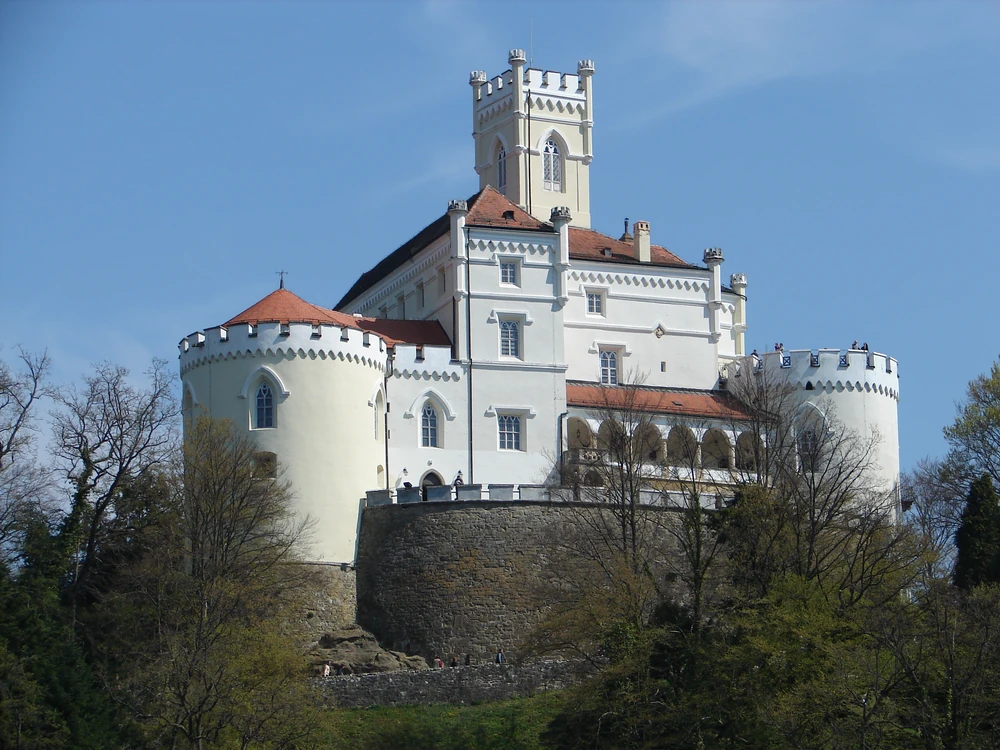
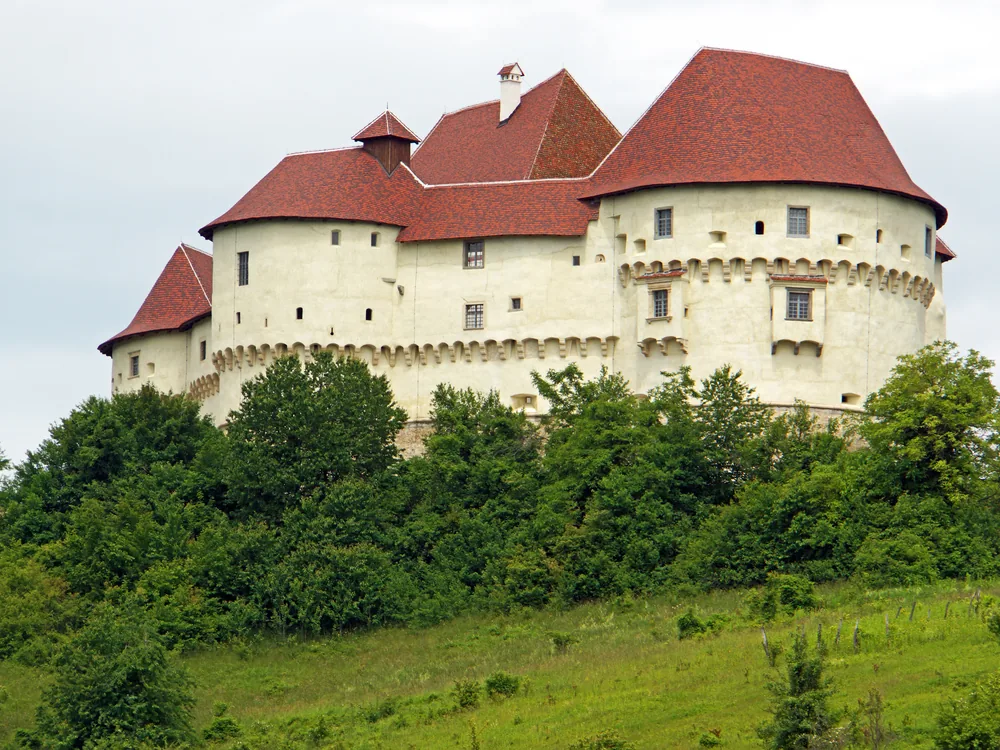
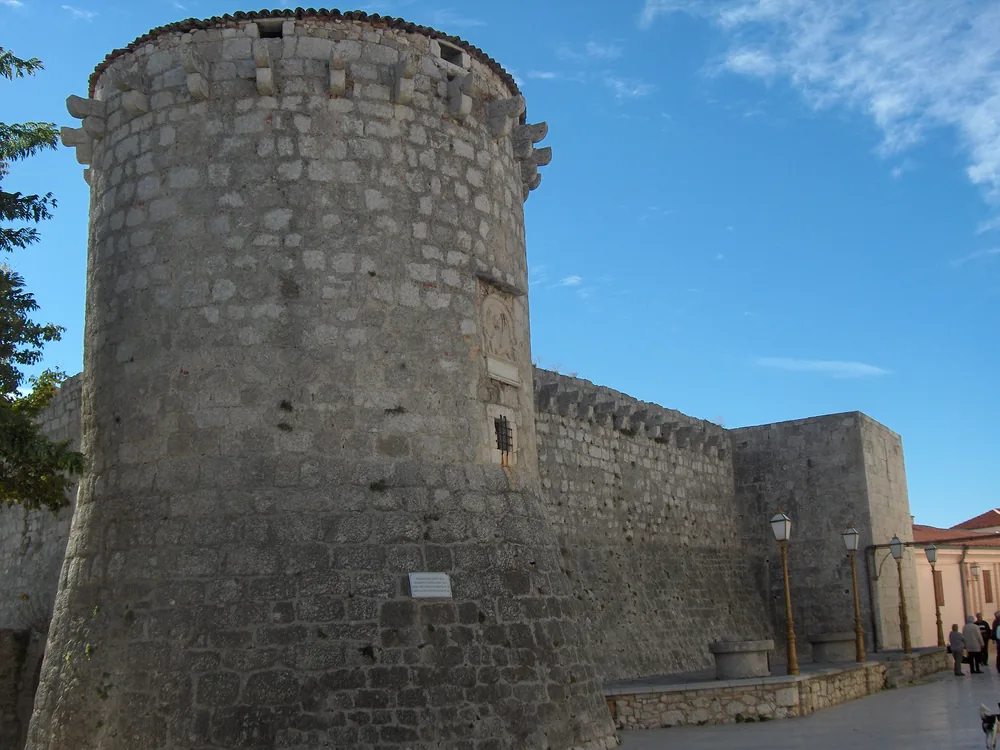
Combine with: Frankopan Castle in Krk town, the Frankopan dynasty's coastal seat, pairs naturally with Dubovac's inland frontier story. Trakošćan Castle and Veliki Tabor in the Zagorje are Croatia's other major inland medieval castles, reachable on a north Croatia circuit from Zagreb.
Frequently Asked Questions
The Croatian Military Frontier was a belt of territory running from the Adriatic coast to Transylvania, governed directly by the Habsburg military administration rather than by Croatian or Hungarian civil institutions, and maintained as a defensive buffer against Ottoman expansion for approximately 350 years (c.1540–1881). The frontier was populated largely by Vlach and Serbian settlers given land in exchange for military service. Dubovac Castle was one of its inland fortifications, controlling river crossings and supply routes through the Kupa valley.
Location
Dubovac 1, 47000 Karlovac, Croatia
Nearby Castles
Tours & Tickets
Powered by GetYourGuide
From
€560/ group