Sokol Fortress
Sokol Grad
Croatia · Dubrovnik-Neretva County / Konavle Valley · Near Dubrovnik
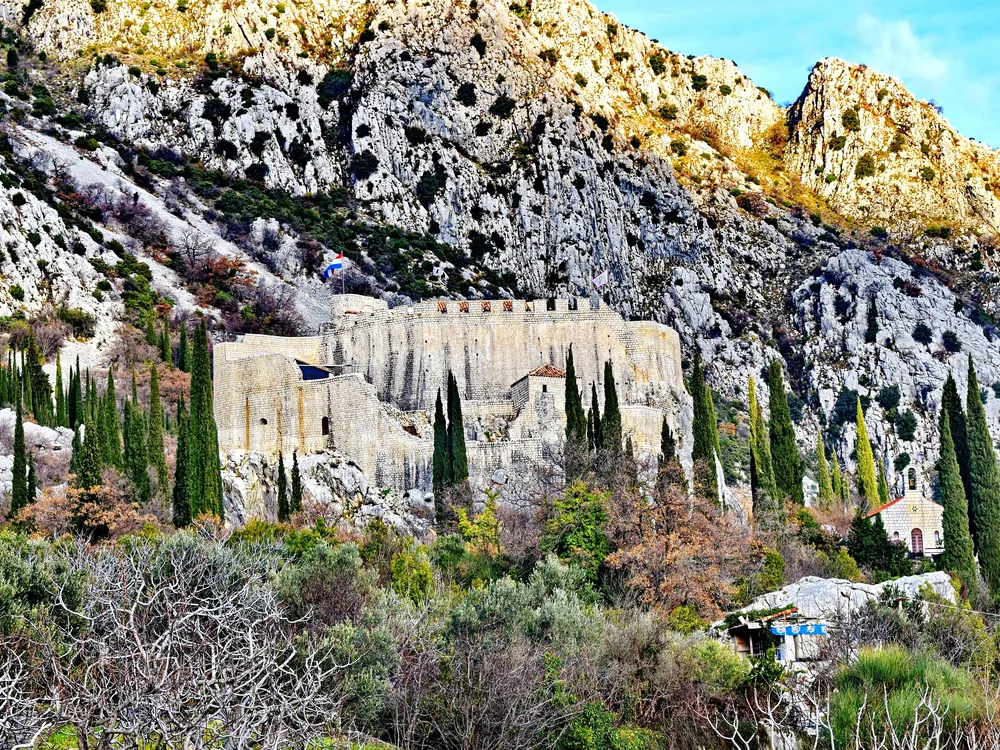
Medieval cliff-top fortress built into a karst rock formation — 'Sokol' means 'falcon' in Croatian, referring to the cliff-falcon (peregrine) that historically nested at the site; the fortress evolved from a natural defensive position on a sheer karst cliff to a military structure serving Ragusan (Dubrovnik Republic) interests from the medieval period through the early modern era; the current remains consist of defensive walls, towers, and cisterns built into the cliff face, accessible via a steep path from the valley floor
This page is part of an independent travel guide and is not affiliated with, endorsed by, or operated by Sokol Fortress.
© Castles & Palaces
Quick Facts
- Hours
- Daily 09:00–17:00
- Day trip from
- €224
- Duration
- 30–45 minutes at the fortress itself; 5 hours for the full GetYourGuide half-day Konavle Valley tour
- Best time
- April to October
- Nearest city
- Dubrovnik
Featured Tour
Konavle Valley & Sokol Fortress Half-Day Tour with Lunch (from Dubrovnik)
Cancellation available · Instant confirmation
Highlights
- ✦The name 'Sokol' (falcon) — the name references the peregrine falcons that historically nested on the karst cliffs; the fortress was built to exploit the natural defensive position of the cliff, and its name became part of the broader Ragusan (Dubrovnik Republic) defensive system that protected the southeastern approaches to the city-state
- ✦The Konavle Valley setting — Sokol Fortress overlooks the Konavle Valley, the fertile agricultural region southeast of Dubrovnik that was one of the most valued territories of the Dubrovnik Republic; the valley produces wine, olive oil, and figs, and retains a distinct local cultural tradition (Konavle folk embroidery and musical traditions are UNESCO-listed); the cliff fortress above the valley was the defensive anchor of this important agricultural territory
- ✦The Ragusan Republic's defensive network — Sokol Grad was part of the extraordinarily sophisticated defensive system that allowed the Dubrovnik Republic (Ragusa) to maintain its independence for over 450 years; the Republic used a network of hilltop fortresses, watchtowers, and city walls that, combined with careful diplomacy and payment of tribute to the Ottoman Empire from 1458, preserved Ragusan autonomy until Napoleon dissolved the Republic in 1808; Sokol Fortress guarded the valley approaches
- ✦The GetYourGuide half-day tour context (provider rating only, 5 hours, includes lunch) — the tour visits the Konavle Valley on a half-day circuit from Dubrovnik including the Sokol Fortress, local tavern lunch, and the valley landscape; **Sokol Fortress is one of several stops on the tour, not the exclusive focus** — the full tour also covers the valley's agricultural traditions and cuisine; the tour includes a guide
- ✦First southern Dalmatia / Konavle entry on this site — the site has existing Dalmatian coverage (Lovrijenac, Klis Fortress); Sokol Fortress adds the Konavle/southeast Dubrovnik area for the first time
- ✦Near Lovrijenac Fortress (~30km north in Dubrovnik itself) — Lovrijenac (the 'Gibraltar of Dubrovnik,' on this site) is the famous fortress outside the city walls used as a Game of Thrones filming location; the contrast between the urban Lovrijenac and the rural Sokol is a useful pairing for the broader Dubrovnik Republic defensive heritage
Skip the queue with a guided tour
Skip-the-line tickets & expert guides
Sokol Fortress — Sokol Grad in Croatian, 'sokol' meaning 'falcon' — occupies the top of a sheer karst cliff above the Konavle Valley, the fertile agricultural region that stretches southeast of Dubrovnik toward the Montenegrin border. The name refers to the peregrine falcons that historically nested on the karst limestone, and the fortress was built to exploit what the falcons had found first: a naturally defensible position, sheer on most sides, commanding the valley floor and the approaches from the south.
The Konavle Valley was among the most valuable territories of the Dubrovnik Republic (Ragusa), a city-state that maintained independence for over 450 years through a combination of diplomatic skill, payment of Ottoman tribute from 1458, and a sophisticated defensive network of walls, hilltop fortresses, and watchtowers. The Republic purchased the Konavle Valley in the early 15th century, and Sokol Fortress was the principal military installation securing the valley against incursions from the south — from Montenegro, Herzegovina, and the Ottoman-controlled hinterland. The Republic's defensive strategy was predicated on making military conquest sufficiently costly that attacking powers would prefer the tribute and trading relationships the Republic offered; the fortress network, of which Sokol was a component, made that calculation work.
The fortress itself is built into the cliff face — the natural rock formation provides most of the defensive work on the sheer sides, and the human construction concentrated on the more accessible approach: defensive walls, towers, cisterns for water storage (essential in any siege), and the residential and administrative structures needed by a permanent garrison. The site is authentically medieval rather than restored: the visitor experience is of a ruin that has been stabilised rather than reconstructed, with the structural elements visible in their original condition.
'Sokol' also connects to a wider network of falcon-fortress naming in the former Yugoslav territories: several fortresses in Bosnia and Herzegovina, Serbia, and Montenegro share the 'Sokol' name, reflecting the prevalence of peregrine falcons on karst cliff sites throughout the Dinaric Alps. The cliff-nesting falcon as a defensive-position indicator is a medieval military topography that predates the fortress constructions by centuries.
The GetYourGuide-listed half-day tour (5 hours, English guide) covers the Konavle Valley on a half-day circuit from Dubrovnik that includes the Sokol Fortress, a traditional Konavle lunch at a local tavern (konoba), and the valley landscape. The tour is an agricultural and heritage circuit with Sokol Fortress as one of several stops — **the fortress is not the exclusive focus of the tour**, but it is the principal historic site on the circuit. Visitors focused exclusively on the fortress can also reach it independently by car (approximately 30 minutes from Dubrovnik) and pay the walk-up entry fee.
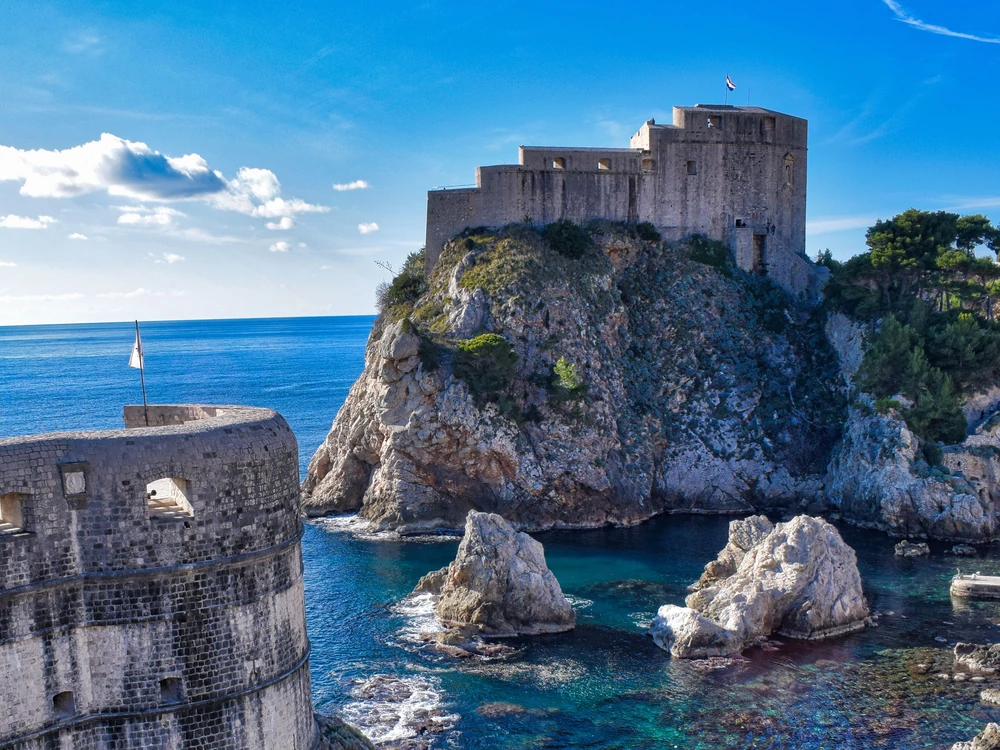
Lovrijenac Fortress — the famous 'Gibraltar of Dubrovnik' outside the city walls, used as a Game of Thrones filming location — is the natural urban companion to Sokol's rural position (both are on this site). The contrast between the two fortress types represents the breadth of the Ragusan defensive system: the elaborate city-adjacent fortification (Lovrijenac) and the valley-guarding cliff fortress (Sokol) were complementary elements of the same strategic system.
History
Konavle Valley acquired by the Dubrovnik Republic in the 1420s–1430s. Sokol Fortress developed and maintained as part of the Ragusan defensive network to protect the valley's southeastern approach. The Republic used a combination of fortresses, tribute payments, and diplomacy to maintain independence until Napoleon dissolved the Republic in 1808. Sokol Fortress fell into disuse after the Republic's dissolution. 20th–21st century: archaeological stabilisation and limited restoration; now a cultural site administered by the Dubrovnik-Neretva County and local municipality.
How to Visit
Getting there: From Dubrovnik, drive approximately 30 minutes southeast on the D8 toward Gruda village; the fortress is signposted from the valley floor. There is no regular public bus service — a car or the GetYourGuide tour are the practical options for most visitors.
Tickets: Walk-up entry is approximately €5 adult / €3 child. The GetYourGuide Konavle Valley half-day tour covers Sokol Fortress as one of several stops on a 5-hour circuit from Dubrovnik, including a traditional Konavle lunch at a local tavern; note the fortress is one stop on the tour, not its exclusive focus.
Practical tips: Allow 15–20 minutes uphill on a steep, rocky path from the valley floor to the entrance — sturdy footwear is essential; sandals are not suitable. The fortress itself is a stabilised ruin rather than a reconstructed site, so the experience is authentically medieval. Visit in spring (April–May) when the Konavle Valley below is green and the heat is manageable.
Combine with: Lovrijenac Fortress in Dubrovnik, 30 km north, is the urban Ragusan counterpart — the two fortresses together represent the Dubrovnik Republic's defensive system from the city walls to the southern valley approaches. Walls of Dubrovnik complete the Ragusan defensive picture on the same day.
Frequently Asked Questions
Sokol means 'falcon' in Croatian (and in related South Slavic languages). The name derives from the peregrine falcons that historically nested on the karst limestone cliffs at the site. Multiple fortresses in the former Yugoslav territories share the Sokol name — all on karst cliff sites where peregrines were present — reflecting the use of cliff-nesting falcon locations as natural defensive positions throughout the Dinaric Alpine zone.
Location
Dunave, 20215 Gruda, Croatia
Nearby Castles
Tours & Tickets
Powered by GetYourGuide
From
€224/ person