
Kyrenia Castle
Girne Kalesi
Cyprus · Kyrenia (Girne) District, Northern Cyprus · Near Kyrenia (Girne)
Built 700 · Layered Byzantine-Lusignan-Venetian harbour fortress — the original Byzantine castle of the 7th century AD was a four-towered rectangular enclosure built to protect the harbour against Arab raids; the Lusignan dynasty strengthened the structure following their acquisition of Cyprus in 1192; the fortress's present appearance is predominantly Venetian, dating from the major military modernization programme of the late 15th and early 16th centuries, when the walls were thickened to absorb cannon shot and cannon embrasures were cut; the Venetian remodel of c.1540 also preserved the 12th-century Byzantine Chapel of St. George, which still stands inside the walls; the castle encloses Kyrenia's small harbour on its eastern side and is visually inseparable from the harbour it was built to defend; the Shipwreck Museum, housed inside the castle, contains the conserved hull of a 4th-century BC Greek merchant ship discovered in 1965
This page is part of an independent travel guide and is not affiliated with, endorsed by, or operated by Kyrenia Castle.
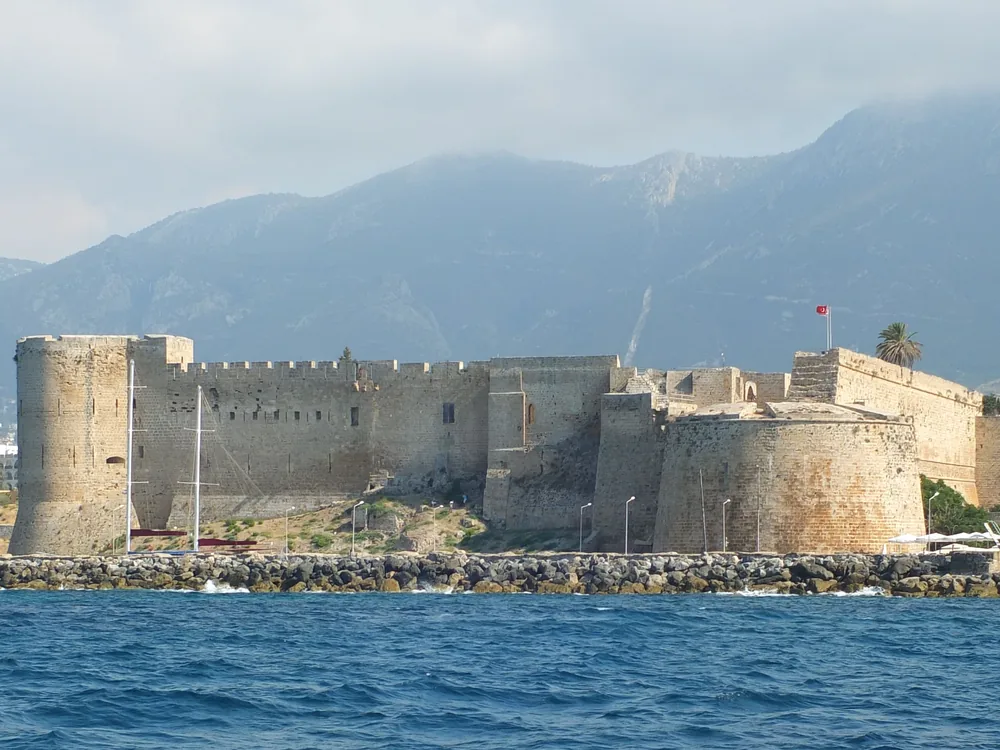
© Castles & Palaces
Quick Facts
- Hours
- Daily 09:00–19:00
- Guided tour from
- €79
- Duration
- 1.5–2.5 hours (castle + Shipwreck Museum + ramparts); 9 hours (GetYourGuide full day tour including St. Hilarion and Bellapais)
- Best time
- March to June and September to November
- Nearest city
- Kyrenia (Girne)
Featured Tour
Kyrenia, St. Hilarion Castle & Bellapais Abbey — Day Tour from Paphos
Cancellation available · Instant confirmation
Highlights
- ✦The Shipwreck Museum — the centrepiece of the castle; the conserved hull of a 4th-century BC Greek merchant ship discovered in 1965 by local diver Andreas Cariolou at 30 metres depth in Kyrenia harbour; the ship was laden with 29 wine amphorae from Rhodes, 10,000 almonds, and millstones from Kos and Rhodes; dendrochronological dating of the hull timbers suggests the ship was already approximately 80 years old when it sank around 300 BC, making it one of the oldest seagoing vessels ever recovered and conserved anywhere in the world
- ✦Richard the Lionheart's 1191 capture — en route to the Third Crusade, Richard I of England stopped at Cyprus and defeated the self-proclaimed Byzantine ruler Isaac Komnenos; Kyrenia Castle was among the fortifications Richard captured; the episode connected Cyprus directly to the Crusader history of the Holy Land and initiated the island's transition from Byzantine to Lusignan rule
- ✦Venetian cannon-era remodel (c.1540) — when Venice acquired Cyprus in 1489, military engineers undertook the systematic strengthening that defines the castle's present appearance: walls thickened to absorb cannon shot, cannon embrasures cut at strategic intervals, the round towers modified for the artillery era; the same engineers preserved the 12th-century Byzantine Chapel of St. George inside the updated circuit
- ✦The Byzantine Chapel of St. George — a 12th-century chapel built by the Lusignans within the castle walls and retained by the Venetians during their structural remodel; it is one of the oldest surviving buildings within the castle complex and provides a direct connection to the Byzantine-era origins of the fortress
- ✦The harbour position — the castle stands at the eastern end of Kyrenia's small natural harbour, its walls descending directly to the waterfront; from the ramparts, the views over the horseshoe-shaped harbour and the Kyrenia Mountains rising immediately behind the town are among the finest on the Mediterranean coast
- ✦GetYourGuide Kyrenia, St. Hilarion Castle & Bellapais Abbey day tour (9 hours) — the only multi-site northern Cyprus day trip covering all three principal Crusader and Byzantine monuments; departs from Paphos with pickup
Skip the queue with a guided tour
Skip-the-line tickets & expert guides
Kyrenia Castle stands at the eastern end of the town's natural horseshoe harbour, its medieval walls descending almost directly to the waterfront and the towers rising above the sea on three sides. The castle and the harbour are visually inseparable — the fortress was built to protect exactly this pocket of water, and the view from the ramparts down into the circular harbour basin, with fishing boats and wooden caiques moored below, is the defining image of northern Cyprus. But the castle's most remarkable content is not architectural. Inside the walls, the Shipwreck Museum houses the conserved hull of a 4th-century BC Greek merchant vessel that was discovered by a local diver in 1965 at 30 metres depth in Kyrenia harbour, making it one of the oldest seagoing vessels ever recovered anywhere in the world.
The first fortress on this site dates to the 7th century AD, built by the Byzantine authorities as a defensive response to the Arab naval raids that had begun threatening the eastern Mediterranean coastline from the mid-7th century onward. The Umayyad caliphate's expansion into the Levant and Egypt had established Arab naval capability in waters previously controlled by Byzantium, and Cyprus — centrally positioned in the eastern Mediterranean and wealthy enough to be worth raiding — was repeatedly targeted. The Byzantine castle at Kyrenia was one of the coastal installations built to provide early warning and resistance against these raids.
The fortress's first appearance in detailed written history comes in 1191, when Richard I of England — the Lionheart — stopped at Cyprus en route to the Third Crusade. Isaac Komnenos, a Byzantine aristocrat who had declared himself independent ruler of Cyprus (the Byzantine government in Constantinople had lost effective control of the island), made the mistake of seizing English shipwreck survivors and refusing to release them. Richard's response was swift: he invaded Cyprus with his fleet, defeated Isaac in battle, and captured the island's fortifications including Kyrenia Castle within a matter of weeks. Richard subsequently sold Cyprus to the Knights Templar and then to Guy de Lusignan, the former king of Jerusalem — initiating the Lusignan dynasty's three centuries of rule over Cyprus.
Under the Lusignans, the castle was strengthened and the Byzantine Chapel of St. George was built within the walls — the 12th-century chapel that still stands inside the fortress today, one of the oldest surviving structures in the complex. The Lusignan kings of Cyprus used Kyrenia as a secondary residence and as a place of refuge: several members of the dynasty died in the castle or used it as a shelter during internal succession crises.
Venetian rule of Cyprus began in 1489, when the last Lusignan queen, Catherine Cornaro, ceded the island to Venice. The Venetians immediately began a systematic reassessment of Cyprus's military installations — the standard process they applied to every significant new possession, evaluating the existing fortifications against the requirements of 16th-century gunpowder-era warfare. At Kyrenia, the conclusion was that the existing Lusignan walls needed to be thickened substantially to absorb cannon fire, and that cannon embrasures needed to be cut at strategic positions to allow the defenders to mount effective artillery. The major Venetian remodel of approximately 1540 produced the fortress largely as it appears today — the thickened walls, the modified round towers, and the cannon embrasures defining a structure adapted for the artillery age while preserving the earlier fabric inside.
The Ottomans took Cyprus in 1570–71, after a campaign that began with the capture of Nicosia and ended with the fall of the Venetian garrison at Famagusta. Kyrenia surrendered without significant resistance. Under Ottoman administration, the castle continued as a military installation before gradually transitioning to civilian use — as a prison at various periods, and eventually as a monument.
The Shipwreck Museum, installed inside the castle walls, was established after the 1965 discovery. The ship itself — a trading vessel approximately 14 metres long, built with a lead-sheathed hull to protect against wood-boring organisms — was excavated between 1967 and 1969 by a team from the University of Pennsylvania. Dendrochronological analysis of the hull timbers dated the ship's construction to approximately 389 BC; residue and tissue analysis found that the ship was already approximately 80 years old when it sank around 300 BC. The cargo — 29 wine amphorae (mostly from Rhodes), approximately 10,000 almonds, four sets of wooden cups and plates suggesting a crew of four, and millstones from Kos and Rhodes — tells a specific story of a small trading vessel working the eastern Aegean and eastern Mediterranean routes in the late 4th century BC. The conserved hull is displayed in the purpose-built museum room with the amphorae and other cargo objects arranged around it.
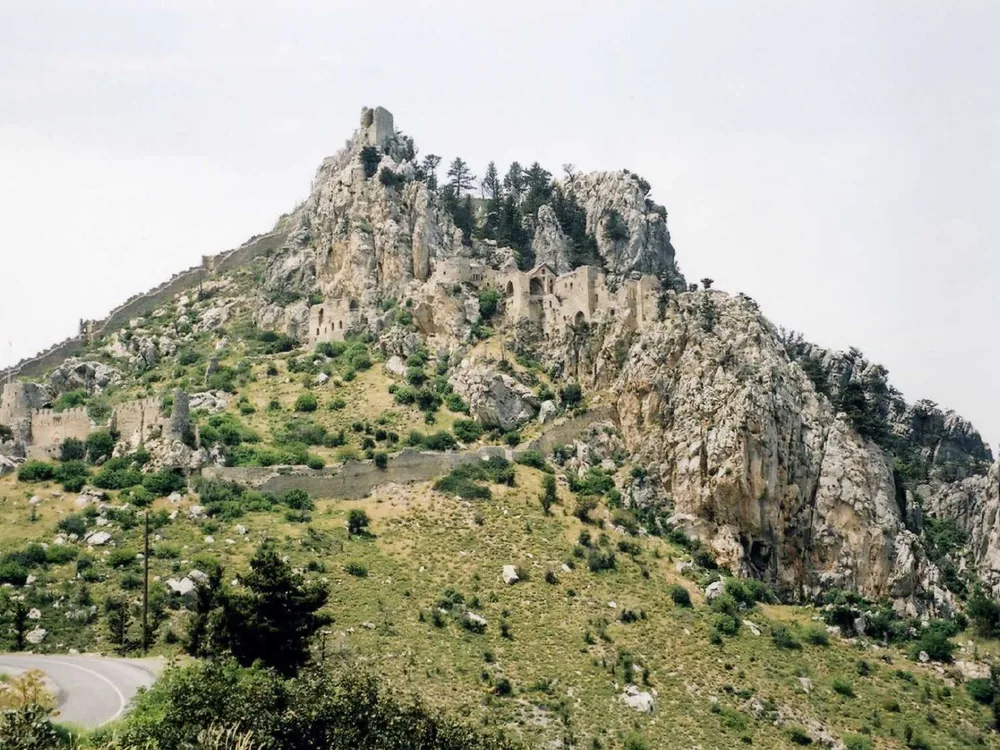
For the broader Cyprus context on this site: [St. Hilarion Castle](/castles/cyprus/st-hilarion-castle), in the Kyrenia Mountains above the town, is a Crusader mountain fortress reached by the same GetYourGuide tour; the two castles are within 20 minutes of each other and can comfortably be combined in a half-day.
History
A Byzantine fortress was protecting Kyrenia harbour from Arab naval raids as early as the 7th century AD, establishing a defensive tradition that successive powers would inherit and adapt for the next thirteen centuries. The island changed hands dramatically in 1191 when Richard I of England captured Cyprus from the self-proclaimed ruler Isaac Komnenos during his passage to the Third Crusade. Richard sold Cyprus to Guy de Lusignan, initiating a dynasty that would hold the island for three centuries and leave its mark throughout the castle — including the Byzantine Chapel of St. George, which the Lusignans preserved within the walls.
Venice acquired Cyprus from the Lusignan line in 1489 and conducted a methodical military assessment of the island's fortifications. By around 1540, Venetian military engineers had substantially remodelled Kyrenia: the walls were thickened, cannon embrasures cut into the towers, and the medieval structure adapted for an era when artillery had made the old defensive geometry obsolete. The renovation proved insufficient — in 1570 Cyprus fell to the Ottomans, and Kyrenia surrendered with minimal resistance. The castle served as a military installation and prison through the Ottoman and British colonial periods.
The most unexpected addition to the castle's story came in 1965, when a local diver named Andreas Cariolou discovered a 4th-century BC merchant ship at 30 metres depth in the harbour. The University of Pennsylvania excavated the wreck between 1967 and 1969; the conserved hull and cargo are now displayed in the Shipwreck Museum within the castle walls — one of the oldest recovered wooden ships in the world. The castle and museum are administered by the Turkish Republic of Northern Cyprus following the 1974 division of the island.
How to Visit
Getting there: From southern Cyprus (Republic of Cyprus), cross at a designated border crossing — the Agios Dometios/Metehan crossing near Nicosia is the most convenient (EU citizens can cross with a passport or national ID; confirm current requirements before travel). From the Nicosia crossing, Kyrenia is about 30 minutes by car. The castle sits at the eastern edge of the harbour, walkable from anywhere in Kyrenia town.
Tickets: Adult €6, children free. Admission includes the Shipwreck Museum, the Byzantine Chapel of St. George, and the rampart walk. No advance booking — tickets at the entrance. The GetYourGuide "Kyrenia, St. Hilarion Castle & Bellapais Abbey — Day Tour from Paphos" is a 9-hour guided day covering Kyrenia Castle alongside St. Hilarion and Bellapais Abbey, departing Paphos with pickup included.
Practical tips: Prioritise the Shipwreck Museum first — the conserved 4th-century BC merchant hull with its cargo of wine amphorae and almonds is the most remarkable thing in the castle. The rampart walk over the horseshoe harbour comes second for the views. Allow 1.5–2.5 hours total. The castle is most photogenic in morning light from the harbour-side approach.
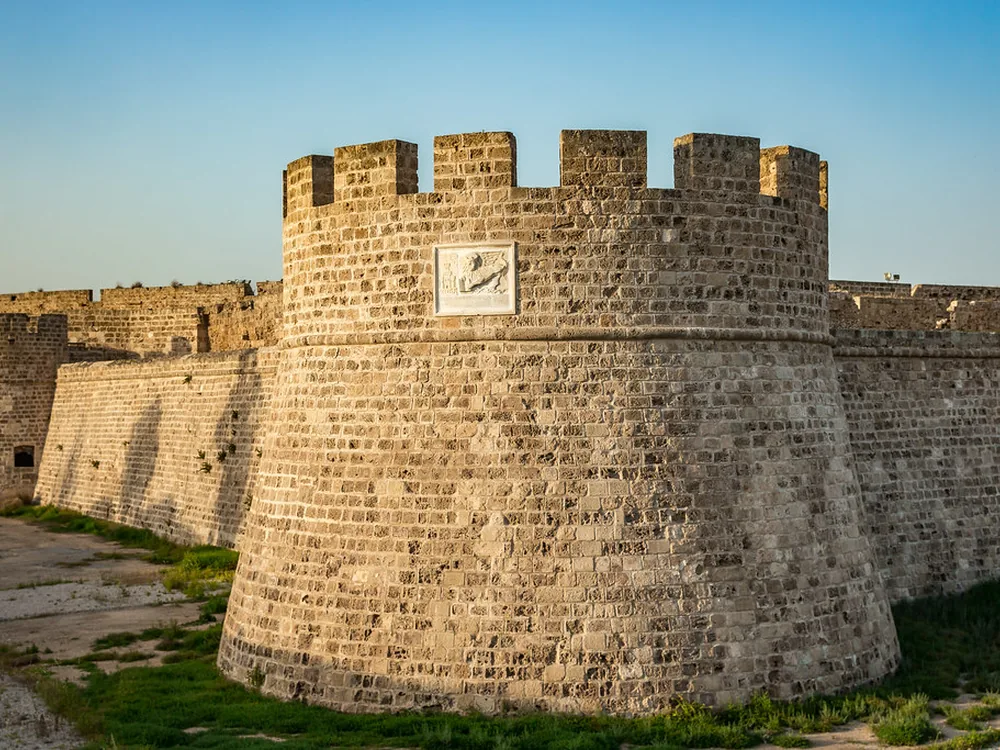
Combine with: St. Hilarion Castle is 10 km into the Kyrenia Mountains (20 minutes by car) and makes the defining pairing — sea-level harbour fortress and mountain-summit Crusader castle in the same day. Othello Castle in Famagusta is another Venetian fortress in northern Cyprus, about an hour east.
Frequently Asked Questions
The Kyrenia Ship is a 4th-century BC Greek merchant vessel discovered in 1965 by local diver Andreas Cariolou at 30 metres depth in Kyrenia harbour. Dendrochronological dating of its hull timbers suggests the ship was built around 389 BC and sank around 300 BC — making it approximately 80 years old at the time of sinking and one of the oldest seagoing vessels ever recovered and conserved anywhere in the world. Its cargo (wine amphorae from Rhodes, almonds, millstones from Kos and Rhodes) provides direct evidence of Aegean trading routes in the late 4th century BC. The conserved hull, with its cargo objects arranged around it, is displayed in the Shipwreck Museum inside the castle walls.
Location
Kyrenia Castle, Kyrenia (Girne), Northern Cyprus
Nearby Castles
Tours & Tickets
Powered by GetYourGuide
From
€79/ person