
Othello Castle
Othello's Tower
Cyprus · Famagusta, Northern Cyprus (TRNC) · Near Famagusta
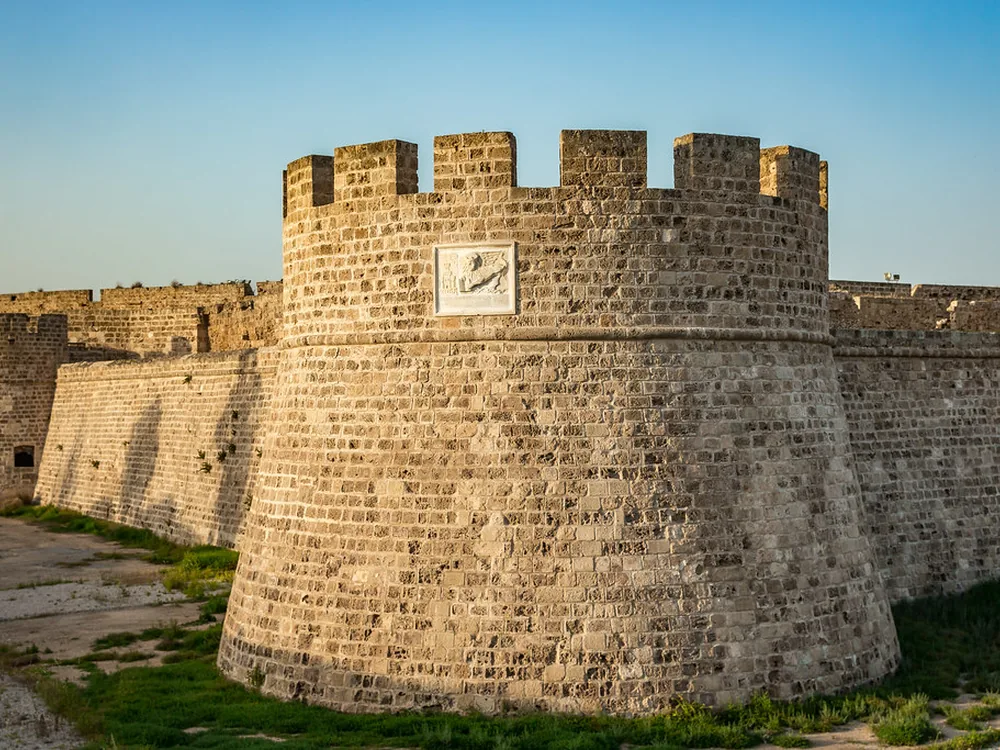
Built 1310 · Lusignan sea-gate fortress with Venetian artillery-era modifications — the 14th-century Lusignan construction established the basic proportions of a harbor-gate fortification with deep surrounding ditches designed to make direct assault impossible; Venetian military engineers converted the original square corner towers to rounded bastions between 1489 and 1492, adapting the structure to the artillery age; the Lion of St Mark relief above the main entrance commemorates the 1492 completion under Captain Nicolò Foscari; the surrounding ditch was drained in 1900 and the castle restored and reopened in 2015; the hybrid Lusignan-Venetian structure is characteristic of the Mediterranean military architecture produced when successive powers updated inherited fortifications rather than demolishing and rebuilding
This page is part of an independent travel guide and is not affiliated with, endorsed by, or operated by Othello Castle.
© Castles & Palaces
Quick Facts
- Hours
- Daily 09:00–17:00
- Guided tour from
- €60
- Duration
- 1 hour (castle); 4.5 hours (GetYourGuide Famagusta ghost-town tour from Ayia Napa)
- Best time
- March to June or September to November
- Nearest city
- Famagusta
Featured Tour
From Ayia Napa: Ghost-Town Famagusta Tour
Cancellation available · Instant confirmation
Highlights
- ✦The Lion of St Mark (1492) above the main gate — the carved marble relief commemorating Captain Nicolò Foscari's completion of the Venetian artillery modernisation is the most visible physical evidence of Venice's 82-year rule of Cyprus and one of the finest Venetian architectural signatures in the eastern Mediterranean
- ✦Shakespeare's Othello setting — the play's fictional harbor town in Cyprus is widely believed to draw on the real career of Cristoforo Moro, an early-16th-century Venetian governor of Cyprus; the castle's association with the play's setting made 'Othello Castle' the accepted popular name centuries before modern heritage labelling; GetYourGuide's own listing spells it 'Othelo's Castle' (a single-letter typo) — the correct name is Othello Castle or Othello's Tower
- ✦Leonardo da Vinci's reported advisory role (1481) — da Vinci is recorded as visiting Cyprus and consulting on the fortification design before the formal Venetian acquisition, in the period of greatest military reassessment of the island's defenses against Ottoman naval power
- ✦Famagusta's ghost quarter of Varosha — the fenced-off modern resort suburb evacuated by its Greek Cypriot population in 1974 and sealed since then is visible from the castle's upper ramparts; the frozen-in-time beachfront hotels and apartment blocks, slowly deteriorating behind chain-link fencing, are one of the most striking visual remnants of the 1974 Cyprus division anywhere accessible to visitors
- ✦The most historically layered harbor gate in Cyprus — Lusignan 14th century → Venetian artillery modification 1489–1492 → Ottoman siege and conquest 1570–71 → British colonial management and ditch drainage 1900 → restoration and reopening 2015; six centuries of successive military ownership visible in a single compact structure
- ✦GetYourGuide Ghost-Town Famagusta Tour from Ayia Napa (4.5 hours) — includes entry to Othello Castle and the walled city
Skip the queue with a guided tour
Skip-the-line tickets & expert guides
The Lion of St Mark is still above the door. The carved marble relief of the winged lion — the symbol of the Venetian Republic, commemorating the military engineering work completed under Captain Nicolò Foscari in 1492 — sits above the main gate of Othello Castle in the walled city of Famagusta as it has for more than five centuries. Venice controlled Cyprus for 82 years (1489–1571) and left behind a body of military architecture that transformed the island's defenses; the relief above the gate at Othello Castle is the physical signature of that transformation on the structure most associated with the Shakespeare play that made Famagusta internationally known.
The fortress's origins predate Venice by more than a century. In the early 14th century, the Lusignan dynasty — the French crusader family that had ruled Cyprus since Richard I of England's conquest in 1191 — built the castle at the harbor gate of Famagusta as a sea-gate fortification controlling access to the city's extraordinary natural harbor. Famagusta at this period was one of the most prosperous trading cities in the eastern Mediterranean: its position at the eastern end of Cyprus, strategically placed between the remnant Crusader states of the Levant and the trade routes of the Aegean, made it the principal entrepôt for commerce between Europe and the East after the fall of Acre in 1291. The Lusignan castle at the harbor gate was the lock on this commercial city — a fortification whose deep surrounding ditches, thick walls, and commanding position over the harbor entrance were designed to make direct assault effectively impossible.
Within the castle, the physical evidence of the Lusignan period includes a refectory and dormitory suggesting members of the royal household lived inside the walls. Famagusta's Cathedral of Saint Nicholas — a Gothic church begun in 1298 and modeled on the Cathedral of Reims, now serving as a mosque — stands a few hundred metres from the castle gate; the city's sacred and military architecture were built in the same generation, by the same Latin dynasty, in the same imported Gothic idiom.
Venice acquired Cyprus in 1489, when Catherine Cornaro — the last Lusignan queen, a Venetian noblewoman placed on the throne to serve Venetian commercial interests — formally ceded the island to the Republic. The Venetians inherited an island in good order and immediately began adapting its fortifications to the artillery age. The Ottoman threat in the eastern Mediterranean had been growing for decades, and the square corner towers of the Lusignan period were structurally vulnerable to cannon fire in ways that the rounded bastions being developed in Italian military engineering were not.
The transformation of the castle's towers from square to round was the primary structural intervention. Leonardo da Vinci is recorded as visiting Cyprus and consulting on the fortification design in 1481 — before the formal Venetian acquisition but during the period of Venetian military influence over the island — providing advice on the strategic approach. Captain Nicolò Foscari directed the construction works to completion in 1492, the date carved into the Lion of St Mark relief above the entrance. The hybrid result — Lusignan proportions with Venetian artillery-era rounded towers — is the structure visitors see today.
The castle's popular name connects it to Shakespeare's Othello, the Venetian military commander in a Cyprus under Venetian rule whose tragedy has been performed continuously since the early 17th century. The play's fictional Moor is widely believed to draw on the real career of Cristoforo Moro (in some sources Christopher Moro), a Venetian military officer who served as a senior official in Cyprus in the early 16th century. The parallel between 'Moro' and 'Moor', and between the documented career of a Venetian governor of Cyprus and the fictional general, is close enough that Shakespeare scholars have broadly accepted Moro as the primary historical model. The castle's association with the play's harbor-town setting made 'Othello Castle' irresistible as a name and it has been the accepted popular designation for centuries. Note: GetYourGuide's own listing spells it 'Othelo's Castle' — a single-letter typo; the correct name is Othello Castle or Othello's Tower.
The Ottoman siege of Famagusta in 1570–71 was one of the most celebrated military episodes of the 16th century. Lala Mustafa Pasha's forces besieged the city for eleven months; the Venetian commander Marcantonio Bragadin held out until August 1571, when his garrison had been reduced from 8,500 to fewer than 900 men. The Ottoman treatment of Bragadin after the capitulation — he was tortured, mutilated, and publicly flayed alive in the main square — made him a martyr throughout Catholic Europe and shaped the emotional context of the Battle of Lepanto, fought two months later. Othello Castle passed into Ottoman hands with the city and remained so through the centuries of Ottoman rule, British colonial administration, and the 1960 Cypriot independence.
The castle's surrounding ditch was drained in 1900 — a public health measure to eliminate the malaria-breeding stagnant water that periodically devastated Famagusta's population. The castle underwent restoration and reopened to visitors in 2015. From the upper ramparts, the ghost quarter of Varosha is visible: the modern beach-resort suburb evacuated by its Greek Cypriot population during the 1974 Turkish military intervention, fenced off since then and slowly deteriorating behind chain-link barriers, an anomaly of the divided island visible from a castle that itself embodies six centuries of political succession.
[Kyrenia Castle](/castles/cyprus/kyrenia-castle), 75 kilometres west on the northern coast, is the other major Lusignan-then-Venetian fortification in Northern Cyprus; its extraordinary Kyrenia Shipwreck Museum houses a 4th-century BC merchant vessel discovered by a local diver in 1965. For the castles of the Republic of Cyprus: [Kolossi Castle](/castles/cyprus/kolossi-castle) and [Limassol Medieval Castle](/castles/cyprus/limassol-castle) are in the south, under different administration.
History
When the fall of Acre in 1291 made Famagusta the commercial capital of the eastern Mediterranean — the redistribution point for all trade between Europe and the Levant — the Lusignan dynasty built a sea-gate castle at the harbour entrance around 1310 to protect their most valuable city. Deep surrounding ditches made the fortress effectively impregnable to direct assault, and its position at the harbour mouth gave it control over which ships entered and which did not. Through the 14th and 15th centuries, the royal Lusignan household maintained a presence within the walls alongside the military garrison.
Venice acquired Cyprus from Queen Catherine Cornaro in 1489, and Venetian military engineers immediately set about adapting the Lusignan fortress for the artillery age. Between 1489 and 1492, Captain Nicolò Foscari directed the conversion of the medieval square corner towers into the rounded bastions that absorbed artillery fire more effectively. The Lion of St Mark carved in relief above the main entrance — still in place today — commemorates that work and the authority under which it was done. Leonardo da Vinci is reported to have visited Cyprus during this period to advise on fortification design, though the evidence remains circumstantial.
The fortress's defining moment came with the Ottoman siege of Famagusta in 1570–71. The Venetian commander Marcantonio Bragadin held the city for eleven months before his garrison was reduced to 900 men and surrender became the only option. Bragadin was publicly executed — an act of brutality that became notorious across Europe. The castle passed to Ottoman control and subsequently to British colonial administration. The surrounding ditch was drained in 1900 to reduce malaria. The castle was restored and reopened to visitors in 2015 and is now an open archaeological site within the walled city.
How to Visit
Getting there: From the Republic of Cyprus, cross at the Metehan/Beyarmudu checkpoint near Nicosia — the standard crossing for day trips to Famagusta (about 1 hour from Nicosia by car). EU citizens and most Western passport holders can cross freely with a passport; check current regulations before visiting. Othello Castle is in the northeast corner of the walled city, at the old harbour gate.
Tickets: Admission is charged at the castle entrance — confirm current prices at famagusta.org. The GetYourGuide "From Ayia Napa: Ghost-Town Famagusta Tour" (4.5 hours) departs from Ayia Napa in the Republic of Cyprus, crosses into Northern Cyprus, and includes guided entry to the walled city and Othello Castle — the most convenient option for visitors based on the eastern coast.
Practical tips: Allow a half-day for the full walled city circuit — the Cathedral of Saint Nicholas (now the Lala Mustafa Pasha Mosque), the Venetian Palace ruins, and the city walls are all walkable from the castle gate. From the upper ramparts, the fenced-off ghost quarter of Varosha is visible to the south — one of the most striking visual remnants of the 1974 division accessible to visitors.
Combine with: Kyrenia Castle is 75 km west on the northern coast — another Lusignan-Venetian fortress, housing the world's oldest recovered ancient shipwreck, best treated as a separate day given the distance.
Frequently Asked Questions
Shakespeare's Othello is set in a Venetian-controlled harbor town in Cyprus, and the play's protagonist — a Moorish general commanding Venice's military forces — is widely believed to be based at least in part on the historical figure of Cristoforo Moro, a Venetian military officer who served as a senior official in Cyprus in the early 16th century. The parallel between the name 'Moro' and the fictional 'Moor', and between the career of a Venetian Cyprus governor and the play's character, has been accepted by Shakespeare scholars as the most plausible historical model. The castle's association with the play's harbor-gate setting made 'Othello Castle' the natural popular name; it has been used for centuries and is now the standard reference in every guidebook and tourist publication. GetYourGuide's own listing spells it 'Othelo's Castle' — a typo; the correct spelling is Othello Castle or Othello's Tower.
Location
Othello Castle, Famagusta (Gazimağusa), Northern Cyprus
Nearby Castles
Tours & Tickets
Powered by GetYourGuide
From
€60/ person