Hrubá Skála Château
Zámek Hrubá Skála
Czech republic · Liberec Region — Hrubá Skála, near Turnov, within Bohemian Paradise (Český ráj) UNESCO Global Geopark · Near Turnov
Built 1680 · Baroque château perched on a natural sandstone rock promontory, 17th century with later modifications — the château was built on one of the main sandstone rock formations of the Hruboskalsko rock city, incorporating the natural cliff as its foundation and rear wall; its specific position on the rock edge gives the building a dramatic verticality that conventional castle architecture could not achieve; the building has been modified across several centuries and currently operates as a hotel château offering guided tours; the immediate surroundings — the Hruboskalsko sandstone rock city — are part of the Bohemian Paradise, the Czech Republic's first protected landscape area (1955) and a UNESCO Global Geopark; the area is characterised by sandstone towers and labyrinths up to 60 metres high, formed by erosion of Cretaceous-era sedimentary rock over millions of years
This page is part of an independent travel guide and is not affiliated with, endorsed by, or operated by Hrubá Skála Château.

© Castles & Palaces
Quick Facts
- Hours
- Mon Open (hotel access year-round; château tours at scheduled times). Tue–Sun Open
- Guided tour from
- €124
- Duration
- 45 minutes–1 hour for the château interior tour; allow 4–6 hours for the full Hruboskalsko rock city hiking circuit including the château
- Best time
- May to October
- Nearest city
- Turnov
Featured Tour
From Prague: Full-Day Bohemian Paradise Guided Hiking Trip
Cancellation available · Instant confirmation
Highlights
- ✦Bohemian Paradise UNESCO Global Geopark — the Czech Republic's first protected landscape area (1955) and a UNESCO Global Geopark since 2005, the Bohemian Paradise (Český ráj) is defined by its Cretaceous-era sandstone formations: towers, labyrinths, and rock cities up to 60 metres high eroded from 100-million-year-old seabed sediments; the Hruboskalsko rock city, of which the château is a centrepiece, is the most dramatic concentration of sandstone formations in the region
- ✦A château built on a rock — the château's position on one of the main Hruboskalsko sandstone formation gives it a view from the rock edge that no conventional building could replicate; the natural cliff forms the rear wall of the complex, and the towers and facades emerge directly from the sandstone; the effect is unique among Czech châteaux
- ✦The symbolic climbers' cemetery — the Hruboskalsko rock city has been a centre of Czech rock climbing since the 19th century (the local sandstone is considered some of the best traditional climbing rock in Central Europe); a small symbolic climbers' cemetery near the château commemorates climbers who died on the Bohemian Paradise rock formations, a touching and unusual heritage feature of the hiking landscape
- ✦Valdštejn Castle ruins nearby — the ruined medieval castle of Valdštejn (after which the Wallenstein family, one of the most powerful in Central Europe, was named) is approximately 3km from Hrubá Skála and is typically passed on the full hiking circuit through the rock city; a genuine medieval castle ruin in a woodland-and-sandstone setting
- ✦Top-rated guided hiking day trip from Prague — the GYG full-day hiking trip (t537215, 5.0★/26 reviews) covers the Hruboskalsko rock city, includes the château entry fee, and gives the landscape a structure that independent hiking without a local guide misses; the 18km circuit with an experienced guide covers the main viewpoints, rock formations, and historical features of the area
Skip the queue with a guided tour
Skip-the-line tickets & expert guides
The sandstone of the Bohemian Paradise is approximately 100 million years old. Laid down as sediment in a shallow inland sea that covered much of Bohemia during the Cretaceous period, the rock accumulated over millions of years into horizontal layers hundreds of metres thick. When the sea retreated, the processes of erosion began their work on the exposed sandstone: water, frost, and wind carved the rock into the labyrinthine formations that now define the Bohemian Paradise — towers, spires, and rock cities up to 60 metres high, honeycombed with passages and crevices, their surfaces layered with the horizontal banding of the original sediment.
The Hruboskalsko rock city is the most dramatic concentration of these formations in the region. The name means simply 'rough rock', and the landscape justifies the directness: a dense packing of sandstone towers in the forested hills north of Turnov that has been attracting walkers, climbers, and artists since the Romantic period. The Czech Republic designated Bohemian Paradise its first protected landscape area in 1955; UNESCO recognised it as a Global Geopark in 2005. The rock city is the geological centrepiece of both designations.
Into this landscape, the château at Hrubá Skála was built — or rather, the landscape was incorporated into the château. The building sits on one of the main sandstone promontories of the Hruboskalsko formation, using the natural cliff as its foundation and rear wall. The baroque château of the 17th century and its later modifications occupy the flat summit of the rock and extend to the very edge; from the other side of the formation, the château emerges from the sandstone as if growing from it rather than placed upon it. Among Czech châteaux, this physical relationship between architecture and geology is unique.
The château operates today primarily as a hotel with guided heritage tours of the historic rooms. But the building is secondary to what surrounds it. The Hruboskalsko hiking circuit — the route through the rock towers, along the ridgelines, and down through the forested passages — is one of the finest walking landscapes in the Czech Republic, and the château is the organising landmark of the journey through it. The GYG full-day guided hiking trip from Prague (t537215) builds the visit around an 18-kilometre circuit that covers the main viewpoints and formations, with the château entry fee explicitly included.
The circuit also passes through territory associated with Valdštejn Castle — the medieval ruined fortress whose name was taken by the powerful Wallenstein family (one of the most important noble houses of the Holy Roman Empire in the 17th century, a dynasty that produced the Imperial general Albrecht von Wallenstein, whose assasssination in 1634 was one of the defining events of the Thirty Years' War). The Valdštejn ruins sit in a woodland setting approximately 3km from Hrubá Skála: not a monument to visit in isolation, but a genuinely medieval presence in the landscape that the hiking circuit passes through as a matter of course.
A less expected heritage feature of the Hruboskalsko area is the symbolic climbers' cemetery. The Bohemian Paradise sandstone has been a centre of Czech rock climbing since the 19th century — the friction of the local rock, its crack systems, and its relative accessibility from Prague made it one of the foundational venues of Central European climbing culture. A small symbolic cemetery near the château commemorates climbers who died on the Bohemian Paradise rock faces, making the area's climbing tradition visible to visitors who might not otherwise register it. The cemetery is understated and moving.
The practical consideration for any visitor is the physical commitment of the full experience. The GYG hiking trip covers 18km with significant elevation change across the rock terrain; the train journey from Prague takes approximately two hours each way. The total day is approximately 11 hours. The tour is explicitly unsuitable for visitors with mobility impairments. For visitors who want the landscape without the full circuit, the Hruboskalsko area can be reached by car and walked on shorter marked trails, though the full circuit with a guide reveals aspects of the rock city that shorter loops miss.
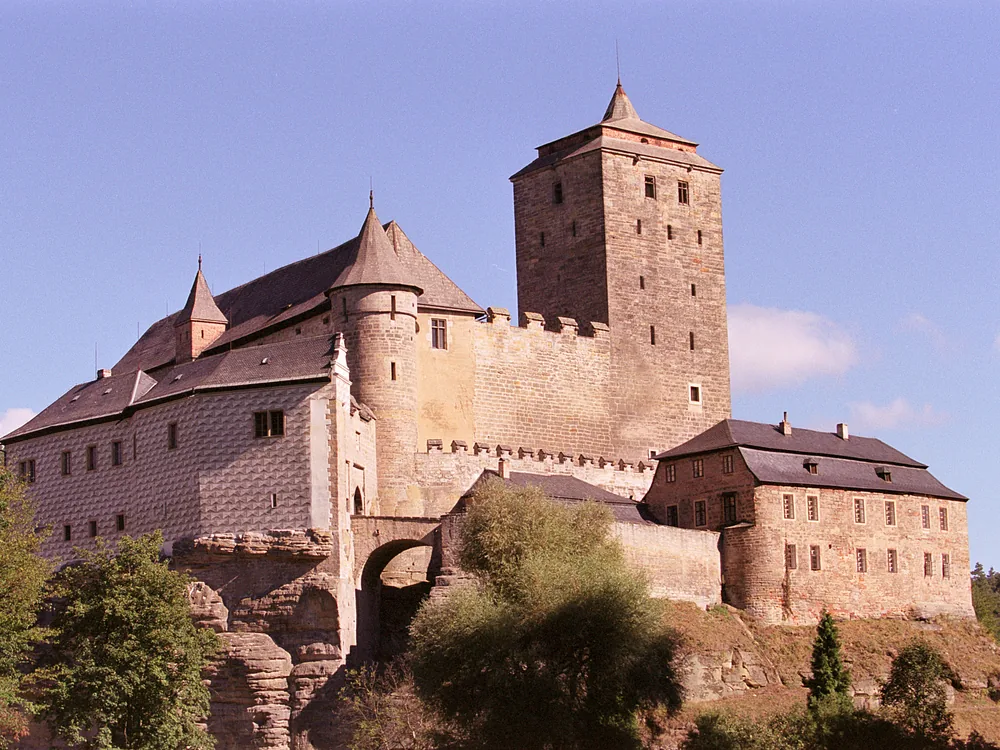
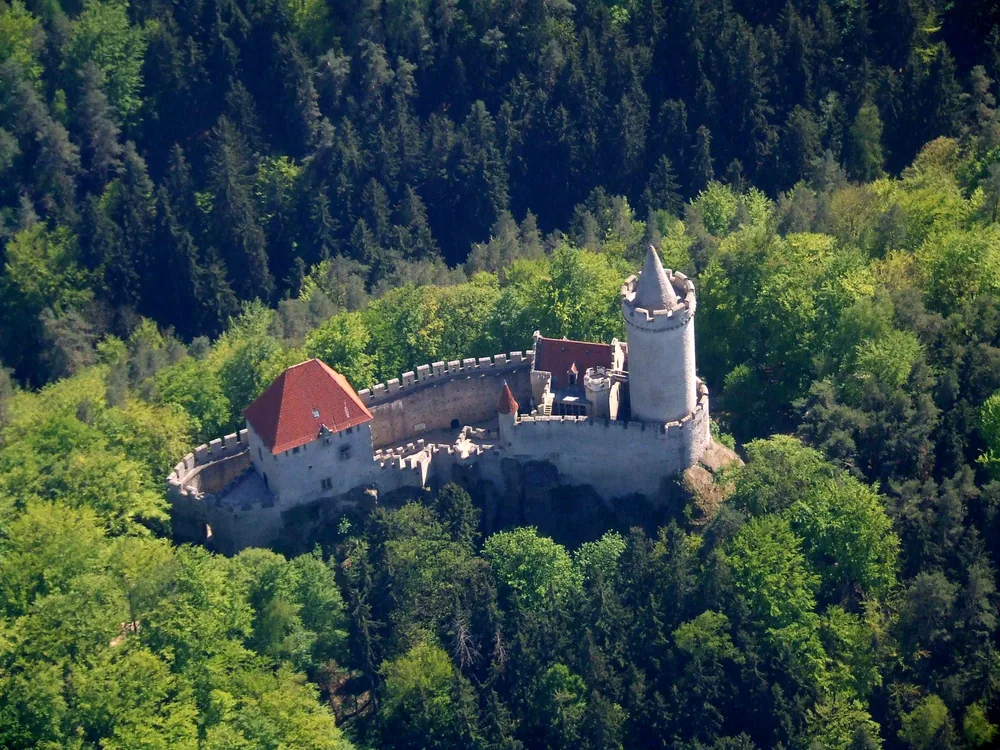
[Kost Castle](/castles/czech-republic/kost-castle) — one of the best-preserved medieval castles in Bohemia, within the Bohemian Paradise landscape approximately 10km south of Hrubá Skála — is a natural companion visit for anyone spending more than a day in the area. [Kokorin Castle](/castles/czech-republic/kokorin-castle), a Gothic castle on a sandstone promontory in the Northern Bohemia forest approximately 40km southwest, offers a similar combination of medieval architecture and sandstone landscape.
History
Cretaceous period (c. 100 million years ago): sandstone laid down as seabed sediment; geological basis for the Hruboskalsko rock formations established. Medieval period: the Hruboskalsko rock city inhabited and used as a defensive position; evidence of human use of the rock formations dating to the early medieval period. 17th century: baroque château built on the main sandstone promontory of the Hruboskalsko formation, using the natural cliff as its foundation. 17th–19th century: château passes through various aristocratic owners; modifications to the building across several periods. 19th century onwards: the Bohemian Paradise becomes an established destination for Romantic-era walkers and artists from Prague; rock climbing tradition begins on the Hruboskalsko sandstone. 1955: Czech Republic designates Bohemian Paradise its first protected landscape area. 2005: UNESCO designates the Bohemian Paradise a Global Geopark. Present day: château operates as a hotel and heritage site; guided tours available; Hruboskalsko hiking trails open year-round.
How to Visit
Getting there: Turnov is on the Prague–Liberec railway line (approximately 1.5 hours from Prague hlavní nádraží). From Turnov, take a local bus or taxi to Hrubá Skála (8 km). Marked hiking trails through the Hruboskalsko rock city depart from the village; trail maps are available at the Turnov tourist office or at trailheads.
Tickets: Walk-up entry to the château tour is €8 adult, €4 child. The GYG full-day guided hiking trip from Prague (t537215, from €124, 5★/26 reviews) includes round-trip train from Prague, an experienced guide, the château entry fee, and the full 18 km Hruboskalsko circuit; it runs April through October and is not suitable for visitors with mobility impairments.
Practical tips: Book the GYG hiking trip in advance — it runs on scheduled dates only and fills quickly. For independent walkers, self-guided hiking takes 3–5 hours depending on route. The full circuit with a guide reveals rock formations and passes the symbolic climbers' cemetery that most independent walkers miss.
Combine with: [Kost Castle](/castles/czech-republic/kost-castle) — one of Bohemia's best-preserved medieval castles, 10 km south. [Kokorin Castle](/castles/czech-republic/kokorin-castle) — a Gothic castle on a sandstone promontory 40 km southwest.
Frequently Asked Questions
The Bohemian Paradise (Český ráj) is a protected landscape area in northern Bohemia, the Czech Republic's first such designation (1955) and a UNESCO Global Geopark since 2005. The Geopark status reflects the exceptional geological interest of the area: the sandstone formations that define the landscape were laid down as seabed sediment during the Cretaceous period approximately 100 million years ago, then exposed by geological uplift and shaped over millions of years of erosion into the rock towers, labyrinths, and crevices that characterise the Hruboskalsko rock city and the wider Bohemian Paradise landscape. The coexistence of this geological heritage with medieval castles, forests, and a long cultural history of Czech walking and climbing makes the Geopark designation a combined geological, ecological, and cultural recognition.
Location
Zámek Hrubá Skála, 511 01 Hrubá Skála, Czech Republic
Nearby Castles
Tours & Tickets
Powered by GetYourGuide
From
€124/ person