Kost Castle
Hrad Kost
Czech republic · Bohemian Paradise (Český ráj), Hradec Králové Region — Podkost, near Sobotka, ~90km northeast of Prague · Near Sobotka
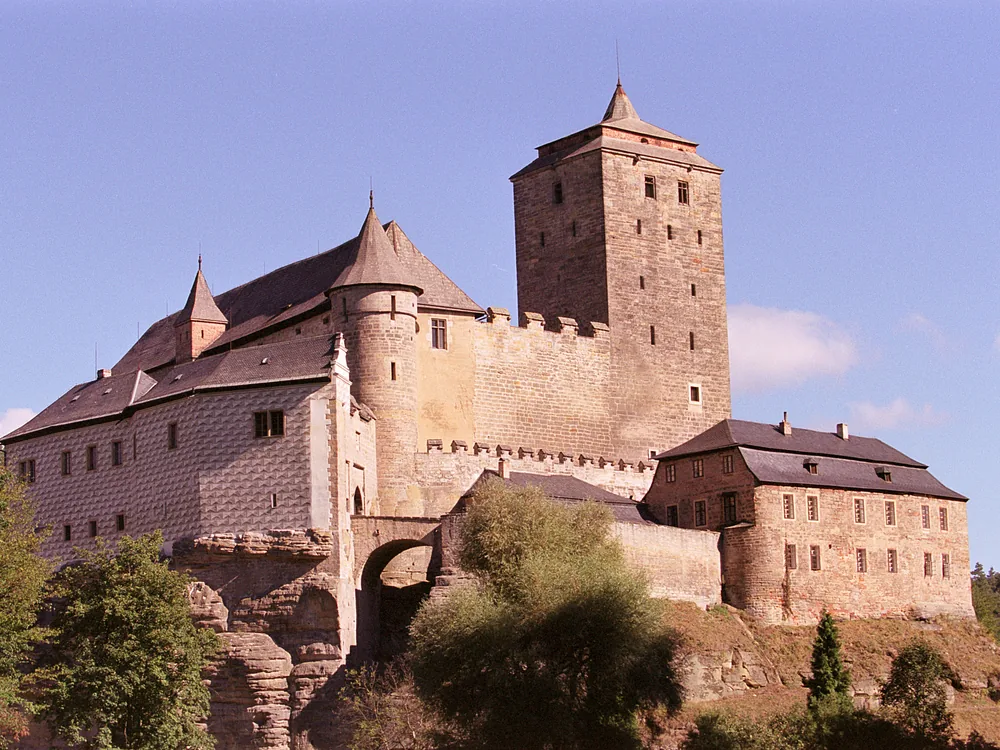
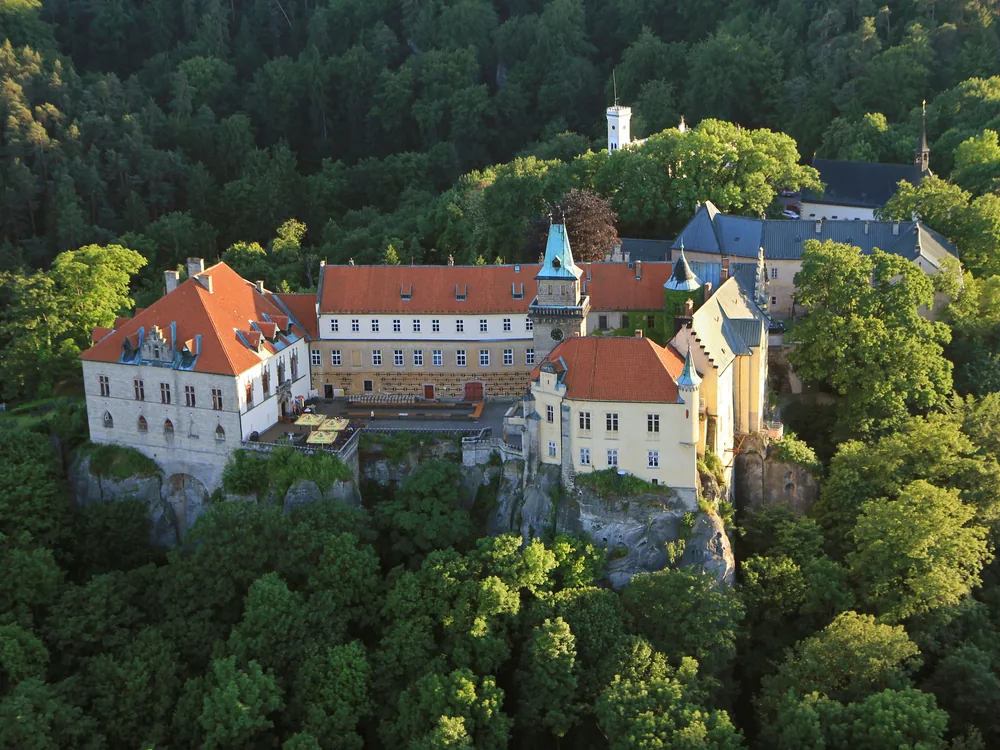
Built 1349 · Gothic castle in a concealed valley position among three intersecting ravines — Kost Castle is one of the best-preserved Gothic fortifications in Bohemia; the original 14th-century construction by Beneš z Vartemberka exploited the topography of three converging valley systems to create a naturally concealed and defensible position that could not be approached directly from any direction without warning; the dominant element is the White Tower (Bílá věž), at 32 metres one of the tallest square Gothic towers in Bohemia, which serves as the castle's keep and primary defensive element; the castle is built on a hard limestone outcrop rising from the sandstone rock formations of the Bohemian Paradise, creating a geological contrast between the hard pale limestone of the castle foundation and the soft orange sandstone of the surrounding Bohemian Paradise landscape
This page is part of an independent travel guide and is not affiliated with, endorsed by, or operated by Kost Castle.
© Castles & Palaces
Quick Facts
- Hours
- Tue–Sun 09:00–17:00. Closed Mon
- Day trip from
- €599
- Duration
- 1–1.5 hours (guided interior tour + White Tower + exterior circuit); 6 hours for the GetYourGuide full-day Bohemian Paradise programme from Prague
- Best time
- May to September
- Nearest city
- Sobotka
Featured Tour
Prague: Private Day Trip to Bohemian Paradise + Kost Castle with Lunch (up to 2 people, 6 hours)
Cancellation available · Instant confirmation
Highlights
- ✦Never conquered — Kost Castle was never taken by military force; its concealed position among three converging valley systems made it impossible to approach without detection, and its defenders consistently repelled or outlasted any potential siege; the 'impregnable' reputation is historical rather than promotional, verified by the castle's survival intact through the Hussite Wars, the Thirty Years' War, and the other conflicts that destroyed or substantially damaged most comparable Bohemian fortifications
- ✦The name origin — the castle's founder, Beneš z Vartemberka, called it by the Latin 'Costa' (meaning 'rib' or 'side' — referring to the limestone rib on which it was built); Czech speakers consistently mispronounced 'Costa' as 'Kost', which means 'bone' in Czech; the name that stuck is therefore an accidental Czech word rather than the architectural metaphor the founder intended
- ✦White Tower (Bílá věž) — the castle's dominant element is a 32-metre square Gothic tower, one of the tallest of its type in Bohemia; the tower served as the primary defensive keep and visual landmark; its white limestone facing contrasts with the warm orange sandstone of the surrounding Bohemian Paradise rock formations and makes the castle identifiable from a considerable distance despite its concealed valley position
- ✦Bohemian Paradise (Český ráj) UNESCO Geopark — the surrounding landscape is a UNESCO Geopark (designated 2002, the first UNESCO Geopark in Central Europe) of sandstone pillars, labyrinthine rock cities, and forested valleys formed by differential erosion of the Cretaceous sandstone; the rock formations of the Hruboskalsko, Prachovské skály, and Drábovny areas are within easy distance of the castle and define the landscape context of the visit
- ✦The Kinský family restitution — after nationalization in 1948 and 50 years of state management, the castle was returned to the Kinský family (the last private owners before nationalization) in 1993 under the Czech restitution laws; the castle has been managed by the family since, maintaining the visitor programme and continuing restoration work; the restitution history makes the castle a living example of the property recovery process that followed the end of Communism in Czechoslovakia
- ✦GetYourGuide private day trip from Prague (per group of up to 2) — the GetYourGuide product combines the Bohemian Paradise rock formations with Kost Castle and a restaurant lunch in a 6-hour private programme from Prague; the €599 price is per group of up to 2 people — this is not per-person pricing in the usual sense, and not a group-of-25 price; a solo visitor pays the full amount
Tickets & tours
Book through GetYourGuide
Kost Castle occupies the hard limestone outcrop at the junction of three valleys in the Bohemian Paradise, approximately 90 kilometres northeast of Prague. The castle is hidden — not in the sense of being small or insignificant, but in the literal topographic sense that the three converging valley systems that surround it make a direct approach from any direction impossible without crossing the castle's sightlines; any attacker would be visible and exposed long before reaching the walls. This natural concealment, combined with the hard limestone of the outcrop that provided both a defensible foundation and building material of exceptional solidity, made Kost one of the few Bohemian medieval fortifications never captured by military force.
The castle was founded in 1349 by Beneš z Vartemberka, a Bohemian nobleman of the House of Vartenberk, who named it after the Latin 'Costa' — meaning 'rib' or 'side' — a reference to the limestone ridge on which it was built. Czech speakers pronounced 'Costa' as 'Kost,' which means 'bone' in Czech. The name that survived is therefore an accidental Czech word rather than the architectural metaphor Beneš intended; the Czech 'Kost' (bone) is the name in all subsequent historical records, and the name on every signpost in the Bohemian Paradise today.
The castle's dominant element is the White Tower (Bílá věž) — a 32-metre square Gothic keep faced in pale limestone that appears white against the warm orange of the surrounding Cretaceous sandstone. At 32 metres, it is among the tallest square Gothic towers in Bohemia. The tower's height and its strategic position above the three valleys gave the castle defenders observation over every approach; an enemy visible at the extreme range of the tower's sightlines would have very little chance of reaching the walls before the garrison was alerted. This combination of natural topographic concealment and constructed observation height is the military logic of Kost: a castle that was unpleasant to attack and extremely well-suited to waiting.
The castle passed through successive ownership: the Selemberk family acquired it in the 15th century; the Biberstejn family in the late 15th century; the Lobkowicz family in the 16th century; and the Černín family in the 17th century, who held it until the 20th century. The Hussite Wars of the early 15th century (the religious conflicts that convulsed Bohemia for two decades after the death of Jan Hus in 1415) and the Thirty Years' War (1618–1648) both tested the castle's defences without taking it. The Thirty Years' War destroyed more Bohemian medieval heritage than any other single historical event; that Kost survived intact while most comparable fortifications were damaged, destroyed, or abandoned is a direct result of its topographic advantage.
The castle was nationalised in 1948 following the Communist takeover of Czechoslovakia and transferred to state management; it opened to visitors in 1950. In 1993, under the restitution laws enacted after the Velvet Revolution, the castle was returned to the Kinský family — the private owners from the final pre-nationalisation period — who have managed it since. The restitution of Kost to the Kinský family was one of the significant Czech property-return cases of the 1990s and makes the castle an example of the broader post-Communist heritage and property landscape.
The Bohemian Paradise (Český ráj) surrounding the castle was designated a UNESCO Geopark in 2002 — the first UNESCO Geopark in Central Europe. The designation recognises the Cretaceous sandstone landscape: the rock cities (skalní města) of Hruboskalsko and Prachovské skály, where erosion has created labyrinthine corridors of standing sandstone pillars; the forested valleys between them; and the castle ruins and historic buildings embedded in the rock formations (including Trosky Castle, a dramatic ruin on twin volcanic plugs, approximately 10 kilometres northwest of Kost). The Bohemian Paradise can be explored on foot or by bicycle, and the GetYourGuide day trip from Prague (from €599 per group of up to 2 people, 6 hours) combines the rock formations and the castle in a single private programme. The pricing structure is unusual: €599 is for a group of up to 2 people — not per-person pricing in the standard sense (not a group-of-25 flat rate either); a solo visitor pays the full €599; two visitors sharing pay approximately €300 each. For most independent visitors, the standalone entry ticket to the castle (~€8 per adult) is the practical and significantly cheaper option.
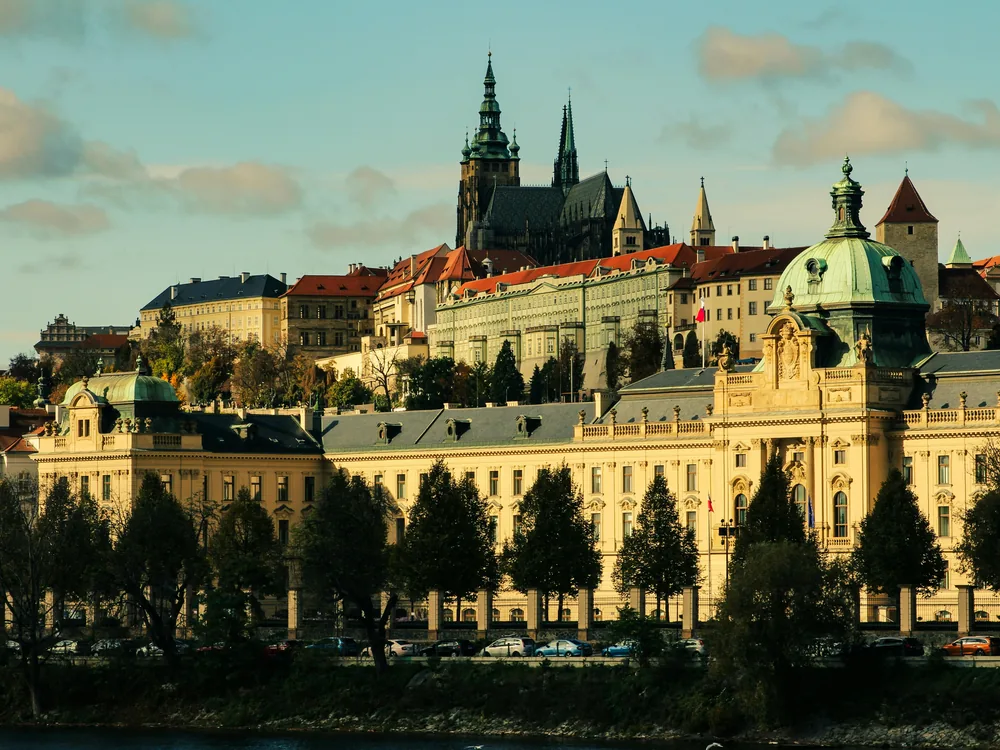
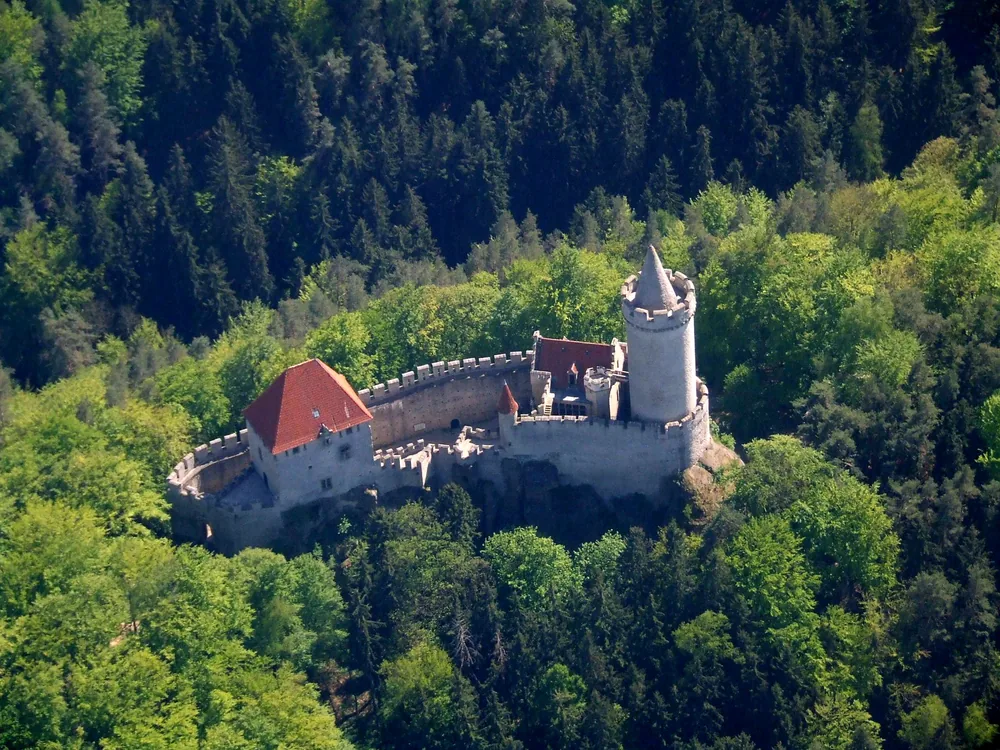
For visitors to the Czech Republic combining Kost with other destinations: [Prague Castle](/castles/czech-republic/prague-castle) is the regional anchor, approximately 90 kilometres south; [Kokořín Castle](/castles/czech-republic/kokorin-castle), another sandstone-region Gothic fortress, is approximately 30 kilometres southwest.
History
1349: Kost Castle founded by Beneš z Vartemberka; the name 'Costa' (Latin, 'rib') mispronounced as 'Kost' (Czech, 'bone'). 14th–15th century: castle expands under Vartemberk and subsequent ownership. 15th century: Hussite Wars — castle not taken. 16th–17th century: Lobkowicz and Černín family ownership; castle maintained and improved. Thirty Years' War (1618–1648): castle not taken despite the conflict devastating much of Bohemia. 18th–19th century: castle in Černín family ownership; maintained as a residential and estate property. 20th century: 1948 nationalisation; state management; 1950 opened to visitors. 1993: restitution to the Kinský family under post-Communist Czech property law. Current period: castle managed by the Kinský family; open April–October.
How to Visit
Getting there: By car from Prague, take the D10/E67 northeast then local roads toward Podkost (~90 km, ~1.5 hours). There is no direct public transport from Prague to the castle; buses run to Sobotka or Jičín (1–1.5 hours), then continue by taxi or bicycle (~10–15 min).
Tickets: Walk-up entry is €8 adult, €4 child; guided interior tours run at scheduled times (confirm at hradkost.cz). The GetYourGuide private day trip from Prague (from €599 per group of up to 2 people) covers the Bohemian Paradise rock formations, Kost Castle, and a restaurant lunch over 6 hours; the €599 price is per group, not per person.
Practical tips: The castle is open April to October only. The nearest parking area is 1–1.5 km from the castle gate via a forest path — allow time for the approach walk. Arrive before 14:00 to have a full choice of tour departure times.
Combine with: Hrubá Skála Château — the baroque château perched on the Bohemian Paradise sandstone rock formations, 10 km north. Kokořín Castle — another Gothic sandstone-ridge castle 30 km southwest.
Frequently Asked Questions
The name is an accident of pronunciation. The castle's founder, Beneš z Vartemberka, named it 'Costa' — a Latin word meaning 'rib' or 'side,' referring to the limestone rib on which the castle was built. Czech speakers consistently pronounced 'Costa' as 'Kost,' which happens to mean 'bone' in Czech (the two words are linguistically related through the Slavic/Latin root for 'rib' and 'bone'). The accidental Czech name stuck, survived all subsequent ownership changes, and appears in every historical record from the 14th century onward.
Location
Podkost 1, 507 44 Podkost, Czech Republic
Nearby Castles
Tours & Tickets
Powered by GetYourGuide
From
€599/ group