
Prague Castle
Pražský hrad
Czech republic · Bohemia · Near Prague
Built 870 · Gothic, Baroque, Romanesque — multiple styles across centuries
This page is part of an independent travel guide and is not affiliated with, endorsed by, or operated by Prague Castle.
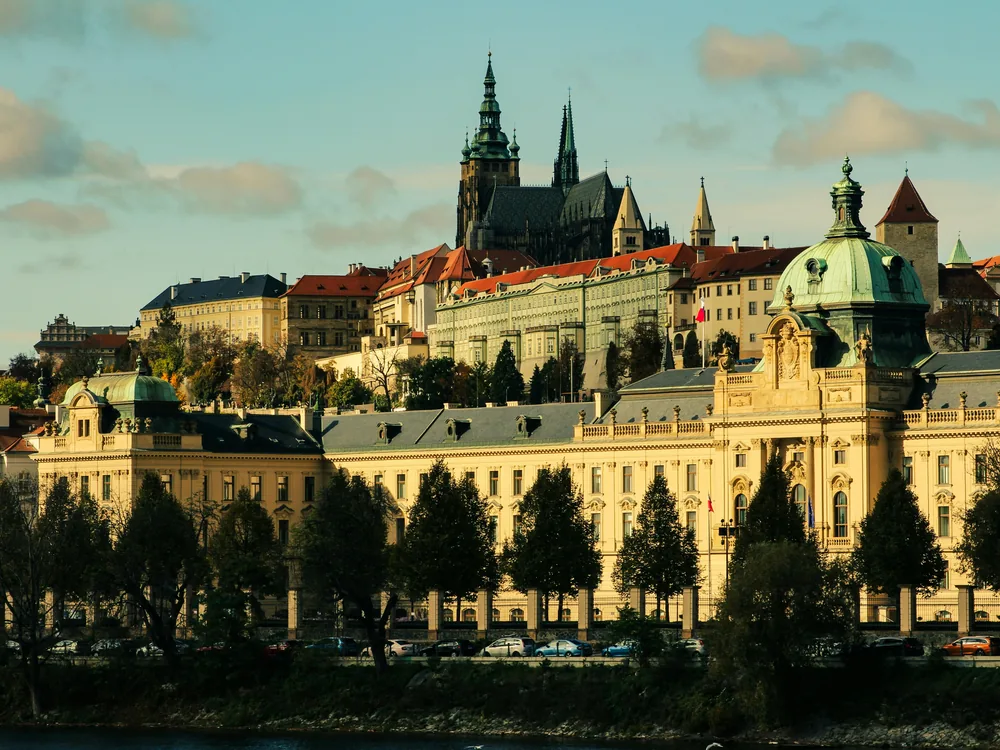
© Unsplash
Quick Facts
- Hours
- Daily 06:00–22:00 (grounds) / 09:00–17:00 (interiors Apr–Oct)
- Entry via GetYourGuide
- €19
- Duration
- 3–4 hours
- Best time
- May, September and October for pleasant weather and manageable crowds
- Nearest city
- Prague
Featured Tour
Prague: Official Entry Ticket to Prague Castle
Cancellation available · Instant confirmation
Highlights
- ✦St. Vitus Cathedral — Gothic masterpiece housing the Bohemian Crown Jewels
- ✦The world's largest ancient castle by area: 70,000 square metres
- ✦The Golden Lane — a row of tiny colourful medieval cottages within the castle walls
- ✦Breathtaking panoramic views over Prague's red rooftops from the castle battlements
- ✦Franz Kafka lived and wrote in a cottage on Golden Lane in 1916–17
Tickets & tours
Book through GetYourGuide
Prague Castle is a superlative in a city full of them. According to the Guinness World Records, it is the largest ancient castle complex in the world: a fortified hilltop district covering 70,000 square metres that contains palaces, churches, galleries, gardens and a street of tiny medieval cottages, all presiding over one of Europe's best-preserved historic city centres.
The castle is not a single building but a walled city within a city. Entering through the main gates (where the changing of the guard takes place on the hour), you pass through three courtyards of increasing age and grandeur before arriving at St. Vitus Cathedral, whose Gothic façade fills the second courtyard completely. The Cathedral alone merits an hour — its stained glass windows include one designed by Alphonse Mucha, its crypt contains the remains of Bohemian kings, and its treasuries hold the Bohemian Crown Jewels (shown only on select occasions).
Beyond the Cathedral, the Old Royal Palace reveals the administrative history of Bohemia across seven centuries. The Vladislav Hall, built in 1493, is a single vaulted space of remarkable scale — it once held jousting tournaments indoors. The Golden Lane, tucked behind the castle's northern ramparts, is something else entirely: a row of miniature Gothic and Renaissance cottages built into the castle walls, home to goldsmiths, castle guards and, famously, Franz Kafka, who used cottage no. 22 as a writing retreat in 1916–17.
The grounds are free to explore, and many visitors spend hours simply walking the courtyards and terraced gardens without buying an interior ticket. But the cathedral and its associated buildings repay the entry cost many times over.
History
Prague Castle's foundation is traditionally dated to around 870 AD, when Prince Bořivoj of the Přemyslid dynasty built a wooden fortress on the rocky promontory above the Vltava river. What began as a practical defensive fortification evolved over the next twelve centuries into the complex that stands today — a palimpsest of architectural styles that reads like a history of Central European civilisation.
The Romanesque elements date from the 11th and 12th centuries, when the Přemyslid princes expanded the wooden structures into stone palaces and basilicas. The Gothic Cathedral of St. Vitus was begun in 1344 by Emperor Charles IV, who made Prague the capital of the Holy Roman Empire and the most important city in Europe outside Rome. Construction continued for nearly six centuries — the cathedral was not fully completed until 1929.
The Habsburg dynasty took control of Bohemia in 1526 and ruled from the castle for over 400 years, leaving their mark in Baroque palaces, gardens and churches. The 17th century brought the Thirty Years' War, which began in Prague when Protestant nobles literally threw two Catholic governors from a castle window in 1618 (the 'Defenestration of Prague') — a political act that plunged Europe into its bloodiest conflict.
Following the collapse of the Habsburg Empire in 1918, Prague Castle became the seat of the Czechoslovak presidency, a role it continues to hold today. Tomáš Masaryk, the first Czechoslovak president, hired the Slovenian architect Josip Plečnik to redesign the castle grounds in the 1920s — Plečnik's humanist modifications, including garden staircases, fountains and obelisks, are still visible and debated by architects today.
How to Visit
Getting there: Take Metro Line A to Malostranská station and walk uphill through Malá Strana (15–20 min), or take tram 22 direct to the Pražský hrad stop. Walking from the Old Town across Charles Bridge and up through Malá Strana is one of the great urban approaches in Europe — allow an extra 45 minutes.
Tickets: Castle grounds and courtyards are free. Interior access requires a circuit ticket: Circuit B (€14 adult, €7 child) covers St Vitus Cathedral, the Old Royal Palace, the Basilica of St George, and Golden Lane. The GetYourGuide official entry ticket covers Circuit B for 2 days and is available in advance online. Note that Lobkowicz Palace inside the complex requires a separate ticket.
Practical tips: Enter from the east via the Old Castle Stairs (from Malostranská metro) — you emerge near Golden Lane with far fewer people and walk the complex in reverse. The noon changing of the guard at the main gate includes a fanfare; time your arrival accordingly.
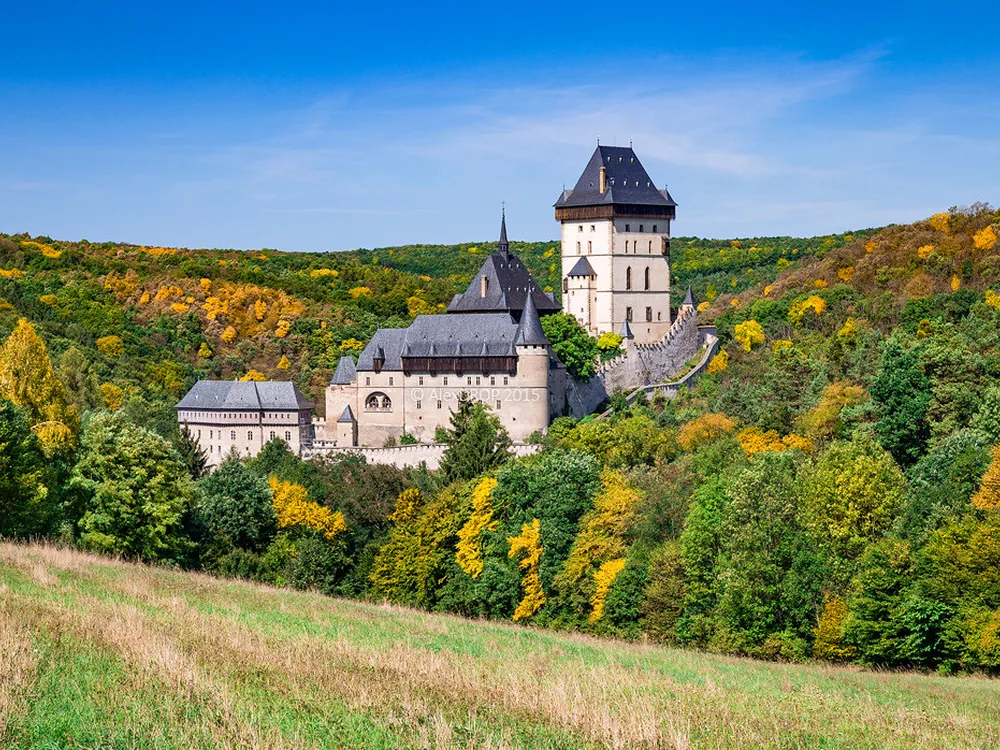
Combine with: Lobkowicz Palace — the only private palace inside the castle complex, with Bruegel and Beethoven's Eroica manuscript, visited as part of the same day. Karlštejn Castle — the 14th-century Gothic imperial treasury 30 km southwest, a natural second day.
Frequently Asked Questions
The castle grounds, outer courtyards and gardens are free to enter and explore without a ticket. To access the key interiors — St. Vitus Cathedral, the Old Royal Palace, the Basilica of St. George and the Golden Lane — you need to buy a circuit ticket (€14–16 for the most useful combinations). Some people are surprised to find they've walked through the whole complex without paying, and missed everything inside.
Location
Hradčany, 119 08 Prague 1, Czech Republic
Nearby Castles
Tours & Tickets
Powered by GetYourGuide
From
€19/ person