
Karlštejn Castle
Hrad Karlštejn
Czech republic · Central Bohemia · Near Prague
Built 1348 · Gothic
This page is part of an independent travel guide and is not affiliated with, endorsed by, or operated by Karlštejn Castle.
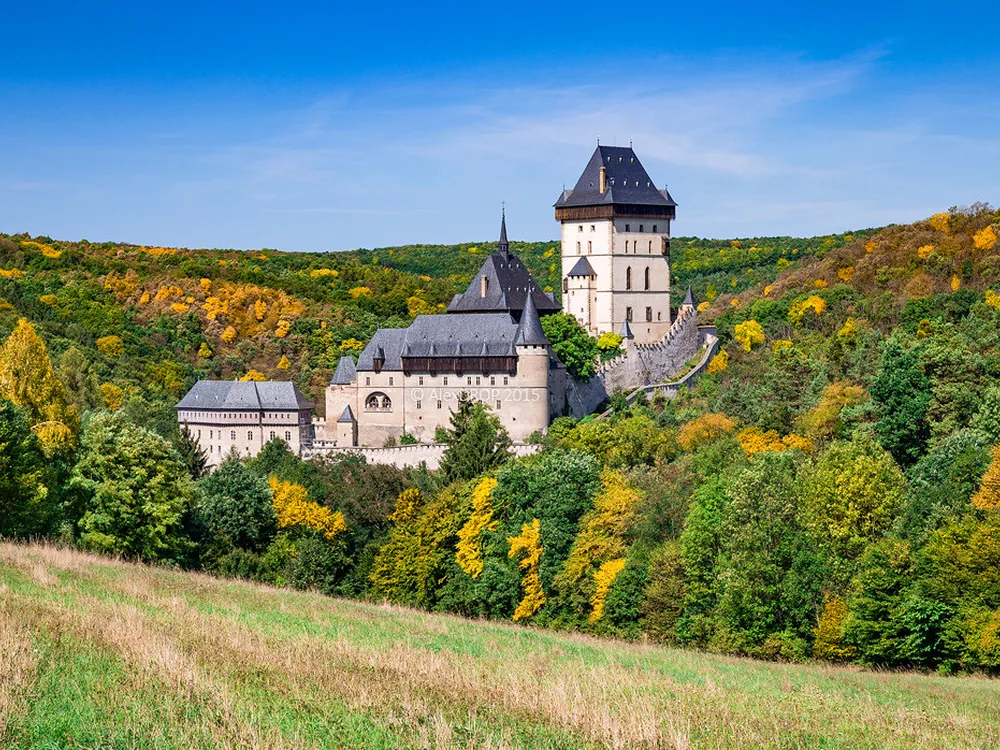
© Unsplash
Quick Facts
- Hours
- Tue–Sun 09:00–17:00. Closed Mon
- Skip-the-line from
- €68
- Duration
- 2–3 hours
- Best time
- May to June and September
- Nearest city
- Prague
Featured Tour
Prague: Karlštejn Castle Guided Tour with Entry Ticket
Cancellation available · Instant confirmation
Highlights
- ✦Built by Emperor Charles IV in 1348 specifically to house the Holy Roman Imperial Crown Jewels
- ✦The Chapel of the Holy Cross — walls set with 2,200 semi-precious stones and 128 panel paintings
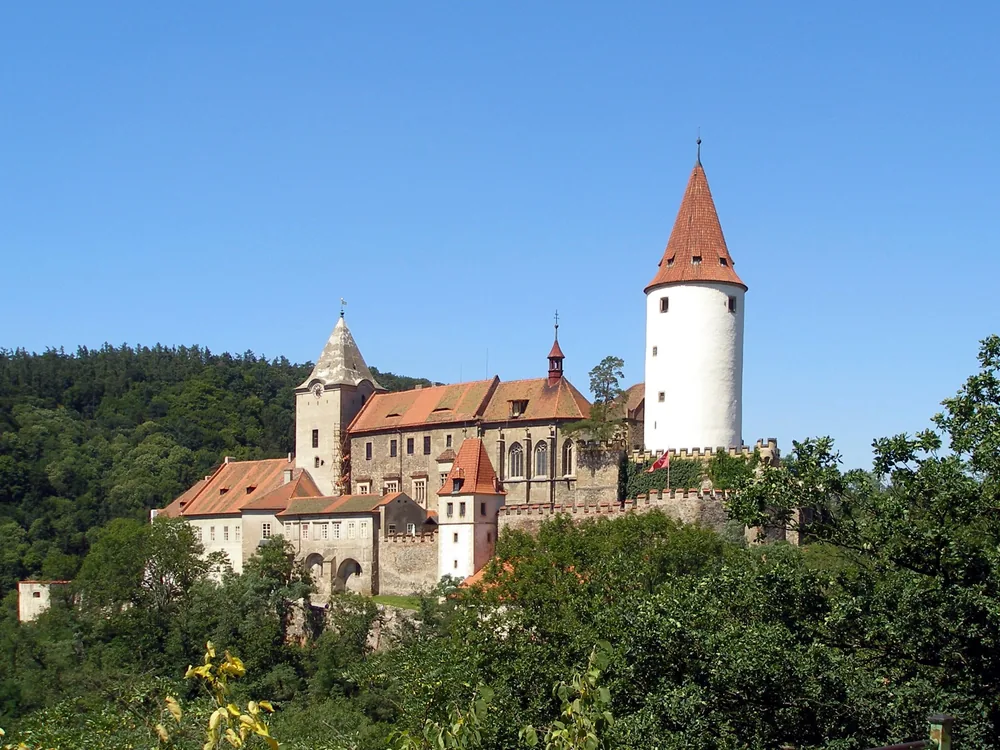
- ✦Dramatically sited on a limestone ridge above a forested valley 30km from Prague
- ✦The most popular day trip from Prague after Kutná Hora
- ✦The village of Karlštejn below is perfectly preserved and entirely castle-oriented
Skip the queue with a guided tour
Skip-the-line tickets & expert guides
Karlštejn was built for one purpose: to keep things safe. Emperor Charles IV, who made Prague the most important city in Europe and spent enormous sums making it look the part, commissioned Karlštejn in 1348 as an imperial treasury — a fortress so secure that it could protect the most valuable objects in the known world: the Holy Roman Imperial Crown Jewels, the Bohemian Crown Jewels, the Imperial Orb, the True Cross, and a collection of sacred relics that represented the symbolic authority of the Holy Roman Empire.
The castle rises in three stages up a limestone ridge above the Berounka river valley, each stage more restricted than the last: the outer palace open to court, the Great Tower accessible to fewer, and at the summit the Chapel of the Holy Cross — accessible originally only to Charles himself and a small number of the highest clergy. The Chapel is the architectural centrepiece: its walls are set with 2,200 polished semi-precious stones that catch the light like a reliquary scaled to room size, while 128 panel paintings by Master Theodoric — the most important Czech medieval painter — cover the vaults and upper walls. It is, in effect, the inside of a reliquary made habitable.
The crown jewels are no longer here — they were moved repeatedly over the centuries and now rest in Prague Castle — but the architecture built to contain them remains among the most extraordinary Gothic spaces in Central Europe. Karlštejn is also the easiest significant castle in Bohemia to reach from Prague, which makes it the most visited day-trip castle in the Czech Republic.
History
Charles IV commissioned Karlštejn immediately after his coronation as Holy Roman Emperor in 1346, seeking a secure repository for the imperial and Bohemian crown jewels and sacred relics. The architect was French — Matthias of Arras, who was also working on the new St. Vitus Cathedral in Prague — reflecting the Parisian Gothic influence Charles absorbed during his education in France.
Construction was completed in 1365. Charles designed the security hierarchy of the castle with care: the lowest level was accessible to his court, the middle level to his household, and the Chapel of the Holy Cross — containing the most sacred objects — was accessible only to Charles, the castle's spiritual administrators, and on one day per year when the relics were publicly displayed.
Following Charles's death in 1378, the castle retained its symbolic importance but the Holy Roman crown jewels were gradually removed to more secure or more politically convenient locations. The Hussite Wars of the early 15th century left Karlštejn intact (it was too well-fortified to assault), but the economic and political disruption of the following centuries diminished its relevance as a treasury.
Major restorations were undertaken in the 1890s under Josef Mocker — whose romantic restorations are also responsible for the dramatic silhouette of Prague Castle's St. Vitus Cathedral as seen today. Mocker's Karlštejn restoration was thorough to the point of replacing original elements with Neo-Gothic interpretations, generating academic controversy that continues. The Chapel of the Holy Cross was restored more carefully in a later campaign and is considered authentic.
How to Visit
Getting there: Direct trains from Prague Hlavní nádraží to Karlštejn station take 45 minutes and run every 1–2 hours (€3–5). From the station, walk through the village (flat, 10 min) then 20 minutes uphill to the castle gate. Total from central Prague: about 1.5 hours — the easiest major castle day trip from the capital.
Tickets: Walk-up entry is €12 adult, €7 child. Castle interiors are accessible only on guided tours: Route I covers the outer palace levels; Route II adds the Chapel of the Holy Cross and has very limited daily places — book at least 2 weeks ahead in summer if the Chapel is your priority. The GetYourGuide guided tour from Prague runs 5 hours and covers transport and entry.
Practical tips: Karlštejn village below the castle is a single medieval street of souvenir shops and restaurants — arrive early or late to avoid the peak midday crowds that form at the castle gate. Many day-trippers buy only Route I without realising Route II and the Chapel exist.
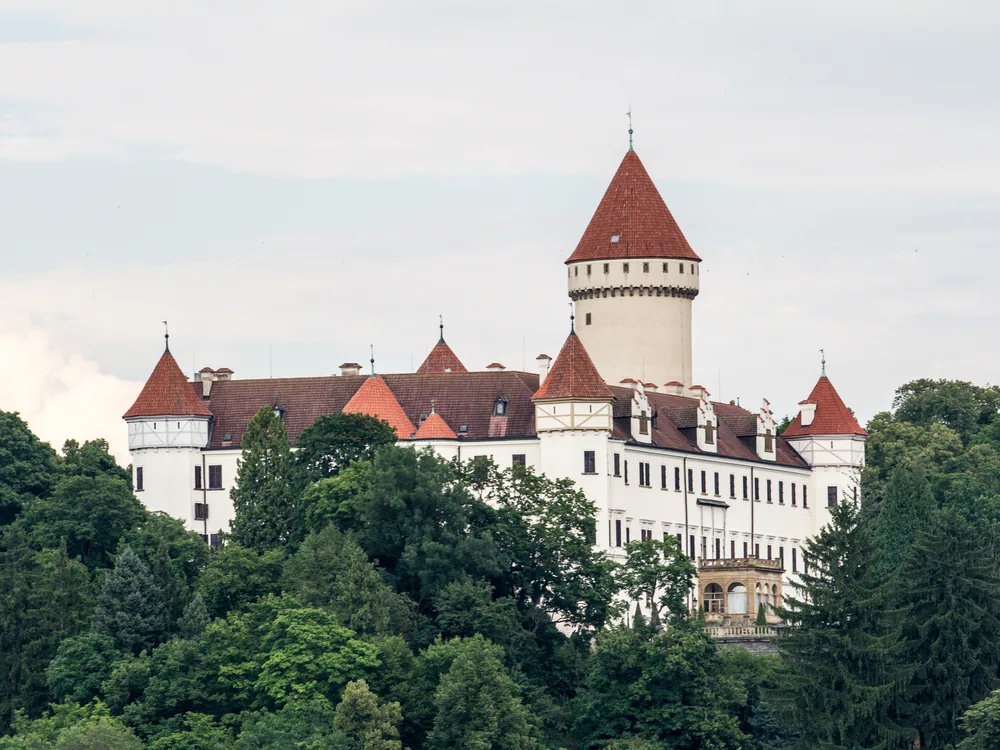
Combine with: Konopiste Castle — the hunting castle of Archduke Franz Ferdinand, 40 km east. Křivoklát Castle — the royal Gothic hunting castle in the Berounka forest, 25 km north.
Frequently Asked Questions
Take a direct train from Prague Hlavní nádraží (main station) to Karlštejn — the journey takes about 45 minutes and trains run roughly every 1–2 hours. Cost is approximately €3–5. From Karlštejn station, walk through the village (10 min flat) then 20 minutes uphill to the castle entrance. No car needed and no transfer — it's the most straightforward day trip from Prague.
Location
267 18 Karlštejn, Czech Republic
Nearby Castles
Tours & Tickets
Powered by GetYourGuide
From
€68/ person