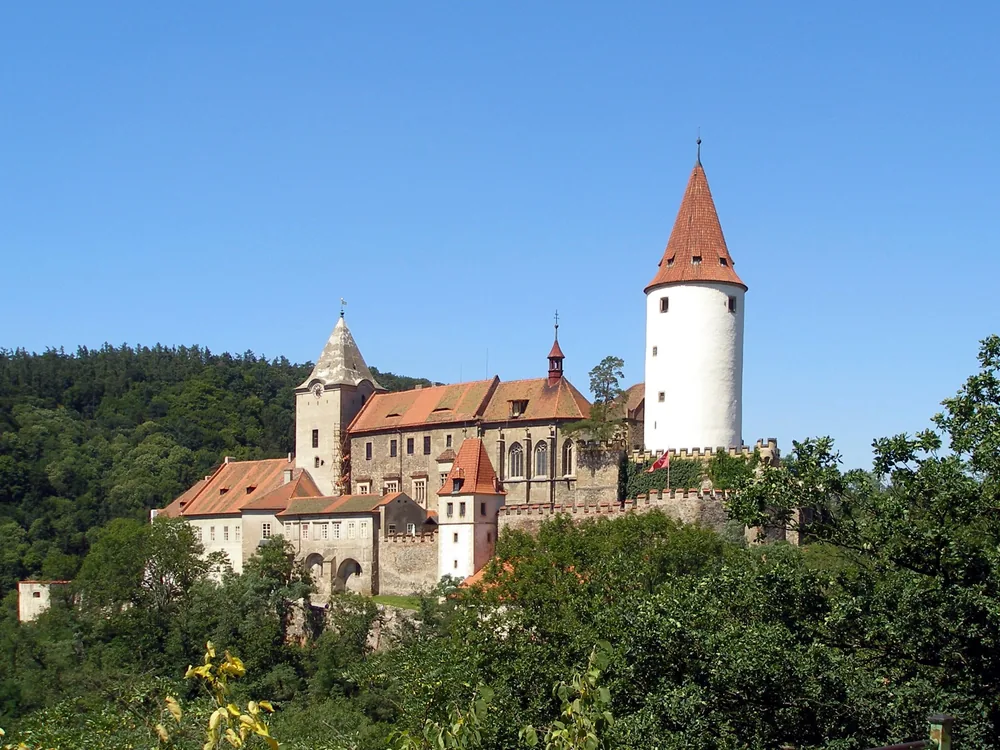
Křivoklát Castle
Hrad Křivoklát
Czech republic · Central Bohemia, Křivoklátsko forests, 50km west of Prague · Near Rakovník
12th century · Royal Bohemian Gothic castle with 19th-century Fürstenberg restoration — the castle occupies a spur above the Berounka River at the edge of the Křivoklátsko forest reserve; the principal building phases are the 13th-century Přemyslid royal expansion under Otakar II, Wenceslaus IV's late-14th-century rebuilding after fire damage, and the definitive Gothic transformation under Vladislaus II Jagiellon (1471–1516) who added the ribbed-vault Gothic chapel, the library wing, and the great residential hall; a severe fire in 1826 destroyed large portions of the castle, and the subsequent Fürstenberg family restoration (1826 onward) re-roofed the ruins in a historicist manner, preserving authentic late-Gothic fabric in the chapel and library while rebuilding the outer buildings in a 19th-century Gothic Revival mode; the result is characteristic of Central European royal castles that survived as working estates rather than as pure archaeological sites
This page is part of an independent travel guide and is not affiliated with, endorsed by, or operated by Křivoklát Castle.
© Castles & Palaces
Quick Facts
- Hours
- Tue–Sun 09:00–17:00. Closed Mon
- Guided tour from
- €248
- Duration
- 1.5–2 hours (standard guided tour); full day (GetYourGuide private day trip from Prague)
- Best time
- May to September
- Nearest city
- Rakovník
Featured Tour
From Prague: Křivoklát Castle & Beroun Private Day Trip
Cancellation available · Instant confirmation
Highlights
- ✦Seven centuries of royal hunting residence — Křivoklát was the preferred hunting retreat of the Přemyslid, Luxemburg, Jagiellon, and Habsburg dynasties in succession; the Křivoklátsko forests surrounding it are among the densest preserved oak-and-beech woodland in Central Bohemia, now a UNESCO Biosphere Reserve, and the reason every Bohemian king kept returning to this castle rather than to the more comfortable palaces closer to Prague
- ✦The Gothic chapel of Vladislaus II Jagiellon — built during the castle's 15th-century golden age, the ribbed-vault chapel contains carved stone altarpiece figures and a remarkable late-Gothic interior considered among the finest examples of Jagiellonian Gothic in Bohemia; the Jagiellon dynasty built in this manner across their domains from Cracow to Buda, and Křivoklát's chapel places Central Bohemia within that broader royal architectural program
- ✦One of the oldest library rooms in Bohemia — the library wing added during the Vladislaus II period contains one of the earliest surviving dedicated library spaces in Bohemia; the castle's collection of Gothic panel paintings and rare books makes it as much a museum of medieval Bohemian culture as a military monument
- ✦Wenceslaus IV's imprisonment in his own castle — King Václav IV of Bohemia (Holy Roman Emperor Wenceslaus, r. 1378–1419), who rebuilt Křivoklát as one of his preferred residences, was captured by a faction of Bohemian nobility and briefly held prisoner here in 1394 — an extraordinary reversal in which the king who had made the castle a royal seat was confined within its own walls by his own subjects
- ✦Edward Kelley's imprisonment — the English alchemist Edward Kelley, who had worked alongside John Dee at the court of Rudolf II in Prague in the 1580s, fell from imperial favor and was imprisoned at Křivoklát by Rudolf II around 1591; the castle's use as a state prison extended across several centuries and its list of captives forms a minor history of Central European political misfortune
- ✦GetYourGuide private day trip from Prague covering Křivoklát Castle + Beroun (9 hours, includes castle entrance fee and tour guide)
Skip the queue with a guided tour
Skip-the-line tickets & expert guides
Křivoklát sits at the edge of the Křivoklátsko — the dense oak-and-beech forest reserve that stretches westward from the Berounka River into Central Bohemia — and the forest is as much the point of the castle as the castle itself. Every Bohemian king who chose Křivoklát as a favorite residence chose it because of what surrounded it: the richest hunting ground within a half-day's ride of Prague, dense enough and remote enough to provide the combination of sport and retreat that medieval royal courts required. The castle and the forest shaped each other across four centuries of royal occupation, and today the Křivoklátsko is a UNESCO Biosphere Reserve — an unintended conservation legacy of the centuries in which royal hunting rights kept the forest intact.
The earliest Přemyslid settlement on the spur above the Berounka dates to the 12th century, when the founding of a royal hunting lodge established the site as a permanent court attachment rather than a seasonal camp. The Přemyslid dynasty — Bohemia's ruling house from the legendary founding of the dynasty to its extinction in 1306 — made Křivoklát a standard fixture of the royal itinerary, and the castle grew from a fortified lodge into a substantial military and residential structure as the 13th century progressed. The most significant Přemyslid expansion came under Přemysl Otakar II (r. 1253–1278), the 'King of Iron and Gold' whose territorial ambitions at their peak stretched from Bohemia to the Adriatic — a ruler with the resources and appetite to build seriously, and who treated Křivoklát as a major royal castle rather than a seasonal stop.
The Luxemburg dynasty succeeded the Přemyslids on the Bohemian throne after 1310, and the castle reached a new phase of significance under Wenceslaus IV (r. 1378–1419), who rebuilt it after fire damage and made it one of his most frequented residences. Wenceslaus was a complex figure — Holy Roman Emperor as well as King of Bohemia, frequently at odds with the Bohemian nobility and ultimately deposed from the imperial throne in 1400 — and Křivoklát's place in his story includes one of the more pointed reversals in medieval Bohemian history: in 1394, a faction of the nobility captured the king and held him prisoner at Křivoklát, the very castle he had rebuilt as a royal seat. The king imprisoned in his own favorite palace by the subjects of that palace.
The castle's architectural golden age came under the Jagiellon dynasty. Vladislaus II Jagiellon (r. 1471–1516) was King of Bohemia and later also King of Hungary, ruler of a domain that stretched from the Baltic to the Balkans and whose court produced the last great flowering of Gothic architecture in Central Europe — the Jagiellonian Gothic, recognizable from Cracow's Wawel Castle to Buda's royal palace and here at Křivoklát. Under Vladislaus, the castle received the Gothic chapel whose ribbed vaulting and carved stone altarpiece figures are considered among the finest Jagiellonian Gothic interiors in Bohemia; the library wing, housing one of the oldest dedicated library spaces in the country; and the great residential hall. These are the rooms that made Křivoklát, in contemporary accounts, one of the most magnificent royal residences in Central Europe.
The castle's later history is defined by two uses: as a state prison and as a victim of fire. Royal and imperial prisoners were held here across the 15th, 16th, and 17th centuries — the list includes nobility, clerics, and the English alchemist Edward Kelley, who had worked alongside John Dee at Rudolf II's Prague court in the 1580s, contributed to the emperor's obsessive alchemical research program, and fell from favor around 1591. Rudolf II imprisoned Kelley at Křivoklát, where he died following an escape attempt. The castle's prison function, like its hunting function, made it useful long after its front-line military role had ended.
A severe fire in 1826 destroyed large sections of the castle and forced a decisive intervention. The Austrian imperial authorities sold the ruin to Karl Egon II, Prince of Fürstenberg, who undertook the comprehensive reconstruction that defined the castle's present appearance — re-roofing the burned-out sections, restoring the outer buildings in a Gothic Revival manner consistent with the surviving medieval fabric, and preserving the authentic late-Gothic chapel and library while rebuilding the residential portions around them. The Fürstenbergs held the castle until 1929, when it passed to the new Czechoslovak state.
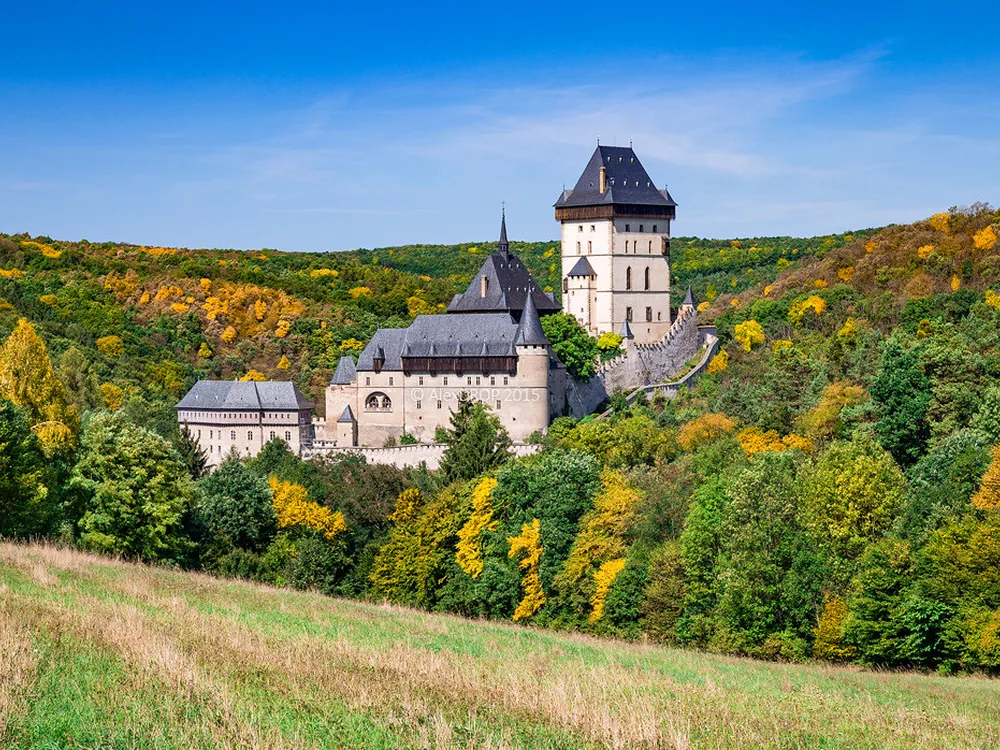
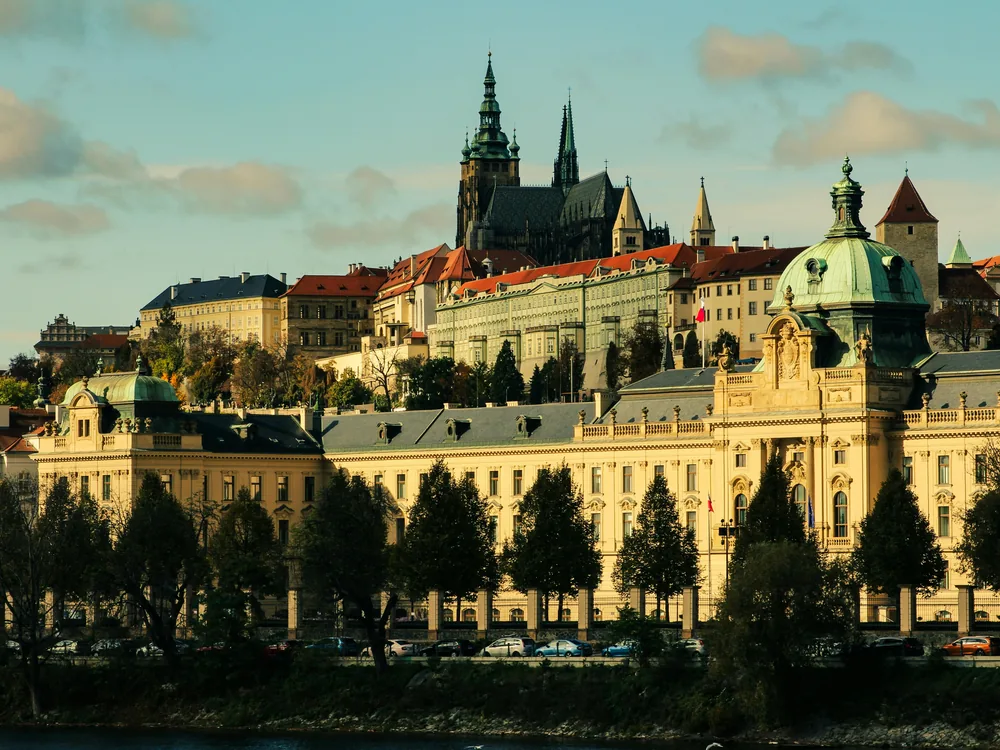
Today the castle is administered by the Czech National Heritage Institute and visited by guided tour. The collections include late-Gothic panel paintings — among the most significant medieval painting collections in any Czech castle outside Prague — hunting weapons accumulated across the centuries of royal occupation, and the rare books of the library. [Karlštejn Castle](/castles/czech-republic/karlstejn-castle), 30 kilometres east in the Berounka valley, was built by Emperor Charles IV specifically to house the Crown Jewels and imperial relics — a companion to Křivoklát in the Central Bohemian castle landscape and reachable on the same day. [Prague Castle](/castles/czech-republic/prague-castle), 50 kilometres east, is the seat of the Bohemian kings whose hunting at Křivoklát was the other half of their lives.
History
The Přemyslid princes of Bohemia established a royal hunting lodge on the spur above the Berounka River in the 12th century — the first building in a sequence that would eventually become one of Bohemia's most significant medieval castle complexes. Přemysl Otakar II undertook major expansion in the 13th century, transforming the lodge into a substantial royal military and residential structure, and the castle's forest context continued to define its appeal to successive rulers: Křivoklát sat at the edge of the richest hunting grounds in Bohemia.
The late 14th century brought Wenceslaus IV, who rebuilt after a devastating fire and made Křivoklát a primary residence — a choice that resulted in one of the more unusual episodes in its history when Bohemian nobility captured their own king and imprisoned him here in 1394. The castle's architectural peak came under Vladislaus II Jagiellon between 1471 and 1516, when the Gothic chapel, library wing, and great hall were built in a programme that represents the best preserved late Gothic interior sequence in Bohemia. The 16th century brought a less glorious function: the castle became a royal prison, most famously housing the English alchemist Edward Kelley, imprisoned by Rudolf II around 1591.
A severe fire in 1826 destroyed large portions of the structure, and the Austrian imperial authorities sold the ruin to Prince Karl Egon II of Fürstenberg. The Fürstenberg family undertook a major Gothic Revival restoration that returned the castle to something approaching its medieval character. Ownership transferred to the Czechoslovak state in 1929, and the castle is now administered by the Czech National Heritage Institute.
How to Visit
Getting there: From Prague, Křivoklát is approximately 50 km west (~1 hour by car). By train, travel from Praha Masarykovo nádraží to Křivoklát via a change at Beroun (about 1.5 hours); the station is a 10-minute walk from the castle.
Tickets: Walk-up prices vary by tour circuit — check current schedules and prices at hradkrivoklat.cz. Visits are by guided tour only; free-roam access is not permitted. The GetYourGuide private day trip from Prague covers Křivoklát Castle and the town of Beroun over 9 hours, with castle entrance fees and a guide included.
Practical tips: The castle closes on Mondays year-round. Several tour circuits of different lengths are offered — the Gothic chapel and library wing are the architectural highlights and worth selecting a circuit that includes them.
Combine with: Karlštejn Castle — 30 km east in the same Berounka valley, pairing the royal Gothic hunting castle with the imperial treasury on a single day from Prague.
Frequently Asked Questions
Edward Kelley (1555–1597) was an English occultist and self-described spirit medium who worked alongside John Dee — astrologer to Elizabeth I — at the court of Holy Roman Emperor Rudolf II in Prague in the 1580s. Rudolf was obsessed with alchemy and the occult, and Kelley claimed the ability to transmute base metals into gold. When Kelley's promises outpaced his results, Rudolf lost patience and imprisoned him at Křivoklát around 1591. Kelley died following an escape attempt from the castle — in some accounts by a fall while attempting to climb down from the walls. His story is one of the more vivid episodes in Rudolf II's famous Prague court, which also attracted Tycho Brahe and Johannes Kepler.
Location
Křivoklát 47, 270 23 Křivoklát, Czech Republic
Nearby Castles
Tours & Tickets
Powered by GetYourGuide
From
€248/ person