Kačina Castle
Zámek Kačina
Czech republic · Central Bohemian Region — near Nové Dvory, 5km north of Kutná Hora, Kolín District · Near Kutná Hora
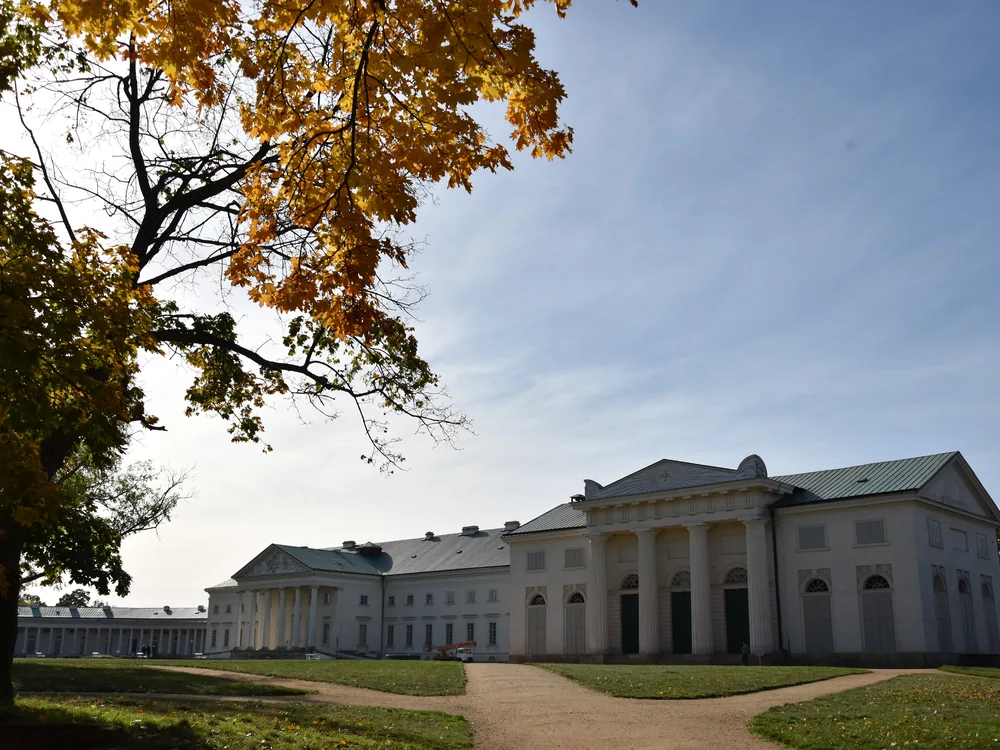
Built 1822 · Empire-style neoclassical château, 1802–1822, considered the finest example of the Empire style in the Czech Republic — commissioned by Count Jan Rudolf Chotek (1748–1824), Vice-Chancellor of Bohemia, as a grand countryside residence; designed by the German architect Georg Fischer and completed in 1822; the central corps-de-logis is flanked by curved colonnaded wings ending in corner pavilions, the whole composition expressing the strict classical symmetry and austere grandeur of the Empire style; the surrounding English landscape garden of approximately 44 hectares was designed in the romantic naturalistic style fashionable among Central European aristocracy in the early 19th century; the estate passed to the National Agricultural Museum of the Czech Republic after the Second World War and operates today as a museum château open to visitors
This page is part of an independent travel guide and is not affiliated with, endorsed by, or operated by Kačina Castle.
© Castles & Palaces
Quick Facts
- Hours
- Tue–Sun 09:00–17:00. Closed Mon
- Guided tour from
- €1031
- Duration
- 1.5–2 hours (guided tour of the state rooms, library, and theatre); 30–45 additional minutes for the English landscape garden
- Best time
- May to September
- Nearest city
- Kutná Hora
Featured Tour
Discover Hidden Bohemia: Kačina & Žleby Castles Private Tour
Cancellation available · Instant confirmation
Highlights
- ✦The finest Empire/neoclassical architecture in the Czech Republic — Kačina is consistently cited by Czech art historians as the outstanding example of the Empire style in Bohemia; the central corps-de-logis flanked by curved colonnaded wings and corner pavilions expresses the strict classical composition of the style in a building of considerable scale and ambition, at a quality that matches comparable neoclassical châteaux in France and Germany
- ✦Historic library with approximately 75,000 volumes — the Chotek family library assembled in the château's neoclassical reading rooms comprises approximately 75,000 volumes, including incunabula (books printed before 1501), early modern manuscripts, and the accumulated scholarly library of one of Bohemia's leading aristocratic families; the library rooms are among the most significant preserved private historical libraries in the Czech Republic
- ✦The preserved historic theatre — Kačina's château theatre, built as part of the original 1802–1822 construction, preserves its original stage, seating, and decorative programme; it was used for theatrical and musical performances by the Chotek family and their guests and remains one of the better-preserved private château theatres in Central Bohemia
- ✦English landscape garden of 44 hectares — the naturalistic English-style park surrounding the château was designed in the early 19th century romantic tradition; it includes mature specimen trees, ornamental water features, and carefully composed vistas from the château's colonnaded wings across the Bohemian countryside
- ✦Proximity to Kutná Hora — 5km south, the UNESCO World Heritage town of Kutná Hora (a medieval silver-mining city with the Gothic Cathedral of St Barbara and the Sedlec Ossuary) combines naturally with Kačina for a day from Prague; the GYG private tour (t1369909) covers both Kačina and Žleby Castle from Prague
Skip the queue with a guided tour
Skip-the-line tickets & expert guides
Count Jan Rudolf Chotek had clear ideas about what his new country residence should look like. As Vice-Chancellor of Bohemia — one of the senior administrative positions in the Habsburg Empire's Czech lands — Chotek had the resources and the cultural ambitions to commission something significant, and in 1802 he engaged the German architect Georg Fischer to design a château at Kačina, near his existing estate at Nové Dvory north of Kutná Hora. What Fischer produced between 1802 and 1822 is now consistently described by Czech art historians as the finest example of the Empire style in the country.
The Empire style — the architectural expression of Napoleonic Europe, simultaneously austere and grand — is defined by strict classical symmetry, columnar porticoes, smooth wall surfaces, and a deliberate avoidance of ornamental excess. At Kačina, Fischer deployed it at a scale appropriate to a major aristocratic commission: a central residential block with a columnar portico, flanked by curved colonnaded wings that sweep outward to end in corner pavilions, the whole composition reading as a single unified statement across the landscape. The curving wings were a particular French Empire-period device, evoking the forecourts of Parisian hôtels and the most ambitious rural château designs of the period; at Kačina they give the building a sense of enclosure and welcome that purely rectilinear neoclassical compositions typically lack.
Chotek designed the estate comprehensively. The English landscape garden — approximately 44 hectares of naturalistic parkland in the romantic tradition then fashionable across Central European aristocracy — was laid out around the château with mature specimen trees, ornamental water, and carefully composed views from the colonnaded wings across the Bohemian plateau. The combination of a classically proportioned building and a deliberately informal English garden was the canonical aristocratic composition of the period in Central Europe, and Kačina is one of the most complete surviving examples in Bohemia.
The interior programme of the château was equally considered. The library that Chotek assembled in the neoclassical reading rooms of the château's east wing comprises approximately 75,000 volumes — incunabula, early modern manuscripts, scientific and scholarly works accumulated across generations of the Chotek family's engagement with Bohemian intellectual life. The library rooms, preserved in their original Empire-period decoration with mahogany book furniture and classical pilasters, are the most significant interior space at Kačina, and rank among the important surviving private historical libraries in the Czech Republic.
The château theatre, built as part of the original construction, preserves its stage, seating, and decorative programme from the early 19th century. Theatrical and musical performances for invited guests were a standard feature of great aristocratic estates in this period; Kačina's theatre was used by the Chotek family and their circle, and remains one of the better-preserved private château theatres in Central Bohemia — a type of interior that was common in the early 19th century but is now rare in anything close to original condition.
The Chotek family held Kačina until the upheavals of the 20th century — confiscated first by the Nazi occupation, then after the Second World War by the Czechoslovak state under the postwar decrees that expropriated the estates of the Bohemian aristocracy. The château passed to the National Agricultural Museum of the Czech Republic, which administers it as a museum estate and maintains the guided tour programme of the state rooms, library, and theatre.
The practical case for visiting Kačina from Prague or Kutná Hora is strong. Kutná Hora — the UNESCO World Heritage medieval silver-mining city, home to the Gothic Cathedral of St Barbara and the Sedlec Ossuary — is approximately 5km south of Kačina and is the obvious day-trip pairing. The GYG product for Kačina (t1369909) is a private nine-hour tour from Prague that combines Kačina with Žleby Castle — a romantically decorated 19th-century Gothic Revival château approximately 20km east — with admission tickets to both included, hotel pickup and drop-off, and a traditional Czech lunch.
Žleby Castle, covered by the same GYG tour, is a candidate for a dedicated castle page in a future batch: it is a distinct and significant Bohemian château with richly decorated neo-Gothic interiors in its own right.
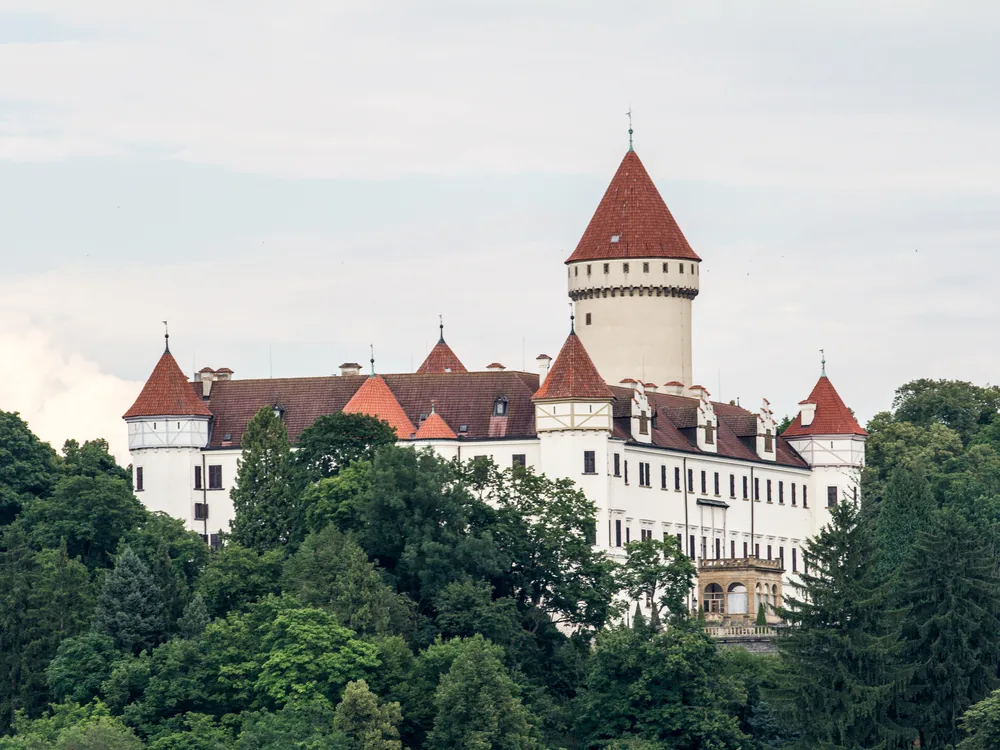
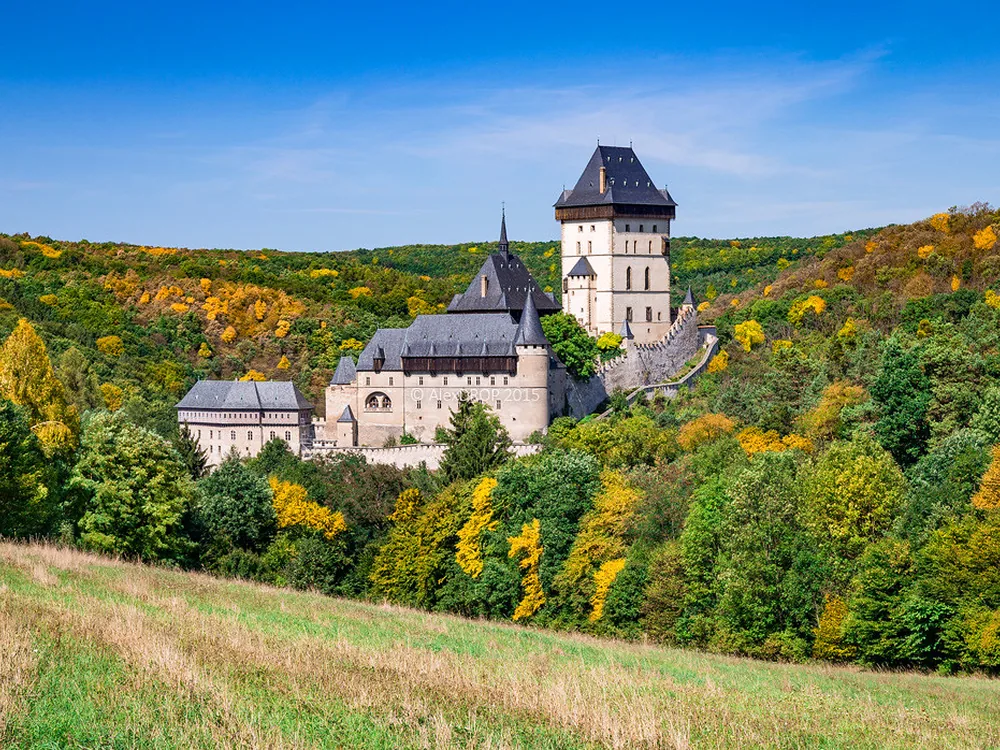
[Konopiste Castle](/castles/czech-republic/konopiste-castle) — the hunting castle rebuilt by Archduke Franz Ferdinand of Austria in the late 19th century, now a museum of his extensive arms collection and his life in the years before the Sarajevo assassination — is approximately 60km southwest of Kačina via Benešov. [Karlštejn Castle](/castles/czech-republic/karlstejn-castle) — the 14th-century royal castle of Charles IV, built to house the Bohemian crown jewels — is approximately 70km west of Kačina via Beroun.
History
Count Jan Rudolf Chotek, Vice-Chancellor of Bohemia and one of the senior Habsburg administrators in the Czech lands, engaged the German architect Georg Fischer in 1802 to design a new country residence at Kačina. The result, completed in 1822, was the finest example of Empire-style architecture in Bohemia: a composition of curved colonnaded wings, a central corps-de-logis, and corner pavilions that achieved the classical restraint the Empire style demanded without sacrificing the spatial drama appropriate to an aristocratic commission of this scale. The 44-hectare English landscape garden laid out around the château between 1802 and 1824 completed the ensemble.
The Chotek family maintained Kačina as their principal country residence through the 19th century, assembling a library of approximately 75,000 volumes and using the private theatre within the château for cultural events. The family retained the property into the early 20th century, until the Nazi occupation confiscated it in 1942. Postwar Czechoslovak decrees expropriated it from the family, and the château passed eventually to the National Agricultural Museum of the Czech Republic, which manages it today.
The guided tours now available from April to October move through the state rooms, library, and theatre in a sequence that captures the full extent of the Chotek commission — the neoclassical architecture, the book collection, and the intimate theatre space that makes Kačina one of the more quietly distinguished country houses in Central Europe.
How to Visit
Getting there: Kačina is 5 km north of Kutná Hora. From Prague, take a train to Kutná Hora město (about 1 hour from Praha hlavní nádraží), then a taxi or local bus the final 5 km. By car from Prague, it is roughly 70 km southeast via D1.
Tickets: Walk-up entry is €11 adult, €6 child; open Tuesday–Sunday, April through October. The GYG private tour (t1369909, from €1,031 per group of up to 3, new — no reviews yet) covers Kačina and Žleby Castle from Prague in 9 hours, with hotel pickup, private transport, admission to both châteaux, and a traditional Czech lunch included.
Practical tips: Pair Kačina with Kutná Hora's UNESCO heritage sites (Cathedral of St Barbara, Sedlec Ossuary) for a full day from Prague — morning in Kutná Hora, afternoon at Kačina. The guided interior tour is the only way to access the state rooms; unguided self-access is not available.
Combine with: [Žleby Castle](/castles/czech-republic/zleby-castle) — the neo-Gothic château 20 km east, also covered by the GYG private tour. [Konopiste Castle](/castles/czech-republic/konopiste-castle) — the hunting castle of Archduke Franz Ferdinand, 60 km southwest.
Frequently Asked Questions
The Empire style is the architectural and decorative idiom of Napoleonic Europe — the period c. 1800–1830 — characterised by strict classical symmetry, columnar porticoes, smooth wall surfaces, and a preference for grandeur without excessive ornamental detail. It takes its name from Napoleon's First Empire and the cultural ambitions of the Napoleonic period, though it spread across Europe well beyond French-controlled territories. Kačina is significant because it applies the Empire style at a large scale and with considerable architectural quality in a Central European context where the style is less commonly encountered than further west; Czech art historians consistently cite it as the outstanding surviving example in the Czech Republic. The curved colonnaded wings in particular — a French Empire device evoking Parisian architectural composition — are an unusual refinement for a rural Bohemian château.
Location
Zámek Kačina, 285 31 Nové Dvory, Czech Republic
Nearby Castles

Tours & Tickets
Powered by GetYourGuide
From
€1031/ group