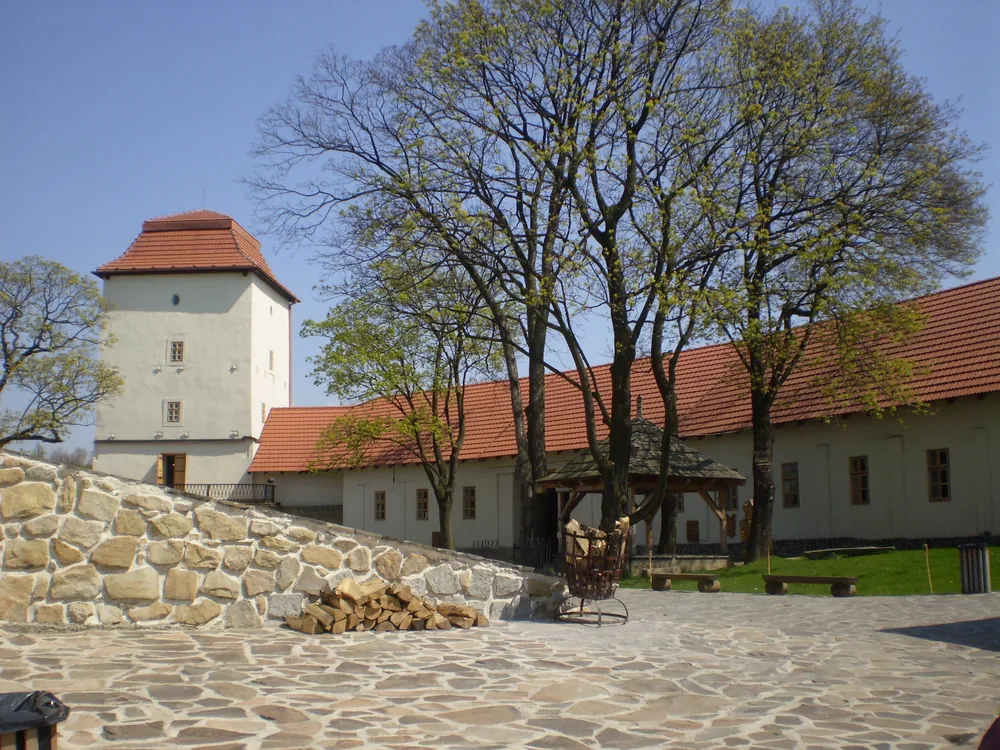
Silesian Ostrava Castle
Slezskoostravský hrad
Czech republic · Moravian-Silesian Region · Near Ostrava
Built 1280 · Medieval castle founded in the late 13th century at the confluence of the Lučina and Ostravice rivers, on the historic border between the Kingdom of Silesia and the Margraviate of Moravia; the castle underwent significant modifications across the medieval and early modern periods, eventually declining into industrial-era administrative use and near-ruin before a major restoration programme in the 1990s and early 2000s restored the structure to a public heritage site; the restored castle retains medieval stonework visible throughout, with later Gothic vaulting and archaeological remains from multiple construction phases exposed and interpreted on site
This page is part of an independent travel guide and is not affiliated with, endorsed by, or operated by Silesian Ostrava Castle.
© Castles & Palaces
Quick Facts
- Hours
- Tue–Fri 09:00–18:00. Sat & Sun 10:00–18:00. Closed Mon
- Entry via GetYourGuide
- €5
- Duration
- 1–1.5 hours
- Best time
- April to October
- Nearest city
- Ostrava
Featured Tour
Entrance to Silesian Ostrava Castle
Cancellation available · Instant confirmation
Highlights
- ✦Silesian Ostrava Castle was built at the confluence of the Lučina and Ostravice rivers specifically because this was the historic border between the Kingdom of Silesia and the Margraviate of Moravia — one of the most consequential territorial boundaries in medieval Central European history, controlling movement between two distinct political and cultural regions
- ✦The castle's unusual arc — medieval stronghold to coal-era administrative building to near-ruin to restored heritage site — tracks the same trajectory as Ostrava itself, which transformed from a medieval market town into the industrial heartland of the Austro-Hungarian Empire and then the Czechoslovak and Czech Republic steel and mining economy
- ✦The early 2000s restoration exposed and interpreted archaeological remains from multiple construction phases within the same walls, allowing visitors to read the castle's physical evolution across seven centuries of building, modification, and neglect — a more archaeologically layered experience than fully reconstructed castles typically offer
- ✦The castle's position at the river confluence gives it an unusually urban character: it sits within the city, not above it on a hill, and the industrial landscape of Ostrava surrounds it on all sides — making it one of the few medieval castles in the Czech Republic whose setting makes the 19th-century industrial revolution part of the context rather than the background
- ✦Ostrava's Lower Vítkovice complex — a decommissioned ironworks 2 km from the castle, designated a UNESCO candidate site and one of the best-preserved 19th-century industrial heritage sites in Central Europe — makes Silesian Ostrava Castle the medieval anchor of a day focused on the longest possible arc of the city's history
Skip the queue with a guided tour
Skip-the-line tickets & expert guides
The Ostravice River runs through the centre of Ostrava, and for most of the medieval period it meant more than geography. The river marked a political boundary — the border between the Kingdom of Silesia to the north and east and the Margraviate of Moravia to the south and west — and the castle built at its confluence with the Lučina in the late 13th century was built precisely to control that boundary. Silesian Ostrava Castle was not a regional capital, not a seat of a major noble family, not the administrative centre of a significant domain. It was a border post: a fortified point of control on one of the most consequential territorial dividing lines in medieval Central European political geography.
The Silesia-Moravia border matters in medieval history because the two regions had distinct legal systems, different administrative traditions, separate economic circuits, and — during periods of political fragmentation — different rulers. Controlling the confluence of two rivers at this boundary meant controlling the movement of goods, people, and armies between two political cultures. The castle's relatively modest scale — it was never the great fortress of a powerful noble but always more of a strategic installation — reflects this functional rather than ceremonial purpose.
The castle's later history tracks the same arc as Ostrava itself: from a medieval border control to gradual irrelevance as political boundaries shifted, then to industrial-era administrative repurposing, then to progressive deterioration as the 20th century's industrial city expanded around it without particular interest in preserving what looked like a dilapidated old building. By the late 20th century the castle was in poor condition — not a ruin in the romantic highland-castle sense, but a building that had been continuously occupied for low-grade purposes and consequently modified, damaged, and neglected in ways that obscured its medieval character.
The restoration programme undertaken in the 1990s and completed in the early 2000s made a specific interpretive decision that distinguishes Silesian Ostrava from many Central European castle restorations: rather than reconstructing a single historical moment, the restoration exposed and stabilised the accumulated evidence of multiple construction phases. Medieval stonework, Gothic vaulting from later rebuilding phases, and archaeological investigations conducted as part of the restoration process are all visible within the same walls, and the site's interpretive approach treats this layering as content rather than confusion. Visitors can read the building's physical evolution — where later construction phases interrupted earlier ones, where archaeological evidence reveals plans that were modified or abandoned, where the transition from fortified stronghold to administrative building left marks in the fabric — in a way that more comprehensively reconstructed castles cannot offer.
The castle's physical setting is distinctive for Czech heritage: it sits at river level within the city rather than on a commanding hilltop outside it. Ostrava's industrial landscape surrounds it — the chimneys and cooling towers of the broader industrial zone are visible from the castle walls, and the approach from the city centre takes you through a working urban environment rather than a heritage precinct. This is not a drawback but a fact about the place: Silesian Ostrava Castle exists within an industrial city, and understanding it fully means accepting that the 19th-century transformation of Ostrava into the industrial heartland of the Austro-Hungarian Empire is part of the castle's context, not separate from it.
Ostrava's other major heritage asset, Lower Vítkovice, is approximately 2 kilometres from the castle — a decommissioned ironworks complex covering blast furnaces, coking plants, gas holders, and workers' infrastructure spanning the 1820s to the 1990s, now being developed as a cultural heritage site and one of the best-preserved examples of integrated 19th-century industrial infrastructure in Central Europe. The combination of Silesian Ostrava Castle and Lower Vítkovice on the same day covers the longest possible arc of the city's history: 13th-century border castle to 19th-century industrial empire. Both are worth seeing, and neither makes much sense without knowing that the other exists.
For visitors to the Czech Republic who have covered Prague, Český Krumlov, and Karlštejn, Ostrava offers something genuinely different: a city that never particularly aimed at the tourist market and consequently has an authenticity that more visited Czech cities cannot replicate. The GetYourGuide entry ticket covers the castle at a price that reflects both its regional rather than national prominence and its position as part of a broader Ostrava heritage day rather than a standalone destination.
Ostrava's position within the Czech Republic's cultural geography is worth understanding. The city lies in the far northeast, close to the Polish and Slovak borders, at the intersection of Silesia and Moravia that the castle once marked militarily. It is emphatically not on the standard Czech tourist circuit — most international visitors to the Czech Republic spend their time in Prague and perhaps Český Krumlov — and this absence from the mainstream gives the city an authenticity that more visited Czech cities cannot replicate. The restaurants, cafés, and public spaces of central Ostrava serve Czech visitors from the surrounding industrial region rather than international tourists, and the city consequently feels unstaged in a way that Prague's tourist districts do not.
Lower Vítkovice — the decommissioned ironworks complex approximately 2 kilometres from the castle — is the primary reason to build a visit around Ostrava rather than simply passing through. The complex encompasses blast furnaces, coking plants, a gasometer converted into a concert and events venue, an observation tower within a former water tower, and workers' housing and service infrastructure dating from the 1820s through the 1990s. Walking through Lower Vítkovice gives a comprehensive and genuinely moving account of what integrated 19th-century industrial production looked like from the inside — the scale of the machinery, the logic of the process connecting coal to coke to iron to steel, and the human infrastructure required to sustain it across 150 years of continuous operation. Admission is separate from the castle; check dolnivitkovice.cz for current visitor information and tour schedules.
History
Silesian Ostrava Castle was founded in the late 13th century at the confluence of the Lučina and Ostravice rivers, on the historic border between the Kingdom of Silesia and the Margraviate of Moravia. The castle controlled the strategic river crossing and served as a border post for several centuries. As Ostrava's importance shifted with the coal and steel industries of the 19th century, the castle fell into administrative use and subsequent disrepair. A major restoration programme in the 1990s and early 2000s returned the castle to public use as a heritage site, exposing archaeological remains from multiple construction phases.
How to Visit
Getting there: The castle is in Slezská Ostrava, approximately 2 km from the city centre. By tram, take line 1 or 2 to Slezská Ostrava and walk a short distance. By car, follow signs to Slezská Ostrava from the centre; parking is available near the castle.
Tickets: Walk-up entry is €6 adult, €3 child. The GetYourGuide entry ticket is the online advance admission booking for the same access.
Practical tips: The castle sits at river level within the city, not on a commanding hilltop — it is best understood as part of a broader Ostrava day. Pair it with Lower Vítkovice (2 km away), one of Central Europe's best-preserved 19th-century industrial heritage complexes; together they cover the full sweep of Ostrava's history from medieval border fortress to industrial empire.
Combine with: Spilberk Castle in Brno is about 170 km southwest — the Habsburg prison-fortress that forms the other bookend of Czech castle history in the region. Closer to hand, the Lower Vítkovice industrial complex (2 km from the castle) is the essential companion for understanding the full sweep of Ostrava's history, though it is a heritage site rather than a castle.
Frequently Asked Questions
The confluence of the Lučina and Ostravice rivers marked the historic border between the Kingdom of Silesia and the Margraviate of Moravia — two distinct medieval political regions with different legal systems and rulers. Controlling the river crossing at this border meant controlling movement between the two territories. The castle was built in the late 13th century as a strategic border installation, not as a noble residence or regional administrative centre.
Location
Hradní 1, 710 00 Ostrava-Slezská Ostrava, Czech Republic
Nearby Castles
Tours & Tickets
Powered by GetYourGuide
From
€5/ person