
Audley End House
Audley End House and Gardens
England · Essex — Saffron Walden, 1 mile west of Saffron Walden, 15 miles south of Cambridge · Near Cambridge
Built 1614 · Jacobean; built 1603–1614 for Thomas Howard, 1st Earl of Suffolk, on the site of the dissolved Benedictine Walden Abbey; one of the largest Jacobean houses ever constructed in England; grounds redesigned by Capability Brown in the 1760s with a serpentine lake and Robert Adam bridge; managed by English Heritage
This page is part of an independent travel guide and is not affiliated with, endorsed by, or operated by Audley End House.
© Castles & Palaces
Quick Facts
- Hours
- Wed–Sun 10:00–17:00. Closed Mon & Tue
- Entry via GetYourGuide
- €25.72
- Duration
- 3–4 hours (house + gardens + servants' quarters)
- Best time
- April to October
- Nearest city
- Cambridge
Featured Tour
Near London: Audley End House and Gardens
Cancellation available · Instant confirmation
Highlights
- ✦Built 1603–1614 for Thomas Howard, 1st Earl of Suffolk, on the foundations of a dissolved Benedictine abbey — at its original extent one of the largest private houses ever constructed in England, with two great courts and over a hundred rooms
- ✦Charles II purchased Audley End in 1668 as a convenient base for the Newmarket races, using it as a royal residence for nearly thirty years before the Crown sold it back to the Howard family in 1701 when running costs proved unmanageable
- ✦Capability Brown redesigned the grounds in the 1760s, creating the serpentine lake, the parkland planting, and the setting for Robert Adam's stone bridge — one of the finest 18th-century designed landscapes attached to a Jacobean house in England
- ✦English Heritage's interpretation of the Victorian servants' quarters — the kitchens, scullery, laundry, butler's pantry, and domestic offices — is among the most detailed and immersive below-stairs experiences available at any English country house
- ✦A miniature railway operates in the stable yard on summer weekends, a surviving estate feature that offers rides through the grounds and is a particular attraction for families visiting the wider property
Skip the queue with a guided tour
Skip-the-line tickets & expert guides
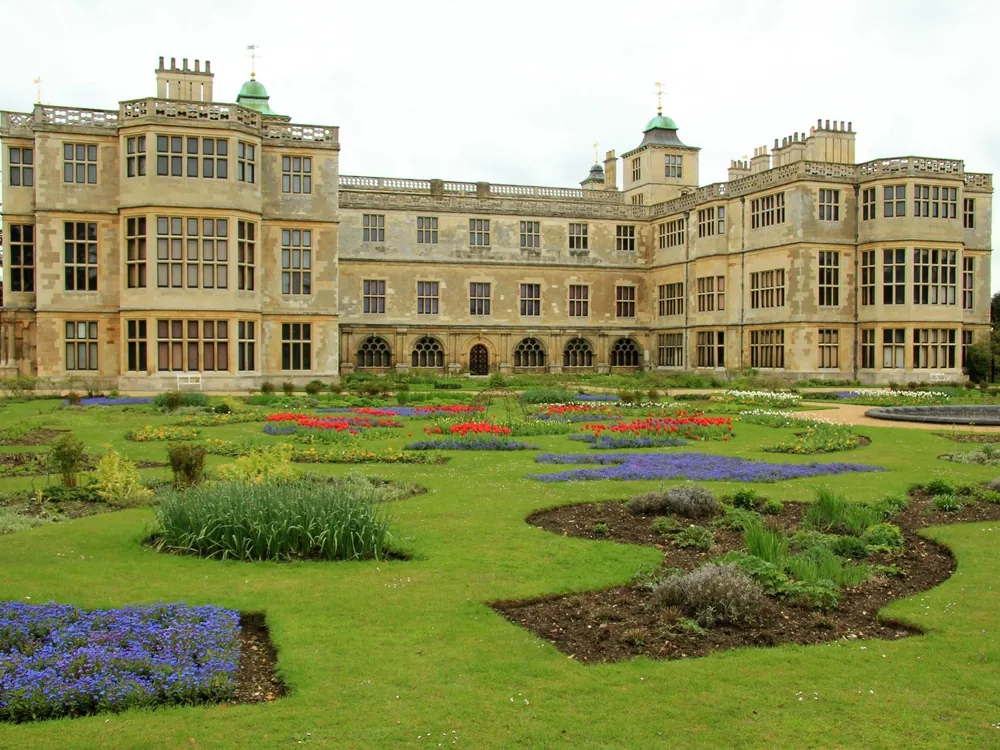
Audley End sits just outside Saffron Walden in Essex, where it has occupied the same stretch of the River Cam for four centuries. The approach is deliberately theatrical: the driveway arrives from the west across a bridge designed by Robert Adam over the serpentine lake that Capability Brown created in the 1760s, with the north front of the house rising ahead — Jacobean brickwork and stone dressings in a broad facade that communicates, even from a distance, that whoever built this intended to make an impression of considerable force. Thomas Howard, 1st Earl of Suffolk and Lord Treasurer to James I, intended exactly that. When he built Audley End between 1603 and 1614, on the site of the dissolved Benedictine Walden Abbey whose stone he incorporated into the new construction, he was creating a house designed to receive royalty, to project the Howard family's dominance at the centre of Jacobean court politics, and to demonstrate that English aristocratic architecture was capable of matching the great houses going up across Europe. James I reportedly declared on an early visit that it was too large for a king but not too large for an earl — whether he said so or not, the observation described the building accurately.
At its original extent, Audley End had two great courts, over a hundred rooms, and ranges of service buildings that made it one of the most ambitious private building projects in Jacobean England. That scale has been significantly reduced since the early 18th century, when the house was contracted to its current form, but what survives is still substantial: the great hall, the Jacobean state rooms, the 18th-century library and drawing rooms fitted out by successive generations of the Howard-Neville family, and the Victorian domestic offices below stairs.
It was Charles II who next transformed the house's trajectory. He purchased Audley End from the Howard family in 1668, primarily for its proximity to the Newmarket racing calendar that dominated the court's attention, and used it as a convenient royal base for almost three decades. The Crown eventually found the running costs unsustainable and sold the property back to the family in 1701 — a brief royal chapter that nonetheless left its mark on some of the interiors.
The Victorian servants' quarters at Audley End are what distinguish the house from comparable English Heritage properties. The kitchens, scullery, laundry, butler's pantry, and domestic offices have been interpreted at a level of detail unusual even by English Heritage's generally high standards — the result is a genuinely immersive below-stairs experience that contextualises the grand rooms above with equal historical care. The GetYourGuide entry ticket covers the house, the servants' quarters, and the grounds. A miniature railway operates in the stable yard on summer weekends and adds an unusual dimension to visits for families with children.
History
Audley End takes its name from Sir Thomas Audley, the Lord Chancellor who received the site of Walden Abbey from Henry VIII after the Dissolution of the Monasteries in 1538. The property passed through several hands before Thomas Howard, 1st Earl of Suffolk and Lord Treasurer to James I, began rebuilding it on a vast scale in 1603. Howard constructed one of the largest private houses in Jacobean England, but the ambition contributed to his downfall: he and his wife were imprisoned in the Tower of London in 1619 for embezzling royal funds, an offence partly enabled by the cost of maintaining the estate. The house passed through successive members of the Howard family, its original two-court plan contracted significantly in the early 18th century to the single court that stands today. Charles II's purchase of the property in 1668 brought a period of royal occupation tied to the Newmarket racing calendar that lasted until 1701, when the Crown sold it back to the family. The grounds were transformed in the 1760s when Capability Brown redesigned the landscape, creating the serpentine lake, the parkland planting, and the setting for a bridge by Robert Adam. The Victorian period added a richly documented below-stairs domestic world — the servants' quarters that English Heritage has since developed into one of the most detailed interpretations of Victorian domestic service at an English country house. English Heritage has managed the house and gardens since the 1980s.
How to Visit
Getting there: Audley End station is on the Great Eastern Main Line between London Liverpool Street (around 55 minutes) and Cambridge (around 15 minutes). From the station, the house is a 15-minute walk across the estate grounds. By car from Cambridge, the journey takes around 25 minutes via the M11; from central London, allow 90 minutes via the M11 and A11.
Tickets: Walk-up entry is £23 for adults and £14 for children, covering the house, servants' quarters, and gardens. English Heritage members enter free. The GetYourGuide entry ticket covers access to the house and grounds and is bookable online — useful for advance planning on busy summer weekends.
Practical tips: Allow a full 3–4 hours: the Jacobean state rooms, the servants' quarters (which take around 45 minutes alone and should not be rushed), and a walk through the Capability Brown grounds each reward proper time. The miniature railway in the stable yard operates on summer weekends — check the schedule in advance if visiting with children. The house has seasonal opening for non-members; verify dates on the English Heritage website before planning a winter visit.
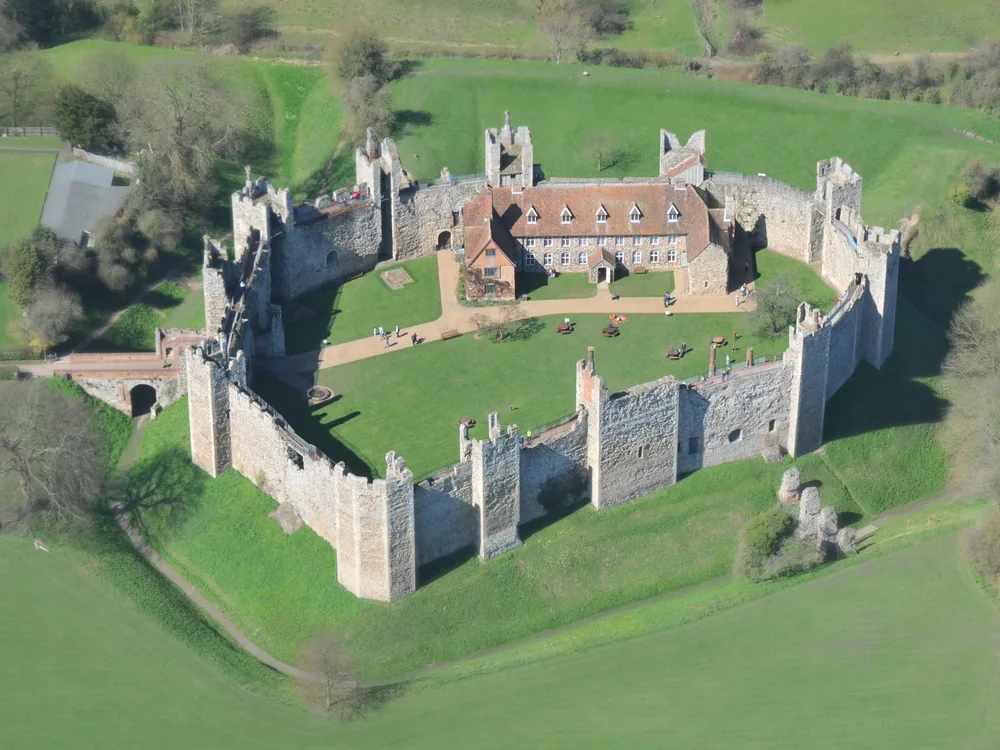
Combine with: Framlingham Castle (50 km east in Suffolk — the 12th-century Bigod fortress where Lady Jane Grey was proclaimed queen in 1553; an English Heritage site that pairs naturally with Audley End for an East Anglia heritage day).
Frequently Asked Questions
Charles II purchased Audley End in 1668 primarily for its proximity to Newmarket, the centre of English horse racing and a fixture of his court's calendar. Audley End offered a convenient base between the races and London, and the Crown occupied it as a royal residence for nearly thirty years. When the maintenance costs of such a large house proved unsustainable, the Crown sold it back to the Howard family in 1701 — ending a brief but historically notable period of royal occupation.
Location
Audley End, Saffron Walden CB11 4JF, England
Nearby Castles
Tours & Tickets
Powered by GetYourGuide
From
€25.72/ person