
Carisbrooke Castle
Carisbrooke Castle
England · Isle of Wight · Near Newport
Built 1100 · Norman motte-and-bailey castle founded c.1100, built on the site of earlier Anglo-Saxon and Roman fortifications; the original Norman construction used the existing defensive earthwork of a Roman fort (castra) whose outline is still visible in the castle's outer boundaries; substantially expanded and refortified in 1587 under Elizabeth I following the threat of Spanish invasion — the Elizabethan artillery bastions added to the outer perimeter, designed by the Italian military engineer Federico Genebelli, represent one of the best-preserved late 16th-century artillery fortification systems in England; later served as a royal prison for Charles I in 1647-48; from the 1880s became the home of Princess Beatrice, Queen Victoria's youngest daughter and Governor of the Isle of Wight, who redesigned the gardens; the castle contains a 16th-century well house with a donkey wheel — a working wooden treadwheel turned by resident donkeys to draw water 49 metres from the well below — one of the most distinctive visitor experiences at any English castle; managed by English Heritage
This page is part of an independent travel guide and is not affiliated with, endorsed by, or operated by Carisbrooke Castle.
© Castles & Palaces
Quick Facts
- Hours
- Daily 10:00–17:00
- Entry via GetYourGuide
- €16
- Duration
- 1.5–2 hours
- Best time
- Year-round
- Nearest city
- Newport
Featured Tour
Isle of Wight: Carisbrooke Castle Entry Ticket
Cancellation available · Instant confirmation
Highlights
- ✦Charles I arrived at Carisbrooke Castle as a prisoner in November 1647, having fled from Parliamentary forces and sought protection on the Isle of Wight from the governor, Colonel Robert Hammond — only to discover that Hammond immediately informed Parliament of the king's presence; Charles was confined at Carisbrooke through 1647 and into 1648 while negotiations between the Crown and Parliament continued and failed; in March 1648 he attempted to escape through a window of the great chamber, reportedly having tested the bars in advance; the window was not wide enough and he became stuck; a second escape attempt in May 1648 also failed; he was transferred to Hurst Castle in December 1648 for his trial, and was executed at Whitehall on 30 January 1649; the Carisbrooke window story is one of the most humanising moments in Charles's captivity — the king's assessment of the window's width was simply wrong, and the failure had no dignity
- ✦The donkeys at Carisbrooke Castle are the most recognisable living feature of any English Heritage site: a team of resident donkeys has been maintained at the castle since the 16th century to power the wooden treadwheel that draws water from the well — 49 metres deep into the chalk below the castle, one of the deepest castle wells in England; a donkey walks inside the wheel (like a hamster wheel scaled for a medieval engineering context) and the rotation winds the rope that raises the bucket; demonstrations are scheduled during visiting hours; the donkeys have individual names and a following on the castle's social media; they are also historically accurate, this being the precise technology that extracted water from the castle well for four centuries
- ✦The Elizabethan artillery bastions added to Carisbrooke in 1587 are among the best-preserved late 16th-century artillery fortifications in England — designed by Federico Genebelli, an Italian military engineer in English service who had contributed to the Thames fortifications, the angled bastions project outward from the medieval curtain wall to provide overlapping fields of fire that eliminated dead ground at the wall base; this was the specific design problem that 16th-century military engineering solved by replacing medieval straight walls with angled projections; the 1587 upgrade was designed against the threat of Spanish invasion, which materialised as the Armada in 1588; the Armada famously did not land on the Isle of Wight, but the defensive works were real and survive in unusually complete condition
- ✦Princess Beatrice — Queen Victoria's youngest daughter, widely known as the queen's companion and secretary during Victoria's final decades — was appointed Governor of the Isle of Wight in 1896 following the death of her husband Prince Henry of Battenberg; she lived at Carisbrooke until her death in 1944, a period of 48 years during which she redesigned the castle gardens in a style reflecting late Victorian and Edwardian horticultural taste; the garden she created is still maintained and includes the bowling alley that Charles I used during his captivity; Beatrice's connection to the castle overlaps with her mother Queen Victoria's residence at Osborne House 4 km away, creating a family geography around two IoW sites
- ✦The Isle of Wight itself is a specific visitor context that makes Carisbrooke different from mainland English Heritage sites: reaching it requires a ferry crossing, and the island's combination of Carisbrooke, Osborne House, Victorian seaside towns, and the Needles chalk stacks makes it a destination that rewards at least a full day; the island's compact geography (40 km long, 20 km wide) means that both the main heritage sites are within easy driving distance of each other and of the ferry terminal
Tickets & tours
Book through GetYourGuide
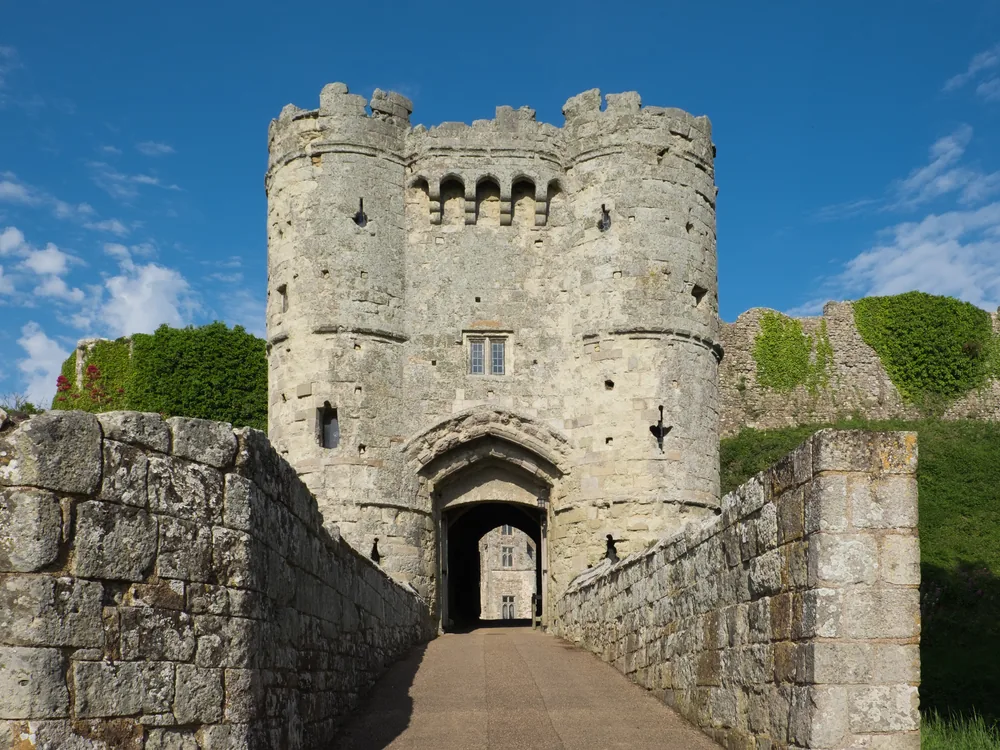
Carisbrooke Castle stands on a hilltop above the town of Newport in the centre of the Isle of Wight, managed by English Heritage. It is the most significant medieval building on the island — a Norman motte-and-bailey castle on the site of an Anglo-Saxon and Roman fortification, substantially expanded in the late 16th century against the Spanish threat, used as a royal prison in the 1640s, and occupied by a member of the Victorian royal family for nearly half a century.
The Norman castle was built around 1100 on the earthwork of an earlier Roman fort — the castra that gives the castle its name, its outline still visible in the outer boundaries of the site. The medieval structure developed across the following centuries with the addition of a gatehouse, a great chamber, and the well house over the castle's principal water source. The well — 49 metres deep into the chalk below the castle — is drawn by a wooden treadwheel worked by donkeys, a mechanism in continuous use since the 16th century and one of the most distinctive features of the castle visit. Resident donkeys are maintained specifically to demonstrate and operate the wheel.
In 1587, with Spanish invasion threatening, Elizabeth I ordered the refortification of Carisbrooke under Italian military engineer Federico Genebelli. The Elizabethan artillery bastions added to the outer perimeter — angled triangular projections designed to provide overlapping fields of fire and eliminate the dead ground at the base of straight medieval walls — are among the most complete surviving examples of late 16th-century artillery fortification design in England. The Spanish Armada of 1588 famously did not land on the Isle of Wight, but the defensive works were constructed in earnest and remain in unusually good condition.
Charles I's confinement at Carisbrooke in 1647–48 is the event that gives the castle its most famous association. The king fled to the Isle of Wight in November 1647, seeking refuge with Colonel Robert Hammond, who immediately informed Parliament. Charles was confined at the castle while negotiations between the Crown and Parliament continued and collapsed. In March 1648 he attempted to escape through a window, having apparently tested the bar spacing in advance; the window was not wide enough, and he became stuck. A second escape attempt in May 1648 also failed. He was transferred to Hurst Castle for trial and executed at Whitehall on 30 January 1649. The Carisbrooke escape attempt — the king's miscalculation of window width — is one of the more humanising moments in the Stuart story, bringing the scale of the political crisis into immediate physical comedy.
From 1896, Princess Beatrice — Queen Victoria's youngest daughter, widowed in 1896 following the death of Prince Henry of Battenberg on the Ashanti Expedition — was appointed Governor of the Isle of Wight and took up residence at Carisbrooke. She lived there until her death in 1944, a period of 48 years during which she redesigned the castle gardens in late Victorian and Edwardian horticultural style. Her mother Queen Victoria's residence at [Osborne House](/castles/england/osborne) was 4 kilometres away — the two sites create a Victorian royal family geography concentrated on the Isle of Wight that makes visiting both in a single day one of the most historically coherent experiences the island offers.
The GetYourGuide entry ticket at approximately €16 is valid on the selected date and covers self-guided access to the full castle. English Heritage members visit free.
History
The hilltop above Newport has been occupied and defended since Roman times — a fort (castra) on the site gave the castle its name and defined the outer boundary that subsequent builders would reuse. A Norman motte-and-bailey castle replaced earlier Anglo-Saxon earthworks around 1100, and over the following centuries the typical medieval sequence of gatehouse, great chamber, and well house accumulated around the original mound. In 1587, the Elizabethan refortification under Italian engineer Federico Genebelli added artillery bastions against the Spanish invasion threat — a precaution that proved unnecessary when the Armada failed to land on the Isle of Wight in 1588.
Carisbrooke's defining episode came in November 1647, when the defeated Charles I, seeking refuge from the Parliamentary army, was confined here by Colonel Hammond on Parliamentary orders. The months that followed generated some of the most undignified passages in royal English history: in March 1648, Charles attempted to escape through a window in his bedchamber but found himself stuck between the bars, unable to proceed or retreat. A second escape attempt in May 1648 failed similarly. In December 1648, Charles was transferred to Hurst Castle for trial; he was executed in London in January 1649.
The castle's later history brought a more peaceable occupant. Princess Beatrice, Queen Victoria's youngest daughter, was appointed Governor of the Isle of Wight in 1896 and lived at Carisbrooke until her death in 1944. English Heritage now manages the castle, which is open year-round.
How to Visit
Getting there: The Isle of Wight is reached by ferry from Portsmouth (35 minutes fast cat or 55 minutes car ferry), Southampton (55 minutes), or Lymington (40 minutes). Carisbrooke is 1.5 km from Newport town centre — a 20-minute walk or a short taxi ride from the ferry terminal.
Tickets: Walk-up admission is £13 for adults and £8 for children; English Heritage members enter free. The GetYourGuide entry ticket provides convenient pre-booked self-guided access to the full castle. Timed donkey wheel demonstrations run at scheduled intervals during visiting hours — check the on-site board on arrival.
Practical tips: Time your visit to catch the donkey wheel demonstration in the well house — the 49-metre chalk well and its working treadwheel mechanism are genuinely remarkable. Arrive early, as the demonstration schedules are timed and can fill up. Walk the full circuit of the Elizabethan artillery bastions on the outer perimeter to appreciate the 1587 fortification design.
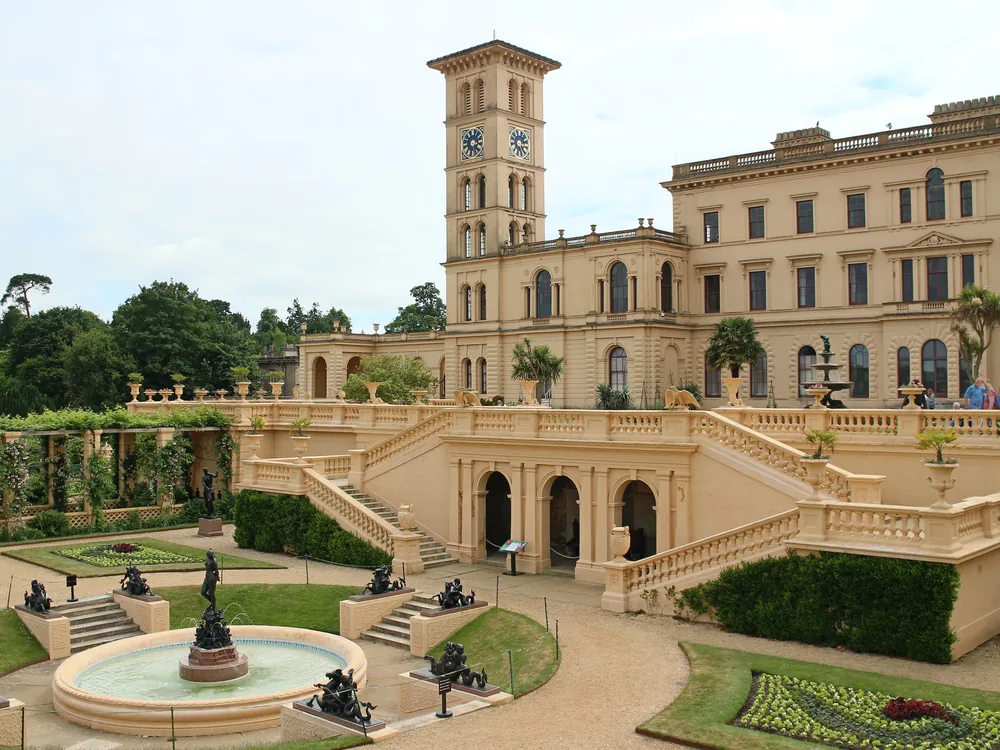
Combine with: Osborne House, 4 km to the east — Queen Victoria's Isle of Wight residence, connected to Carisbrooke through Princess Beatrice who lived at both — for a complete Victorian royal island day.
Frequently Asked Questions
Yes — or at least this is the account in historical sources. In March 1648, Charles I attempted to escape from Carisbrooke through a window of the great chamber, reportedly having tested the bar spacing in advance. The window proved narrower than he had judged and he became stuck between the bars, unable to get through. A second escape attempt in May 1648 also failed. He was transferred to Hurst Castle in December 1648 for his trial and executed at Whitehall on 30 January 1649.
Location
Castle Hill, Newport, Isle of Wight PO30 1XY, England
Nearby Castles
Tours & Tickets
Powered by GetYourGuide
From
€16/ person