
Clifford's Tower
Clifford's Tower, York Castle
England · North Yorkshire, York · Near York
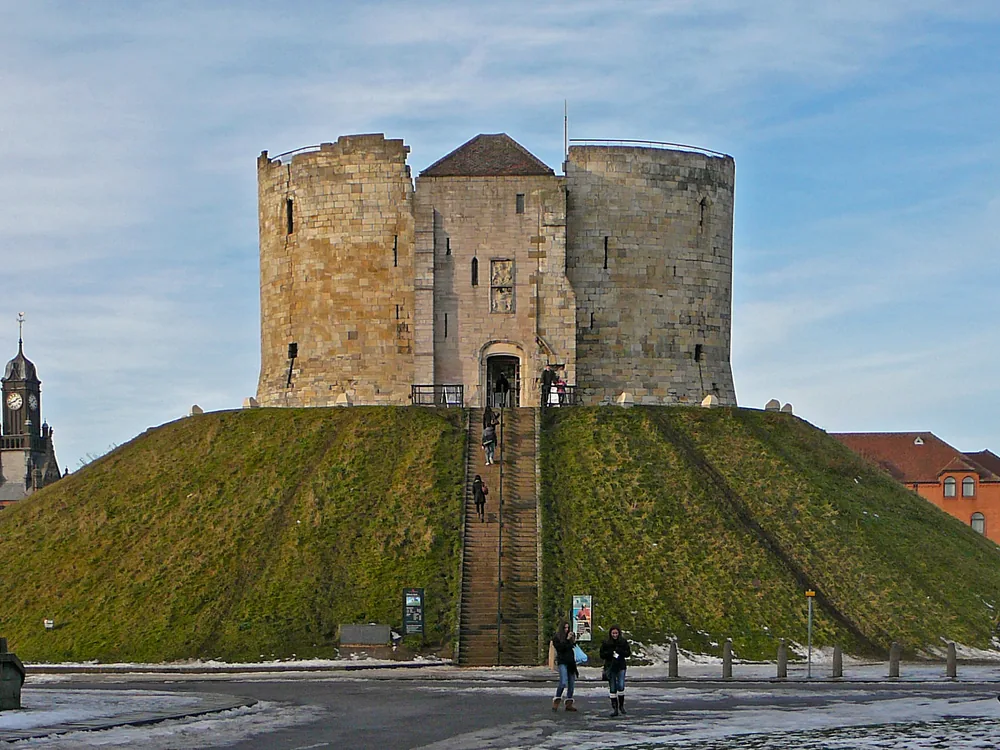
Built 1190 · Quatrefoil stone keep on a Norman motte — the largest surviving element of York Castle, not a complete castle in its own right; the current stone keep was built for Henry III between approximately 1245 and 1272 on top of the pre-existing Norman motte (earthwork mound), replacing an earlier wooden tower burned in the events of 1190; the quatrefoil plan — four lobes arranged as interlocking circles — is an unusual choice for English keep design that produced a distinctive clover-leaf profile unique in English castle architecture; the motte itself dates from the original Norman fortification of York by William I in 1068-9; the larger York Castle complex of which Clifford's Tower is the surviving keep originally included outer walls, a gateway, and buildings in the outer ward — most of these structures were demolished in subsequent centuries or developed over by the city; recent major restoration 2017-2022 added a new roof deck to the tower top, allowing visitors to walk at height above the York skyline for the first time in modern heritage management history
This page is part of an independent travel guide and is not affiliated with, endorsed by, or operated by Clifford's Tower.
© Castles & Palaces
Quick Facts
- Hours
- Daily 10:00–17:00
- Entry via GetYourGuide
- €10.88
- Duration
- 45 minutes–1 hour
- Best time
- Year-round
- Nearest city
- York
Featured Tour
York: Clifford's Tower Entry Ticket
Cancellation available · Instant confirmation
Highlights
- ✦The York Massacre of March 1190 is one of the darkest events in medieval English Jewish history, and Clifford's Tower is its defining site: during a wave of anti-Jewish violence in the city, instigated primarily by local nobleman Richard Malebisse and his associates who owed substantial debts to York's Jewish creditors, York's Jewish community took refuge in the wooden tower on the motte; besieged by a mob over several days, the community faced an impossible choice; their leader Rabbi Yomtov of Joigny reportedly advised that death by their own hands was preferable to forced conversion or violence from the besiegers; many took their own lives in the tower, and those who did not were killed when they came out; the event effectively destroyed York's medieval Jewish community for generations; a plaque marks the site today, and the tower's deep connection to this episode of medieval English history is one of the most important reasons to engage seriously with Clifford's Tower beyond its architectural interest
- ✦The quatrefoil keep — four lobes arranged in a clover-leaf plan — is unique in English castle design; Henry III's builders at York in the 1240s-1270s chose a form that appears nowhere else in the country, producing a tower profile that is immediately identifiable from outside and creates an unusually complex interior space within; the choice of quatrefoil may reflect awareness of similar multi-lobed forms from French castle design or from the geometric sophistication of Henry III's broader building programme, which also included Westminster Abbey and the chapter house at Wells; whatever the source, the result is a keep that looks like no other in England
- ✦The tower's name commemorates Roger de Clifford the younger, executed after the Battle of Boroughbridge in 1322 for his role in the rebellion against Edward II; his body was hanged in chains from the tower as a display warning, a medieval practice of posthumous humiliation for traitors that left the name Clifford permanently attached to a building he never occupied alive; the naming of places for executed people or their posthumous remains is a medieval convention that the tower's name carries forward eight centuries after the fact
- ✦The 2017–2022 restoration by English Heritage — a major conservation investment that included stabilising the medieval masonry, excavating the motte interior, installing new visitor walkways, and adding a roof deck at the top of the tower — transformed a site where visitors could previously see only the exterior mound and a limited interior into one where the full spatial experience of the keep is accessible; the roof deck is the most visible change: visitors can now stand at the top of the keep and look across the York skyline — the Minster towers, the city walls, the Vale of York — from the height the garrison would have had in the medieval period
- ✦The broader York Castle complex of which Clifford's Tower is the surviving keep once included outer walls, gateways, and the building that is now York Crown Court — still operating as a court, making it among the few remaining elements of the castle in active use; the Assize Courts building beside the motte dates from the 18th century and was designed by John Carr; the combination of the medieval keep, the Norman motte, and the Georgian courthouse creates a layered legal and military complex at the heart of York that most visitors to the tower do not fully register
Tickets & tours
Book through GetYourGuide
Clifford's Tower is the largest surviving element of York Castle — an English Heritage managed stone keep on a Norman earthwork mound (motte) in the centre of York, approximately 200 metres from Clifford Street and visible from across the city. It is not a complete castle: what survives is the keep of a larger fortified complex that once occupied this site, with the outer walls, gateways, and most of the subsidiary buildings long since demolished or built over by the city's development. Understanding it as a castle remnant rather than a complete medieval fortress sets the right expectations for the visit — a significant, historically charged piece of the York Castle complex, not a full walled enclosure.
The site's history begins with William I's first visit to York in 1068–69, when he ordered the construction of two earthwork fortifications (mottes with wooden towers) to secure the newly conquered city. Clifford's Tower's motte is one of these original Norman earthworks — an artificial hill approximately 18 metres high that forms the base for everything built subsequently. The wooden tower on the motte was destroyed by fire during the events of March 1190, when York's Jewish community had taken refuge inside the fortification during a wave of anti-Jewish violence.
The 1190 massacre is the event that most defines Clifford's Tower's place in English history. The violence in York that spring was part of a broader pattern of anti-Jewish attacks in England in the weeks surrounding the departure of the Third Crusade — a combination of crusading fervour, economic resentment (York's Jews included successful moneylenders to whom local nobility and merchants owed substantial sums), and the organised instigation of local leaders like Richard Malebisse who stood to benefit from the destruction of their creditors' records. York's Jewish community — perhaps 150 people — took refuge in the wooden castle tower. Besieged for several days by a mob that included elements of the local gentry, they faced death or forced conversion. The community's leader, Rabbi Yomtov of Joigny, reportedly counselled that death at their own hands was preferable to either. Many died that night; those who came out the following day seeking mercy were killed. The event effectively ended York's medieval Jewish community for generations. A plaque marks the site, and a formal annual commemoration takes place at the tower.
The current stone keep was built by Henry III between approximately 1245 and 1272 to replace the burned wooden structure. Its quatrefoil plan — four interlocking lobes creating a clover-leaf profile — is unique in English castle design. Henry III's building programme across England and his campaigns for Westminster Abbey suggest a court with sophisticated architectural ambitions, and the choice of the quatrefoil form at York may reflect awareness of similar geometric explorations in French design or in the broader architectural culture of the 13th-century English court. The result is a tower interior quite unlike any other English keep.
The tower takes its name not from any builder but from Roger de Clifford the younger, a nobleman executed after the Battle of Boroughbridge in 1322 for his role in the rebellion against Edward II. His body was displayed hanging in chains from the tower — a practice of posthumous humiliation applied to traitors in medieval England — and the association of his name with the building has persisted for 700 years.
English Heritage's 2017–2022 restoration added a roof deck to the top of the keep and restored interior walkways, opening the tower's upper level to visitors for the first time in the modern heritage management period. The view from the roof deck takes in the towers of York Minster, the city walls, and the Vale of York — the same outlook the garrison commanded in the medieval period. The GetYourGuide pre-booked entry ticket (approximately €11) is valid on the selected date; English Heritage members visit free.
History
William I ordered the construction of two earth mottes in York in 1068–69 to secure the newly conquered city, and the motte on which Clifford's Tower stands today is one of them. The wooden tower that surmounted it was the site of one of the most catastrophic episodes of medieval English anti-Semitism: in March 1190, York's Jewish community, besieged in the tower by an anti-Jewish mob following a sequence of religious and financial tensions, chose mass suicide over the violence they anticipated outside. The tower burned; the motte remained.
Henry III commissioned the current quatrefoil stone keep — an unusual design that follows the curves of the motte's summit — between about 1245 and 1272. The keep acquired its current name in 1322, when Roger de Clifford was executed and his body displayed on the tower — a grim medieval practice that embedded the Clifford name in the structure permanently. The outer castle that once surrounded it gradually fell from military use through the 14th to 17th centuries, and an explosion in 1684, when gunpowder stored in the tower ignited, damaged the interior and left it in the ruined state it occupied for the following three centuries.
A major English Heritage restoration project between 2017 and 2022 added a roof deck and interior walkways, allowing visitors access to the upper level and the views across York that the medieval garrison would have commanded. The tower reopened with the new visitor arrangements in 2022.
How to Visit
Getting there: Clifford's Tower is in York city centre on Tower Street, a 15-minute walk from York railway station. York is on the East Coast Main Line from London King's Cross (2 hours), Edinburgh (2.5 hours), and Leeds (25 minutes). The tower is within easy walking distance of all central York sights.
Tickets: Walk-up admission is £9 for adults and £5 for children; English Heritage members enter free. The GetYourGuide pre-booked entry ticket provides convenient timed-entry access including the roof deck and all interior walkways added in the 2022 restoration.
Practical tips: The roof deck — the highlight of the 2022 restoration — gives views across York's medieval skyline including the Minster towers and city walls at the height the medieval garrison commanded; allow time to walk the full circuit. English Heritage's on-site interpretation of the 1190 York Massacre is thorough and worth reading carefully before climbing — the site's historical weight deserves more than a passing glance.
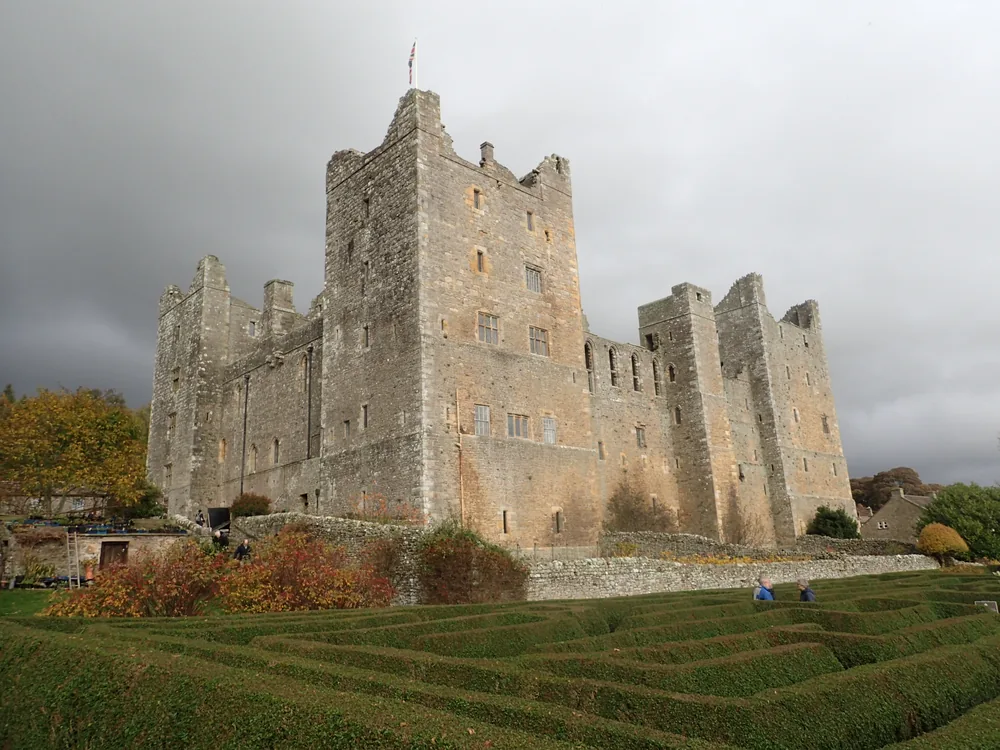
Combine with: Bolton Castle, 35 km northwest in Wensleydale — Yorkshire's most intact ruined castle and the prison of Mary Queen of Scots — reachable as a half-day extension from York.
Frequently Asked Questions
In March 1190, during a wave of anti-Jewish violence instigated partly by local noblemen who owed large debts to York's Jewish creditors, York's Jewish community — approximately 150 people — took refuge in the wooden castle tower on this motte. Besieged for several days by a mob, the community faced death or forced conversion. Many died by their own hands; those who came out seeking mercy were killed. The event effectively destroyed York's medieval Jewish community for generations. A plaque marks the site and an annual commemoration takes place at Clifford's Tower.
Location
Tower Street, York YO1 9SA, England
Nearby Castles
Tours & Tickets
Powered by GetYourGuide
From
€10.88/ person