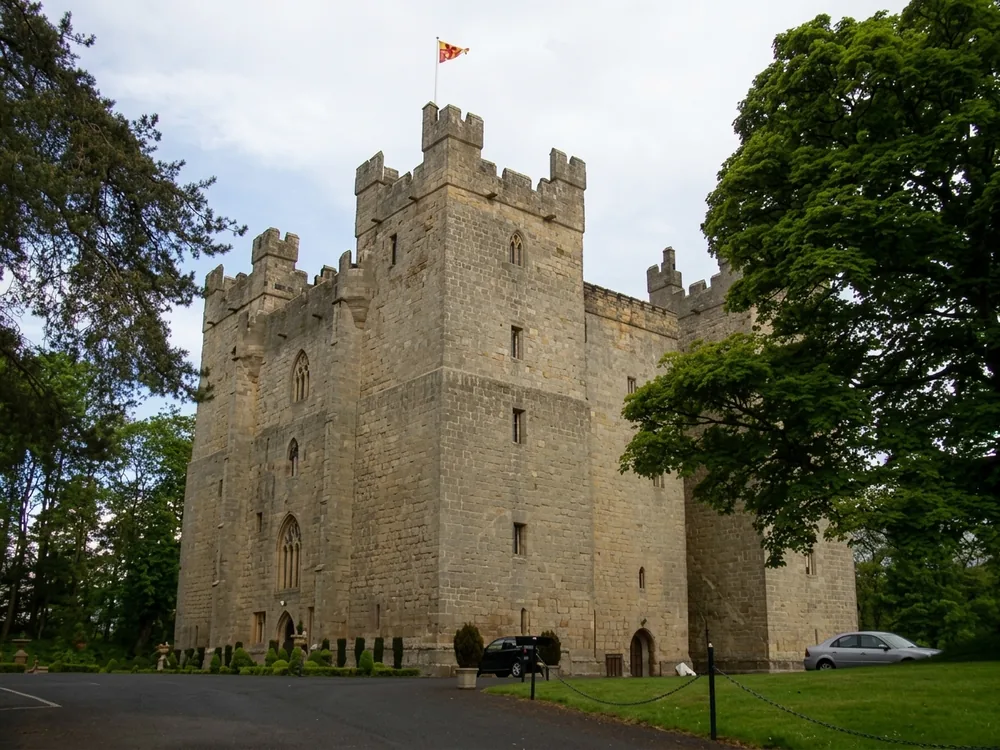
Langley Castle
England · Northumberland — near Hexham · Near Hexham
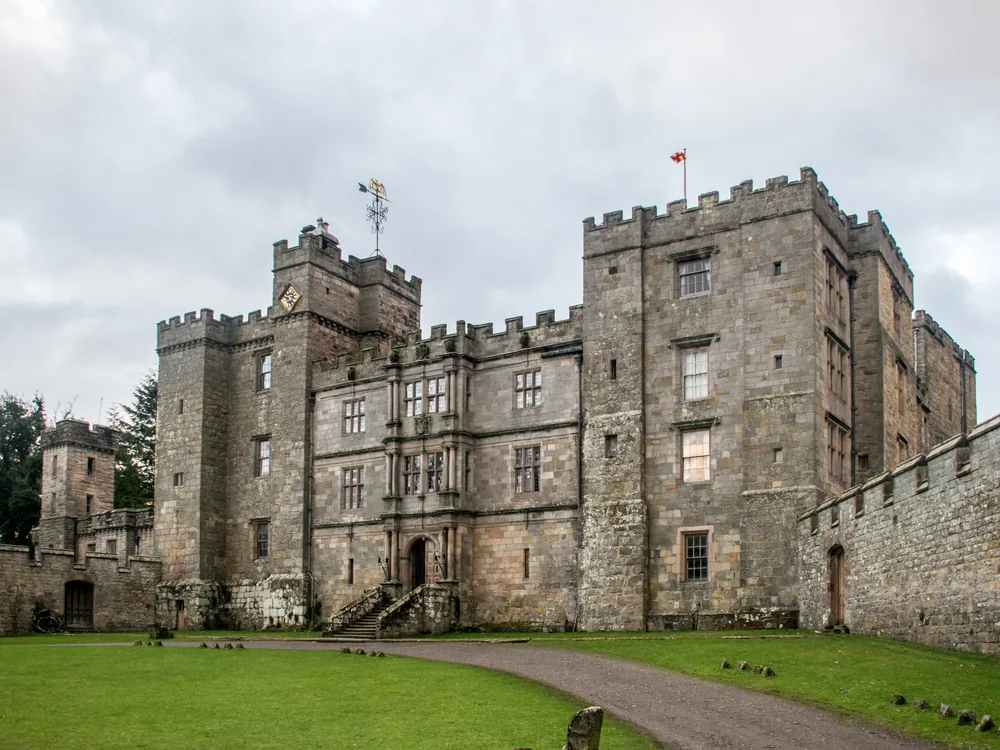
Built 1350 · 14th-century H-plan tower house, four storeys, built 1350 on the earlier 12th-century seat of the Barons of Tynedale
This page is part of an independent travel guide and is not affiliated with, endorsed by, or operated by Langley Castle.
© Castles & Palaces
Quick Facts
- Rooms from
- £126 / night
- Hotel rating
- ★★★★ 4-Star Hotel
- Duration
- Restaurant dining or afternoon tea: 1–2 hours; overnight stay separately bookable
- Best time
- Year-round
- Nearest city
- Hexham
Stay Here
Langley Castle Hotel
★★★★ 4-Star HotelRooms are split between the historic building and a newer wing
Booked via Booking.com · Cancellation terms vary by rate
Josephine Restaurant, 2 AA Rosettes, open to non-residents — see Highlights above
Highlights
- ✦Built in 1350 by Sir Thomas de Lucy on a site that had been the 12th-century seat of the Barons of Tynedale — a four-storey H-plan tower house
- ✦Severely damaged in 1405 when forces loyal to Henry IV attacked the Percy family of Northumberland; left ruined for centuries afterward
- ✦Purchased in 1882 by Cadwallader Bates, who restored it with his wife Josephine — the hotel's Josephine Restaurant is named for her
- ✦Used as army barracks during the Second World War and later as a girls' school
- ✦Bought in 1986 by Stuart Madnick and converted into a hotel; Grade I listed and described by English Heritage as 'possibly the finest tower house in Northumberland'
Stay overnight
Book a room via Booking.com
Langley Castle stands near Hexham in Northumberland, on a site whose fortified history reaches back to the 12th century, when it served as the seat of the Barons of Tynedale — a title connected to the border lordships that governed this contested stretch of country between England and Scotland. The castle in its current recognisable form was built in 1350 by Sir Thomas de Lucy, who raised a substantial four-storey tower house on an H-plan, a layout distinct from the more common rectangular or L-plan towers found elsewhere in the Anglo-Scottish Border region, giving Langley a genuinely distinctive architectural footprint among England's northern fortifications.
The castle's early history included genuine violence typical of this frontier landscape. In 1405, Langley was severely damaged during an attack by forces loyal to King Henry IV against the powerful Percy family of Northumberland, whose rebellion against the crown was one of the defining conflicts of the early 15th century. The damage inflicted in 1405 left Langley in a ruined state for centuries afterward, a fate shared by many Border fortifications that lost their strategic or family significance following the political realignments of the late medieval and early modern periods.
Langley's rescue from ruin came in 1882, when it was purchased by Cadwallader Bates, an antiquarian and local historian who undertook its restoration alongside his wife, Josephine. The couple's restoration returned Langley to habitable condition after roughly four and a half centuries of decay, and Josephine's name lives on today in the hotel's Josephine Restaurant, a direct and personal link between the Victorian-era restoration and the castle's present hospitality identity.
The 20th century brought further institutional uses typical of large historic buildings during this period: Langley served as army barracks during the Second World War, and subsequently operated as a girls' school before eventually being sold. Stuart Madnick purchased the castle in 1986 and converted it into the hotel that operates today. Langley holds Grade I listed status, the highest tier of architectural and historic building protection in England, and English Heritage has described it as possibly the finest tower house in the whole of Northumberland — a striking endorsement for a county with no shortage of significant fortified architecture, including Alnwick and Bamburgh castles within the same region.
Today's Langley Castle welcomes both hotel guests and non-residents to the Josephine Restaurant, which carries 2 AA Rosettes and offers a Table d'Hôte menu at £44.95 alongside a tasting menu from £65, plus the Drawing Room for afternoon tea and the more contemporary Glass Pavilion as an additional dining space. For visitors exploring Hadrian's Wall, Hexham Abbey or the wider Northumberland National Park, Langley offers a way to dine inside a genuinely significant medieval tower house without booking a room — a rare combination of a working Border fortress, a documented Victorian rescue story, and a modern, accessible dining offer built around English Heritage's own assessment of the building's singular architectural quality.
Langley's H-plan layout is itself worth understanding for visitors unfamiliar with medieval Border tower architecture: two projecting wings extend from a central block, an arrangement that gave defenders clearer sightlines along more of the building's perimeter than a simple rectangular tower could offer. Combined with walls several feet thick throughout, this design reflects the genuinely serious defensive requirements of a family building in Tynedale in the mid-14th century, a period when Border raiding and cross-frontier conflict were a routine feature of life in this part of Northumberland rather than an occasional disruption.
History
The site of Langley Castle had been the seat of the Barons of Tynedale since the 12th century. The current four-storey H-plan tower house was built in 1350 by Sir Thomas de Lucy. In 1405, the castle was severely damaged during an attack by forces loyal to Henry IV against the Percy family of Northumberland, and it remained ruined for centuries afterward. Cadwallader Bates purchased the castle in 1882 and restored it with his wife Josephine. Langley served as army barracks during the Second World War and later as a girls' school, before Stuart Madnick bought it in 1986 and converted it into a hotel. It holds Grade I listed status, and English Heritage has described it as possibly the finest tower house in Northumberland.
How to Stay
Getting there: near Hexham, Northumberland.
Rooms & rates: 9 individually named castle bedrooms (including 4 feature rooms and 5 deluxe rooms) are within the 1350 castle itself; Castle View Rooms occupy a separate listed building 80 metres away, and a Lodge sits about 150 metres from the main castle.
On-site: Josephine Restaurant.
Good to know: Specify a castle bedroom if sleeping inside the medieval tower-house itself is the priority — Castle View and the Lodge, while historic buildings in their own right, are separate structures.
Combine with: Hadrian's Wall, a short drive away.
Frequently Asked Questions
Yes. The Josephine Restaurant, which carries 2 AA Rosettes, welcomes both hotel guests and non-residents, offering a Table d'Hôte menu at £44.95 and a tasting menu from £65. The Drawing Room serves afternoon tea, and the Glass Pavilion offers an additional, more contemporary dining space.
Location
Langley-on-Tyne, Hexham, Northumberland NE47 5LU, England
Nearby Castles
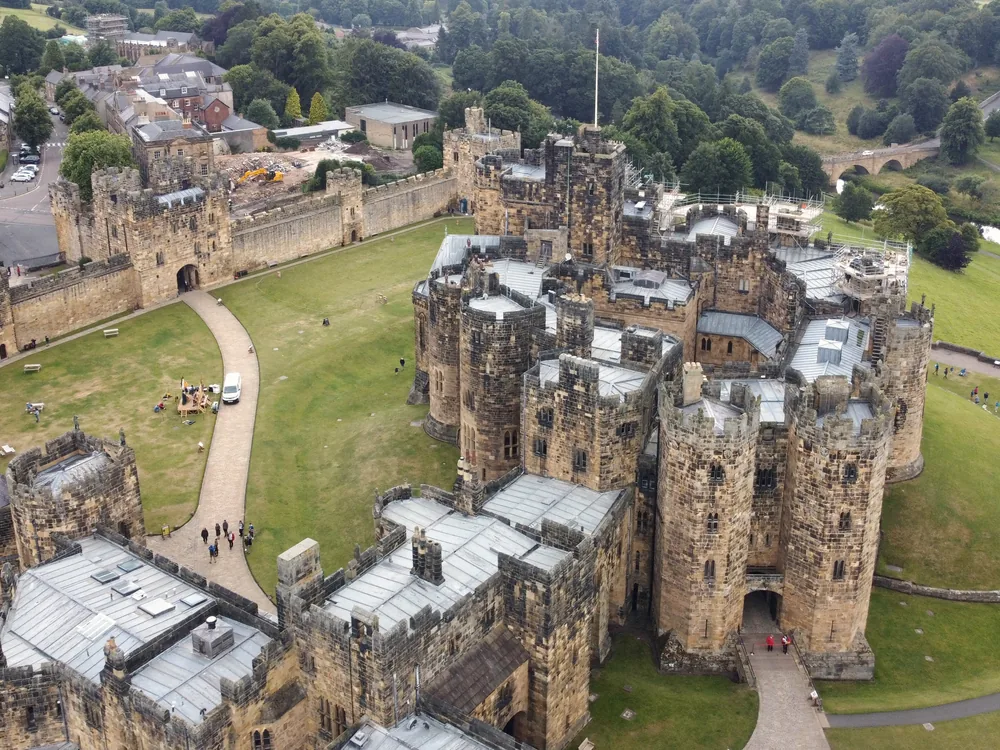
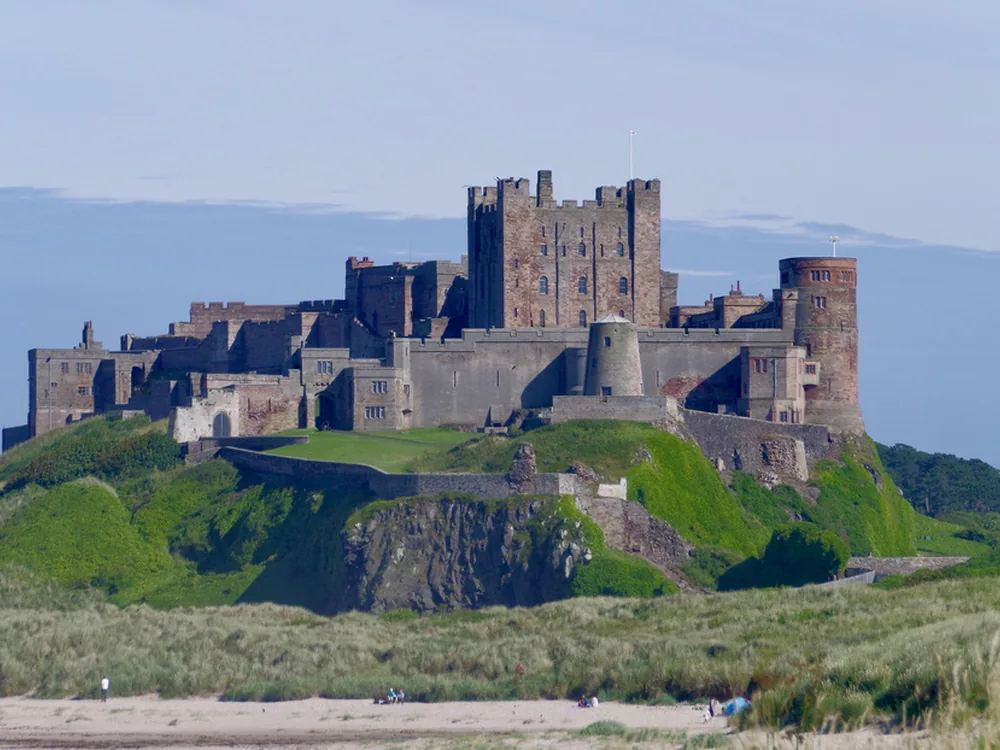
Rooms from
£126/ night