
Oxford Castle
Oxford Castle & Prison
England · Oxfordshire · Near Oxford
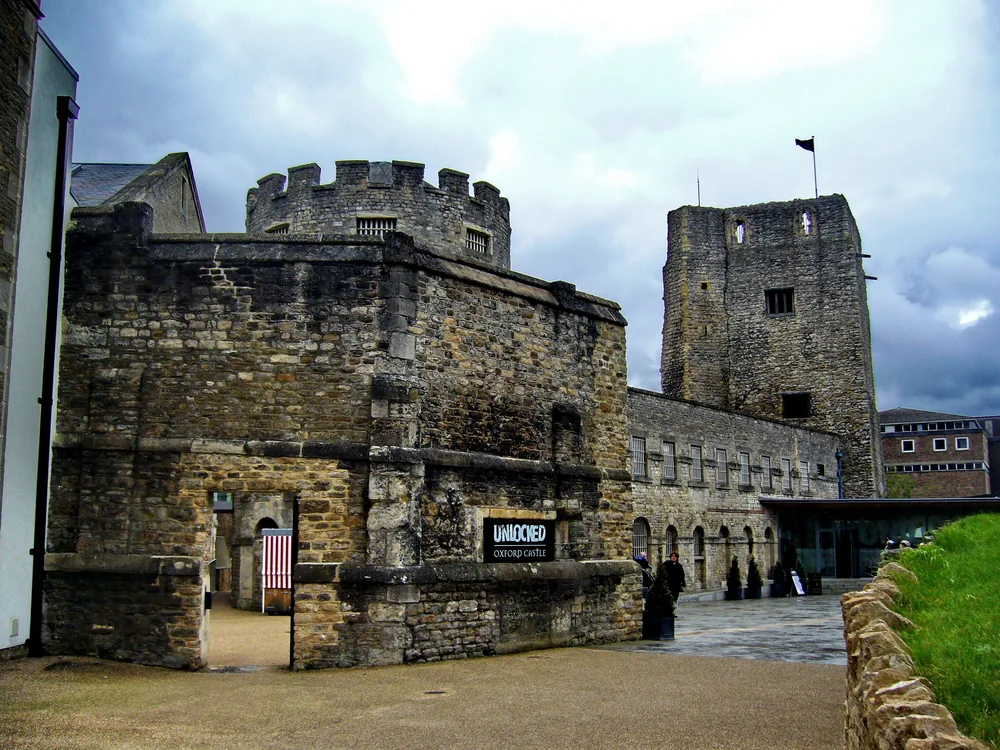
Built 1071 · Norman motte-and-bailey castle founded by Robert D'Oyly in 1071, of which St George's Tower (early Norman, one of the oldest surviving Norman structures in England) and the earthwork motte survive from the original construction; the castle's subsequent history is dominated by its conversion into a working prison from the medieval period, with 18th and 20th-century prison buildings now forming the primary above-ground structure; the current heritage attraction is built around the 18th-century Debtors' Tower, the Victorian prison wing, and the crypt of St George's Chapel, with guided tours using costumed character storytelling to animate the site's 900-year history of incarceration
This page is part of an independent travel guide and is not affiliated with, endorsed by, or operated by Oxford Castle.
© Castles & Palaces
Quick Facts
- Hours
- Daily 10:00–16:30
- Guided tour from
- €23.27
- Duration
- 1–1.5 hours
- Best time
- Year-round
- Nearest city
- Oxford
Featured Tour
Oxford Castle Prison: Guided Tour
Cancellation available · Instant confirmation
Highlights
- ✦Oxford Castle was founded in 1071 by Robert D'Oyly, William the Conqueror's Norman baron, making it contemporaneous with the Tower of London and among the earliest Norman fortifications in England — St George's Tower, which survives from this original construction, is one of the oldest Norman structures still standing in the country
- ✦The castle functioned as a working prison from the medieval period until 1996 — a span of approximately 850 years, making it one of the longest-serving penal sites in English history; the guided tour moves through cells that were in active use within living memory alongside structures that predate the university Oxford is internationally associated with
- ✦The guided tour is delivered by costumed characters telling the stories of real former inmates — a format that provides direct human engagement with the site's carceral history rather than interpretive panels, and that gives the 1-hour tour a theatrical quality uncommon among English castle visits
- ✦Oxford Castle predates the University of Oxford by at least a century — the castle was built in 1071, while the first evidence of teaching at Oxford dates from the late 11th or early 12th century and formal university organisation from the late 12th century; the castle is the older institution, a fact worth noting in a city where the university tends to define historical identity
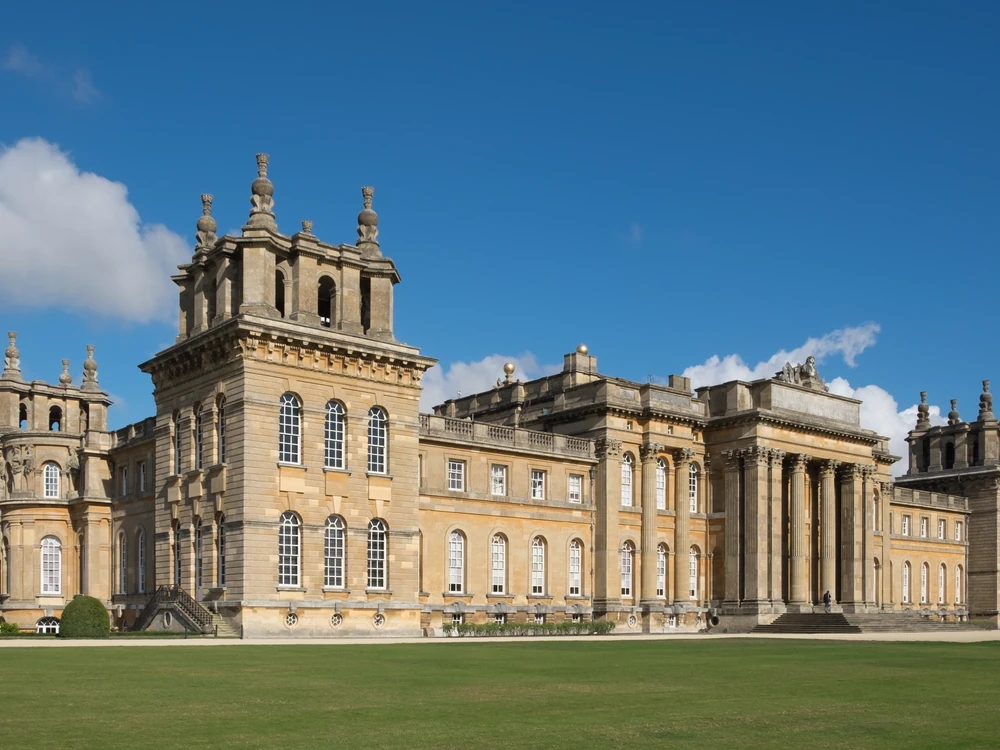
- ✦Blenheim Palace is approximately 13 kilometres north in Woodstock — the baroque ducal palace built for the Duke of Marlborough after the Battle of Blenheim (1704) and birthplace of Winston Churchill, already on this site; the two make a natural and strongly contrasted day out: Norman castle-prison in the city, baroque palace of military triumph in the countryside
Skip the queue with a guided tour
Skip-the-line tickets & expert guides
A few things about Oxford Castle are not what visitors typically expect, and the surprises start with the founding date. The castle was built in 1071 — four years after the Norman Conquest, by one of William's most trusted administrators, Robert D'Oyly, as part of the systematic programme of castle-building that the new Norman rulers imposed on England to consolidate their control. This places Oxford Castle among the earliest Norman fortifications in England, contemporaneous with the White Tower at the Tower of London and predating most of the other castles that Oxford visitors might associate with English medieval history.
St George's Tower, the only significant above-ground remnant of the original Norman construction, demonstrates this age in its fabric. The tower's construction — large blocks of local limestone, small windows, simple round-arched openings, walls of great thickness — belongs to the earliest phase of English Norman architecture, before the style had developed the elaborations of the late 11th and 12th centuries. The tower originally formed part of the castle's chapel complex; the crypt of St George's Chapel, also surviving from the original construction, is accessible on the guided tour and represents one of the oldest intact Norman interiors in Oxfordshire. The motte — the earthwork mound on which the original wooden keep stood — is also original, and climbing it provides both a view over central Oxford and a physical connection to the castle's 1071 footprint.
Almost everything else above ground is a prison. This is the defining fact of Oxford Castle's history, and the guided tour makes it the central story: from the medieval period, when the castle's administrative function included the confinement of prisoners, through the Tudor and Stuart periods when the castle courts and gaol were active parts of Oxford's judicial system, through the 18th century when the county rebuilt and expanded the prison facilities, through the Victorian era when the separate prison wing was constructed, to the 20th century when the prison continued in active use as a Her Majesty's Prison until its closure in 1996. The castle's military and royal function — the brief episodes of historical significance, including the Empress Matilda's escape across the frozen Thames in 1142 during the civil war of The Anarchy — were interludes in what was essentially an 850-year continuous history as a place of confinement.
The closure in 1996 is recent enough that some visitors will have living memory of the prison as a functioning institution. This proximity gives the Victorian prison wing a different quality from the medieval structures: the cells, the exercise yard, the administrative offices, and the governor's quarters are within a period that living people can contextualise from direct knowledge or within family memory, not yet transformed into the safe distance of genuine historical remoteness. The guided tour makes use of this by foregrounding individual stories: real inmates whose names and cases appear in the historical record, told by costumed performers who move through the actual spaces where these people were confined.
The costumed character format is a deliberate choice that distinguishes Oxford Castle from the interpretation-panel heritage standard. Rather than reading about execution methods or prison conditions on a panel beside a cell door, the visitor encounters a performer who embodies a specific historical character — a prisoner, a gaoler, a court official — and delivers the historical information through a dramatic encounter. This approach works particularly well in Oxford Castle's case because the site's history is primarily the history of individual people who passed through it under compulsion rather than the history of battles, dynasties, or architectural programmes. The stories of those people are what the tour is primarily about, and the costumed character format makes them immediate in a way that static interpretation cannot.
The GetYourGuide guided tour ticket covers the full experience: the crypt of St George's Chapel, the motte climb, the Victorian prison wing, and the costumed character storytelling throughout. Tours run at regular intervals of approximately 20 minutes and last about one hour. The attraction is in central Oxford, a short walk from the covered market, Christ Church, and the Bodleian Library — the standard anchors of an Oxford day out.
The university context is relevant to how Oxford Castle is understood within the city. Oxford's international identity is almost entirely defined by its university — the colleges, the libraries, the traditions of academic life that have operated continuously since the late 12th century — and visitors who come to Oxford primarily for the university sometimes treat everything else as secondary. The castle is, straightforwardly, older than the university. It was built a century before teaching at Oxford is formally documented and represents an administrative and military history of the city that preceded the academic one. St George's Tower was here before Merton College, before Balliol, before the Bodleian. The castle's 1071 foundation is the oldest dateable structure in central Oxford, and visiting it alongside the university sites gives the city a temporal depth that the medieval college quad experience, for all its genuine antiquity, slightly flattens.
Blenheim Palace, approximately 13 kilometres north in Woodstock, is the natural extended day out from Oxford Castle. The baroque palace built for John Churchill, the first Duke of Marlborough, after the Battle of Blenheim (1704) — and the birthplace of Winston Churchill in 1874 — is one of England's grandest non-royal baroque buildings and represents a completely different historical moment and architectural ambition from the Norman castle in the city centre. The contrast between the two sites is as stark as contrasts in English heritage get: a 1071 military fortification that became a prison versus a 1705 baroque triumph palace that became a UNESCO World Heritage Site. Both are worth seeing; together they cover a span of English history from the Conquest to the Raj.
History
Oxford Castle was founded in 1071 by Robert D'Oyly, Norman baron and follower of William the Conqueror. The castle served as an administrative and military centre, with St George's Tower and the motte surviving from the original construction. The castle played a role in The Anarchy (1135–1153), most notably the Empress Matilda's escape across the frozen Thames in 1142. From the medieval period the site increasingly served as a county prison and court complex. The 18th century saw major rebuilding of the prison facilities; the Victorian era added a separate prison wing. The site functioned as HM Prison Oxford until its closure in 1996. The castle and prison opened as a heritage attraction in 2006, with the Grade I listed St George's Tower among the oldest Norman structures in England.
How to Visit
Getting there: Oxford Castle is in central Oxford, a 10-minute walk from Oxford railway station. Oxford is connected to London Paddington by fast train (55 minutes) and to Birmingham New Street. Parking in central Oxford is limited; train or coach from London is strongly recommended.
Tickets: Adult admission is £20 and children £12. The GetYourGuide guided tour covers the full experience — St George's crypt, the motte climb, Victorian prison cells, and costumed character storytelling — with tours departing approximately every 20 minutes and lasting about 1 hour.
Practical tips: Arrive slightly before your tour's departure time and engage directly with the costumed performers — questions about specific cases and prisoners are well answered and give the visit a personal dimension that interpretation panels cannot match. The motte climb is steep but short and provides the best view of central Oxford available from any ground-level heritage site.
Combine with: Blenheim Palace, 13 km north in Woodstock — one of England's finest Baroque palaces and birthplace of Winston Churchill — for a full Oxford day combining the Norman castle-prison in the city with the 18th-century triumph palace in the countryside.
Frequently Asked Questions
Both. St George's Tower and the earthwork motte survive from the 1071 Norman original and are included in the guided tour. Everything else above ground is primarily the 18th and 19th-century prison complex — the Debtors' Tower, the Victorian prison wing, and the associated buildings. The guided tour visits both the Norman and the prison elements, making the relationship between the two parts of the site's history the central narrative. The crypt of St George's Chapel, also Norman, is one of the oldest intact Norman interiors in Oxfordshire.
Location
44-46 Oxford Castle, Oxford OX1 1AY, England
Nearby Castles
Tours & Tickets
Powered by GetYourGuide
From
€23.27/ person