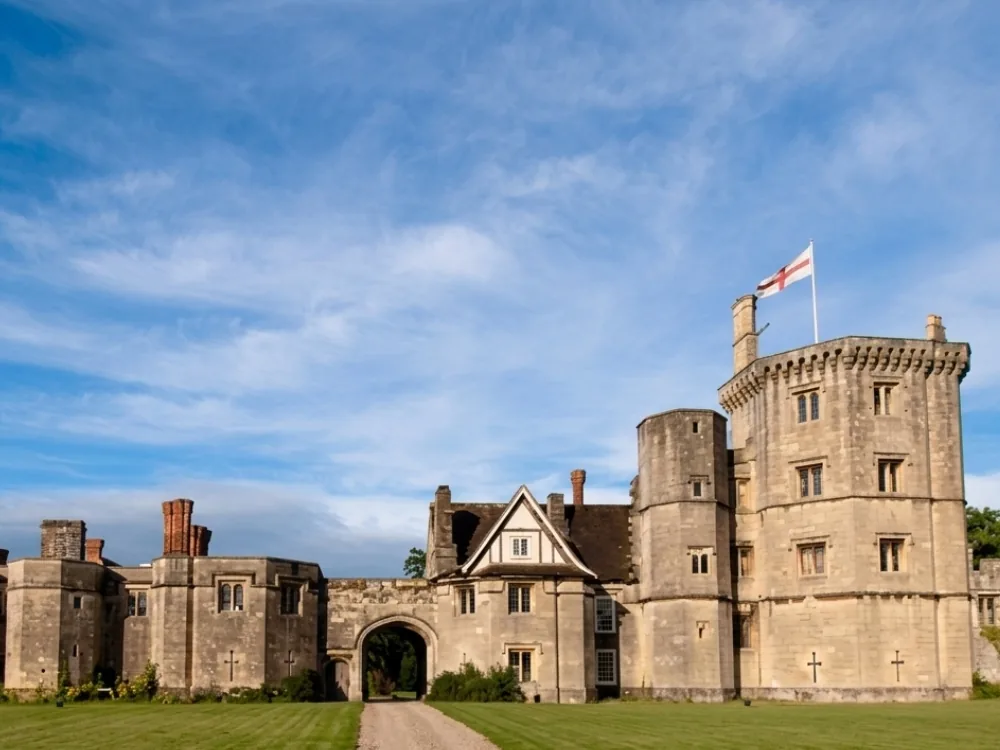
Thornbury Castle
England · South Gloucestershire — near Bristol · Near Bristol
Built 1511 · Early Tudor fortified manor house begun in 1511 for Edward Stafford, 3rd Duke of Buckingham — grand country residence more than genuine military fortress, with restrained defensive features
This page is part of an independent travel guide and is not affiliated with, endorsed by, or operated by Thornbury Castle.
© Castles & Palaces
Quick Facts
- Rooms from
- £136 / night
- Hotel rating
- ★★★★ 4-Star Hotel
- Duration
- Restaurant dining: 1–2 hours; overnight stay separately bookable
- Best time
- Year-round
- Nearest city
- Bristol
Stay Here
Thornbury Castle - A Relais & Chateaux Hotel
★★★★ 4-Star HotelRooms are within the historic castle building itself
Booked via Booking.com · Cancellation terms vary by rate
Tower Restaurant, 3 AA Rosettes, open to non-residents by reservation — see Highlights above
Highlights
- ✦Building began in 1511 for Edward Stafford, 3rd Duke of Buckingham, as an additional residence — conceived as a grand early Tudor country house rather than a genuine military fortress, with only sparse defensive features
- ✦The Duke was executed for treason in 1521, and the castle passed to the Crown; Henry VIII stayed here with Anne Boleyn for ten days in August 1535 — guests today can sleep in the room Henry VIII himself occupied
- ✦Fell into disuse after the Civil War; restored in the 19th century by the Howard family, who owned it until 1960
- ✦Operated as one of Britain's most celebrated restaurants from 1966 to 1986 under chef Kenneth Bell MBE
- ✦Grade I listed, today a 27-room Relais & Châteaux hotel with a 3-AA-Rosette restaurant, the only Tudor castle in England open as a hotel
Stay in the castle itself
Book a room via Booking.com
Thornbury Castle stands in South Gloucestershire on the edge of the Cotswolds, a short distance from Bristol, and its origins belong to one of the most consequential and ultimately tragic careers in early Tudor England. Building began in 1511 for Edward Stafford, 3rd Duke of Buckingham, one of the wealthiest and most highly ranked noblemen in the kingdom, who conceived Thornbury as an additional grand residence rather than a working fortress — its Tudor-era architecture is far more concerned with comfort, display and fashionable design than with genuine military defence, reflecting a moment when England's nobility increasingly built for status rather than siege warfare.
Buckingham's ambition proved fatal in the most literal sense. He was executed for treason in 1521, accused of plotting against Henry VIII, and Thornbury passed into royal hands as a result of his attainder. The castle's connection to the Tudor court did not end there: Henry VIII himself stayed at Thornbury with Anne Boleyn for ten days in August 1535, during the royal progress that took place in the years surrounding their marriage. That visit has left a genuinely tangible legacy for modern guests — the room Henry VIII occupied during his stay can still be booked today, offering overnight visitors a rare, direct physical connection to one of English history's most consequential royal figures.
Thornbury's fortunes declined considerably after the English Civil War, and the castle fell into disuse for an extended period. Restoration came in the 19th century under the Howard family, who took ownership of the property and held it until 1960 — a period that stabilised and preserved the castle's Tudor fabric for the modern era. Thornbury's most unexpected chapter, however, unfolded between 1966 and 1986, when the castle operated as one of the most celebrated restaurants in Britain under the chef Kenneth Bell MBE, drawing serious culinary attention to this corner of Gloucestershire decades before 'destination dining' became a familiar concept.
Today Thornbury Castle holds Grade I listed status and operates as a 27-room hotel within the Relais & Châteaux group, a mark of genuine international luxury-hospitality recognition, alongside an AA classification of 4 Red Stars. It is, distinctively, the only Tudor castle in England open as a hotel — a genuinely unique position among England's country-house hotels, most of which occupy later Georgian, Victorian or Edwardian buildings rather than surviving early 16th-century fabric.
Thornbury's dining reputation continues through the Tower Restaurant, which carries 3 AA Rosettes and is explicitly open to non-residents with advance reservation, offering a six-course tasting menu, an à la carte selection, and afternoon tea. For visitors exploring Bristol, Bath or the southern Cotswolds who want a genuine taste of Tudor England without booking a room, Thornbury's restaurant provides a direct, historically grounded way to experience the castle — dining in rooms that once hosted a king, within walking distance of gardens first laid out for a Duke who never lived to see his castle completed.
The castle's grounds themselves carry genuine historical weight beyond the building: Thornbury's walled Tudor gardens are considered the oldest surviving example of their kind in England, with formal planting dating back to the reign of Henry VIII still traceable in the garden's structure, alongside 16th-century bee-holes and an 18th-century ha-ha. The gardens were reinterpreted in the 19th century in a Tudor-revival style that shapes their present appearance, and a more recently planted vineyard on the grounds now supplies grapes for wine served at the hotel's own restaurant. Combined with the castle's position on the edge of the Cotswolds, an area of outstanding natural beauty, Thornbury offers a genuinely layered day out for visitors willing to look beyond its dramatic Tudor history alone.
History
Building at Thornbury Castle began in 1511 for Edward Stafford, 3rd Duke of Buckingham, conceived as a grand early Tudor residence rather than a genuine fortress. Buckingham was executed for treason in 1521, and the castle passed to the Crown; Henry VIII stayed at Thornbury with Anne Boleyn for ten days in August 1535. The castle fell into disuse after the Civil War and was restored in the 19th century by the Howard family, who owned it until 1960. Between 1966 and 1986, Thornbury operated as one of Britain's most celebrated restaurants under chef Kenneth Bell MBE. Grade I listed, it operates today as a 27-room Relais & Châteaux hotel, the only Tudor castle in England open as a hotel.
How to Stay
Getting there: Thornbury, South Gloucestershire, about 12 miles north of Bristol.
Rooms & rates: All 26 bedchambers are within the historic Tudor castle itself, named after Tudor-era figures — including the Catherine of Aragon Suite at the top of the South Wing Tower and the room Henry VIII and Anne Boleyn shared in 1535, at the top of the main tower (77 spiral steps up).
On-site: Tower Restaurant, walled privy garden.
Good to know: As 'the only Tudor Castle in England open as a hotel,' the whole building is genuinely historic — no modern annex to navigate, but do ask about stairs if the tower suites' 77-step climb is a concern.
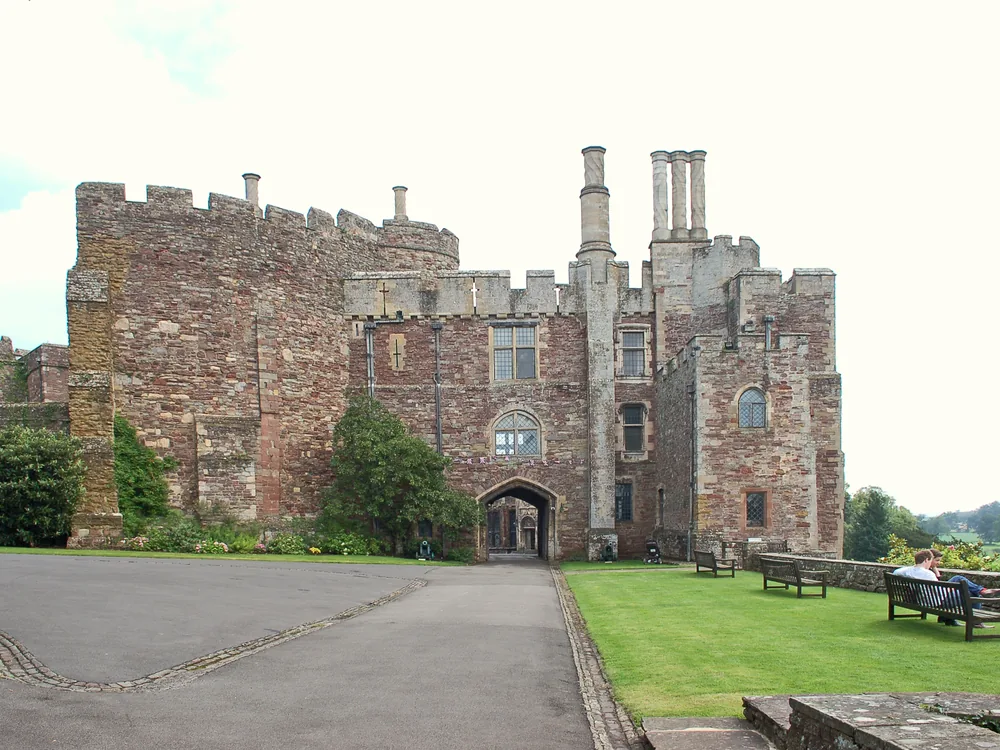
Combine with: Berkeley Castle, about 20 minutes away.
Frequently Asked Questions
Yes. The Tower Restaurant, which carries 3 AA Rosettes, is open to non-residents with advance reservation, offering a six-course tasting menu, an à la carte menu, and afternoon tea. Booking ahead is recommended given the restaurant's reputation and limited capacity.
Location
Castle Street, Thornbury, South Gloucestershire BS35 1HH, England
Nearby Castles
Rooms from
£136/ night