
Fortifications of Aigues-Mortes
Remparts d'Aigues-Mortes
France · Camargue, Gard, Occitanie · Near Montpellier
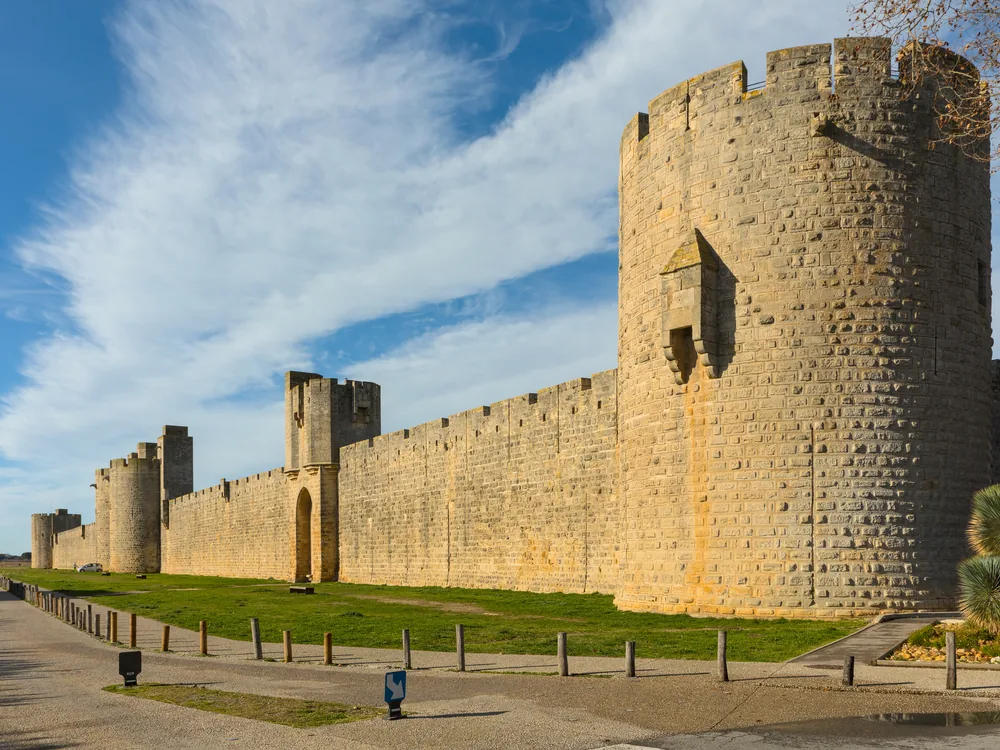
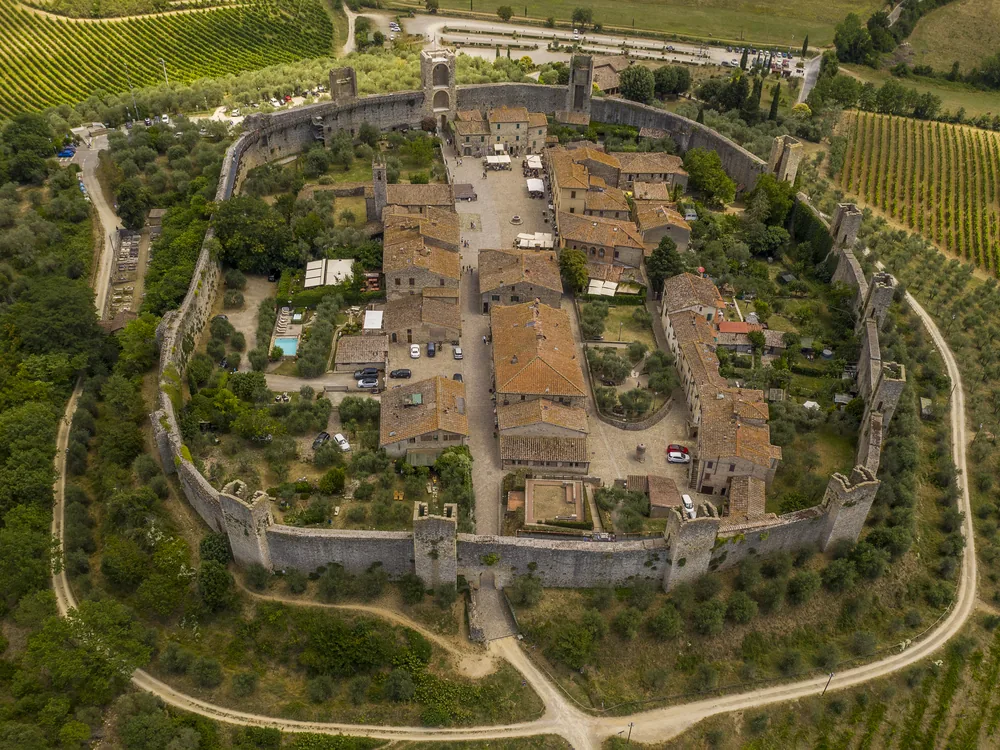
Built 1240 · Purpose-built royal fortified town of the 13th century — structurally in the same category as the Italian walled town of Monteriggioni rather than a conventional castle; the entire town is enclosed within a rectangular perimeter of medieval walls approximately 1.6 kilometres in circuit (nearly a mile), with 20 towers and 10 gateways; founded by King Louis IX (Saint Louis) around 1240 as France's only Mediterranean port, constructed on entirely flat Camargue marshland without natural defensive advantages; the walls were largely completed under Philip III in the 1270s; the principal landmark within the circuit is the Tour de Constance (Tower of Constance), a massive cylindrical keep 22 metres in diameter, predating the enclosure walls and serving as the royal donjon and later as a prison; the walls, towers, and the Tour de Constance can be visited as a continuous rampart walk; the town within the walls is a complete medieval grid plan largely preserved from its 13th-century foundation, the streets still following the original orthogonal layout; the wetland and salt marsh landscape of the Camargue surrounding the walls on all sides preserves the geographic isolation that made Aigues-Mortes both strategically significant and commercially marginal
This page is part of an independent travel guide and is not affiliated with, endorsed by, or operated by Fortifications of Aigues-Mortes.
© Castles & Palaces
Quick Facts
- Hours
- Daily 10:00–17:00
- Entry via GetYourGuide
- €9
- Duration
- 1.5–2 hours (ramparts + Tour de Constance)
- Best time
- April to October
- Nearest city
- Montpellier
Featured Tour
Aigues Mortes: Medieval Ramparts Entry Ticket
Cancellation available · Instant confirmation
Highlights
- ✦Marie Durand's single word is the most powerful text in the Tour de Constance. Imprisoned in the tower from 1730 to 1768 — 38 years without trial, sentenced for her Protestant faith after the revocation of the Edict of Nantes made Protestant worship illegal in France — she carved the word RÉSISTER into the stone of the tower's interior during her imprisonment; the carving survives and is now a Protestant pilgrimage site; Durand's 38-year imprisonment without formal sentence, her refusal to abjure her faith, and the single-word resistance she left in the stone constitute one of the most concentrated acts of documented defiance in French history; the Tour de Constance as a Huguenot prison preceded and outlasted Durand — it held Huguenot women after the Camisard wars beginning in 1703, and the last prisoners were released in 1768
- ✦Louis IX (Saint Louis) founded Aigues-Mortes around 1240 for a specific geopolitical reason: France had no Mediterranean port that it controlled directly; Genoa and Marseille handled French maritime trade and provided the ships for crusading ventures, giving Italian city-states leverage over French royal ambitions; Aigues-Mortes was Louis's solution — a purpose-built fortified port on the Camargue coast, constructed on land with no natural harbor advantages, connected to the sea by a canal across the marshes, and owned by the French Crown; the Seventh Crusade departed from here in 1248 and the Eighth Crusade in 1270 (on which Louis IX died of dysentery in Tunis); the town that launched two Crusades from a marsh, for the precise reason that France needed to own its own embarkation point, is a monument to 13th-century geopolitical logic made visible in stone
- ✦The rampart walk — nearly a mile of continuous battlemented wall with 20 towers walkable in sequence from the Tour de Constance back to the starting point — is one of the most complete such circuits in southern France; the experience of walking at height around the entire perimeter of a medieval town, with the Camargue salt marshes and wetlands visible on all sides and the medieval grid of the town visible below, is qualitatively different from visiting a conventional castle; the wall circuit takes approximately 45 minutes to walk at a reasonable pace with stops at each tower
- ✦The Camargue landscape that surrounds Aigues-Mortes on all sides is itself part of the experience: the flat wetland horizon, the salt pans (salins de Camargue — the area is one of France's largest salt-producing regions), the flamingo populations in the lagoons, and the wild white horses and black bulls of the delta are visible from the ramparts in a way that makes the medieval isolation of the site immediately comprehensible; Louis IX chose this site not because it was defensible by terrain but precisely because the surrounding marshes created the isolation that functioned as a natural moat
- ✦The word RÉSISTER carved by Marie Durand is the Tour de Constance's most visited detail, but the tower has a longer and more complex history as a prison: the Tour de Constance was used to imprison Templars after the suppression of the order in 1307-1312, then later Huguenot prisoners from the Camisard wars of 1703 onward; the tower's career as a prison for religious and political dissenters spans more than four centuries, and the survival of Durand's carving from within that longer prison history gives it a specific weight that individual-story heritage always carries more forcefully than aggregate statistics
Tickets & tours
Book through GetYourGuide
The fortifications of Aigues-Mortes enclose a complete medieval town in the Camargue marshes of the Languedoc coast, approximately 35 kilometres southwest of Montpellier. The site is structurally comparable to the Italian walled town of Monteriggioni rather than a conventional castle: the medieval walls form a continuous circuit around an entire residential settlement, not a military enclosure separate from civilian life. The 13th-century town grid is still largely intact within the walls, and the combination of complete medieval perimeter, internally preserved townscape, and surrounding Camargue wetland landscape makes Aigues-Mortes one of the most historically coherent medieval sites in southern France.
The town was founded by Louis IX (Saint Louis) around 1240 for a specific geopolitical purpose. France at that moment had no Mediterranean port under direct royal control: Genoa and Marseille handled French maritime trade and crusading logistics, giving Italian city-states leverage over French royal ambitions at the moment when Louis was planning the Seventh Crusade. Aigues-Mortes was his solution — a purpose-built fortified port on the Camargue coast, constructed on entirely flat marshland without natural defensive advantages, connected to the sea by a canal across the wetlands. The town had no pre-existing settlement, no natural harbour, and no strategic terrain: it was built precisely to be owned by the French Crown, and the construction on a marsh was the price of that ownership. The Seventh Crusade departed from Aigues-Mortes in 1248. The Eighth Crusade departed from here in 1270, on which Louis IX died of dysentery in Tunis and was subsequently canonised as Saint Louis. The town that launched two Crusades is the practical implementation of a geopolitical decision made visible in stone.
The walls were largely completed under Philip III in the 1270s after Louis's death. The circuit runs approximately 1.6 kilometres (nearly a mile) with 20 towers and 10 gateways — a rectangular enclosure that follows a roughly orthogonal plan matching the street grid within. The principal tower predates the enclosure walls: the Tour de Constance (Tower of Constance) was built by Louis IX before the town walls, serving as the royal donjon and signal tower for the port. Its cylindrical form, 22 metres in diameter, stands at the northwest corner of the rampart circuit and is the monument's largest single structure.
The Tour de Constance's most significant modern associations come not from crusading but from its later use as a prison. The tower held Knights Templar after the suppression of the order in 1307-1312. From 1703 it held Huguenot women — Calvinist Protestants imprisoned under the religious persecution that followed Louis XIV's revocation of the Edict of Nantes in 1685. The most famous prisoner was Marie Durand, confined from 1730 to 1768 — 38 years without formal sentence, imprisoned for refusing to abjure her Protestant faith. During her imprisonment she carved the word RÉSISTER into the stone of the tower. The carving survives. It is now a Protestant pilgrimage site, visited specifically to see Durand's act of defiance in the surviving physical text, and it represents one of the most concentrated pieces of documented resistance in French religious history.
The rampart walk available with the entry ticket covers the full circuit — nearly a mile of continuous battlemented wall at height, with Camargue salt marsh visible on all sides and the medieval town grid visible below. The walk takes approximately 45 minutes at a reasonable pace, with stops at each of the 20 towers providing successive views of the surrounding landscape. The GetYourGuide ticket includes audio guide and self-guided access to both the rampart circuit and the Tour de Constance interior. The town within the walls is freely accessible without a ticket; the ramparts and tower require the entry ticket.
History
Louis IX of France — Saint Louis — founded Aigues-Mortes around 1240 as the kingdom's Mediterranean port for Crusades, choosing the Camargue marshes precisely because they offered an anchorage deep enough for the fleet he intended to assemble there. The Seventh Crusade departed from Aigues-Mortes in 1248; the Eighth departed in 1270, when Louis himself died of dysentery before reaching the Holy Land in Tunisia — events that led to his canonisation and made Aigues-Mortes the departure point for the most celebrated of the royal Crusades. Philip III completed the enclosure walls after his father's death, giving the town its circuit of 20 towers and 10 gateways that still stands complete today.
As the Camargue coastline shifted through the 14th to 17th centuries, the port silted up and the town lost its commercial purpose. What remained was the intact wall circuit and the Tour de Constance — the great round tower at the northern corner of the enceinte that found a new function in the suppression of religious minorities. Knights Templar were imprisoned there between 1307 and 1312 after the order's dissolution; from 1703, it served as a prison for Huguenot women during the Camisard period following the Revocation of the Edict of Nantes.
The most resonant prisoner was Marie Durand, confined from 1730 through 38 years of imprisonment. During her confinement she carved the word RÉSISTER into the stone — a mark that survives and has become the defining symbolic object of the entire site. The last Huguenot prisoners were released in 1768. The walls are now a heritage monument open year-round.
How to Visit
Getting there: Aigues-Mortes is 35 km southwest of Montpellier. By car: 35 minutes from Montpellier via the D62; 1.5 hours from Marseille. No direct train — bus connections run from Montpellier or Nîmes. The town is entirely walkable once arrived.
Tickets: Adults ~€9, children ~€5. The GetYourGuide entry ticket includes an audio guide for the self-guided rampart walk and Tour de Constance — the easiest way to visit with full context. Open daily year-round; extended hours approximately May–September (10:00–20:00).
Practical tips: Walk the full ~1.6 km rampart circuit (about 45 minutes) to see the Camargue salt marshes from the tower tops — the surrounding wetland landscape makes the medieval isolation of the site immediately tangible. Inside the Tour de Constance, look specifically for Marie Durand's word RÉSISTER carved in the stone during her 38-year imprisonment: it is small, low on the wall, and easy to miss without knowing where to look.
Combine with: Carcassonne (130 km west) for France's other great medieval walled town, and the Camargue nature reserve (flamingos, white horses) with Saintes-Maries-de-la-Mer (30 km) for a full Camargue day.
Frequently Asked Questions
Marie Durand was a Huguenot (French Protestant) woman imprisoned in the Tour de Constance from 1730 to 1768 — 38 years without formal sentence — for refusing to abjure her Protestant faith after Louis XIV's revocation of the Edict of Nantes made Protestant worship illegal in France. During her imprisonment she carved the word RÉSISTER (resist) into the stone of the tower. The carving survives and is now a Protestant pilgrimage site. It is one of the most powerful pieces of historical graffiti in France.
Location
Place Anatole France, 30220 Aigues-Mortes, France
Nearby Castles
Tours & Tickets
Powered by GetYourGuide
From
€9/ person