
Château de Chaumont-sur-Loire
Domaine de Chaumont-sur-Loire
France · Loir-et-Cher, Centre-Val de Loire — Loire Valley, Chaumont-sur-Loire · Near Blois
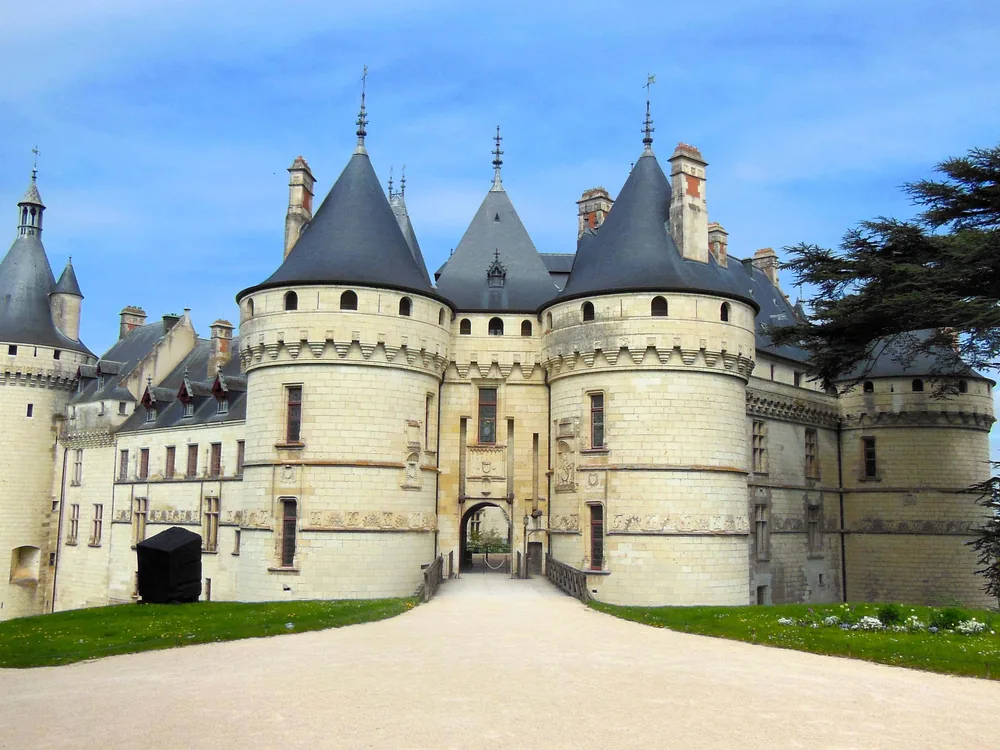
Built 1469 · Late Gothic to early Renaissance Loire Valley château — Pierre d'Amboise began rebuilding the château after 1469 following Louis XI's demolition of the earlier fortress as punishment for political disloyalty; construction continued under his son Charles I d'Amboise (Governor of Milan for Louis XII) and his grandson Charles II d'Amboise into the early 16th century; the towers are round and built in the transitional style between medieval Gothic and Renaissance decorative influences arriving from Italy, with flamboyant Gothic corbelling on the towers and early Renaissance mouldings on the interior courtyard; one of the original four wings was demolished in the 19th century to improve Loire Valley views from the forecourt, giving the current three-wing U-shaped configuration
This page is part of an independent travel guide and is not affiliated with, endorsed by, or operated by Château de Chaumont-sur-Loire.
© Castles & Palaces
Quick Facts
- Hours
- Daily 10:00–20:00
- Entry via GYG
- €21
- Duration
- 2–3 hours (château interior, garden festival, Art and Nature Center, permanent gardens); allow a full afternoon for the complete Domaine
- Best time
- May to October
- Nearest city
- Blois
Featured Tour
Admission ticket to the Domaine de Chaumont sur Loire
Cancellation available · Instant confirmation
Highlights
- ✦The Catherine de' Medici / Diane de Poitiers château swap — after the death of Henri II in 1559, his widow Catherine de' Medici (who owned Chaumont) forced his former mistress Diane de Poitiers to exchange the more prestigious Château de Chenonceau (which the king had given Diane) for Chaumont; Diane accepted but found Chaumont far inferior to Chenonceau and eventually retreated to her own Château d'Anet, where she died; Catherine's Chenonceau is the more famous result of the story, but Chaumont is where it ended
- ✦International Garden Festival since 1992 — one of Europe's major garden design events, held at Chaumont every year since 1992; approximately 30 landscape designers from around the world compete with themed seasonal installations across the estate's grounds, making Chaumont one of the most consistently programmed of the Loire châteaux rather than a purely historical house-museum
- ✦Art and Nature Center — approximately 15 international contemporary artists' installations each year across the 32-hectare Domaine, integrated into the landscape alongside the Garden Festival installations; the estate operates as an active cultural venue rather than a preserved historical site
- ✦Loire Valley châteaux context — Chaumont occupies a strategic position on the chalk escarpment above the Loire, its towers visible from the river below; the Loire Valley is UNESCO-listed as a cultural landscape for its concentration of historic châteaux, Renaissance garden design, and the river itself as an axis of French royal history from the 15th to the 17th century
- ✦The d'Amboise family rebuild — Chaumont's current structure was built by the d'Amboise family starting in 1469 after Louis XI demolished the earlier fortress as punishment; Charles I d'Amboise, who served as Governor of Milan under Louis XII, brought early Renaissance decorative ideas back from Italy that can be seen in the interior courtyard detailing — one of the earlier Italian Renaissance influences to reach the Loire Valley
Skip the queue with a guided tour
Skip-the-line tickets & expert guides
Château de Chaumont-sur-Loire is most famous for a transaction it did not initiate. In 1559, Henri II of France died from a jousting wound sustained in a tournament to celebrate the marriage of his daughter. His widow, Catherine de' Medici, had long resented the influence of his mistress Diane de Poitiers, to whom the king had given the Château de Chenonceau — the elegant bridge-château spanning the Cher river, one of the finest properties in the Loire Valley. Catherine owned Chaumont. After the king's death, with Catherine now regent and Diane's position gone, Catherine used her leverage to force an exchange: Diane surrendered Chenonceau and received Chaumont in return.
Diane spent little time at Chaumont. She found it inferior to Chenonceau — less beautiful, less comfortable, less dramatically situated — and eventually withdrew to her own Château d'Anet in Normandy, where she died in 1566. Chaumont passed through several owners after Diane. Catherine de' Medici, who is known to have used astrology and occult arts as political tools, is traditionally associated with having had Nostradamus at Chaumont, though historians debate how much of the story is embellishment. The château itself shows little trace of either Catherine's ownership or Diane's brief residence; the building speaks primarily of its builders, the d'Amboise family, who constructed it over several decades starting in 1469.
The original fortress on the Chaumont site was demolished in that year by order of Louis XI of France as punishment for Pierre d'Amboise's involvement in the feudal revolt known as the League of the Public Weal — a coalition of nobles who had attempted to limit royal authority. Pierre was eventually restored to favour and began rebuilding his château immediately. Construction continued under his son Charles I d'Amboise, who served as Governor of Milan under Louis XII and brought early Italian Renaissance decorative ideas back with him — visible in the interior courtyard detailing, where classical mouldings appear alongside the flamboyant Gothic corbelling of the towers. Charles I's grandson continued the building into the early 16th century; the château was largely complete by the time it fell into royal possession in 1550.
The history of Chaumont after Catherine and Diane is more varied than its Renaissance story. The writer and intellectual Germaine de Staël spent time at Chaumont in the early 19th century, one of the exiles imposed on her by Napoleon. Prince Amédée de Broglie purchased the estate in 1875 and invested heavily in its landscaping and modernisation over the following decades, adding the extensive parkland that now forms the backdrop for the Garden Festival. In 1938 the château became the property of the French state.
The transformation that makes Chaumont distinctive among Loire châteaux began in 1992, when the estate launched the International Garden Festival — an annual competition in which landscape designers from around the world are invited to create themed seasonal installations within the Domaine's grounds. Approximately thirty designs are selected each year, installed across designated plots and paths in the estate, and open from late spring through autumn. The Festival draws landscape architects, garden designers, and horticulturalists as well as general visitors; it is one of Europe's major events in its field and has no equivalent at any other Loire château. The installations range from minimalist conceptual gardens to elaborate theatrical constructions; some are beautiful, some are provocative, and the standard is consistently high.
Alongside the Festival, the Domaine maintains an Art and Nature Center with approximately fifteen international contemporary artists' installations each year integrated into the 32-hectare landscape. The château interior — furnished with period pieces representing its Renaissance and later history — is also part of the visit. From the château's terrace, the Loire stretches in both directions, with the characteristic chalky white bluffs and the wooded banks that give the valley its UNESCO-protected character.
The GYG admission ticket is valid for 30 days from purchase — an unusual flexibility that reflects the Domaine's operating model as an active cultural venue rather than a standard historical monument. The visit is most rewarding during the Garden Festival season, which typically runs from late April to late October.
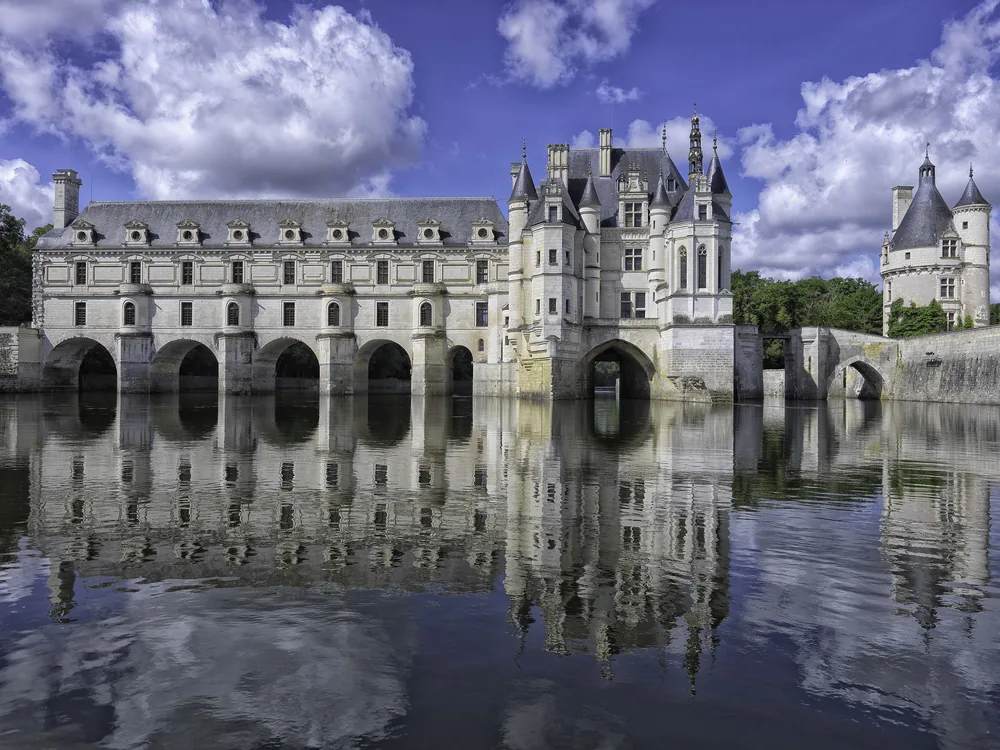
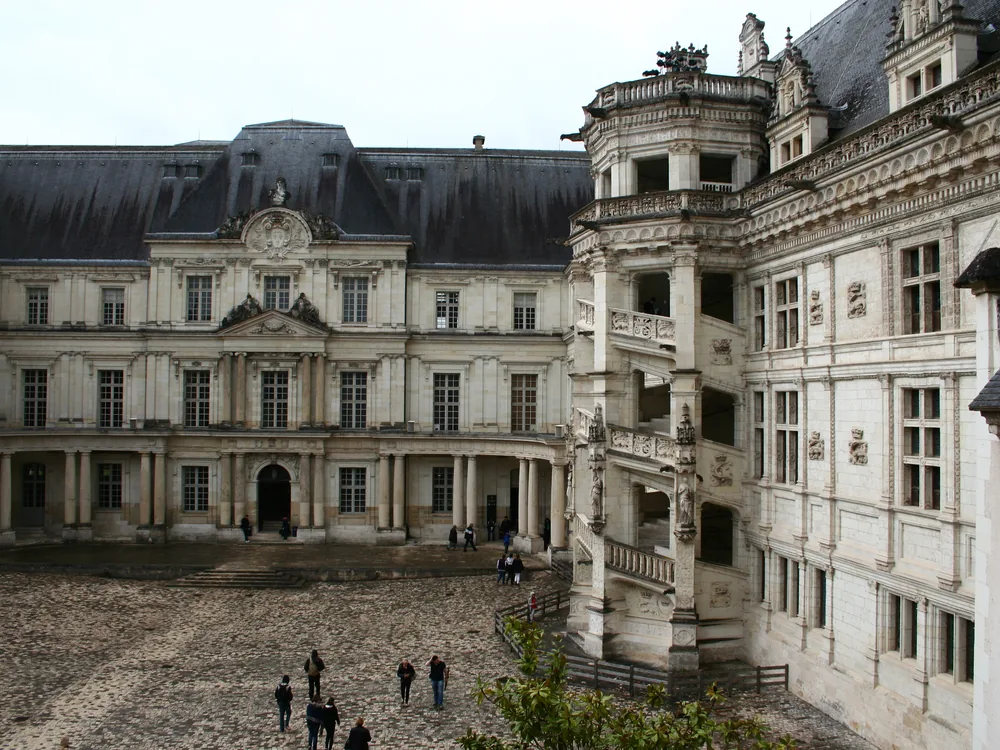
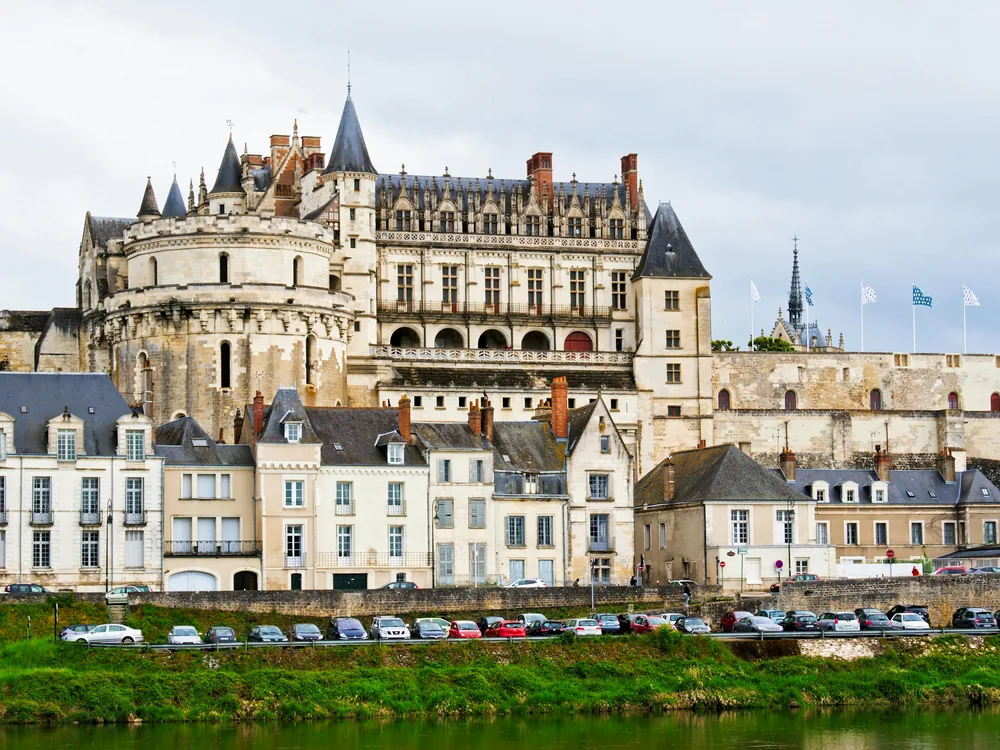
[Château de Chenonceau](/castles/france/chateau-de-chenonceau) — the bridge-château over the Cher river that Diane de Poitiers surrendered in the exchange — is approximately 25km to the southeast. [Château de Blois](/castles/france/chateau-de-blois) is in the nearby town of Blois, approximately 18km northeast. [Château d'Amboise](/castles/france/chateau-damboise) — the royal residence above the Loire, burial place of Leonardo da Vinci — is approximately 18km to the east.
History
An earlier fortress at Chaumont, held by the d'Amboise family, was demolished in 1465 by Louis XI as punishment for Pierre d'Amboise's involvement in the League of the Public Weal — a coalition of nobles who had challenged royal authority. Pierre was restored to favour four years later and immediately began rebuilding, a project that his son Charles I d'Amboise continued, introducing early Italian Renaissance decorative elements that reflected his years as Governor of Milan and his exposure to Italian court culture.
The château's most famous episode was the transaction that Catherine de' Medici arranged after the death of Henri II in 1559. The queen, who had long endured her husband's devotion to his mistress Diane de Poitiers, used the power that came with widowhood to compel an exchange: Diane would surrender the magnificent Château de Chenonceau she had received as a royal gift and accept Chaumont in its place. Diane obliged, spent a brief period at Chaumont, and then withdrew to Château d'Anet, which she had built for herself. The forced exchange transformed Chaumont from an architectural curiosity into a politically charged stage prop, and the story has dominated its reputation ever since.
Later chapters brought Germaine de Staël in Napoleonic exile in the early 19th century and Prince Amédée de Broglie's extensive landscape improvements after 1875. The property passed to the French state in 1938. Since 1992 the estate has hosted the International Garden Festival, an annual event that has established Chaumont as one of the most innovative landscape design venues in France.
How to Visit
Getting there: Chaumont-sur-Loire is ~18 km southwest of Blois on the south bank of the Loire. By car: D952 from Blois (~20 min). By train: TGV to Blois from Paris (~1.5 hours), then taxi, bike hire, or the Loire à Vélo cycling route (20 km along the river). The château car park is at the foot of the hill; short walk or shuttle to the Domaine entrance.
Tickets: Adults €22, children free. The GYG admission ticket (t1212520, from €21, 4.5★/6 reviews) is valid for 30 days from purchase and covers the full Domaine — International Garden Festival, Art and Nature Center, château interior, and permanent gardens. Book in advance during peak Festival season (May–September).
Practical tips: The International Garden Festival (late April to late October) is the primary reason to visit — the 30 international landscape installations are freshest in late May and early June before high summer crowds arrive. The 30-day ticket validity means you can buy it before your trip and visit at any convenient date within the Festival window without fixing a date at purchase.
Combine with: [Château de Blois](/castles/france/chateau-de-blois) (18 km northeast), [Château d'Amboise](/castles/france/chateau-damboise) (18 km east), and [Château de Chenonceau](/castles/france/chateau-de-chenonceau) (25 km southeast) for a full Loire Valley circuit.
Frequently Asked Questions
The International Garden Festival at Chaumont is an annual event, running since 1992, in which approximately 30 international landscape designers are invited to create themed seasonal installations within the Domaine's grounds. Each year the festival has a different theme; designers submit proposals and a selection is installed from late spring through autumn. Unlike a permanent estate garden, the Festival installations change every year and include temporary gardens, conceptual plantings, and architectural interventions that would not be found in a conventional historic garden. It is one of Europe's leading events in landscape design and runs alongside the permanent Art and Nature Center, which adds approximately 15 contemporary art installations each year.
Location
Domaine de Chaumont-sur-Loire, 41150 Chaumont-sur-Loire, France
Nearby Castles
Tours & Tickets
Powered by GetYourGuide
From
€21/ person