
Château de La Bourdaisière
Château de La Bourdaisière
France · Loire Valley — Indre-et-Loire, Montlouis-sur-Loire, between Tours and Amboise · Near Tours
Built 1520 · Loire Renaissance
This page is part of an independent travel guide and is not affiliated with, endorsed by, or operated by Château de La Bourdaisière.
© Castles & Palaces
Quick Facts
- Hours
- Daily 10:00–18:00
- Entry via GetYourGuide
- €12
- Hotel rating
- ★★★ 3-Star Hotel
- Duration
- 1.5–2 hours (exhibition + gardens + tomato conservatory)
- Best time
- May to October
- Nearest city
- Tours
Featured Tour
Château de La Bourdaisière: Exhibition Admission Ticket
Cancellation available · Instant confirmation
Stay Here
Château de La Bourdaisière
★★★ 3-Star HotelRooms are split between the historic building and a newer wing
Booked via Booking.com · Free cancellation on most rates
Château exhibition and tomato conservatory admission covered separately by the existing GetYourGuide ticket — see Quick Facts/Visit above.
Highlights
- ✦The National Conservatory of Tomato Varieties — over 700 heritage cultivars planted each summer in the kitchen garden, from near-black heirlooms to pale American rediscoveries, the largest collection of its kind in France
- ✦The estate's intimate connection with Gabrielle d'Estrées, favourite of Henri IV and one of the most powerful women at the late 16th-century French court, born here in the early 1570s
- ✦The rotating exhibitions inside the château tracing the tomato's global history, from its Andean origins through its long European suspicion to the culinary transformation it eventually produced
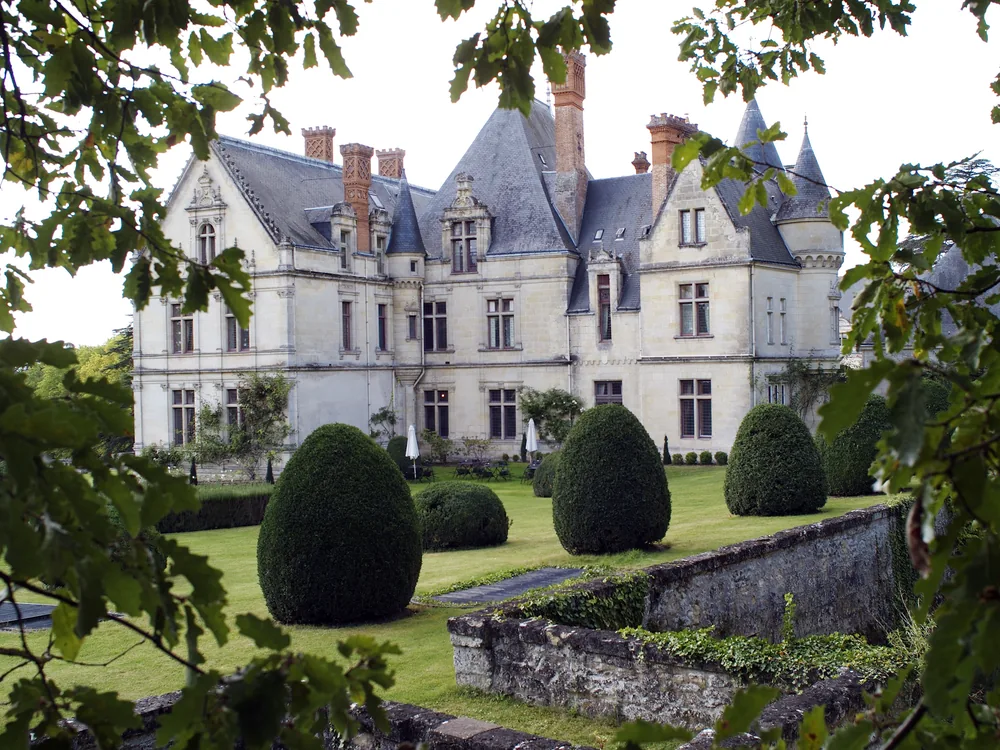
- ✦The Renaissance château itself, rebuilt under François I on the ruins of an earlier manor destroyed by fire, its elegant 16th-century façade overlooking a formal parterre and the broader grounds
- ✦The formal kitchen garden, laid out in the French geometric tradition around the tomato conservatory, at its most spectacular at peak fruiting season between August and early October
Skip the queue with a guided tour
Skip-the-line tickets & expert guides
Château de La Bourdaisière occupies a quietly exceptional position in the Loire Valley — not for its architectural scale, though the Renaissance château is genuinely handsome, but for the unlikely combination of royal history and horticultural obsession that now defines it. Set in the soft countryside between Tours and Amboise in the Indre-et-Loire, it is a château that rewards curious visitors willing to look beyond the famous names on the Loire circuit.
The estate's royal association is with Gabrielle d'Estrées, born here around 1571 and destined to become the most influential figure in the private life of Henri IV. As the king's acknowledged favourite and the mother of three of his legitimised children — César, Alexandre, and Catherine — Gabrielle held a position at court that was effectively equivalent to queen consort. Henri's widely discussed intention to marry her was cut short by her sudden death in April 1599, before any ceremony could take place, making her story one of the more dramatically incomplete biographies attached to any Loire Valley estate. The château later passed through distinguished hands, including the Broglie family, one of France's most prominent aristocratic dynasties.
The estate's modern identity began taking shape in the 1990s, when the current owners established the National Conservatory of Tomato Varieties on the grounds — a living collection that has grown to encompass more than 700 heritage cultivars planted each summer in the kitchen garden. The conservatory is not a display or a museum but a working garden, with plants in the ground from June through October producing fruit in every imaginable colour, shape, and size: from tiny currant tomatoes scarcely larger than a pea to enormous beefsteaks, from near-black to pale gold to vivid orange-striped, from centuries-old European varieties to carefully rediscovered American heirlooms. Nothing quite prepares you for the visual strangeness of a formal French kitchen garden laid out with this kind of botanical obsession.
The exhibition inside the château traces the tomato's full history: its origins as a cultivated plant in Andean South America, its arrival in Europe via Spain in the 16th century, the long decades during which it was regarded across much of Europe with suspicion and sometimes classified as poisonous, and the eventual, irreversible culinary transformation it produced once it found its way into kitchens across the Mediterranean and beyond. The rotating displays connect botanical history with the wider story of the Columbian Exchange and what it did to European diets.
The grounds include formal parterre gardens in front of the château, the kitchen garden surrounding the conservatory, and mature trees that give the property a park-like quality unusual for a château of this scale. The building itself — rebuilt in the early 16th century during the François I era on the ruins of an earlier structure destroyed by fire — is a composed Loire Renaissance ensemble, more intimate than theatrical. For visitors already planning to visit Chenonceau, which is ten kilometres east, La Bourdaisière adds something genuinely different: a personal scale, a strange and specific seasonal spectacle, and the odd pleasure of walking through 700 tomato varieties in the garden of a woman who came within months of becoming queen of France.
History
An earlier fortified manor stood on this site before it was lost to fire, and it was on those ruins that the present château took shape during the reign of François I in the early 16th century. The estate's most enduring historical association belongs to Gabrielle d'Estrées, born at La Bourdaisière around 1571 to Antoine d'Estrées, a nobleman and military governor. Gabrielle entered the orbit of Henri IV in the late 1580s, at a moment when the king — then still Henri de Navarre, fighting for his crown during the Wars of Religion — was in acute need of both emotional companionship and political counsel. She became his acknowledged favourite and bore him three children whom he formally legitimised, and by the mid-1590s her position at the French court was so secure that Henri's intention to set aside his existing marriage and wed her was openly discussed among diplomats and advisors. Her death in Paris in April 1599, sudden and at the age of roughly 28, ended those plans and left Henri genuinely bereft.
Following Gabrielle's era, the estate passed through several aristocratic families over the following centuries, eventually coming into the possession of the Broglie family, before the current owners undertook its most transformative chapter. Beginning in the 1990s, they established the National Conservatory of Tomato Varieties on the grounds — a project that has grown into a collection of over 700 heritage cultivars and given the château a public identity unlike any other in the Loire Valley.
How to Visit
Getting there: Tours is 10 km west and the most practical base. By car, take the D751 east along the Loire towards Montlouis-sur-Loire — the château is signposted from the town centre. There is no direct bus link; visitors without a car will need a taxi from Tours or Amboise. The Loire à Vélo cycling route passes through Montlouis-sur-Loire and makes La Bourdaisière reachable by bicycle from Tours in around 45 minutes on mostly flat terrain.
Tickets: Walk-up admission is €12 for adults, €6 for children, covering both the château exhibitions and the tomato conservatory gardens. The GetYourGuide entry ticket covers exhibition admission with 1-day validity and can be purchased in advance online for confirmation.
Practical tips: The tomato conservatory is the main reason to visit and requires coming between June and October to see the plants in fruit. The collection is at its visual peak between late July and mid-September, when the full range of colours and sizes is on display. Arrive by mid-morning before any group visits and allow 30–40 minutes in the kitchen garden before heading into the château exhibition. The indoor display takes another 30 minutes and works well as a follow-on once you have already seen the varieties growing outside.
Combine with: Château de Chenonceau (10 km east — the most visited Loire château, spanning the Cher river; La Bourdaisière and Chenonceau share a Loire Valley half-day itinerary from Tours).
How to Stay
Getting there: Already covered by the How to Visit section above (Tours, 10 km west, via the D751).
Rooms & rates: A mix of room types from about €132/night — some within the 16th-century château, others in the separate Pavillon Choiseul (12 rooms/1 apartment) or the Clos building on the grounds.
On-site: In addition to the tomato conservatory and gardens described above, the estate's restaurant and Bar à Tomates use produce from the property's over 650 tomato varieties.
Good to know: Not all rooms are within the château itself — the Pavillon Choiseul and the Clos are separate buildings on the same estate. The estate now also operates as a boutique 3-star hotel alongside its long-standing visitor attraction.
Combine with: Château de Chenonceau, already listed above as a nearby day-visit pairing.
Frequently Asked Questions
Since the 1990s, the château's owners have developed and maintained the National Conservatory of Tomato Varieties on the estate — a living collection of over 700 heritage cultivars grown each summer in the kitchen garden. The project began as a commitment to preserving rare and endangered tomato varieties and has grown into France's most significant collection of its kind, attracting food historians, chefs, and horticulturalists alongside ordinary visitors.
Location
Rue de la Bourdaisière, 37270 Montlouis-sur-Loire, France
Nearby Castles
Tours & Tickets
Powered by GetYourGuide
From
€12/ person