
Château de La Chaize
Château de La Chaize
France · Auvergne-Rhône-Alpes — Rhône, Beaujolais, Odenas (near Villefranche-sur-Saône) · Near Villefranche-sur-Saône
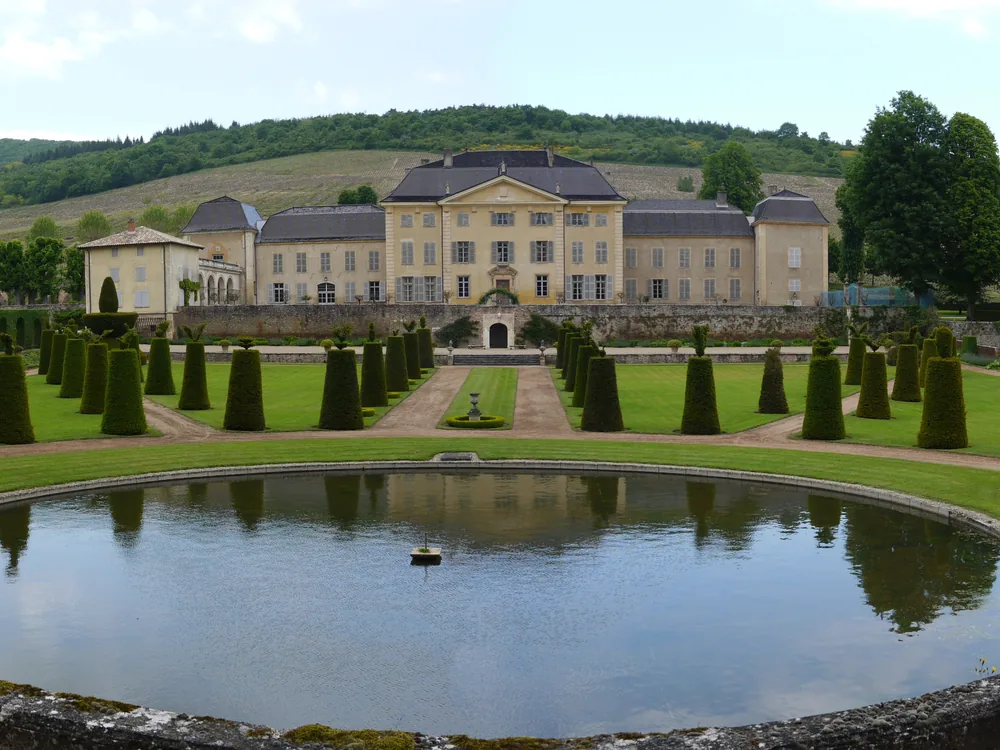
Built 1676 · Grand Siècle French Classical estate designed by Jules Hardouin-Mansart in 1676 — the same architect responsible for the Palace of Versailles, the Grand Trianon, and the Dôme des Invalides; the main building presents the formal symmetry and ordered proportions characteristic of the Louis XIV classical style, a register that distinguishes La Chaize from the more domestic vernacular architecture typical of the Beaujolais wine châteaux of subsequent centuries; the formal grounds laid out in the French Classical manner — terraced gardens and vine-framed approaches — complete the estate's architectural statement; the main château building is a private residence not open to visitors, and the most extensively explored structure on the estate is the 300-metre underground wine cellar, which has been in continuous use for wine storage and maturation since the estate's construction in the late 17th century
This page is part of an independent travel guide and is not affiliated with, endorsed by, or operated by Château de La Chaize.
© Castles & Palaces
Quick Facts
- Hours
- Mon–Sat By appointment. Closed Sun
- Guided tour from
- €149
- Duration
- 3 hours (grounds + cellar + tasting; part of Lyon day tour)
- Best time
- April to October
- Booking
- Required — book 1+ days ahead
- Nearest city
- Villefranche-sur-Saône
Featured Tour
From Lyon: Beaujolais – Pérouges Full Day Shared Trip
Cancellation available · Instant confirmation
Highlights
- ✦The 300-metre wine cellar — the longest underground wine gallery in the Beaujolais appellation, in continuous use since the estate's 17th-century construction; walking its full length gives a physical sense of the scale of production at one of the Beaujolais' most historically rooted private estates
- ✦Jules Hardouin-Mansart's authorship — the architect of Versailles, the Grand Trianon, and the Dôme des Invalides designed this estate in 1676 for Louis XIV's personal confessor; no other working wine estate in Beaujolais can claim an architect of equivalent standing or a commission of such direct proximity to royal patronage
- ✦Brouilly and Côte de Brouilly production — the estate's wines come from the granite and clay soils of Mont Brouilly, the distinctive volcanic hill at the heart of the Brouilly cru; Côte de Brouilly, the hillside sub-appellation, is among the most concentrated and terroir-specific of the ten Beaujolais crus, and the tasting captures both appellations alongside the broader Beaujolais AOC range
- ✦The formal Classical grounds — the terraced garden layout, with its ordered geometry and vine-framed views over the Beaujolais hillside, reflects Hardouin-Mansart's training in the Grand Siècle French tradition; these exterior spaces are the publicly accessible counterpart to the private château interior and give a clear sense of the estate's original architectural ambition
- ✦The Lyon day-trip format — the GetYourGuide full-day shared tour combines the Château de La Chaize cellar stop with a drive along the Beaujolais wine route and a visit to the medieval walled village of Pérouges, creating a structured day from Lyon that covers two of the Ain-Rhône area's most photogenic destinations without requiring a hire car
Skip the queue with a guided tour
Skip-the-line tickets & expert guides
Château de La Chaize stands on the slopes of Mont Brouilly in Odenas, in the heart of the Brouilly appellation — the largest of the ten cru Beaujolais wine territories. The estate's origins are aristocratic and ecclesiastical: it was built in 1676 by Jules Hardouin-Mansart, the architect of Versailles, for Father François de La Chaize, the Jesuit priest who served as confessor to Louis XIV for more than thirty years. That commission places Château de La Chaize at an intersection of royal power, Jesuit influence, and the emerging prestige of the Beaujolais countryside that is unusual for any French provincial estate, let alone one still principally known for wine rather than for its architecture or its history.
The château building is a private residence and is not open to visitors. What the estate offers instead is something more intimate and more specifically Beaujolais in character: access to the grounds and formal gardens, and — most significantly — the 300-metre underground wine cellar that is believed to be the longest working wine cellar in the Beaujolais appellation. That cellar is the heart of the visit. The progression through its gallery of barrels and tanks, in the cool underground atmosphere beneath the vines, is the defining sensory experience of the estate tour, and the cellar's scale is the most direct expression of the property's centuries-long commitment to wine production at volume and quality.
The Brouilly appellation surrounds the distinctive volcanic mass of Mont Brouilly, and the vineyards of Château de La Chaize descend from the château terraces into the characteristic granite and clay soils that give the appellation its fresh, aromatic Gamay character. Côte de Brouilly — the more concentrated sub-appellation drawn from the Mont Brouilly hillsides themselves — is among the most individual of the ten Beaujolais crus, and the estate produces both appellations alongside a broader Beaujolais AOC range. The tasting that concludes the cellar visit gives the wines their place names in practice: standing near the vineyard after walking the cellar gallery makes the relationship between soil, elevation, and wine character legible in a way that a detached tasting room experience cannot.
Château de La Chaize is visited as part of the GetYourGuide full-day shared trip from Lyon, which combines the estate stop — grounds, cellar, and tasting — with a drive along the Beaujolais wine route and a visit to the medieval walled village of Pérouges. The format is a full day structured around two of the most photogenic destinations in the Ain and Rhône departments, with the Château de La Chaize wine experience as the principal wine content of the itinerary. The tour departs from Lyon and returns the same evening, making it a practical way to reach an estate that is not easily accessible by public transport from the city.
The estate is sometimes called the Versailles of Beaujolais — a comparison earned by Hardouin-Mansart's authorship of both buildings and by the Classical proportions of the formal grounds, though it is more appropriately read as a country estate of high architectural ambition than as any kind of scaled imitation of the royal palace. The grounds, the cellar, and the wines are the experience; the building itself, visible from the exterior, is the frame.
History
Built in 1676 under the commission of Father François de La Chaize — the Jesuit priest who served as Louis XIV's personal confessor for more than three decades, and whose name was attached posthumously to the Père Lachaise cemetery in Paris after his death in 1709 — Château de La Chaize is one of the rare French provincial estates to have been designed by an architect of the very first rank. Jules Hardouin-Mansart, the man responsible for the Palace of Versailles, the Grand Trianon, and the Dôme des Invalides, brought the Grand Siècle classical language to this Beaujolais hillside at a moment when the prestige of the French court was at its height and the confessor of the Sun King was one of the most influential figures in the Society of Jesus. That a Jesuit priest of such proximity to royal power could commission a country estate from Versailles' own architect reflects the particular reach that the order exercised during this period of its influence at the French court.
The château has remained in private hands as a working wine estate without interruption since its construction — it has never been opened to the public as a historical monument, and the agricultural and viticultural purpose that the estate was built to serve has persisted continuously across three centuries. The most celebrated practical feature of the estate's history is the underground wine cellar: a 300-metre gallery believed to be the longest wine cellar in the Beaujolais appellation, housing the estate's production of Beaujolais AOC, Brouilly, and Côte de Brouilly wines from the granite and clay soils of Odenas. The formal grounds, laid out in the French Classical manner, gave the property its informal epithet — the Versailles of Beaujolais — a description that points to the estate's architectural ambitions rather than to any royal connection.
How to Visit
Getting there: Château de La Chaize is in Odenas, approximately 40 km northwest of Lyon and 15 km east of Villefranche-sur-Saône. By car from Lyon: take the A6 north to Villefranche-sur-Saône then the D19 toward Odenas (approximately 40 minutes total). Public transport to the estate is not practical; the closest train station is Villefranche-sur-Saône, from which a taxi to Odenas is required.
Tickets: The château building is a private residence and not open to visitors. The GetYourGuide day trip from Lyon — a full-day shared tour covering Château de La Chaize (grounds, 300-metre wine cellar, and tasting), the Beaujolais wine route, and the medieval village of Pérouges — is the structured way to visit; book in advance.
Practical tips: The underground cellar maintains a constant cool temperature year-round — bring a light layer regardless of surface conditions. The harvest period (September–October) is the most atmospheric time to visit a working wine estate: pressing and fermentation activity around the estate adds a live dimension to the cellar and vineyard tour that other months cannot match. The formal grounds are best appreciated in the morning light, which falls directly on the château façade and the terraced gardens from the east.
Combine with: Château du Moulin à Vent (20 km northwest — the iconic Beaujolais cru château of the Moulin-à-Vent appellation; the two estates together cover the heart of Beaujolais' most prestigious wine country).
Frequently Asked Questions
No — the château is a private family residence and has never been open to the public. The guided visit covers the exterior, the formal grounds, the 300-metre underground wine cellar, and the tasting; the building's interior is not accessible. The architecture is best appreciated from the grounds, where the Classical façade and the estate's garden layout are visible and the scale of Hardouin-Mansart's design for a working wine estate can be read in full.
Location
Château de La Chaize, 69460 Odenas, Rhône, France
Nearby Castles
Tours & Tickets
Powered by GetYourGuide
From
€149/ person