
Château de la Noé Sèche
Château de la Noé Sèche
France · Brittany — Côtes-d'Armor · Near Quintin
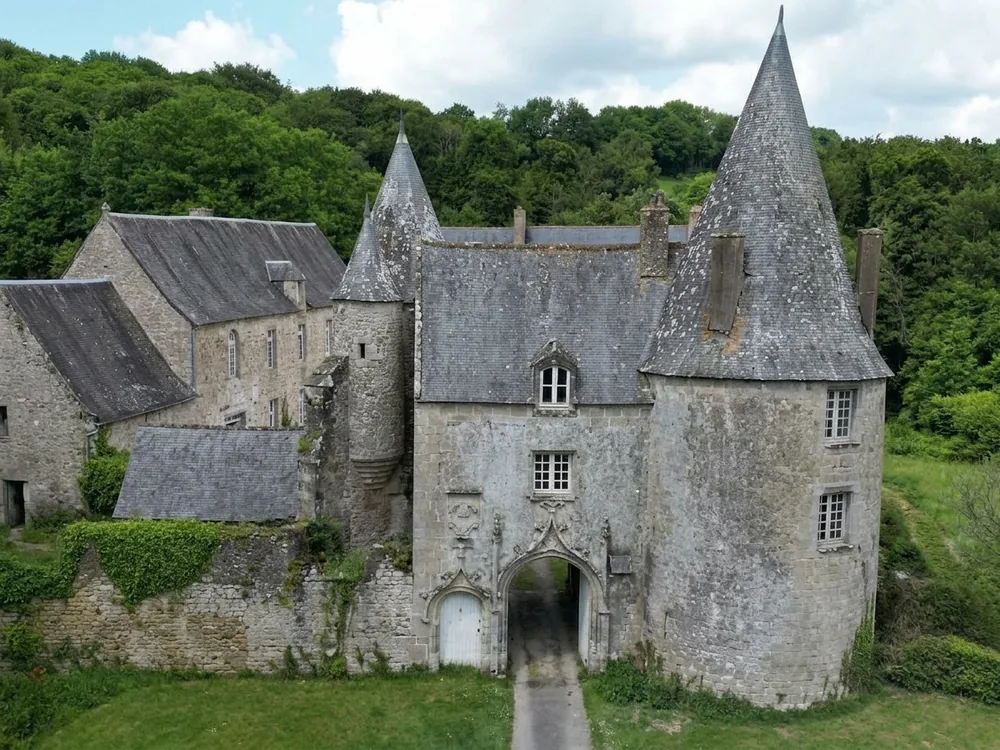
Supplier-dated between the 13th and 18th centuries; oldest surviving wing late 14th century · A former Hospitaller (Knights of Malta) commandery near Quintin, remodelled into a manor house; only the entrance building — a small 15th-century gatehouse — is formally protected; the oldest surviving wing dates to the late 14th century, with a central section from the late 16th or early 17th century
This page is part of an independent travel guide and is not affiliated with, endorsed by, or operated by Château de la Noé Sèche.
© Castles & Palaces
Quick Facts
- Guided tour from
- €10
- Duration
- 1 hour, guided
- Best time
- Year-round
- Nearest city
- Quintin
Featured Tour
Quintin / Le Foeil: Guided Tour of the Château de la Noé Sèche
Cancellation available · Instant confirmation
Highlights
- ✦A former Hospitaller (Knights of Malta) commandery near Quintin, in Brittany
- ✦Only the entrance building — a small 15th-century gatehouse, or porterie — is formally protected, by an arrêté of 17 June 1936
- ✦The oldest surviving wing dates to the late 14th century and holds a library and an oratory
- ✦The central part of the building, from the late 16th or early 17th century, is identified as the commandery's old chapter hall
- ✦Admiral Jules de Cuverville, whose military library survives on site, was one of the château's owners
Skip the queue with a guided tour
Skip-the-line tickets & expert guides
Château de la Noé Sèche sits near Le Foeil, close to Quintin in the Côtes-d'Armor, a manor house whose present form grew out of a Hospitaller commandery — a local administrative seat of the Knights of Malta, the crusading order better known for its later stronghold on Malta itself. The property's supplier describes construction as spanning the 13th to the 18th centuries, a long window that should be read as the estate's own account of a building remodelled repeatedly over time rather than a single, precisely dated structure.
What survives today tells a more specific story in places. The oldest wing, dating to the late 14th century, holds a library and an oratory, giving a sense of the commandery's dual role as both residence and religious seat. The building's central section, from the late 16th or early 17th century, has been identified as the order's old chapter hall — the room where the commandery's business would once have been conducted. A small gatehouse, or porterie, from the 15th century forms the entrance, and it is this element alone that carries formal heritage protection, designated by an arrêté of 17 June 1936; the rest of the manor, despite its age, does not hold the same protected status.
Ownership passed through several hands over the centuries that followed the commandery's original religious use, and the château remains in private hands today. One notable owner was Admiral Jules de Cuverville, a 19th-century French naval officer whose personal military library survives on the property — a tangible link to one chapter of the house's post-commandery life.
The visit itself is unusual: the one-hour guided tour is led personally by the château's own owner, covering both the interior and the grounds, with the tour offered in French, German or English. GetYourGuide flags this listing as a "rare find" with limited availability, so visitors should check for open dates well before planning a trip rather than assuming walk-up access. The uneven, historic floors and stairs throughout the building mean it is not suitable for visitors with mobility impairments or wheelchair users.
History
Château de la Noé Sèche grew out of a Hospitaller (Knights of Malta) commandery near Quintin in Brittany. Its oldest surviving wing dates to the late 14th century, with a central section from the late 16th or early 17th century identified as the commandery's old chapter hall; a 15th-century gatehouse forms the entrance and is the only part of the property formally protected, by an arrêté of 17 June 1936. The estate's own account describes construction spanning the 13th to 18th centuries. Admiral Jules de Cuverville, a 19th-century French naval officer, was among its later owners, and his military library remains on site. The château is privately owned today.
How to Visit
What this is: A one-hour guided tour of the château's interior and grounds, led personally by the property's owner — not a self-guided or open-access visit.
Availability: Tours run on limited dates only; check current availability before planning a visit, as this listing is not available every day.
Practical tips: The tour is offered in French, German or English. The historic building is not suitable for visitors with mobility impairments or wheelchair users.
Frequently Asked Questions
No — GetYourGuide flags this as a limited-availability listing. The one-hour guided tour, led by the château's owner, runs on specific dates only, so check current availability before planning a visit.
Location
Le Foeil, 22800 Quintin, France
Nearby Castles

Tours & Tickets
Powered by GetYourGuide
From
€10/ person