
Château de Lacypierre
Château de Lacypierre
France · Nouvelle-Aquitaine, Dordogne (Périgord Noir), Saint-Crépin-et-Carlucet · Near Sarlat-la-Canéda
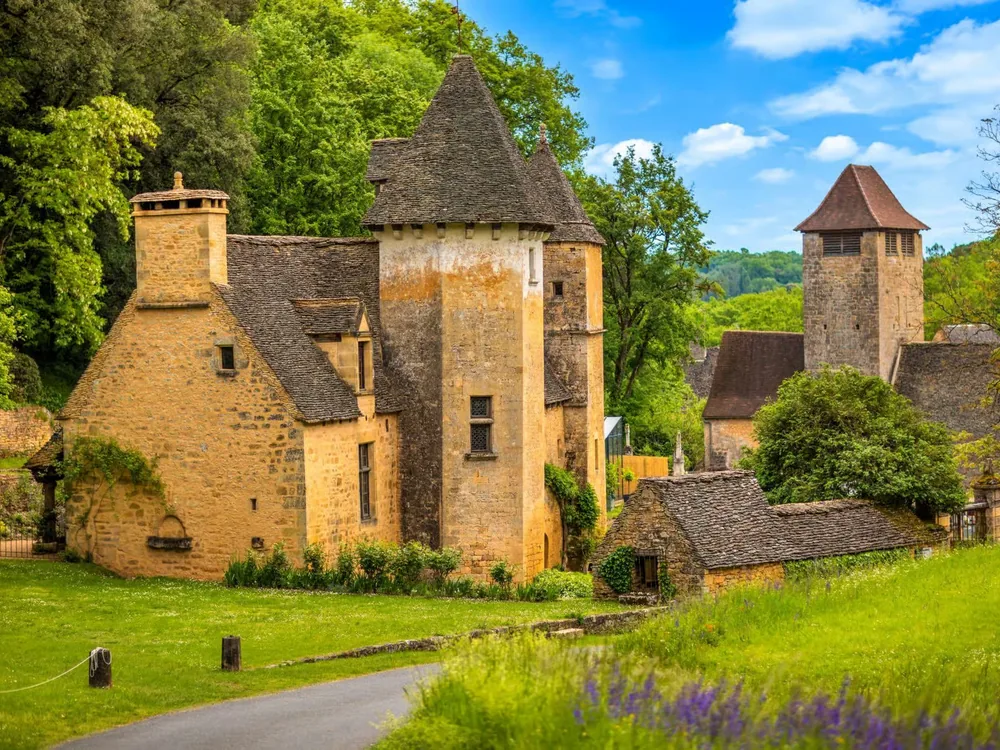
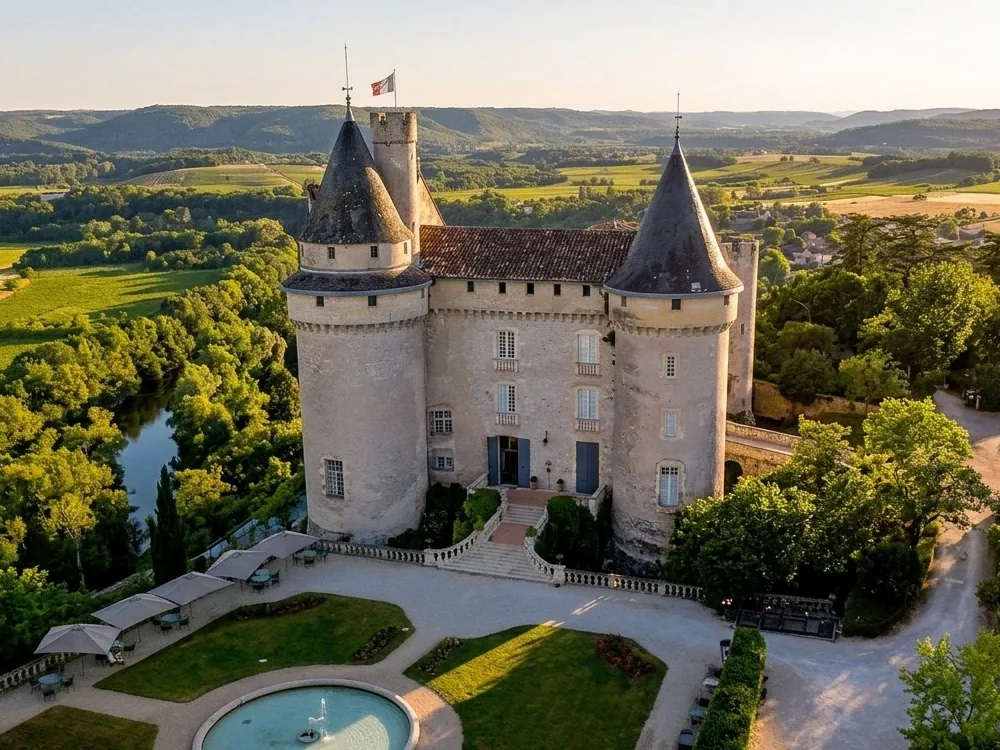
Built 1462 · Layered Périgord manor-château — 15th-century defensive towers and curtain walls built on 13th-century stronghold foundations, with 16th-17th century residential additions in the Périgord Noir manner: local limestone, characteristically steep slate roofs (the regional building tradition that gives the Périgord Noir its name alongside its oak forests), and modest proportions appropriate to provincial nobility; the physical fabric reflects the layering of three separate construction phases across two centuries, with the earliest surviving stonework belonging to the post-Hundred-Years-War reconstruction and the latest to the consolidation of the house in the 17th century
This page is part of an independent travel guide and is not affiliated with, endorsed by, or operated by Château de Lacypierre.
© Castles & Palaces
Quick Facts
- Hours
- Wed–Sun Tours by appointment. Closed Mon & Tue
- Guided tour from
- €12
- Duration
- 1.5 hours (guided tour)
- Best time
- May to October
- Booking
- Required — book 3+ days ahead
- Nearest city
- Sarlat-la-Canéda
Featured Tour
Château de Lacypierre: Intimate Guided Tour with the Owners
Cancellation available · Instant confirmation
Highlights
- ✦Owner-guided by the family who restored it — Isabelle and Florence Lebon-Hénault, daughters of the couple who bought and restored the château between 1968 and 2015, give all tours themselves; the narration combines the four-century documentary history of the Bénié de Lacypierre family with childhood memories of growing up in a château being rebuilt around them
- ✦Guillaume Bénié de Lacypierre's counter-revolutionary trajectory (1792) — Guillaume (1734–1826) served as a royal bodyguard to both Louis XV and Louis XVI at Versailles; when the Revolution collapsed the world he served, he emigrated in 1792 to Koblenz, the principal assembly point of the French émigré nobility, and enlisted in the counter-revolutionary Army of Condé under the Prince of Condé — a direct personal connection between this small Périgord manor and the defining political crisis of 18th-century France
- ✦47 years of family restoration (1968–2015) — Annick and Serge Lebon-Hénault bought a largely ruined property in 1968 and spent their adult lives restoring it; their research was published as the book *Lacypierre, la mémoire retrouvée* (2018), which traces the Bénié de Lacypierre family history from 1462 to Guillaume's death in 1826
- ✦The tour route — garden, slate-roofed attic, family living rooms, antique earthenware collection — covers spaces accumulated and restored over 50 years of occupation; each room reflects both the house's documented history and the specific choices the Lebon-Hénault family made in restoring it
- ✦The post-Hundred-Years-War foundation date (1462) — the Bénié de Lacypierre family acquired the property as the Hundred Years' War drew to its final close; the château they built and expanded over the following three centuries was a product of the slow return to provincial normality in a Dordogne recently returned to French sovereignty after a century of English occupation
Skip the queue with a guided tour
Skip-the-line tickets & expert guides
Most châteaux in the Périgord Noir are managed by heritage trusts, municipal authorities, or hospitality groups; Lacypierre is managed by the family who restored it. Isabelle and Florence Lebon-Hénault guide visitors through a house that was their childhood, explaining rooms their parents spent half a century bringing back to life alongside a four-century history that neither they nor the house can entirely separate. The experience of visiting Lacypierre is specifically that of a property still inhabited and still personally meaningful to the people who preserved it — which makes it unlike virtually any of its famous Dordogne neighbors.
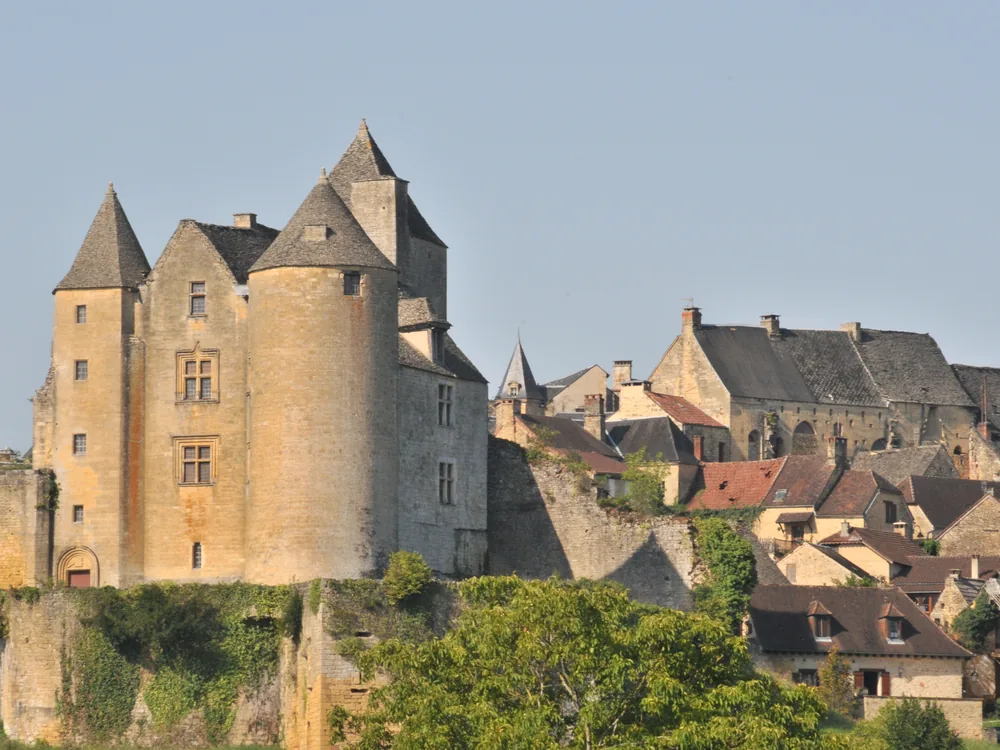
The château stands in the hills of the Périgord Noir, approximately a kilometer southeast of the village of Saint-Crépin-et-Carlucet, on a site that has been occupied and fortified since at least the 13th century. The earliest structure here was a fortified stronghold belonging to the seigneury of Salignac — Château de Salignac, visible on its ridge roughly six kilometers to the northeast, was the administrative center of the region, and the Lacypierre site was held by the Ferrières family as vassals of Salignac's lords. The landscape around Saint-Crépin-et-Carlucet is quintessential Périgord Noir: dense oak woodland on limestone plateaus, with the valleys cut by small rivers between which the manor houses and defensive towers of medieval Périgord are distributed across the high ground.
The year 1462 marks the first significant documented transition in the property's ownership. The Hundred Years' War had formally concluded nine years earlier — the French expulsion of English forces from Gascony was completed at the Battle of Castillon in 1453 — and the Dordogne was in the slow process of returning to normal provincial life after a century of intermittent occupation, raid, and depopulation. In 1462, as the Ferrières family's tenure ended, the property passed to the Bénié de Lacypierre family. That name, and the particular character of the house it would generate, would persist for over three hundred years.
The physical character of the château reflects the layering of its construction history. The earliest surviving fabric includes defensive elements from the 15th-century construction — thick walls, the rhythm of the tower positions, the steep slate rooflines — that speak to a period when even provincial manors required credible defensive capability in a landscape still recovering from a century of intermittent warfare. The 16th and 17th-century additions that constitute the main residential block are built in the Périgord tradition: local limestone, the characteristically steep slate roofs of the region, and proportions appropriate to the rural nobility of the area rather than to the grander aspirations of the Loire or the Île-de-France.
The most historically remarkable figure connected to the house is Guillaume Bénié de Lacypierre, born in 1734 and died in 1826 at the age of ninety-one. Guillaume served as a royal bodyguard at Versailles to both Louis XV and Louis XVI — a position that brought him physically close to the court of the ancien régime during the decades in which that world was visibly beginning to fracture. When the Revolution arrived in 1789 and royal authority collapsed around him, Guillaume made the choice that tens of thousands of French nobles faced: to remain in a France hostile to the class he represented, or to leave. In 1792, Guillaume emigrated to Koblenz — the German city on the Rhine that had become the principal assembly point for the French émigré nobility — and enlisted in the counter-revolutionary army organized under the Prince of Condé. The Army of Condé was a royalist force formed from French officers and nobles who refused to accept the Revolutionary government; it fought on the margins of the larger European wars against France for more than a decade before being definitively disbanded.
Guillaume returned to France under the Napoleonic amnesty for émigrés, the last Bénié de Lacypierre to carry the family's history in full. He died in 1826 without legitimate heirs, and the château's subsequent century was one of progressive decline and eventual abandonment — a fate shared by many provincial French noble properties that had lost the family structures maintaining them through the upheavals of the Revolution and its aftermath.
The restoration story begins in 1968, when Annick and Serge Lebon-Hénault bought the largely ruined property. What followed was forty-seven years of systematic physical restoration combined with equally systematic archival research into the house's history. Annick's research into the Bénié de Lacypierre family — their documented history from the 1462 acquisition through Guillaume's death in 1826, and the specific story of Guillaume's path from Versailles to Koblenz to the Condé army and back — was eventually published as *Lacypierre, la mémoire retrouvée* (2018), a book that reconstructs the family's four-century presence at the property from documentary sources. The restoration itself was completed in 2015.
Today the château is guided by Isabelle and Florence Lebon-Hénault, who grew up in the house during its restoration and now lead all visits themselves. The tour covers the formal garden (restored as part of the broader project), the slate-roofed attic (where the original structural timbers of the medieval portions of the house are exposed), the family living rooms (furnished with a combination of original pieces and objects accumulated during the restoration period), and an antique earthenware collection assembled by the family over decades of local acquisition in the Périgord markets. The daughters speak about the house in two registers simultaneously: the documentary history of the Ferrières, the Bénié de Lacypierre family, and Guillaume's particular trajectory, and the more personal account of what it meant to grow up surrounded by a house being rebuilt — a combination that is specific to this kind of owner-guided property and cannot be replicated elsewhere.
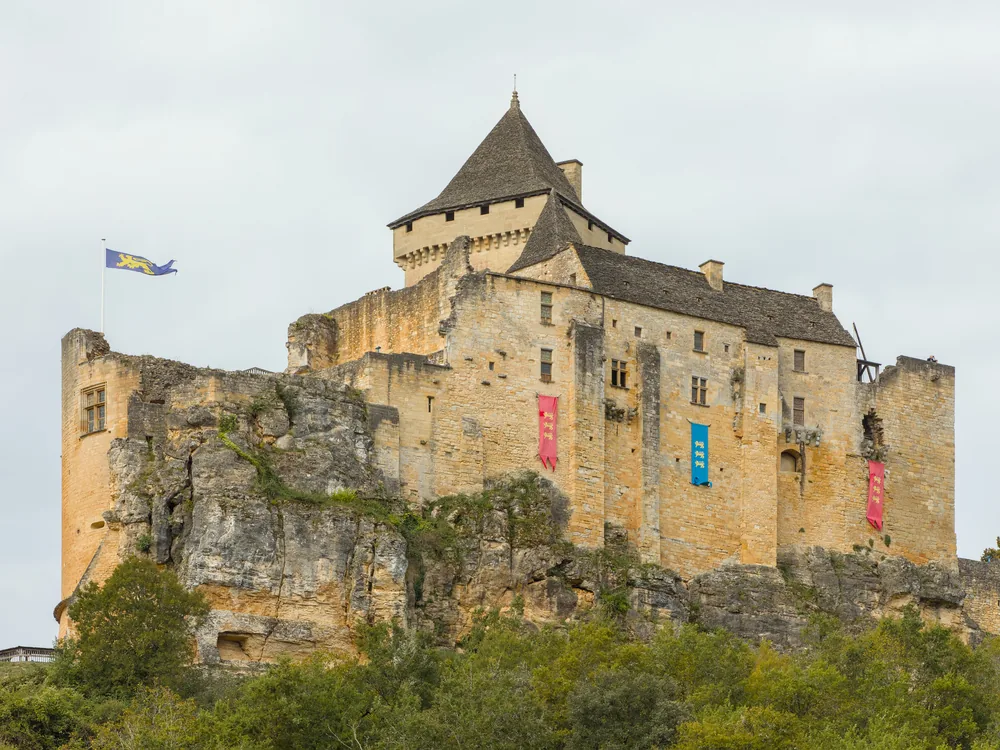
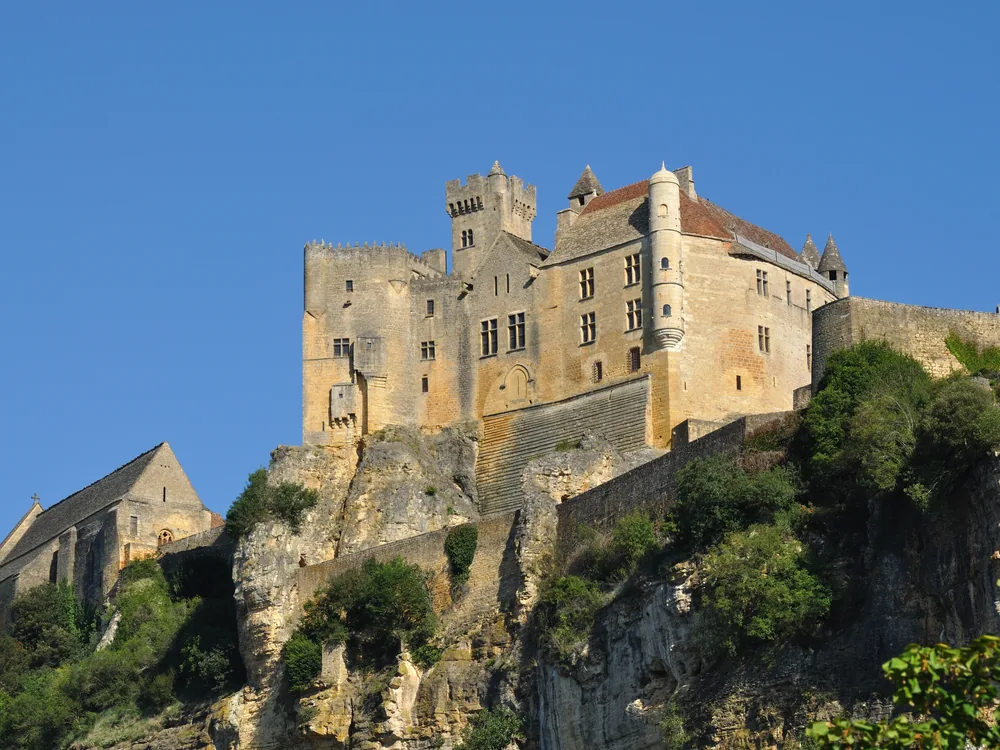
For the broader Périgord Noir castle context: [Château de Beynac](/castles/france/chateau-de-beynac) and [Château de Castelnaud](/castles/france/chateau-de-castelnaud), both in the Dordogne valley 18–22 kilometres southwest, are the principal Hundred Years' War fortifications of the region; [Château de Salignac](/castles/france/chateau-de-salignac), visible on its ridge 6 kilometers northeast, was the seigneury to which Lacypierre's earliest lords were vassals.
History
A fortified stronghold stood on the Lacypierre site in the 13th century, held by the Ferrières family as vassals of the seigneury of Salignac. The main construction phases of the current château — its defensive and residential elements accumulated across successive periods — belong to the 15th through 17th centuries. In 1462, at the close of the Hundred Years' War, the Bénié de Lacypierre family acquired the property and gave it the name it carries today.
The family's most historically vivid member was Guillaume Bénié de Lacypierre, born in 1734, who served as a royal bodyguard to Louis XV and Louis XVI at Versailles before the world he had served collapsed in 1789. In 1792 he emigrated to Koblenz and joined the counter-revolutionary Army of Condé under the Prince of Condé — the royalist émigré force that spent years in frustrated exile waiting for a restoration that did not come on their terms. Guillaume died in 1826 without legitimate heirs, aged 91, the last of the Bénié de Lacypierre line. The château fell into partial ruin through the 19th and early 20th centuries.
In 1968, Annick and Serge Lebon-Hénault purchased the property and began a restoration that lasted 47 years — systematic, archival, and personally driven. Annick Lebon-Hénault's parallel research into the Bénié de Lacypierre family history was published in 2018 as Lacypierre, la mémoire retrouvée. Today their daughters Isabelle and Florence guide visitors through a house that combines a medieval structure, a royalist family history, and a half-century of family restoration labour.
How to Visit
Getting there: Saint-Crépin-et-Carlucet is ~15 km northeast of Sarlat-la-Canéda. No regular public transport to the château; a car is required.
Tickets: Advance booking required. The GetYourGuide guided tour is the standard access method — conducted in French only by Isabelle and Florence Lebon-Hénault; check GetYourGuide for current availability and dates before planning your visit.
Practical tips: Tours last ~1.5 hours and are personal rather than scripted — Isabelle and Florence combine the documented family history with their own childhood memories of growing up in the house during its 47-year restoration. A copy of the family's book *Lacypierre, la mémoire retrouvée* (2018) is available at the château and provides deeper context for those who read French.
Combine with: Château de Salignac (6 km northeast — the seigneury to which the earliest Lacypierre lords were vassals), Château de Beynac, and Château de Castelnaud (18–22 km southwest in the Dordogne valley).
Frequently Asked Questions
This is a tagging error by GetYourGuide — possibly a confusion with another property — that has no basis in any local, regional, or historical source. The château's correct name in every independent source (the commune's own publications, Dordogne Périgord Tourisme, Visit Dordogne Valley, the family's own book *Lacypierre, la mémoire retrouvée*) is Château de Lacypierre. The property has no connection to Cipières (a village in Alpes-Maritimes). Ignore the GetYourGuide location tag entirely.
Location
Château de Lacypierre, Saint-Crépin-et-Carlucet, 24590 Dordogne, France
Nearby Castles
Tours & Tickets
Powered by GetYourGuide
From
€12/ person