
Château de Langeais
Château de Langeais
France · Loire Valley — Indre-et-Loire, town of Langeais, above the Loire · Near Tours
Built 1465 · Late Gothic / Early French Renaissance
This page is part of an independent travel guide and is not affiliated with, endorsed by, or operated by Château de Langeais.
© Castles & Palaces
Quick Facts
- Hours
- Daily 09:30–17:30
- Guided tour from
- €973
- Duration
- 1.5 hours (self-guided with audio guide)
- Best time
- April to October
- Nearest city
- Tours
Featured Tour
Group Day Tour: Azay-le-Rideau, Langeais & Villandry Gardens
Cancellation available · Instant confirmation
Highlights
- ✦The only major Loire château to survive the Renaissance with its authentic 15th-century appearance intact — built in haste for Louis XI and never 'Renaissanced' into something else
- ✦The wedding chamber where Charles VIII of France and Anne of Brittany were married on 6 December 1491, one of the most politically consequential weddings in French history, commemorated by wax figures in period dress
- ✦The 10th-century keep of Foulques Nerra in the château grounds — the oldest surviving castle ruin in France, predating the present building by five centuries
- ✦The furnished medieval interiors, including a remarkable collection of 15th-century Flemish and Milanese tapestries displayed in rooms that retain their original architectural fabric
- ✦The town of Langeais itself, where the château rises directly above the main square without intervening parkland — one of the Loire Valley's most dramatically sited castles in relation to its town
Skip the queue with a guided tour
Skip-the-line tickets & expert guides
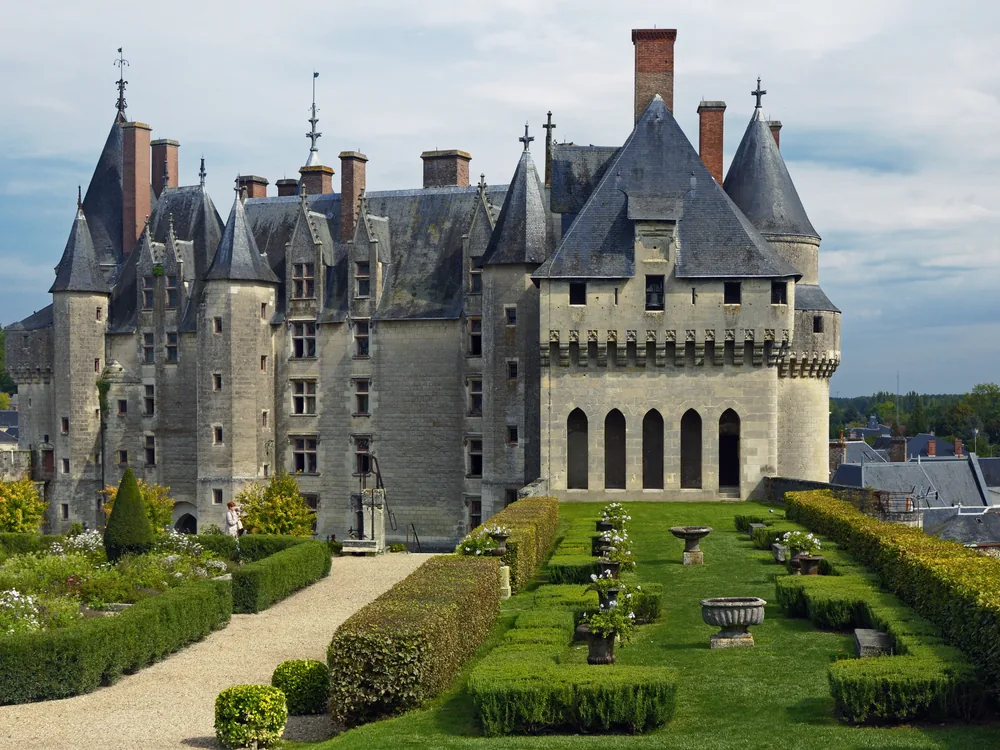
Most of the great Loire châteaux wear their history lightly — centuries of renovation, addition, and Baroque remodelling have layered competing aesthetics over the medieval bones. Langeais is the exception. Built in extraordinary speed between 1465 and 1469 on the orders of Louis XI, the château has come down to the present day with its 15th-century fabric essentially intact: the same machicolated towers, the same steep-roofed dormers, the same austerely defensive profile that Louis intended as a political statement against the independent Duchy of Brittany, whose territory began just across the river. Inside, the rooms are furnished in the style of the period, the tapestries are genuinely medieval, and the stone is original. Nothing at Langeais was heavily restored or replaced.
The castle's defining historical moment came early in its existence. On the morning of 6 December 1491, the thirteen-year-old Anne of Brittany arrived at Langeais before dawn and, in the wedding chamber that still stands on the first floor, married Charles VIII of France in a ceremony of urgent political necessity. Anne had just narrowly escaped marriage to the Holy Roman Emperor Maximilian I, and the French crown needed the union formalised before any rival claim could be pressed. The speed and secrecy of the ceremony — conducted in the grey light of a winter morning in a newly built castle barely twenty years old — adds to its historical peculiarity. The marriage united Brittany with France, beginning the political process that would make Breton independence impossible; it is one of the most consequential diplomatic events of the French Renaissance, transacted in a room the size of a large parlour.
The wax figures in the wedding chamber — Charles, Anne, and their witnesses in full late-medieval dress — are among the most effective of their kind in any Loire château, and the audio guide that accompanies the self-guided tour does an unusual job of explaining why this particular marriage mattered so much to the future of France.
The grounds of the château hold something even older: the ruins of the keep of Foulques Nerra, Count of Anjou, who built the first fortress on this site in the early 10th century. The masonry surviving today, identified by archaeologists as dating to before the year 1000, makes it the oldest castle ruin in France, and the contrast with the well-preserved 15th-century château behind it — five centuries of European castle architecture visible in one courtyard — gives Langeais a temporal depth that more celebrated Loire sites cannot match.
For visitors planning a day in the western Loire, Langeais combines naturally with Azay-le-Rideau (15 km south) and Villandry (15 km east), and a GetYourGuide group day tour covers all three in a single trip from Tours.
History
The site above Langeais has been fortified since the early medieval period. Foulques Nerra, the fearsome and prolific castle-builder who served as Count of Anjou from 987 to 1040, raised a stone keep here around the year 1000 in his campaign to defend the Anjou frontier against the Count of Blois. The masonry that survives in the present château's grounds is among the oldest stone military construction in France and testifies to Foulques' reputation as one of medieval Europe's most energetic builders of fortifications.
The present château was built on an entirely different scale and for a different strategic purpose. Louis XI, king of France from 1461, ordered the construction of a new fortress at Langeais in 1465 as a direct response to the threat posed by the independent Duchy of Brittany, whose lands began close to the Loire at this point. The castle was completed by 1469 — a pace of construction exceptional for a building of this scale — and Louis specifically designed it as a defensive fortress, giving it towers and machicolations rather than the courtly amenities that other Loire châteaux were already acquiring. The result is one of the most authentic examples of late-medieval French military architecture in the Loire Valley.
Its defining moment came in December 1491, when Charles VIII of France married Anne of Brittany in the château's wedding chamber in a ceremony that effectively sealed the eventual absorption of Brittany into France. The castle subsequently passed out of active royal use and was sold as national property during the Revolution, before being acquired and restored by Jacques Siegfried in the late 19th century, who bequeathed it to the Institut de France in 1904.
How to Visit
Getting there: Langeais is 25 km west of Tours along the south bank of the Loire. By car, take the D952 from Tours — the drive takes around 30 minutes. By train from Tours, regional services run to Langeais station (25 minutes, roughly hourly); the château is a 10-minute walk from the station, directly uphill through the town. The Loire à Vélo cycling route also passes through Langeais.
Tickets: Walk-up admission is €12 for adults, €6 for children, including the audio guide. No advance booking is required. The GetYourGuide group day tour combines Azay-le-Rideau, Langeais, and Villandry Gardens in a full day from Tours — the most efficient option for visiting all three in one day without a car, and the only way to cover the western Loire trio without retracing your steps.
Practical tips: The audio guide is worth taking — the story of the 1491 wedding and why it happened at dawn in this specific castle is more interesting than the room itself suggests, and the guide conveys it well. Allow time in the grounds for the Foulques Nerra keep ruins after the château interior; they are easy to overlook but represent the oldest castle masonry in France. The town square just outside the gate has good cafés for a midday break between Langeais and Azay-le-Rideau.
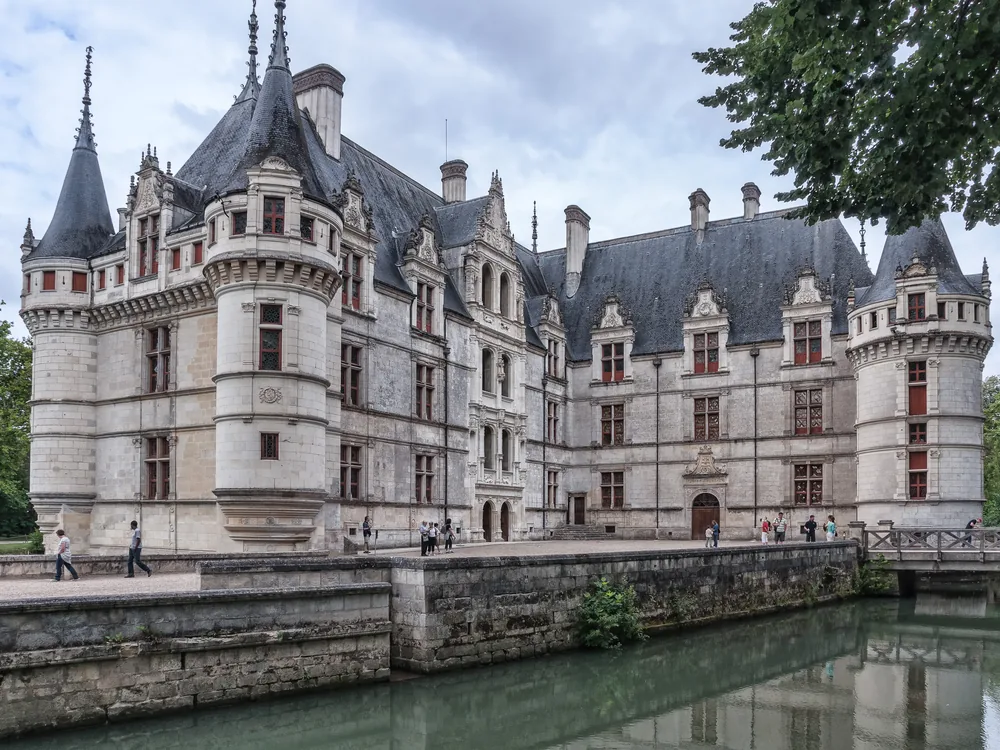
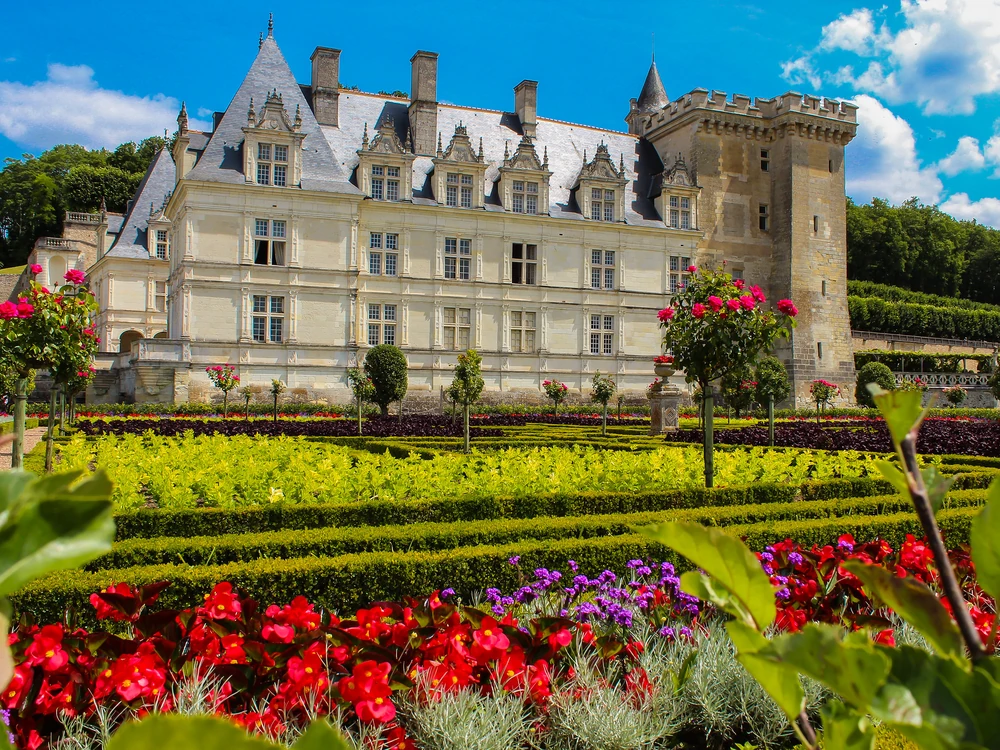
Combine with: Château de Azay-le-Rideau (15 km south — the Renaissance masterpiece on an island in the Indre, arguably the most graceful of all Loire châteaux; both are part of the GetYourGuide day tour) and Château de Villandry (15 km east — the Loire's most magnificent formal gardens).
Frequently Asked Questions
The marriage of Charles VIII of France and Anne of Brittany on 6 December 1491 was one of the most consequential diplomatic events of the French Renaissance. Anne had been the sovereign Duchess of Brittany and had been formally betrothed to the Holy Roman Emperor Maximilian I; the French crown needed the union completed quickly to prevent any imperial claim on Brittany. The marriage, conducted in secret at dawn, began the political process that would eventually incorporate Brittany into France, ending Breton independence and reshaping the French kingdom's western boundary permanently.
Location
Rue Anne de Bretagne, 37130 Langeais, France
Nearby Castles
Tours & Tickets
Powered by GetYourGuide
From
€973/ person