
Château de Montségur
Château de Montségur
France · Occitanie — Ariège, Pyrenean foothills, near Lavelanet (15 km) and Foix (30 km) · Near Foix
Built 1204 · Polygonal curtain-wall enclosure — Cathar-era reconstruction of 1204 replaced by French royal keep c.1245; surviving masonry dates from post-siege rebuilding
This page is part of an independent travel guide and is not affiliated with, endorsed by, or operated by Château de Montségur.
© Castles & Palaces
Quick Facts
- Hours
- Daily 10:00–18:00
- Guided tour from
- €590
- Duration
- 2–3 hours (1 hour ascent/descent + 45 minutes at the summit ruins; allow longer to visit the Musée de Montségur in the village below)
- Best time
- May to October
- Nearest city
- Foix
Featured Tour
Mirepoix, Castles of Montségur & Camon Guided Tour
Cancellation available · Instant confirmation
Highlights
- ✦The pog ascent — a steep 30–40 minute climb up an isolated volcanic rock rising 200 metres from the valley floor, with unfolding views across the Ariège foothills and Pyrenees; the same path walked by the castle's defenders in 1243–44
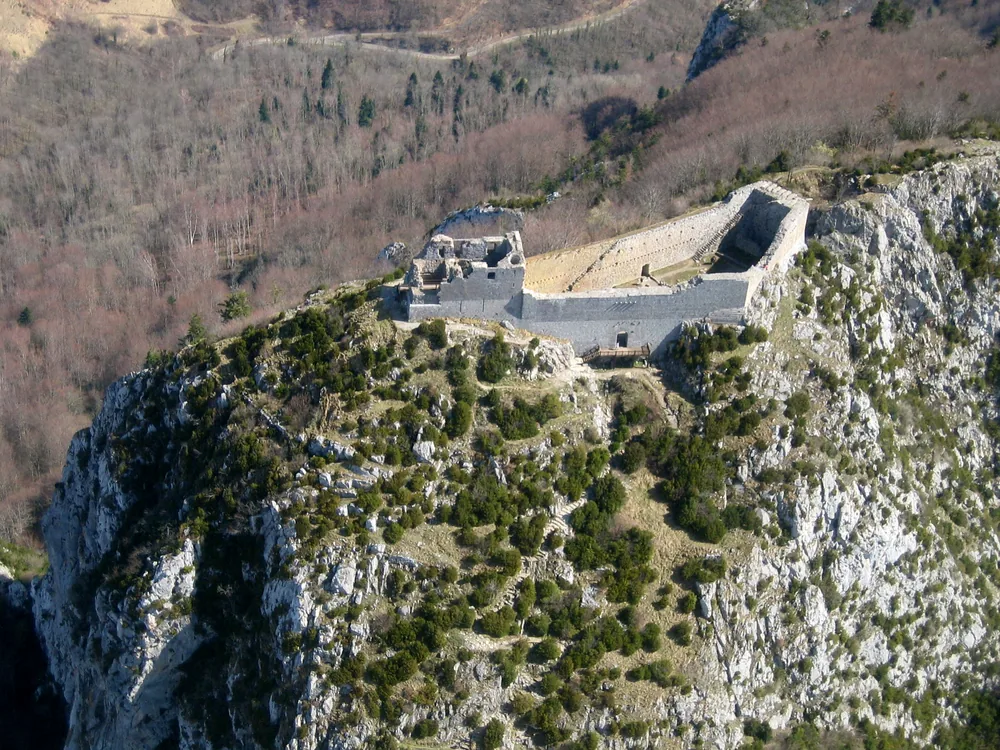
- ✦The polygonal ruins — the compact curtain walls and keep of the French royal reconstruction built after 1245, positioned at 1,207 metres above sea level on the summit of the pog
- ✦The Camp dels Cremats — the Field of the Burned at the foot of the pog, marked by a stone memorial stele, where over 200 Cathar parfaits were burned alive on 16 March 1244 rather than recant their faith
- ✦The summit panorama — clear days reveal views south to the high Pyrenees and north across the rolling hills and forests of Ariège, a landscape essentially unchanged since the siege of 1243–44
- ✦The Musée de Montségur — the archaeological museum in the village below the pog, with medieval finds from the castle site and a thorough permanent exhibition on Catharism and the Albigensian Crusade
Skip the queue with a guided tour
Skip-the-line tickets & expert guides
Montségur is the most historically charged ruin in France. Not the largest, not the most complete, and not the easiest to reach — but no other castle in the country carries a story so specific and so terrible. The ruins sit on a pog, an isolated volcanic rock rising 200 metres from the Ariège valley floor at an altitude of 1,207 metres. The climb takes 30 to 40 minutes on a steep, rocky path. What you find at the top is modest: a compact polygonal keep, sections of curtain wall, the outline of a small fortified enclosure. The drama is not in the stones. It is in the view from the summit, and in what happened here.
The Cathars were a Christian dualist movement that flourished across Languedoc in the 12th and early 13th centuries. They rejected the material world as the creation of a lesser evil principle, kept no property, and organised their clergy — the parfaits — on a doctrine of radical spiritual poverty. The Catholic Church declared them heretics, and Pope Innocent III launched the Albigensian Crusade in 1209 to destroy them. The campaign devastated the population of the south of France over two decades of warfare, burning towns and massacring communities that had harboured Cathar believers.
By the 1240s, Montségur was the last functioning refuge of the Cathar church. Several hundred believers — parfaits, their supporters, and armed fighters — lived within the castle and on the slopes of the pog. In May 1243, French royal forces began a siege that lasted ten months. On 2 March 1244, the defenders capitulated. Those who agreed to recant their faith were allowed to leave. Those who did not — over 200 Cathar parfaits — were burned alive in a mass pyre at the foot of the pog on 16 March 1244. The site is marked today by a stone memorial stele: the Camp dels Cremats, the Field of the Burned.
The ruins you visit today are not the Cathar castle. The original fortification was demolished by the French Crown after the siege; the surviving walls and keep date from the reconstruction built from around 1245 onward. This does not diminish the site — the pog, the views, the path, and the village below are all unchanged — but it is worth knowing that you are standing in the fortress built by those who won, not those who died here.
The Musée de Montségur in the village provides essential context: medieval finds from the archaeological excavations of the site, clear explanations of Cathar theology, and a detailed chronology of the Albigensian Crusade. Visit the museum before the climb.
History
The rocky pog above the village of Montségur was fortified from at least the early 12th century, serving as a refuge for the Cathar community as pressure from the Church intensified. The reconstruction commissioned in 1204 — at the request of the Cathar bishop Guilhabert de Castres, carried out by Raymond de Péreille — transformed the site into the functional headquarters of the Cathar church, sheltering parfaits, their archives, and an armed garrison in a settlement that spread across the upper slopes of the pog.
The castle's defining moment came during the Albigensian Crusade. French royal forces laid siege to Montségur in May 1243, and the defenders held out for ten months — a remarkable resistance on a near-impregnable rock — before capitulating on 2 March 1244. Two weeks later, on 16 March, the 215 parfaits who refused to recant their faith were led to the Camp dels Cremats at the base of the pog and burned alive in a mass pyre. It was the effective end of organised Catharism as a public religious faith in Languedoc.
The French Crown demolished the original Cathar fortification and rebuilt the site from around 1245 as a royal stronghold. It was this second castle — smaller and more regular than what the Cathars had held — that survives as the ruin visible today. Gradually abandoned as a military post, the castle fell into ruin over the following centuries, and systematic archaeological excavations from the mid-20th century onward recovered material evidence of both the Cathar occupation and the royal reconstruction.
How to Visit
Getting there: Montségur is most practically reached by car. From Foix (30 km northwest) take the D117 east to Lavelanet, then the D9 south to Montségur village — approximately 45 minutes. From Carcassonne (80 km) allow around 1 hour 15 minutes via the D117. A car park is located below the village. There is no direct public transport to Montségur; the nearest bus connection is Lavelanet (15 km), from which a taxi is the only option.
Tickets: Walk-up entry to the Montségur archaeological site: €6 adult, €3 child (pay at the car park below). The GetYourGuide private day tour — a full-day privately guided excursion from the Carcassonne area with driver, covering Mirepoix, Montségur (castle entrance included), and Camon — is a premium option that combines the castle with two historic Cathar-era villages under expert private guidance; the €590 covers the complete private programme for a group, not the site entry alone.
Practical tips: Begin the ascent by 09:30 in summer to avoid midday heat on the exposed path and the peak crowd period in July and August. Bring water — there is no refreshment on the summit — and wear sturdy footwear. Allow at least 45 minutes for the Musée de Montségur in the village before or after the climb; the museum provides historical context that the bare summit ruins cannot. In winter the path can be icy and is sometimes closed; check conditions at chateau-montsegur.fr before travelling.
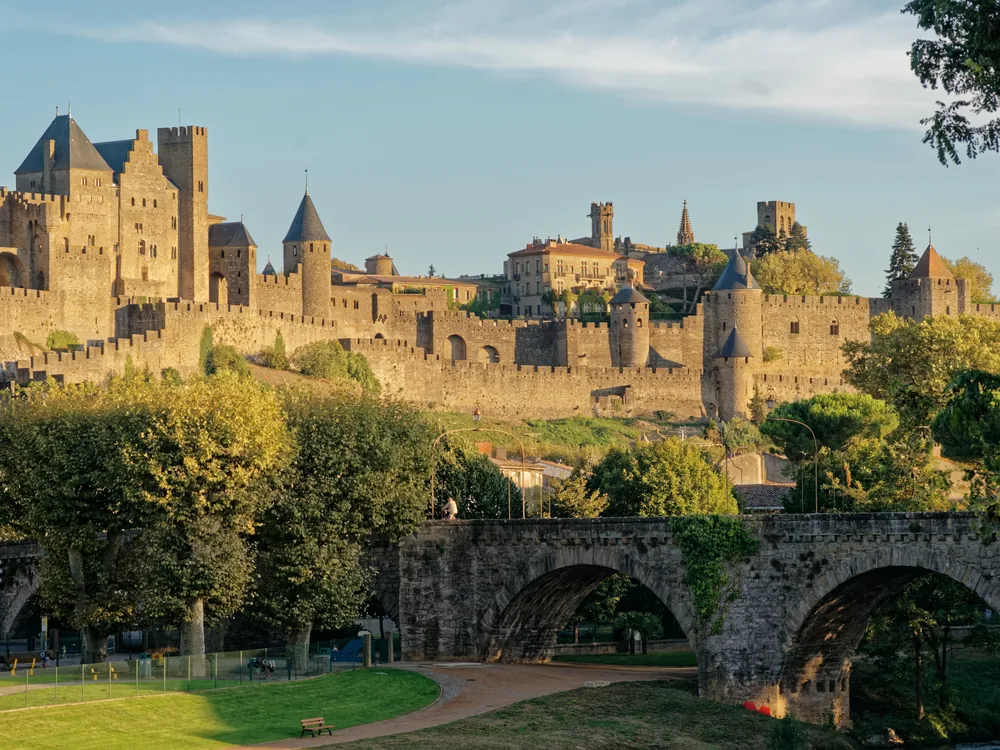
Combine with: Carcassonne (80 km northwest — the UNESCO-listed walled city and greatest surviving medieval fortified ensemble in France; together they form the defining Cathar and crusade-era itinerary of Languedoc-Occitanie).
Frequently Asked Questions
The Cathars were a Christian dualist movement that flourished across Languedoc in the 12th and 13th centuries. They believed in two divine principles — a good spiritual God and an evil material one — and organised their clergy, the parfaits, on a doctrine of radical poverty and renunciation of the physical world. The Catholic Church declared them heretics and launched the Albigensian Crusade in 1209 to suppress them. Montségur became the last functioning headquarters of the Cathar church, sheltering several hundred believers. When the castle fell in 1244, over 200 parfaits who refused to recant their faith were burned alive at the Camp dels Cremats — the Field of the Burned — at the foot of the pog. This event effectively ended organised Catharism in Languedoc.
Location
Château de Montségur, 09300 Montségur, Ariège, France
Nearby Castles
Tours & Tickets
Powered by GetYourGuide
From
€590/ person