
Carcassonne
Cité de Carcassonne
France · Occitanie · Near Carcassonne
Built 100 · Gallo-Roman walls, Visigothic towers, medieval additions — comprehensively restored by Viollet-le-Duc 1853–1879
This page is part of an independent travel guide and is not affiliated with, endorsed by, or operated by Carcassonne.
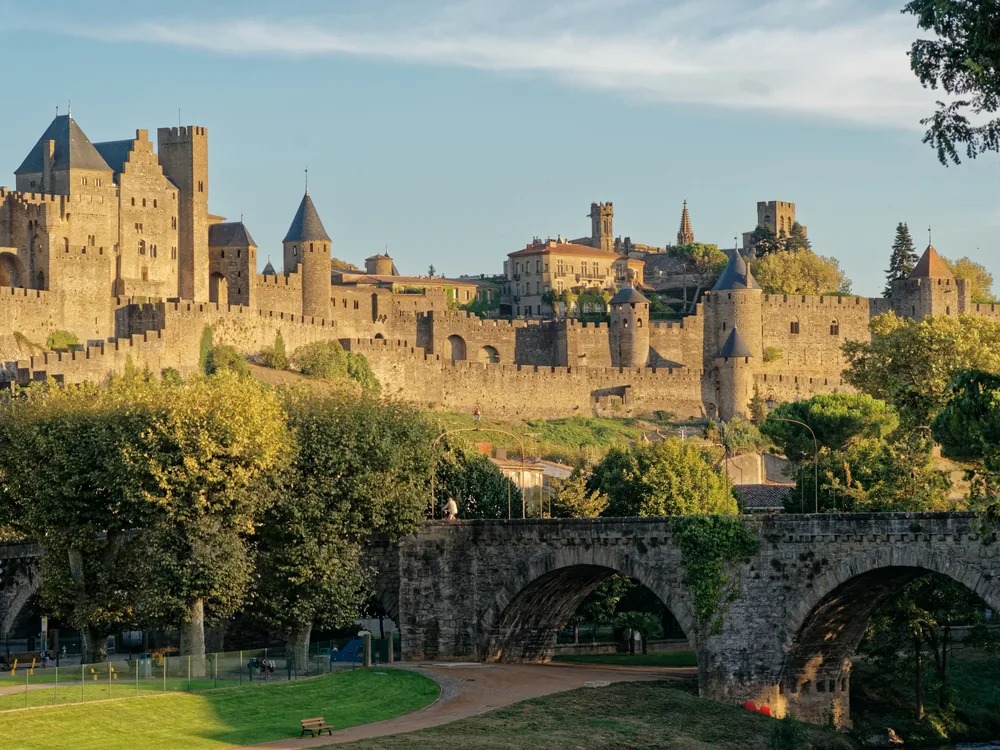
© Castles & Palaces
Quick Facts
- Hours
- Daily 10:00–18:00
- Entry via GetYourGuide
- €13
- Duration
- 3–4 hours
- Best time
- April to June and September
- Nearest city
- Carcassonne
Featured Tour
Carcassonne: Castle and Ramparts Entry Ticket
Cancellation available · Instant confirmation
Highlights
- ✦The double ring of ramparts — 3 kilometres of walls with 52 towers, largely intact and walkable
- ✦The Château Comtal — the inner castle within the Cité, with a museum of the city's history and views from the towers
- ✦The Cité — a complete medieval walled town with cobbled streets, restaurants and hotels within the walls
- ✦The view from the lower town — the skyline of towers against the Pyrenees on a clear day is one of France's great panoramas
- ✦The Bastille Day fireworks — the 14th July fireworks display over the Cité is considered the most spectacular in France
Tickets & tours
Book through GetYourGuide
Carcassonne is not merely a castle but a complete walled medieval city — the Cité de Carcassonne — with two concentric rings of ramparts totalling over 3 kilometres, 52 towers, and within the walls a settlement of narrow cobbled streets, a Romanesque cathedral, the inner fortress of the Château Comtal, and even hotels and restaurants. It is the largest fortified medieval city in Europe and one of the most visited monuments in France: around 3 million people a year climb the slope from the lower town to walk the ramparts.
The walls themselves span two millennia: the lowest courses are Gallo-Roman from the 1st–3rd centuries AD; the round towers are Visigothic (5th–7th centuries); the pointed towers and most of the visible fabric are medieval, added by the French crown after the Cathar Crusade of the 13th century brought the city under royal control. The comprehensive restoration by Eugène Viollet-le-Duc between 1853 and 1879 is responsible for much of the dramatic appearance — the pointed slate cone roofs on the towers, for instance, are his invention rather than medieval practice, and are historically questionable but visually indispensable.
The Cité is one of the most atmospheric places in France on a summer evening, when the day visitors have departed and the hotel guests have the ramparts largely to themselves. The view of the towers against the Pyrenees at sunset, or the walls illuminated at night, is one of the most memorable in European travel.
History
The site of Carcassonne has been fortified since before Roman times, and the earliest visible walls — the lower courses of the outer ramparts — are Gallo-Roman work of the 1st–3rd centuries AD. After the fall of Rome, the Visigoths occupied the city and added their characteristic horseshoe towers (distinguishable by their Visigothic construction technique) in the 5th–6th centuries. The Franks took the city in the 8th century, and it subsequently became part of the County of Carcassonne.
The city's most dramatic medieval episode was its role in the Cathar Crusade of 1209–29. The Cathars were a Christian dualist sect with a large following in Languedoc; Pope Innocent III declared a crusade against them, and northern French forces besieged and took Carcassonne in 1209. The city eventually came under direct French royal control in 1247, and the French crown invested heavily in strengthening the fortifications — adding the outer ring of walls and rebuilding many towers. The city was never taken again. When Viollet-le-Duc began his restoration in 1853, the ramparts were ruinous and partially inhabited by squatters; his work, though historically contested, saved the city.
How to Visit
Getting there: Carcassonne has a TGV station with direct services from Paris (4.5 hours), Toulouse (50 minutes), and Montpellier (1.5 hours). The Cité is 2 km from the station — taxi, bus line 4, or a 25-minute walk.
Tickets: Walking the outer town and the rampart circuit between the two rings of walls is free. The inner Château Comtal and museum charge adults €10, children free. The GetYourGuide entry ticket covers the Castle and Ramparts with priority access.
Practical tips: Arrive after 17:00 — day-tour buses clear out and the cobbled streets become far more pleasant in the late afternoon light. The best views of the towers are from the lower town to the north; the Bastille Day fireworks (14 July) over the Cité are considered the most spectacular in France.
Combine with: Château de Luc nearby, the Cathar clifftop castles of the Ariège (Montségur, Peyrepertuse — 1 hour by car), the Canal du Midi (UNESCO, walkable from Carcassonne), and Toulouse (50 min by train).
Frequently Asked Questions
The medieval town within the walls (La Cité) is free to enter and walk through — the cobbled streets, rampart walk between the two rings of walls, and the general atmosphere are all free. The Château Comtal, the inner fortress, and the museum inside it require a paid ticket (around €10 for adults, free under 18). The most popular activity — walking the outer ramparts with views over the lower town and Pyrenees — is free and very worthwhile.
Location
Château Comtal, Rue Viollet-le-Duc, 11000 Carcassonne, France
Nearby Castles
Tours & Tickets
Powered by GetYourGuide
From
€13/ person