
Alcázar of Seville
Real Alcázar de Sevilla
Spain · Andalusia · Near Seville
Built 913 · Mudéjar, Gothic, Renaissance
This page is part of an independent travel guide and is not affiliated with, endorsed by, or operated by Alcázar of Seville.
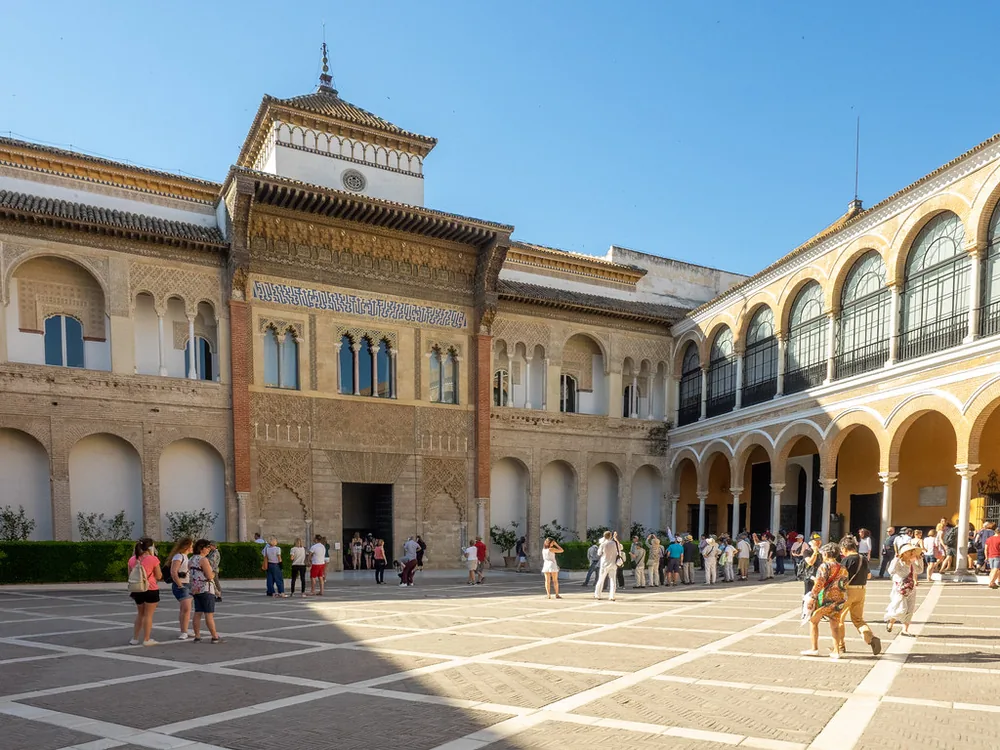
© Unsplash
Quick Facts
- Hours
- Mon 10:30–17:00. Tue–Sun 09:30–17:00
- Skip-the-line from
- €20
- Duration
- 2–3 hours
- Best time
- March to May and October to November
- Booking
- Required — book 14+ days ahead
- Nearest city
- Seville
Featured Tour
Seville: Royal Alcázar Entry Ticket
Cancellation available · Instant confirmation
Highlights
- ✦The oldest royal palace still in use anywhere in Europe — the Spanish royals stay here today
- ✦The Mudéjar Palace of Pedro I (1364) — the finest example of Hispano-Islamic architecture in Spain after the Alhambra
- ✦Featured as the Water Gardens of Dorne in Game of Thrones — one of the show's most recognisable locations
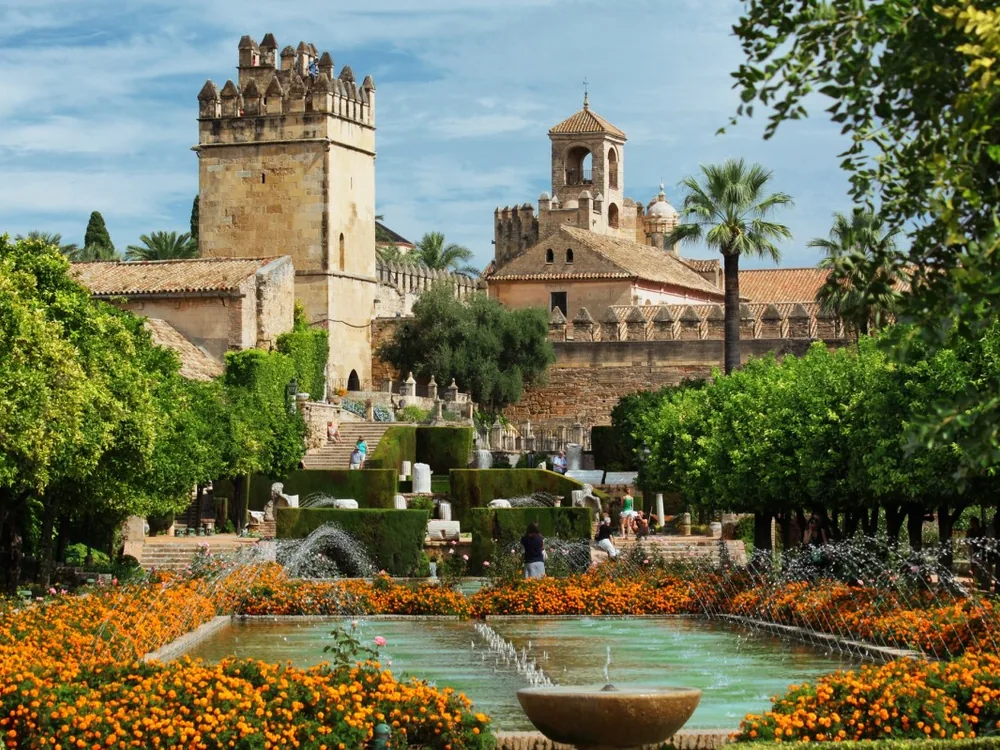
- ✦11 hectares of gardens with orange trees, fountains, reflecting pools and Gothic pavilions
- ✦The Hall of Ambassadors — a golden dome of breathtaking complexity built by Moorish craftsmen for a Christian king
Skip the queue with a guided tour
Skip-the-line tickets & expert guides
The Alcázar of Seville is one of Europe's most startling buildings for a simple reason: it was built by Christian kings using Muslim architects, craftsmen and decorative language, for explicitly political purposes, long after the Christian reconquest of Seville in 1248. The result — Mudéjar architecture at its most sophisticated — is a palace where Islamic geometric patterns, Arabic calligraphy and horseshoe arches serve a Christian court, creating something that belongs wholly to neither tradition and is more beautiful for it.
The palace complex occupies an entire city block adjacent to Seville's cathedral, enclosed by crenellated walls. The main entrance, the Puerta del León, leads through a series of courts of increasing intimacy and refinement. The oldest sections (the Patio del Yeso, built in the 12th century) are Almohad Islamic architecture; the grandest (the Palacio del Rey Don Pedro, built by Pedro I between 1356 and 1366) are Mudéjar at peak sophistication — craftsmen imported from Granada and Toledo working a generation after the Christian reconquest to produce interiors for a Christian king that are virtually indistinguishable from the Alhambra's.
What makes the Alcázar exceptional among Spain's historic palaces is that it remains a working royal palace: the Spanish royal family stays here on official visits to Seville, and the upper floors of the palace are closed to the public during royal residence. This gives the building a living quality that many more-visited monuments lack. The gardens, extending 11 hectares behind the palace, are among the finest in Spain — formal parterres of myrtle and orange, Gothic pavilions, a mercury pool and walled gardens in the English style.
History
The site has been a royal residence since at least 913 AD, when the Abbasid governor Abd ar-Rahman III built a palace for the Umayyad caliph here. The Almohad dynasty expanded it substantially in the 12th century, adding the Patio del Yeso (the oldest surviving Alcázar courtyard) and the Torre del Oro on the river. The Christian reconquest of Seville in 1248 under Fernando III brought the palace intact into Castilian royal hands.
The decisive creative moment came under Pedro I 'the Cruel' (1350–1369), who demolished much of the Almohad palace and built a new one between 1356 and 1366 using craftsmen brought from Islamic Granada and Toledo. Pedro's choice to build in the Mudéjar style — using Muslim craftsmen and Islamic decorative vocabulary for a Christian court — was a deliberate political and aesthetic statement: it projected power and cultural sophistication by demonstrating that the greatest art in the Iberian world was still being produced by Muslim craftsmen, and that the Castilian kings could commission it.
Isabella of Castile and Ferdinand of Aragon used the Alcázar as their base for the final campaigns of the Reconquista, and it was here that Christopher Columbus received his commission to sail west in 1492. The palace was modified in Renaissance style under Charles V, who added a large hall for his marriage to Isabella of Portugal in 1526. Subsequent centuries added Gothic chapels, Baroque fountains, and English gardens.
The 1755 Lisbon earthquake caused significant damage, as did the 19th-century romantic restorations that repainted many of the original medieval interiors. Major conservation work has been ongoing since the 1990s. The palace was used as a filming location for Game of Thrones between 2015 and 2019, appearing as the Water Gardens of Dorne.
How to Visit
Getting there: The Alcázar is in central Seville, adjacent to the Cathedral. Seville's old city is largely car-free; the nearest metro is Puerta Jerez (10 min walk). Seville is connected to Madrid by AVE high-speed train (2.5 hours) and to Córdoba (45 min). The city centre is walkable.
Booking essential: Tickets sell out days to weeks in advance in spring and autumn. Book online at alcazarsevilla.org. Timed entry windows prevent the worst of the crowd buildup, but the palace can still feel crowded on peak mornings.
Strategy: Arrive at opening time (09:30 on weekdays). Go directly to the Palacio de Pedro I — this is the most popular section and gets crowded by 11am. The gardens are best visited after the palace interior, when tour groups have left. Allow at least 45 minutes for the gardens alone.
Night visits: On Tuesday to Saturday evenings in summer (June–September), night tours run with atmospheric lighting in the palace and gardens. Separate ticket, book in advance. A very different experience from the daytime visit.
Tickets: Walk-up entry €14 adult, €0 child. The GetYourGuide tour — Seville — offers a guided visit; book in advance.
Practical tips: March to May and October to November — Seville in summer is extremely hot (40°C+). Book at least 14 days ahead.
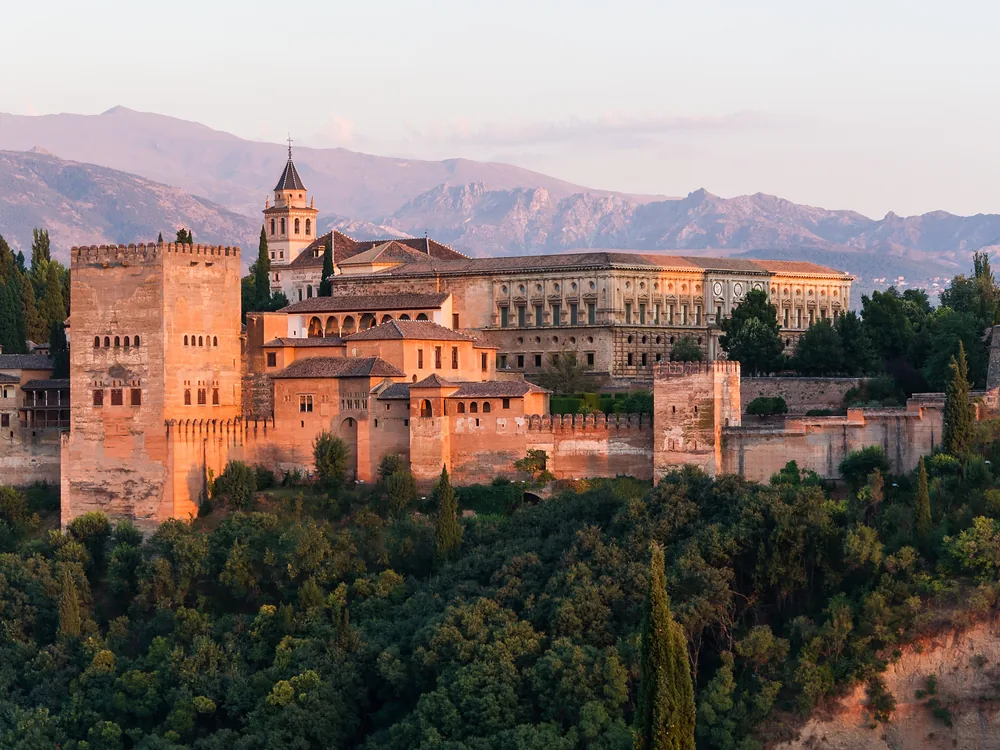
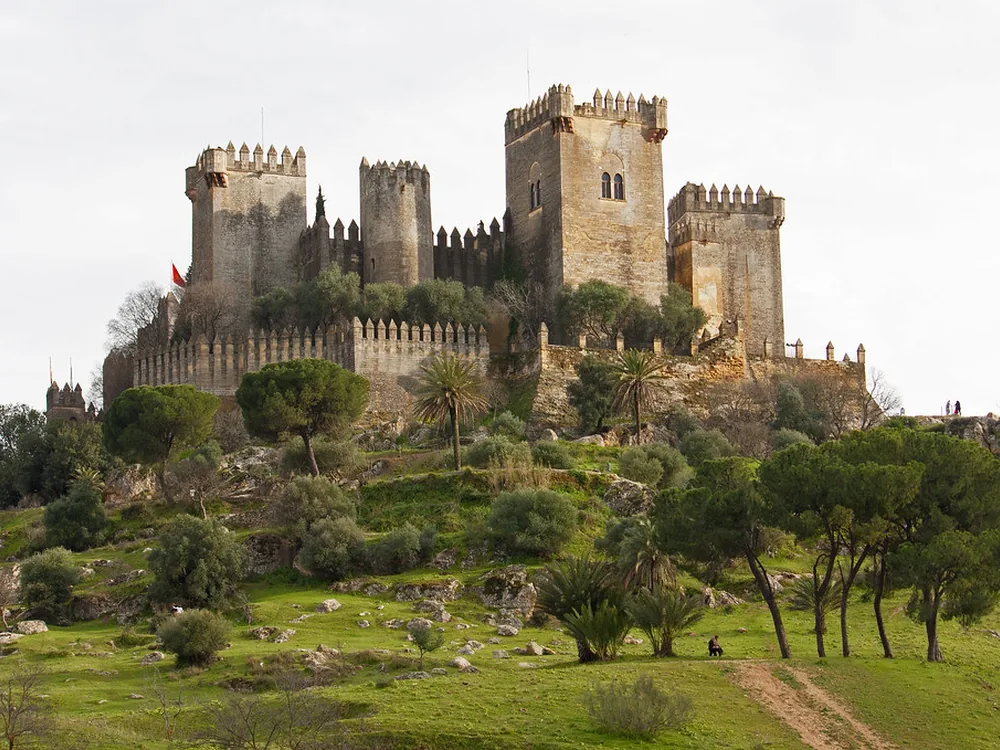
Combine with: Alhambra Granada, Almodovar Castle.
Frequently Asked Questions
Yes. The Alcázar served as the Water Gardens of Dorne in Seasons 5 and 6 of Game of Thrones, with the gardens, fountains and reflecting pools used extensively for the Martell storylines. The Jardín del Estanque (Pool Garden), the Galería del Grutesco and several inner courtyards appeared in the show. The Alcázar's Mudéjar architecture was considered the closest European equivalent to the show's fictional architecture.
Location
Patio de Banderas, s/n, 41004 Seville, Spain
Nearby Castles
Tours & Tickets
Powered by GetYourGuide
From
€20/ person