
Alcázar of the Christian Monarchs
Alcázar de los Reyes Cristianos
Spain · Andalusia · Near Córdoba
Built 1328 · Fortress-palace built from 1328 under Alfonso XI atop the remains of the former Umayyad caliphal palace of Córdoba; principal residence of Ferdinand and Isabella (the Catholic Monarchs) during the final campaign of the Reconquista, and the site where Christopher Columbus first presented his proposal to reach Asia by sailing west; later served as the seat of the Court of the Holy Inquisition (from 1482), then a civil prison and military prison until the 1950s; declared a Historical Monument in 1931 and part of the Historic Centre of Córdoba UNESCO World Heritage Site since 1994; the fortress gardens have been protected by municipal planning law since 1986
This page is part of an independent travel guide and is not affiliated with, endorsed by, or operated by Alcázar of the Christian Monarchs.
© Castles & Palaces
Quick Facts
- Hours
- Tue–Fri 08:15–20:00. Sat 09:30–18:00. Sun 09:30–14:30. Closed Mon
- Guided tour from
- €25
- Duration
- 1.5 hours
- Best time
- March to June, September to November
- Nearest city
- Córdoba
Featured Tour
Cordóba: Gardens & Fortress of Catholic Monarchs Guided Tour
Cancellation available · Instant confirmation
Highlights
- ✦The site of Columbus's first royal audience with Ferdinand and Isabella in 1486, where he outlined his plan to reach Asia by sailing west — the proposal that eventually became the 1492 voyage
- ✦Built in 1328 by Alfonso XI directly on the foundations of the Umayyad caliphal palace of Córdoba, one of the most sophisticated residences in 10th-century Europe, layering Christian Gothic-Mudéjar architecture over the memory of the caliphate
- ✦Headquarters of Ferdinand and Isabella during the final decade of the Reconquista, and subsequently the seat of the Court of the Holy Inquisition for several centuries
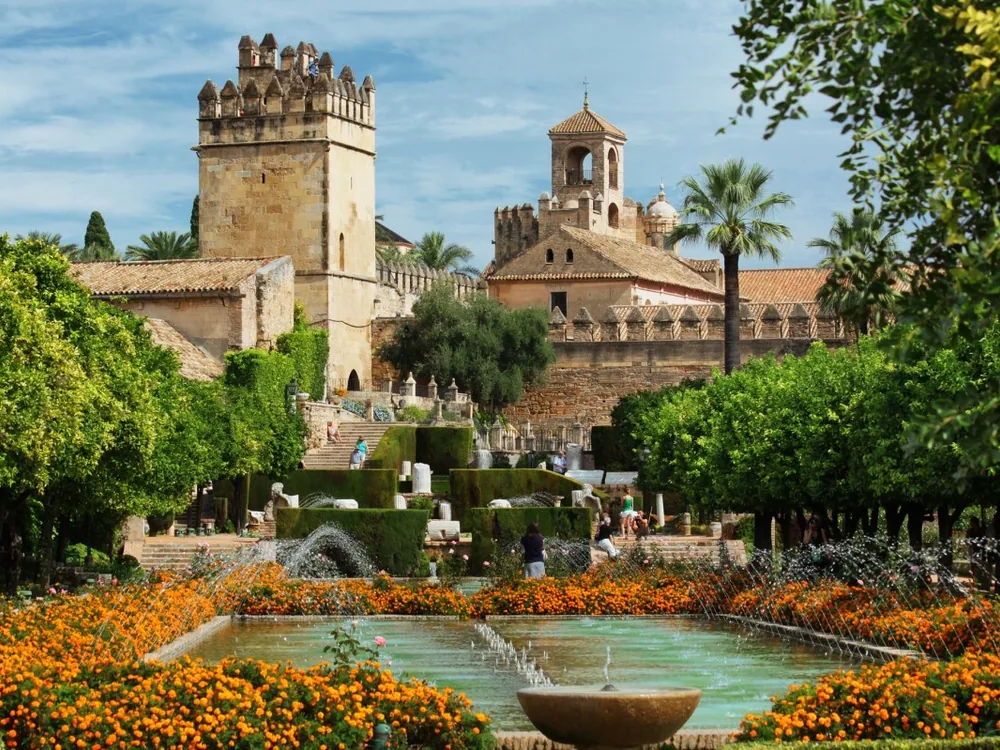
- ✦Terraced Andalusian gardens fed by pools and fountains, protected by municipal planning law since 1986, with the Avenue of the Monarchs lined with royal statues
- ✦Part of the Historic Centre of Córdoba UNESCO World Heritage Site since 1994, within walking distance of the Mezquita-Catedral and the Judería
Skip the queue with a guided tour
Skip-the-line tickets & expert guides
In a meeting room inside this riverside fortress, sometime in 1486, a Genoese sailor stood before Ferdinand and Isabella of Aragon and Castile and outlined a plan to reach Asia by sailing west across the Atlantic. The Catholic Monarchs did not immediately agree — it would take six more years, and another royal audience at Santa Fe outside Granada, before Columbus received his commission — but the Alcázar de los Reyes Cristianos in Córdoba was where the proposal first entered royal consideration. It is a fitting origin point: this fortress-palace, built over the ruins of a caliph's residence, was the operational headquarters from which Ferdinand and Isabella directed the final campaigns of the Reconquista, and it carries the compressed weight of Spain's transition from Islamic al-Andalus to the unified Catholic monarchy that would soon fund a voyage to the New World.
The fortress that stands today was begun in 1328 under Alfonso XI of Castile, constructed directly on the site and partly on the foundations of the former Umayyad caliphal palace of Córdoba — the residential and administrative seat of the caliphate at the height of its power in the 10th century, when Córdoba was among the largest and most sophisticated cities in Europe, home to libraries, public baths, street lighting, and a court culture of extraordinary intellectual range. Little of the caliphal structure survives above ground, but the site's continuity of royal and administrative use across the Islamic and Christian periods is itself part of its significance, layering Reconquista-era Gothic-Mudéjar military architecture over the deep memory of Umayyad civilisation.
From 1482, Ferdinand and Isabella made the Alcázar their principal base for the decade-long war against the Emirate of Granada, the last Muslim state in the Iberian Peninsula. The royal court, military command structure, and diplomatic apparatus all operated from this building during the final years of a campaign that culminated in the fall of Granada in January 1492 — the same year Columbus sailed. The Alcázar was not merely a passive setting for these events; it was the administrative engine of the Reconquista's final phase. After the fall of Granada, the Court of the Holy Office of the Inquisition was permanently seated here, giving the building a second chapter of institutional power considerably darker than the first. Its use as a civil and then military prison extended this association with state authority and confinement well into the 20th century; the Alcázar was not fully opened to the public until after its prison function ended in the 1950s.
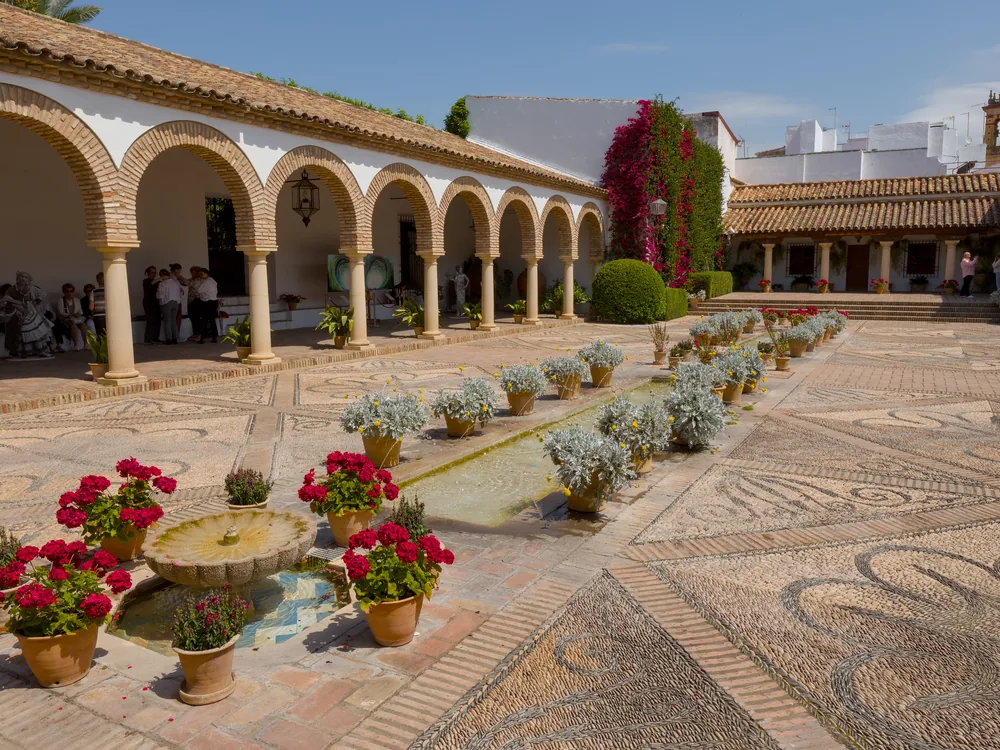
The gardens are, for many visitors, the most immediately rewarding element of the site: terraced, formally laid out, fed by pools and fountains that draw on the Moorish garden tradition of water as a structural element rather than mere ornament. The Avenue of the Monarchs runs through the gardens lined with statues of the Castilian and Aragonese rulers connected to the fortress — Ferdinand, Isabella, and their predecessors gazing across lawns and flowerbeds that have been legally protected as a historic landscape since 1986. The towers of the fortress rise above, and the Guadalquivir River runs just beyond the perimeter walls, the same river whose bridge led Christopher Columbus out of the city in 1486 to await the monarchs' eventual decision.
The Alcázar has been part of the Historic Centre of Córdoba UNESCO World Heritage Site since 1994, alongside the Mezquita-Catedral (the Great Mosque-Cathedral, a 10th-century hypostyle mosque converted into a cathedral in the 13th century and one of the most complex religious buildings in the world). The two monuments sit within a few hundred metres of each other, with the medieval Judería (Jewish Quarter) between them — a compact circuit of Spanish history in which Roman, Umayyad, Jewish, and Christian medieval layers are visible within a 15-minute walk.
History
The fortress of the Christian Monarchs was built from 1328 by Alfonso XI of Castile on the site of the former palace of the Umayyad caliphs of Córdoba, whose capital this had been during the 10th century. The building served as a royal residence for successive Castilian monarchs before becoming the primary operational base of Ferdinand and Isabella during the final years of the Reconquista (1482–1492). Columbus presented his initial proposal for a westward Atlantic crossing here in 1486.
From 1482, the building housed the Court of the Holy Office of the Inquisition, which remained here for several centuries. It subsequently served as a civil prison and then a military prison until the 1950s. Declared a Historical Monument in 1931, it became part of the Historic Centre of Córdoba UNESCO World Heritage Site in 1994. The terraced gardens are among the building's most significant elements and have been protected by municipal planning law since 1986.
**Current access note:** Visitor reviews from early 2026 report that restoration works temporarily closed the fortress interior, with the gardens remaining freely accessible to visitors. Confirm current opening status before visiting.
How to Visit
Getting there: The Alcázar is in Córdoba's historic centre, a 10-minute walk from Córdoba railway station (follow the river west) and within easy walking distance of the Mezquita-Catedral. No parking at the site; central Córdoba is best explored on foot.
Current status caveat: Visitor reviews from early 2026 report restoration works that may temporarily limit interior access to the fortress, with the gardens remaining freely accessible. Confirm the current opening status at alcazardelosreyescristianos.es or by phoning the site before finalising your visit.
Tickets: Direct admission is approximately €5 (check for free days under current municipal policy — entry has historically been free on certain days and for Córdoba residents). The GetYourGuide guided tour covers a 60–90 minute visit with a qualified local guide in Spanish, English, or French; includes the fortress admission fee and VAT. Free cancellation up to 24 hours in advance.
The gardens: Even during periods of interior restoration, the gardens typically remain accessible and are worth visiting independently — the formal terraced layout, the pools, and the towers above repay an hour's walking regardless of interior access.
Practical tips: March to June, September to November.
Combine with: The Mezquita-Catedral (5 minutes' walk northeast), the Judería (Jewish Quarter, between the two), and the Roman Bridge of Córdoba for a full day in the historic centre.
Frequently Asked Questions
In 1486, Christopher Columbus appeared before Ferdinand and Isabella at the Alcázar de los Reyes Cristianos to present his proposal for a westward Atlantic crossing to reach Asia. The monarchs did not immediately approve the plan — it required six more years of deliberation and a final meeting at Santa Fe, near Granada, in 1492, before Columbus received his commission and three ships. The Alcázar's role in the story was as the first royal venue where the proposal was formally considered rather than the place where it was accepted.
Location
Campo Santo de los Mártires, 14004 Córdoba, Spain
Nearby Castles
Tours & Tickets
Powered by GetYourGuide
From
€25/ person