
Palacio Domecq
Palacio Domecq
Spain · Andalusia · Near Jerez de la Frontera
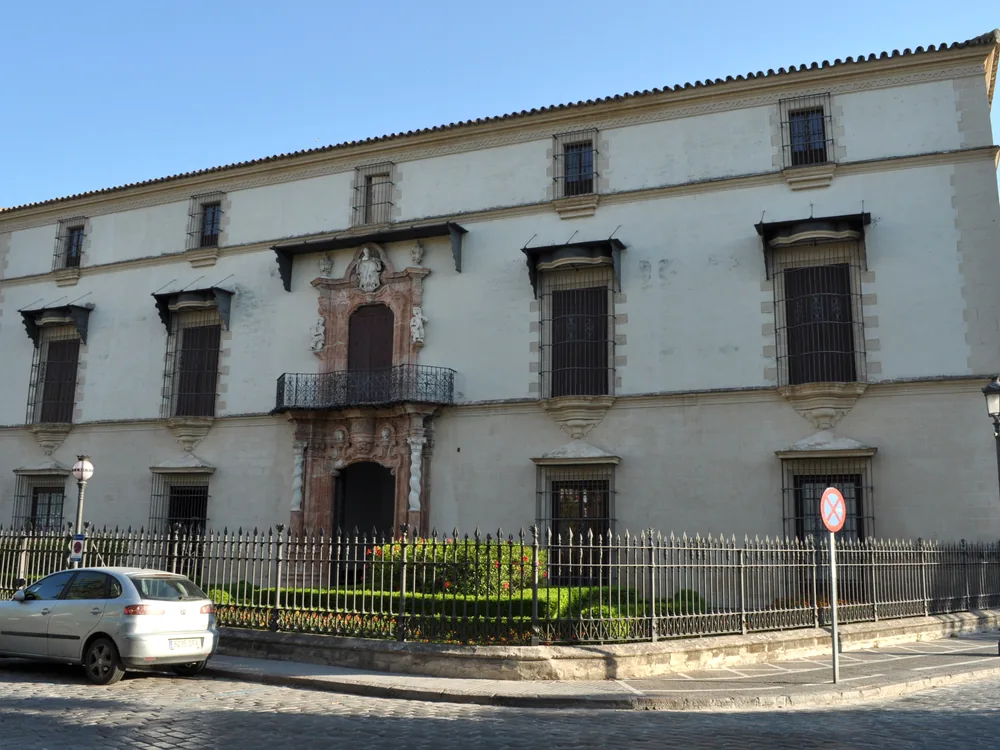
Built 1762 · 18th-century Baroque palace built for the Domecq family, one of the founding dynasties of the Jerez sherry trade; the principal facade and interior courtyard combine Spanish Baroque ornament with Neoclassical restraint, the courtyard decorated with elaborate stucco work and iron grilles in a style that reflects Jerez's layered Andalusian, Flemish, and Irish wine-trade influences; the building subsequently received Regency-era modifications to the interior decoration; compact in scale relative to royal palace comparisons — the 45-minute visit format reflects its size as an aristocratic urban townhouse rather than a ceremonial seat of power
This page is part of an independent travel guide and is not affiliated with, endorsed by, or operated by Palacio Domecq.
© Castles & Palaces
Quick Facts
- Hours
- Mon–Sat 10:00–14:00. Closed Sun
- Entry via GetYourGuide
- €15
- Duration
- 45 minutes
- Best time
- October to May
- Nearest city
- Jerez de la Frontera
Featured Tour
Palacio Domecq Entrance Ticket
Cancellation available · Instant confirmation
Highlights
- ✦The Domecq family were among the founding dynasties of the Jerez sherry trade — Pedro Domecq arrived from France in 1730 and established the bodega that still bears the family name on sherry and brandy labels worldwide; the palace they built in 1762 is the architectural expression of the wealth that trade generated, and it makes most sense when understood as part of the sherry-economy landscape of Jerez rather than as an isolated monument
- ✦The courtyard is the palace's architectural centrepiece: a double-height space with elaborate stucco decoration, iron grilles, and a combination of Baroque ornament and Neoclassical restraint that reflects the hybrid cultural influences at work in 18th-century Jerez — Andalusian craft traditions, the Flemish business culture that many early sherry families brought, and the Irish immigrant wine-trade dynasties (the Harveys, the Terrys) who worked alongside them
- ✦The visit is approximately 45 minutes — smaller and more compact than the major palace entries elsewhere on this site, and worth positioning honestly as a polished architectural add-on to a Jerez bodega day rather than a standalone destination; the optional audio guide (included in the GetYourGuide ticket) helps decode the decorative programme for visitors without prior knowledge of Andalusian Baroque
- ✦Jerez de la Frontera is the sherry triangle's principal city — the Jerez/Xérès/Sherry designation requires production within a triangular zone covering Jerez, El Puerto de Santa María, and Sanlúcar de Barrameda — and the Palacio Domecq sits at the heart of a historic centre that includes major sherry bodegas (González Byass, Tío Pepe, Sandeman), the Alcázar, the flamenco museum, and the Royal Andalusian School of Equestrian Art within walking distance
- ✦The Domecq brand name (now part of the Beam Suntory portfolio) is still among the most recognisable in the global sherry and brandy markets: seeing the palace from which that brand originated — a mid-18th-century townhouse in a Andalusian city of 200,000 — is a useful corrective to the scale assumptions that global brand names typically generate
Skip the queue with a guided tour
Skip-the-line tickets & expert guides
The word 'sherry' is an anglicisation of 'Jerez' — specifically of the Arabic-origin name that was pronounced as Sherish during the Moorish period and corrupted through centuries of English commercial contact into the word that now appears on wine lists worldwide. This linguistic etymology is relevant because it encapsulates the multi-layered cultural history of Jerez de la Frontera, the Andalusian city whose wine trade built the Palacio Domecq and whose name, bent through Arabic, Spanish, and English in sequence, ended up labelling the fortified wine that made a small number of Jerez families extraordinarily wealthy.
The Domecq family was among the most prominent of those families. Patrick (Pedro) Domecq arrived from Lembeye in the French Basque country around 1730, having come to Jerez initially as an agent for the wine business of his fellow Frenchman Juan Haurie. He eventually bought out the Haurie interests and established the Domecq bodega under his own name, which he passed to descendants who expanded it through the 18th and 19th centuries into one of the largest sherry and brandy operations in Spain. The family's commercial success translated directly into architectural investment: the Palacio Domecq, built in 1762, is the physical record of what two generations of sherry trade income could commission in mid-18th-century Jerez.
The palace is not large by the standards of royal residences or aristocratic country estates. It is an urban townhouse on a generous scale — the kind of building that prosperous merchant families across Europe were constructing in the same period, in the architectural language of their specific region and with the decorative ambitions appropriate to their wealth. In Jerez in 1762, that meant a facade and courtyard in the Spanish Baroque idiom, with stucco ornament, iron grilles, and the layered decorative programme that Andalusian craftsmen had developed across centuries of Moorish, Mudéjar, and European Baroque influence.
The courtyard is the building's finest space. A double-height enclosure with arcade columns on the lower level and decorative ironwork on the upper, it is decorated with stucco work in a style that reflects the hybrid cultural influences operating in 18th-century Jerez. The sherry trade was not a purely Spanish enterprise: the families who built it came from France, Ireland, England, and the Netherlands as well as from Andalusia, and they brought with them different architectural and decorative tastes that blended in the specific commercial culture of the sherry triangle. The Domecq courtyard shows this blend — Spanish Baroque as interpreted through the cosmopolitan lens of a city whose most important residents had arrived from elsewhere and whose most important product was sold abroad.
The palace subsequently received Regency-era modifications to its interior decoration, adding a layer of early 19th-century refinement to the 18th-century Baroque structure. This palimpsest of decorative periods — Baroque courtyard, later Regency interior rooms — is common in buildings that remained in active family use across generations, each owner adjusting the interiors to contemporary taste without rebuilding the architectural structure.
The visit is approximately 45 minutes in duration, and this is worth stating directly rather than hedging. The Palacio Domecq is not a palazzo of Florentine scope or a royal palace with stateroom circuits requiring half a day. It is a compact, elegant, historically specific townhouse that rewards unhurried attention to its courtyard and interiors but does not need more than an hour. The GetYourGuide ticket includes an optional audio guide that helps decode the decorative programme; for visitors without background knowledge of Andalusian Baroque or the Domecq family's specific position in sherry history, the audio guide is recommended.
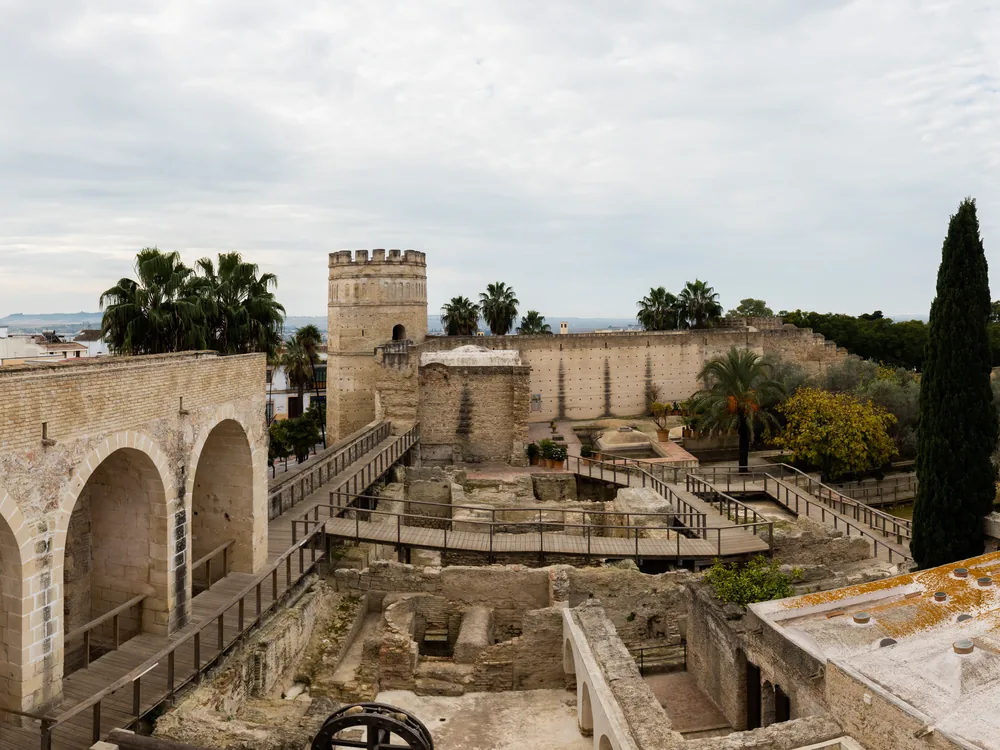
The Palacio Domecq sits in the historic centre of Jerez de la Frontera, within walking distance of several of the major sherry bodegas that make the city worth visiting in the first place. González Byass — whose Tío Pepe brand is one of the world's most recognisable sherries — is approximately 400 metres away. The Jerez Alcázar, a medieval fortress with Moorish origins and a 12th-century mosque converted to a chapel, is a similar distance. The Royal Andalusian School of Equestrian Art, whose choreographed horse shows are one of the more unusual spectacles available in any Spanish city, is approximately 800 metres north.
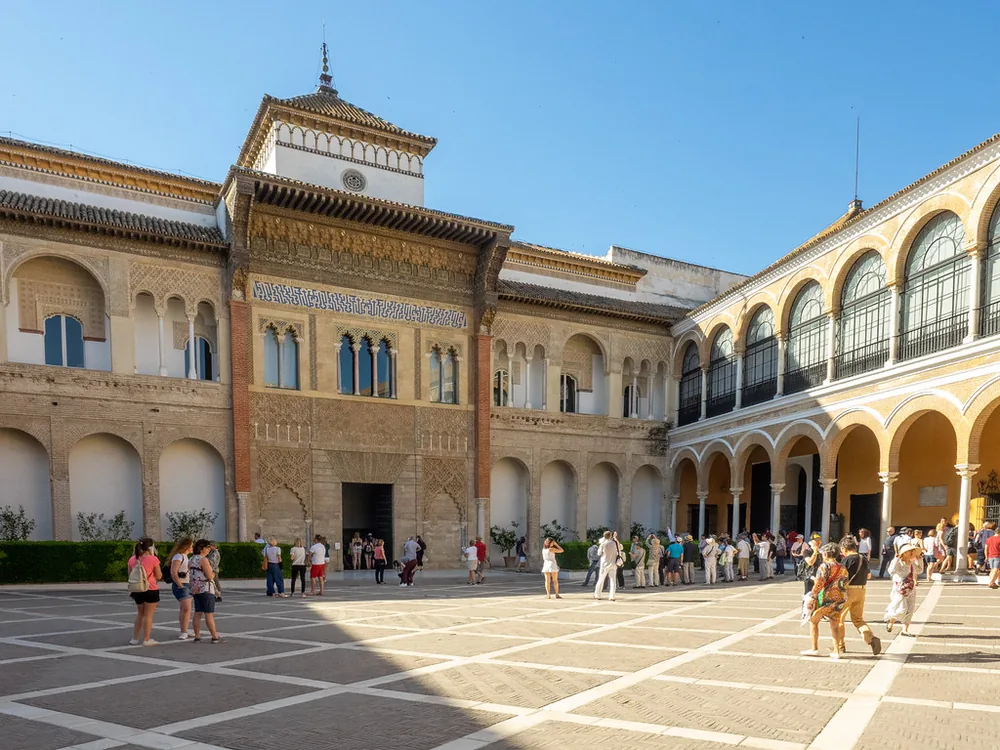
For visitors staying in Seville and making day trips into the Sherry Triangle — a common itinerary given Seville's size and transport links — Jerez is approximately 90 minutes south by car or train. The Alcázar of Seville, already on this site, anchors the Seville end of this itinerary; Palacio Domecq adds the Jerez end, giving visitors who make the trip a specific architectural and social-history anchor to accompany the bodega visits and horse shows that typically constitute the Jerez itinerary. The two sites are in the same Andalusian cultural sphere but represent different scales and different periods of Andalusian aristocratic life: the Alcázar as a medieval royal fortress with Mudéjar palace apartments accumulated across centuries of Muslim and Christian rule, the Palacio Domecq as a single-generation commercial-family townhouse of the 18th century.
The broader context of the sherry trade — how a fortified wine produced in a triangular zone of about 10,000 hectares in southwestern Spain became one of the dominant luxury goods of 18th-century Europe, and how the families who produced and traded it converted that wealth into urban architectural investment — is a story the Palacio Domecq tells from one specific vantage point: the view from the building that one family's share of the trade paid for. Reading the courtyard stucco and the Regency interior rooms with that specific commercial history in mind changes what you see: not just Baroque ornament but the accumulated residue of centuries of wine shipped to London, Bristol, and Hamburg.
History
The Domecq family arrived in Jerez from France in the early 18th century and built a significant position in the sherry wine trade. The Palacio Domecq was constructed in 1762 as the family's principal Jerez residence, in the Baroque architectural style prevalent in 18th-century Andalusia. The palace remained in the Domecq family for generations, receiving modifications including Regency-era interior decoration. The Domecq brand and bodega operations were eventually sold and consolidated through various commercial transactions into the modern global spirits industry. The palace is now open to visitors as a heritage site in the Jerez historic centre.
How to Visit
Getting there: The palace is in the historic centre of Jerez de la Frontera, Cádiz province, Andalusia. By train: Jerez station is on the Seville–Cádiz line (Seville to Jerez: 1 hour; Cádiz to Jerez: 30 minutes). From Seville by car: approximately 90 minutes via the A-4 motorway. The palace is a 15-minute walk from Jerez station.
Tickets: GetYourGuide entry ticket includes optional audio guide. Walk-up entry also available.
Visit length: 45 minutes for the palace and courtyard.
Practical tips: October to May.
Combine with: The González Byass bodega (400m away) and the Jerez Alcázar (400m) make natural same-day additions. The Royal Andalusian School of Equestrian Art (800m north) has horse shows on selected days. Seville's Alcázar is 90 minutes away and is on this site.
Frequently Asked Questions
Patrick (Pedro) Domecq arrived in Jerez from France around 1730 as a wine-trade agent and eventually established his own sherry bodega under the Domecq name. The family built one of the largest sherry and brandy operations in Spain across the 18th and 19th centuries. The Domecq name still appears on sherry and brandy labels worldwide, though the commercial operations have passed through various corporate owners. The Palacio Domecq, built in 1762, is the architectural legacy of the family's commercial success in the early sherry trade.
Location
Calle San Ildefonso, 3, 11403 Jerez de la Frontera, Cádiz, Spain
Nearby Castles
Tours & Tickets
Powered by GetYourGuide
From
€15/ person